How to Pick API Platforms: 7 Tools Compared

- 1
 TykDevelopers wanting a light programmable gatewayVisit
- 2
 ZuploTeams shipping public APIs with minimal setupVisit
- 3
 ApigeeGoogle Cloud shops managing API programs at scaleVisit
- 4
 PostmanTeams that want the standard API client and collaboration hubVisit
- 5
 StoplightAPI design-first teams standardizing on OpenAPIVisit
- This list starts with Tyk, which is built for developers wanting a lightweight programmable gateway.
- The cheapest monthly starting price in the list is $14/user/month, offered by Postman.
- What to know about Tyk first: management UI and portal depth trail the big suites.
- Only 4 of the 7 tools have a free plan (Tyk, Zuplo, Postman, Stoplight), so check the caps.
- MuleSoft Anypoint is the one to check for enterprises unifying integration and API management.
Direct answer
Our first pick is Tyk, best for developers wanting a lightweight programmable gateway. Zuplo is better for teams shipping public APIs with minimal setup, and Apigee is better for Google Cloud shops managing API programs at scale. Details, prices and limits for the rest of the 7 tools are below.
Quick comparison
| Product | Ideal for | Price from | Free version | |
|---|---|---|---|---|
| Tyk | Developers wanting a light programmable gateway | See website | Yes | Visit |
| Zuplo | Teams shipping public APIs with minimal setup | See website | Yes | Visit |
| Apigee | Google Cloud shops managing API programs at scale | See website (pay-as-you-go available) | Free trial (60 days) | Visit |
| Postman | Teams that want the standard API client and collaboration hub | $14/user/month (Basic plan, billed yearly) | Yes | Visit |
| Stoplight | API design-first teams standardizing on OpenAPI | See website | Yes | Visit |
 Boomi | Integration-led organizations connecting apps and APIs | See website (custom quote) | Free trial | Visit |
 MuleSoft Anypoint | Enterprises unifying integration and API management | See website (custom quote) | Free trial | Visit |
Every option for API platforms explained
Ainotely put together this guide to API platforms for readers who want a clear shortlist without reading every vendor page. It compares 7 tools on starting price, free plans, who each one suits and where each one falls short.
Tyk
Ideal for: Developers wanting a light programmable gateway
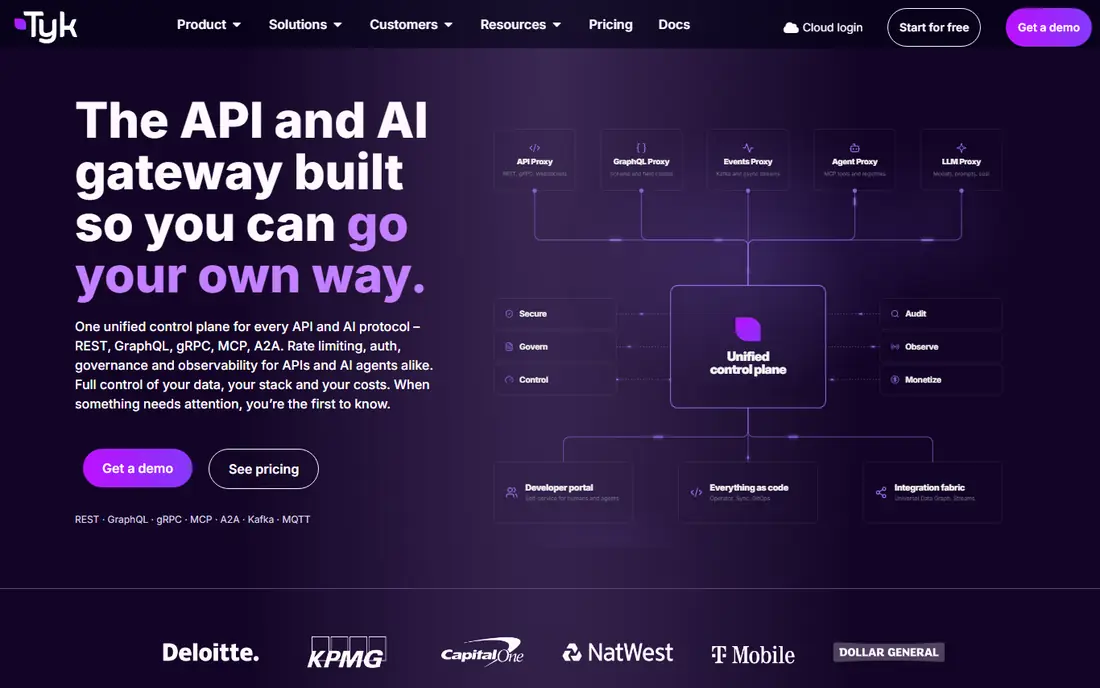
Tyk is a good fit for developers wanting a light programmable gateway. The dashboard and developer portal include the management basics without the weight of a full suite. Its strength is the programmable, automation-friendly core that suits product engineering teams.
Tyk appeals to developers who want infrastructure as code all the way down. More specifically, open source spans the gateway; Tyk Cloud and self-hosted commercial plans add management with quoted pricing. Tyk shows no starting price here, so confirm the cost on the vendor site. Tyk offers a free plan.
The main drawbacks: Management UI and portal depth trail the big suites.
- Open-source core with cloud and self-hosted choices
- Light gateway with a small footprint
- Commercial pricing needs a quote
Zuplo
Ideal for: Teams shipping public APIs with minimal setup

Zuplo is built with teams shipping public APIs with minimal setup in mind. The youth of the system cuts both ways. Zuplo is aimed at the team that needs a production API gateway this week.
Points against: Enterprise governance features still maturing.
In practice, rate limiting, authentication and analytics come standard without the enterprise sales process. Configuration lives in git, deployment takes minutes, and the developer portal with documentation creates itself from your OpenAPI spec. On top of that, startups and product teams shipping their first public API get the most value. Regulated enterprises should verify compliance features before committing. As for the details, you get modern developer experience and pricing that starts small. But the ecosystem of plugins and the depth of enterprise governance trail the incumbents. Zuplo shows no starting price here, so confirm the cost on the vendor site. Zuplo includes a free tier.
- Usage-based pricing that starts small
- Developer portal and docs generated automatically
- Younger system with a smaller ecosystem
Apigee
Ideal for: Google Cloud shops managing API programs at scale
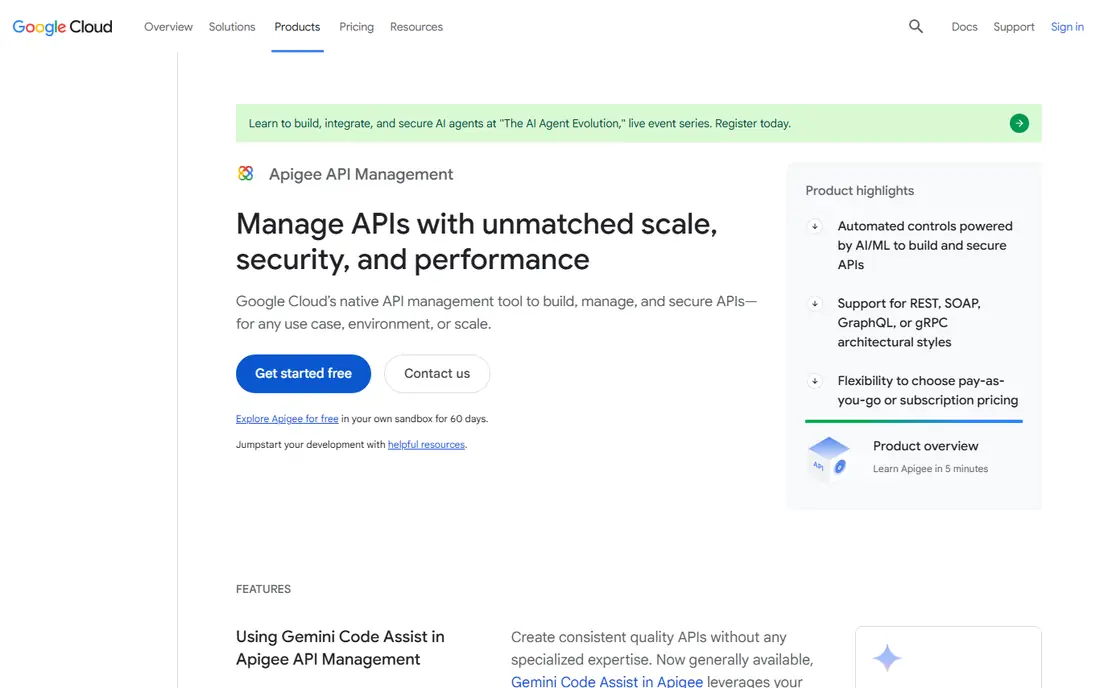
Apigee is aimed squarely at Google Cloud shops managing API programs at scale. Outside Google Cloud the value proposition thins; inside it, the integration with Cloud's IAM, logging and billing is the reason to choose it. This is an enterprise platform with enterprise onboarding, not a weekend signup.
For everyday use, beyond gateway routing, it includes the API program: developer portal, API products and monetization, advanced analytics, and security policies managed as code. For everyday use, Apigee is Google's enterprise API management system, and it presents in the depth. Apigee does not show a starting price in this comparison, so check the vendor site for current pricing. On free options: Free trial (60 days).
The main drawbacks: Pricing complexity with pay-as-you-go and subscription choices. Upsides: analyze and monetize.
- Full-lifecycle management: design, secure, publish
- Deep Google Cloud integration
- Best value inside the Google Cloud ecosystem
Postman
Ideal for: Teams that want the standard API client and collaboration hub
Think of Postman for teams that want the standard API client and collaboration hub. The client deals with requests, environments and test scripts. The product layer layers on shared workspaces, versioned collections, mock servers and auto-generated documentation.
For most teams, the journey starts here since the ramp-up time is zero: your developers already use it. In practice, entry-level at $14 per user a month brings collaboration history and more monitoring; Professional at $29 brings reporting, SSO and private workspaces. Postman cost at the entry level: $14/user/month. You can start on Postman without paying.
Honest limits: Governance and private-network features need higher levels. Where it shines: collections and mock servers for team collaboration.
- Built-in testing
- Documentation and monitoring
- Full product pricing scales per user
Stoplight
Ideal for: API design-first teams standardizing on OpenAPI
Stoplight targets API design-first teams standardizing on OpenAPI. Stoplight owns the design end of the lifecycle.
Watch-outs: design and documentation only.
Beyond that, organizations standardizing dozens of APIs on consistent design rules use it as the governance point before any code is written. Worth adding: teams write and maintain OpenAPI specs in a visual editor, enforce style guides with spectral linting, and create documentation and mock servers from the same source of truth. Stoplight shows no starting price here, so confirm the cost on the vendor site. Free access exists with Stoplight.
- Documentation and mocking from the same spec
- Design-first workflow with visual OpenAPI editing
- Not a gateway
Boomi
Ideal for: Integration-led organizations connecting apps and APIs
Boomi targets integration-led organizations connecting apps and APIs. The platform's strength is connecting applications, data and systems with low-code tooling, and API management rides along: design, publish and govern the APIs your integrations expose.
Also, organizations standardizing on Boomi for integration get API management without a second vendor. On top of that, if your problem is "run a developer-facing API program," compare the specialists first. This comparison lists no price for Boomi; ask the vendor. Free access: Free trial.
Limits to weigh: API management depth trails pure-play gateway vendors.
- Low-code integration product with API management included
- Faster time to value than heavier suites
- Custom pricing
MuleSoft Anypoint
Ideal for: Enterprises unifying integration and API management
MuleSoft Anypoint works best for enterprises unifying integration and API management. Licensing is custom and substantial, and most deployments involve implementation partners. The product links SaaS apps, databases and legacy systems, then exposes the integrations as managed APIs through the same lifecycle tooling.
From a buyer's view, MuleSoft pays off when the organization commits to API-led integration as an operating model across dozens of systems. In daily use, MuleSoft Anypoint treats APIs as part of integration, not a separate discipline. For enterprises already invested in Salesforce, which owns MuleSoft, the combined story is the pitch. MuleSoft Anypoint does not show a starting price in this comparison, so check the vendor site for current pricing. On free options: Free trial.
Points against: Implementation usually needs specialists.
- Not two vendors
- Salesforce ecosystem integration
- Custom pricing with significant license costs
How we built this list
We compared the tools on published pricing, free plan or trial availability, feature coverage for API platforms, and the limits each vendor documents. Plan names, prices and limits change often. Treat the figures here as a starting point and verify them with the vendor. Order on the page follows fit for the typical buyer first, then price transparency and free access. Your own requirements should decide the final pick.
Things to verify first
- Ask Tyk, Zuplo, Apigee and others for a written quote, since no starting price is shown.
- Look at free plan limits closely: Tyk, Zuplo, Postman and Stoplight have one, and the caps decide whether it is usable for real work.
- Run a trial of Apigee, Boomi and MuleSoft Anypoint with real work before paying for a year; your own workflow is the best test.
- Read the limits listed for Tyk first: management UI and portal depth trail the big suites.
- Verify that exporting from Apigee is possible on your plan and covers all your records.
- Map your must-have features to a specific MuleSoft Anypoint plan before you compare prices.
Frequently asked questions
Can I try these options before paying?
Often, yes. Tyk, Zuplo, Postman and Stoplight have a free plan and Apigee, Boomi and MuleSoft Anypoint offer a free trial. Use your own data and a real task during the test, and check what the free tier or trial limits before you rely on it.
Is Tyk the right pick for everyone comparing API platforms?
No single tool suits every team. Tyk comes first because it fits developers wanting a lightweight programmable gateway, while Zuplo suits teams shipping public APIs with minimal setup and Apigee suits Google Cloud shops managing API programs at scale. Match the tool to your own size, budget and workflow before deciding.
Which options for API platforms have a free plan?
On this list, Tyk, Zuplo, Postman and Stoplight include a free plan. Caps on seats, usage or features are common, so test the free plan against your real workload. Several others offer a trial instead.
What is the cheapest option for API platforms in this list?
On published monthly entry prices, Postman is the lowest here at $14/user/month. Entry price is only part of the cost, because seats, add-ons and billing terms can change the total.