Best app to learn chess in 2026: 8 Options Compared

- 1
 Chess.commost learners wanting lessons and games in one appVisit
- 2
 Lichesslearners wanting a free open-source platformVisit
- 3
 Chessablelearners wanting to memorise openings and patternsVisit
- 4
 ChessKidchildren learning chess safelyVisit
- 5
 Learn Chess with Dr. Wolfbeginners wanting a patient coach-style appVisit
- The best chess learning apps mix lessons, puzzles and real games, since puzzles alone do not teach planning.
- Free tiers from Chess.com and Lichess cover a lot for beginners.
- Kids need a separate, safe app rather than an adult platform.
Quick comparison
| Product | Ideal for | Price from | Free version | |
|---|---|---|---|---|
| Chess.com | most learners wanting lessons and games in one app | See website | Yes | Visit |
| Lichess | learners wanting a free open-source platform | Free | Yes | Visit |
| Chessable | learners wanting to memorise openings and patterns | See website | Yes | Visit |
| ChessKid | children learning chess safely | See website | Free trial | Visit |
| Learn Chess with Dr. Wolf | beginners wanting a patient coach-style app | See website | Free trial | Visit |
 Aimchess | improving players wanting data on weaknesses | See website | Free trial | Visit |
 DecodeChess | players wanting plain-language game explanations | See website | Free trial | Visit |
 Chess Tempo | players wanting serious tactics training | See website | Yes | Visit |
The best best app to learn chess
We compared official feature pages, pricing, app store listings, privacy policies and public reviews to build this list of best app to learn chess. Our pick for most people is listed first in each section below, but the right choice depends on your budget, team size and must-have features, so read the strengths and limits for each option before you decide.
Chess.com
Ideal for: most learners wanting lessons and games in one app

For readers weighing this option, the story starts with fit. Chess.com is the default pick for most learners, with lessons, puzzles, analysis and a huge pool of opponents at every level. In practice, that means you should judge it on the job you need done most, not on the longest feature list, since a tool that fits your daily work beats a broader tool you rarely open. We also weighed pricing honesty, support options and how the product handles your data, because those factors shape the experience long after the first week.
The catch is membership, since the full lesson library sits behind a paid plan. That trade-off is normal, since every product on this list gives up something to excel at its main job. Before you commit, use the free plan or trial with a real task from your own work, check the export and cancellation terms, and confirm the plan you need includes the features described here, since vendors move features between tiers from time to time.
- Lessons and puzzles
- Huge player pool
- Game analysis
- Full lessons need membership
- Ads on free tier
Lichess
Ideal for: learners wanting a free open-source platform
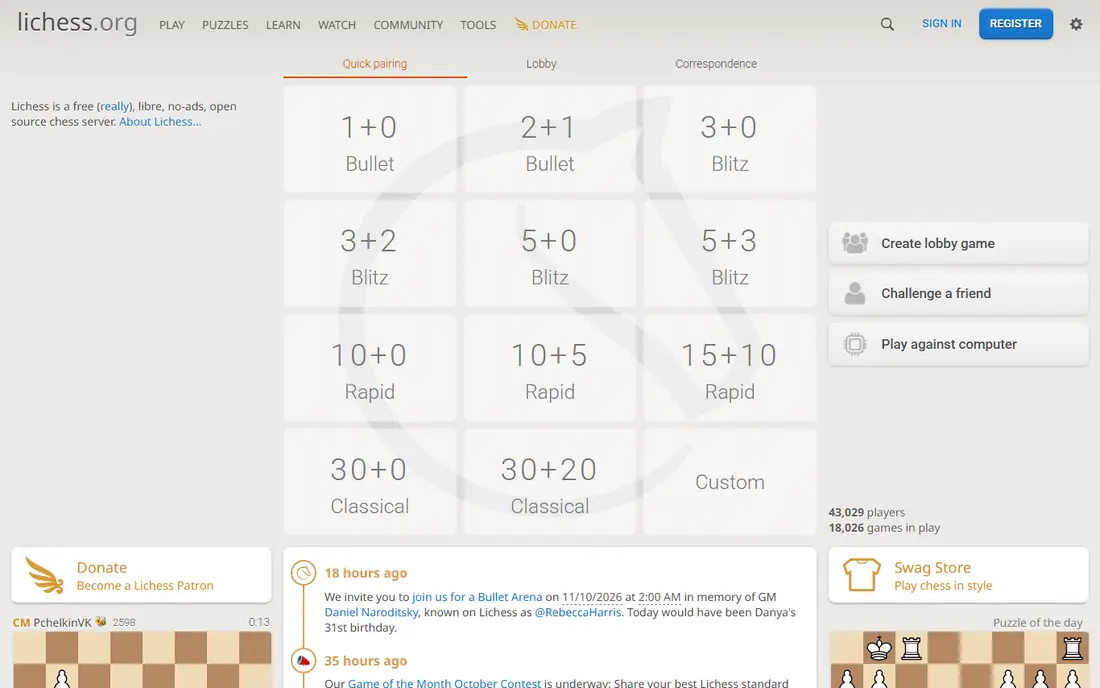
This one earns its place for a clear reason. Lichess is the free champion, offering lessons, puzzles, analysis and games with no ads and no subscription. In practice, that means you should judge it on the job you need done most, not on the longest feature list, since a tool that fits your daily work beats a broader tool you rarely open. We also weighed pricing honesty, support options and how the product handles your data, because those factors shape the experience long after the first week.
The catch is structure, since its lessons feel looser than a guided course. That trade-off is normal, since every product on this list gives up something to excel at its main job. Before you commit, use the free plan or trial with a real task from your own work, check the export and cancellation terms, and confirm the plan you need includes the features described here, since vendors move features between tiers from time to time.
- Free lessons and puzzles
- Analysis
- No ads
- Interface is plainer
- Lesson structure is looser than Chess.com
Chessable
Ideal for: learners wanting to memorise openings and patterns
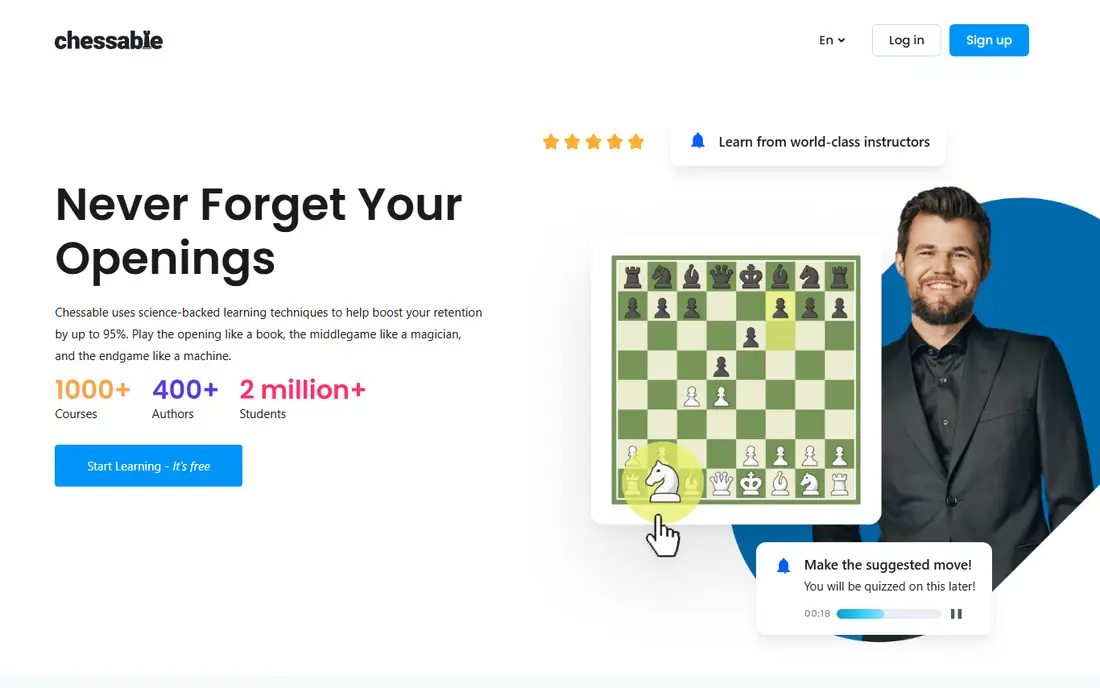
Here is where this option stands out from the rest of the list. Chessable uses spaced repetition to lock in openings and patterns, which suits learners who want study that sticks. In practice, that means you should judge it on the job you need done most, not on the longest feature list, since a tool that fits your daily work beats a broader tool you rarely open. We also weighed pricing honesty, support options and how the product handles your data, because those factors shape the experience long after the first week.
The catch is cost, since the best courses are paid and can add up. That trade-off is normal, since every product on this list gives up something to excel at its main job. Before you commit, use the free plan or trial with a real task from your own work, check the export and cancellation terms, and confirm the plan you need includes the features described here, since vendors move features between tiers from time to time.
- Spaced repetition courses
- Video lessons
- Opening training
- Paid courses add up
- Focus is study more than play
ChessKid
Ideal for: children learning chess safely
Consider this option if its strengths match your main need. ChessKid is the safe pick for children, with lessons, puzzles and play in an environment designed for young learners. In practice, that means you should judge it on the job you need done most, not on the longest feature list, since a tool that fits your daily work beats a broader tool you rarely open. We also weighed pricing honesty, support options and how the product handles your data, because those factors shape the experience long after the first week.
The catch is audience, since adults should pick Chess.com or Lichess instead. That trade-off is normal, since every product on this list gives up something to excel at its main job. Before you commit, use the free plan or trial with a real task from your own work, check the export and cancellation terms, and confirm the plan you need includes the features described here, since vendors move features between tiers from time to time.
- Kid-safe lessons and puzzles
- Safe play environment
- Parent controls
- Designed for kids
- Adults will outgrow it fast
Learn Chess with Dr. Wolf
Ideal for: beginners wanting a patient coach-style app
This entry suits a narrower audience, and that focus is its strength. Dr. Wolf coaches beginners through games with spoken explanations, which feels closer to a human teacher than a puzzle set. In practice, that means you should judge it on the job you need done most, not on the longest feature list, since a tool that fits your daily work beats a broader tool you rarely open. We also weighed pricing honesty, support options and how the product handles your data, because those factors shape the experience long after the first week.
The catch is scope, since it is a learning app first and a playing platform second. That trade-off is normal, since every product on this list gives up something to excel at its main job. Before you commit, use the free plan or trial with a real task from your own work, check the export and cancellation terms, and confirm the plan you need includes the features described here, since vendors move features between tiers from time to time.
- Coach-style lessons
- Spoken explanations
- Guided games
- Smaller player pool
- Subscription for full coaching
Aimchess
Ideal for: improving players wanting data on weaknesses
On value alone, this option deserves a close look. Aimchess analyses your games to find weaknesses, then builds training around them, which suits players past the beginner stage. In practice, that means you should judge it on the job you need done most, not on the longest feature list, since a tool that fits your daily work beats a broader tool you rarely open. We also weighed pricing honesty, support options and how the product handles your data, because those factors shape the experience long after the first week.
The catch is level, since beginners may find the data more than they need. That trade-off is normal, since every product on this list gives up something to excel at its main job. Before you commit, use the free plan or trial with a real task from your own work, check the export and cancellation terms, and confirm the plan you need includes the features described here, since vendors move features between tiers from time to time.
- Weakness analysis
- Personalised training
- Puzzle sets
- Best for improving players
- Beginners may find data overwhelming
DecodeChess
Ideal for: players wanting plain-language game explanations
If you want a dependable choice, start here. DecodeChess explains moves in plain language, which helps players understand why a move works rather than just seeing a score. In practice, that means you should judge it on the job you need done most, not on the longest feature list, since a tool that fits your daily work beats a broader tool you rarely open. We also weighed pricing honesty, support options and how the product handles your data, because those factors shape the experience long after the first week.
The catch is community, since it is smaller than Chess.com and Lichess for finding opponents. That trade-off is normal, since every product on this list gives up something to excel at its main job. Before you commit, use the free plan or trial with a real task from your own work, check the export and cancellation terms, and confirm the plan you need includes the features described here, since vendors move features between tiers from time to time.
- Plain-language move explanations
- Game analysis
- Learning insights
- Smaller community
- Subscription for deep analysis
Chess Tempo
Ideal for: players wanting serious tactics training
The final entry rounds out the list with a different angle. Chess Tempo is the tactics gym, with serious puzzle and endgame training for players who want to sharpen calculation. In practice, that means you should judge it on the job you need done most, not on the longest feature list, since a tool that fits your daily work beats a broader tool you rarely open. We also weighed pricing honesty, support options and how the product handles your data, because those factors shape the experience long after the first week.
The catch is polish, since the interface is functional rather than pretty. That trade-off is normal, since every product on this list gives up something to excel at its main job. Before you commit, use the free plan or trial with a real task from your own work, check the export and cancellation terms, and confirm the plan you need includes the features described here, since vendors move features between tiers from time to time.
- Tactics puzzles
- Endgame training
- Opening training
- Interface is functional rather than polished
- Lessons are lighter
How we picked these
We compared official feature pages, pricing pages, app store listings, privacy policies and public reviews for each product on this list, and we checked that each product exists and works today. We favoured products that fit the topic directly, offered clear pricing or a usable free tier, and showed an honest balance of strengths and limits. We did not claim hands-on testing we did not do, and where a price could not be verified we wrote See website rather than guessing.
We also mixed well-known leaders with strong smaller options, so the list is useful whether you want the safest default or a more specialised pick. If a product changed its pricing or features after our check, the vendor website is the final word, and we recommend confirming the plan details before you buy.
How to choose the right best app to learn chess
Mix study and play from the start. Do a short lesson or puzzle set, then play a slow game and review it, since review is where most learning happens. Beginners should start with Chess.com or Lichess and add Chessable only when openings start to matter. For children, ChessKid is the right call, with its safe environment and parent controls. Set a realistic daily habit, such as 15 minutes, rather than long weekend sessions that fade fast.
Use the checklist below with your own shortlist, since it catches the problems that cause most regret after purchase.
- Fit first: does it solve your main job, or does it only look impressive in a demo.
- True cost: add up seats, add-ons, taxes and renewal prices, not just the headline monthly figure.
- Exit route: can you export your data and cancel without a long process or penalty.
- Support and privacy: check support hours, data handling and security practices before you rely on it daily.
Run a trial with real work, not sample data, and involve the people who will use the product every day. Their verdict after a week of real tasks tells you more than any feature table, including ours.
Frequently asked questions
What is the best app to learn chess?
Chess.com suits most learners, Lichess is the best free option, and Chessable leads for memorising openings. ChessKid is the best choice for children, while Dr. Wolf suits beginners who want coach-style lessons.
Is there a free app to learn chess?
Yes. Lichess is fully free, and Chess.com and Chess Tempo offer free tiers with lessons and puzzles. Free tiers cover beginners well, while advanced lessons and deep analysis usually need payment.
What is the best chess app for beginners?
Chess.com and Lichess both suit beginners, with lessons, puzzles and opponents at low levels. Dr. Wolf is a good extra pick for beginners who want guided coaching through games.
Can kids learn chess on an app?
Yes, and ChessKid is designed for children with safe play, lessons and parent controls. Adult platforms are less suitable for young children, so start with ChessKid for under-12s.
Do I need to pay to improve at chess?
Not at first. Free lessons, puzzles and games on Lichess and Chess.com take beginners a long way. Paid lessons and analysis become useful once you play regularly and want structured improvement.