Best app to learn German in 2026: 8 Compared

- Duolingo is our pick for most beginners, since it is free, gamified and easy to use daily.
- Babbel suits learners who want structured lessons with real-life dialogues and grammar.
- Busuu is best for speaking feedback, since native speakers can correct exercises.
- Lingoda suits learners who want live classes with teachers and a structured curriculum.
Quick comparison
| Product | Ideal for | Price from | Free version | |
|---|---|---|---|---|
 Duolingo | Beginners | Free | Yes | Visit |
 Babbel | Structured learners | See website | No | Visit |
 Rosetta Stone | Immersive learners | See website | No | Visit |
 Busuu | Speaking feedback | Free | Yes | Visit |
 Memrise | Vocabulary learners | Free | Yes | Visit |
 Lingoda | Live classes | See website | No | Visit |
 Pimsleur | Audio learners | See website | No | Visit |
 Deutsche Welle Learn German | Free structured learning | Free | Yes | Visit |
The best app to learn german
We compared official feature pages, pricing pages, app store listings, privacy policies and public reviews to build this list, focusing on products that fit the topic closely and are still available in October 2026.
Duolingo
Ideal for: Beginners

For buyers who want a clear fit, Duolingo is aimed at beginners. Duolingo offers gamified German lessons that are easy to use daily. Beginners can build vocabulary and basic sentences for free. In practice, that means the product earns its place by doing one job well for that audience, rather than trying to cover every possible use case at once. We compared its official feature page, pricing and public reviews against the other options here, and its best-for label reflects where it looked strongest, not where its marketing claims are loudest.
The trade-off is worth naming plainly. Grammar explanations are light, and the free plan shows ads. On price, the starting point listed above is free, and the free plan entry is Yes. If that combination fits your budget and your main use case, Duolingo is a sensible shortlist choice. If the catch above is a deal breaker, move to another entry in this list whose strength matches your priority instead.
- Gamified lessons
- Free tier
- Daily streaks
- Grammar explanations are light
- Ads on free plan
Babbel
Ideal for: Structured learners
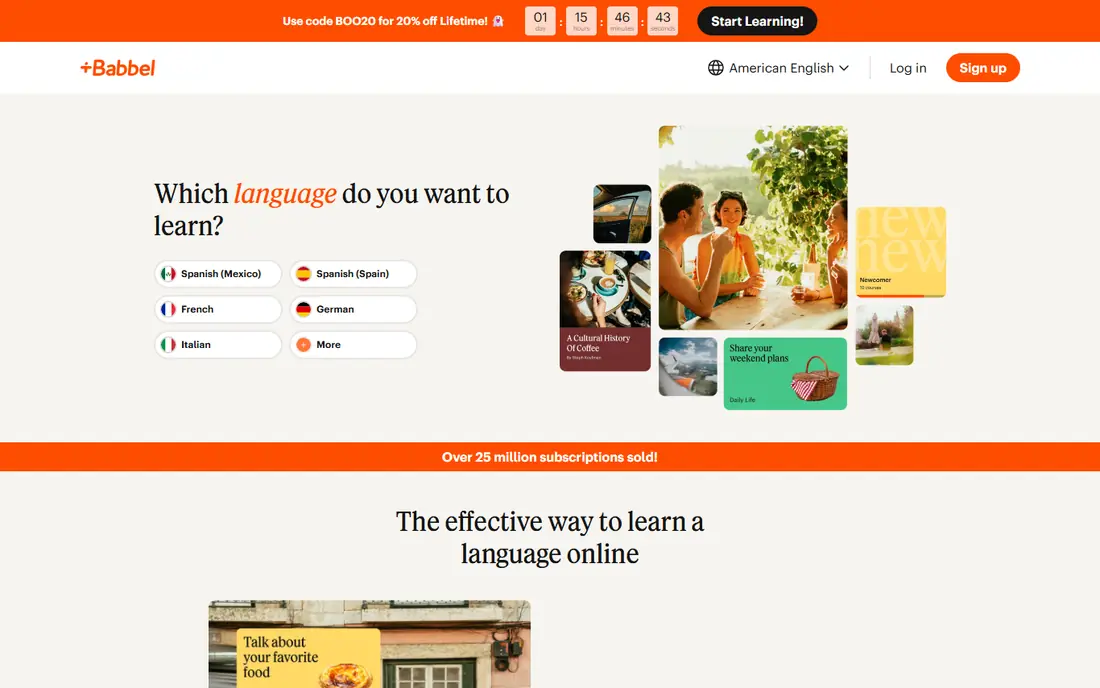
If that use case sounds familiar, Babbel is aimed at structured learners. Babbel offers structured German lessons with dialogues and grammar. Learners who want a clear path will find its lessons systematic. In practice, that means the product earns its place by doing one job well for that audience, rather than trying to cover every possible use case at once. We compared its official feature page, pricing and public reviews against the other options here, and its best-for label reflects where it looked strongest, not where its marketing claims are loudest.
On the other side of that strength, It needs a subscription, and gamified features are fewer than Duolingo. On price, the starting point listed above is not published clearly, so check the vendor site, and the free plan entry is No. If that combination fits your budget and your main use case, Babbel is a sensible shortlist choice. If the catch above is a deal breaker, move to another entry in this list whose strength matches your priority instead.
- Structured lessons
- Dialogues
- Grammar
- Subscription
- Fewer gamified features
Rosetta Stone
Ideal for: Immersive learners
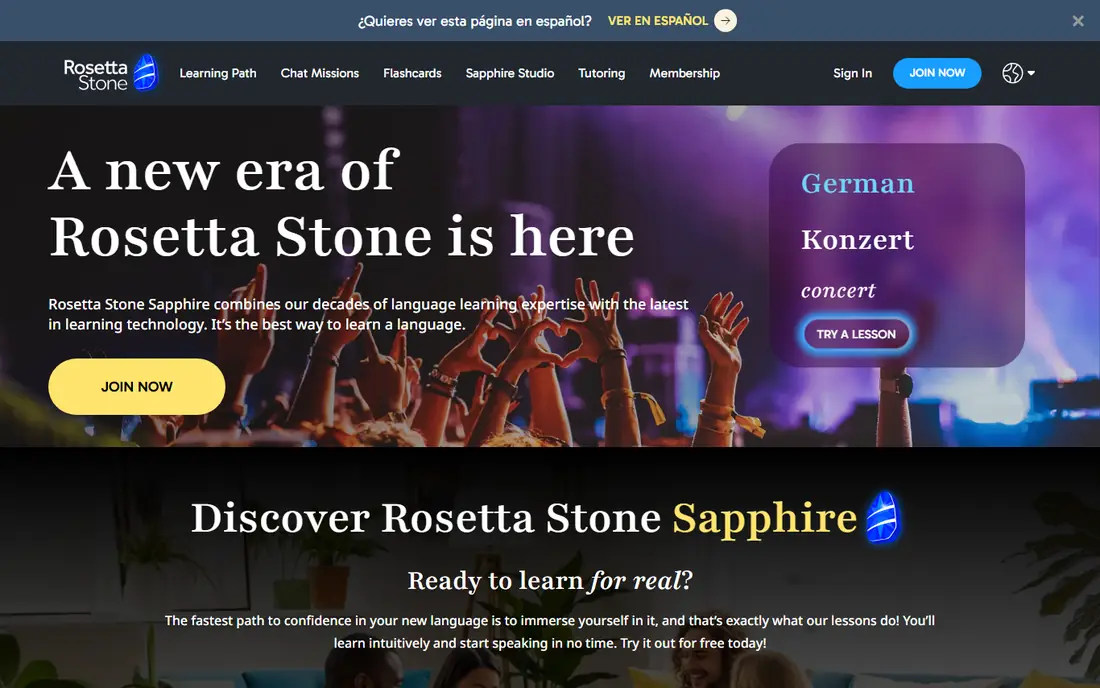
Among the options here, Rosetta Stone is aimed at immersive learners. Rosetta Stone teaches German immersively, without translation, with speech recognition. Immersive learners can build intuition for words and phrases. In practice, that means the product earns its place by doing one job well for that audience, rather than trying to cover every possible use case at once. We compared its official feature page, pricing and public reviews against the other options here, and its best-for label reflects where it looked strongest, not where its marketing claims are loudest.
Before you commit, weigh this part. Its price is higher, and grammar explanations are slower. On price, the starting point listed above is not published clearly, so check the vendor site, and the free plan entry is No. If that combination fits your budget and your main use case, Rosetta Stone is a sensible shortlist choice. If the catch above is a deal breaker, move to another entry in this list whose strength matches your priority instead.
- Immersive method
- Speech recognition
- No translation
- Price
- Slower for grammar explanations
Busuu
Ideal for: Speaking feedback
For a team or household weighing this choice, Busuu is aimed at learners wanting feedback. Busuu offers German courses with native speaker corrections on exercises. Learners get feedback on speaking and writing from the community. In practice, that means the product earns its place by doing one job well for that audience, rather than trying to cover every possible use case at once. We compared its official feature page, pricing and public reviews against the other options here, and its best-for label reflects where it looked strongest, not where its marketing claims are loudest.
The honest catch comes next. Premium is needed for full courses, and feedback quality varies. On price, the starting point listed above is free, and the free plan entry is Yes. If that combination fits your budget and your main use case, Busuu is a sensible shortlist choice. If the catch above is a deal breaker, move to another entry in this list whose strength matches your priority instead.
- Native speaker corrections
- Structured courses
- Offline
- Premium for full courses
- Community feedback varies
Memrise
Ideal for: Vocabulary learners
When the main need is the one above, Memrise is aimed at vocabulary learners. Memrise focuses on vocabulary and phrases with video from native speakers. Vocabulary learners can build useful German words quickly. In practice, that means the product earns its place by doing one job well for that audience, rather than trying to cover every possible use case at once. We compared its official feature page, pricing and public reviews against the other options here, and its best-for label reflects where it looked strongest, not where its marketing claims are loudest.
Pricing and limits deserve a second look. Grammar is lighter than Babbel, and Pro is needed for full features. On price, the starting point listed above is free, and the free plan entry is Yes. If that combination fits your budget and your main use case, Memrise is a sensible shortlist choice. If the catch above is a deal breaker, move to another entry in this list whose strength matches your priority instead.
- Vocabulary and phrases
- Video with native speakers
- Spaced repetition
- Grammar is lighter
- Pro for full features
Lingoda
Ideal for: Live classes
For readers who put this factor first, Lingoda is aimed at learners wanting live teaching. Lingoda offers live German classes with teachers and a structured curriculum. Learners who want live teaching and certificates will value it. In practice, that means the product earns its place by doing one job well for that audience, rather than trying to cover every possible use case at once. We compared its official feature page, pricing and public reviews against the other options here, and its best-for label reflects where it looked strongest, not where its marketing claims are loudest.
A smaller drawback can still matter. Its price is higher, and class times are fixed. On price, the starting point listed above is not published clearly, so check the vendor site, and the free plan entry is No. If that combination fits your budget and your main use case, Lingoda is a sensible shortlist choice. If the catch above is a deal breaker, move to another entry in this list whose strength matches your priority instead.
- Live teacher classes
- Structured curriculum
- Certificates
- Price
- Fixed class times
Pimsleur
Ideal for: Audio learners
In a crowded field, Pimsleur is aimed at audio learners. Pimsleur teaches German through audio-first lessons focused on speaking. Audio learners can practise while driving or walking. In practice, that means the product earns its place by doing one job well for that audience, rather than trying to cover every possible use case at once. We compared its official feature page, pricing and public reviews against the other options here, and its best-for label reflects where it looked strongest, not where its marketing claims are loudest.
What to check before paying is simple. Its price is higher, and reading and writing are lighter. On price, the starting point listed above is not published clearly, so check the vendor site, and the free plan entry is No. If that combination fits your budget and your main use case, Pimsleur is a sensible shortlist choice. If the catch above is a deal breaker, move to another entry in this list whose strength matches your priority instead.
- Audio-first lessons
- Speaking practice
- Hands-free
- Price
- Reading and writing are lighter
Deutsche Welle Learn German
Ideal for: Free structured learning
For a first purchase in this category, Deutsche Welle Learn German is aimed at budget learners. Deutsche Welle Learn German offers free structured courses, videos and exercises for all levels. Budget learners get quality German teaching without payment. In practice, that means the product earns its place by doing one job well for that audience, rather than trying to cover every possible use case at once. We compared its official feature page, pricing and public reviews against the other options here, and its best-for label reflects where it looked strongest, not where its marketing claims are loudest.
The limit to keep in mind is this. It has no gamified app, and speaking feedback is limited. On price, the starting point listed above is free, and the free plan entry is Yes. If that combination fits your budget and your main use case, Deutsche Welle Learn German is a sensible shortlist choice. If the catch above is a deal breaker, move to another entry in this list whose strength matches your priority instead.
- Free structured courses
- Videos
- All levels
- No app gamification
- Less speaking feedback
How we picked these
We compared official feature pages, pricing pages, app store listings, privacy policies and public reviews for each product, and we kept only products that are still available in October 2026 and that fit the topic closely. Where a vendor did not publish a clear starting price on its own site, we wrote See website rather than guessing. Prices can change, so check the vendor page linked in each product block before you buy.
Learning German without stalling after week two
Pick an app you will open daily, even for ten minutes, since consistency matters more than long sessions. Add speaking practice early, even if it feels awkward, since German pronunciation and cases need use, not just reading. Use the app for vocabulary and grammar, but add listening through podcasts or shows once you know basics. Finally, set a clear goal, such as travel, work or an exam, since the goal decides whether you need conversation, grammar or business German most.
Frequently asked questions
What is the best app to learn German?
Duolingo is best for beginners, Babbel suits structured learners, Busuu suits speaking feedback, and Lingoda suits live classes.
Can I learn German for free?
Yes, Duolingo and Deutsche Welle offer free German learning. Paid apps add structured lessons, speaking feedback and offline access.
Is Babbel better than Duolingo for German?
Babbel offers more structured grammar and dialogues, while Duolingo is more gamified and free. Serious learners often use Babbel for structure and Duolingo for daily habit.
How long does it take to learn German?
It depends on time, prior languages and goals. Daily practice for months builds basic conversation, while fluency takes longer and needs speaking practice.
What is the best app for German grammar?
Babbel and Lingoda cover grammar systematically, while Duolingo introduces grammar through exercises. A grammar book or tutor helps for complex cases.