Best Apps to Learn Japanese in 2026: 9 Apps Compared

- No single app covers everything: Japanese needs speaking practice, grammar and kanji, so most learners do best combining two apps.
- Duolingo lists every course as free, including Japanese, which makes it the easiest place to start before you pay for anything.
- WaniKani ($9 per month, $89 per year or $299 lifetime) and Bunpro ($5 per month, free forever tier) are the most focused tools for kanji and grammar.
- Pimsleur is the audio-first option for speaking, with single-language courses starting at $150 and a 30-day money-back guarantee.
- renshuu has an unlimited free version, while LingoDeer has a paid subscription starting at $14.99 per month on the App Store.
Quick comparison
| Product | Ideal for | Price from | Free version | |
|---|---|---|---|---|
 Duolingo | Starting free with short daily lessons | Free | Yes | Visit |
 LingoDeer | Structured beginner lessons with grammar notes | $14.99 per month | No | Visit |
 Pimsleur | Speaking and listening in the car or on a walk | $150 (one language) | Free lesson | Visit |
 WaniKani | Learning kanji and vocabulary with mnemonics | $9 per month | Free trial | Visit |
 Bunpro | Japanese grammar with spaced repetition | $5 per month | Yes | Visit |
 renshuu | A free, all-around study site and app | Free | Yes | Visit |
 Bunpo | Speaking practice plus JLPT grammar | See website | Yes | Visit |
 Memrise | Native-speaker videos and conversation practice | See website | Yes | Visit |
 Drops | Quick vocabulary games | See website | Yes | Visit |
The best apps to learn Japanese
Japanese has three writing systems and a very different grammar from English, so the right app depends on what you struggle with. The nine apps below split into general courses, kanji and grammar trainers, and speaking tools.
Duolingo
Ideal for: Starting free with short daily lessons
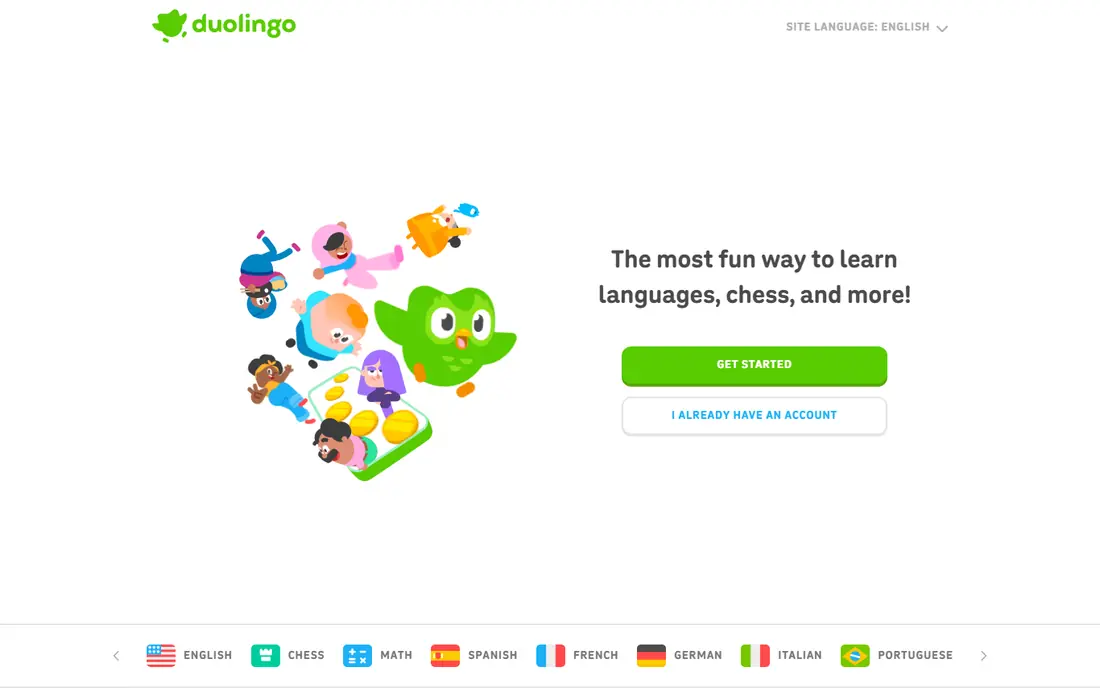
Duolingo is where most people begin because it costs nothing and takes five minutes a day. The App Store listing says every course is free, names Japanese among them, and describes bite-sized lessons that practice speaking, reading, listening and writing.
Its optional Super Duolingo subscription removes ads and adds perks such as unlimited energy and monthly streak repair, with a 14-day free trial offered. We could not read a price, so it is marked See website.
The iOS app has a 4.7 rating from more than 5.5 million ratings. The honest limit is depth: if you want to understand why a particle is used, or learn kanji beyond the basics, add a grammar or kanji tool alongside it.
- Japanese course is free
- Short game-like lessons
- Practice in speaking, reading, listening and writing
- Super Duolingo price not stated on pages we could read
- Lighter on grammar explanation than dedicated tools
LingoDeer
Ideal for: Structured beginner lessons with grammar notes

LingoDeer was built with Asian languages in mind, and Japanese is one of its main courses. The App Store listing says lessons start from the alphabet and aim for a conversational level, with grammar tips, studio-recorded audio from native speakers, flashcards, quizzes and offline learning.
It lists a Character Drill for writing Japanese kanji and Chinese characters, and a Fluent feature for real-life conversation practice that is available for Japanese among a few other courses.
The listing says you need a subscription for full access, starting at $14.99 per month. The site shows a promotion on a 3-year plan, but did not list regular prices on the page we read, so confirm on the website. We could not confirm what, if anything, is free beyond a trial.
- Grammar tips and notes inside lessons
- Character Drill for kanji writing practice
- Offline lessons and native speaker audio
- Subscription needed for full access
- Price shown is the App Store starting price
Pimsleur
Ideal for: Speaking and listening in the car or on a walk

Pimsleur teaches through listening and speaking rather than flashcards. Its site describes about 30-minute lessons built on the Pimsleur Method and spaced repetition, with reading practice, flashcards, a speaking roleplay feature, pronunciation feedback called Voice Coach, and daily challenges.
The site says single-language courses start at $150, sold as All Access or a single-language Premium subscription, and that all purchases come with a 30-day money-back guarantee. The App Store listing offers a complimentary first lesson in 51 languages, and says some features depend on the language.
It suits learners who commute or want to improve pronunciation. It will not teach you to read, so pair it with a kana and kanji app. The iOS app has a 4.7 rating from about 30,000 ratings.
- About 30 minutes of audio per lesson
- Offline and hands-free modes
- 30-day money-back guarantee
- Not a reading or kanji course
- Single-language courses start at $150
WaniKani
Ideal for: Learning kanji and vocabulary with mnemonics
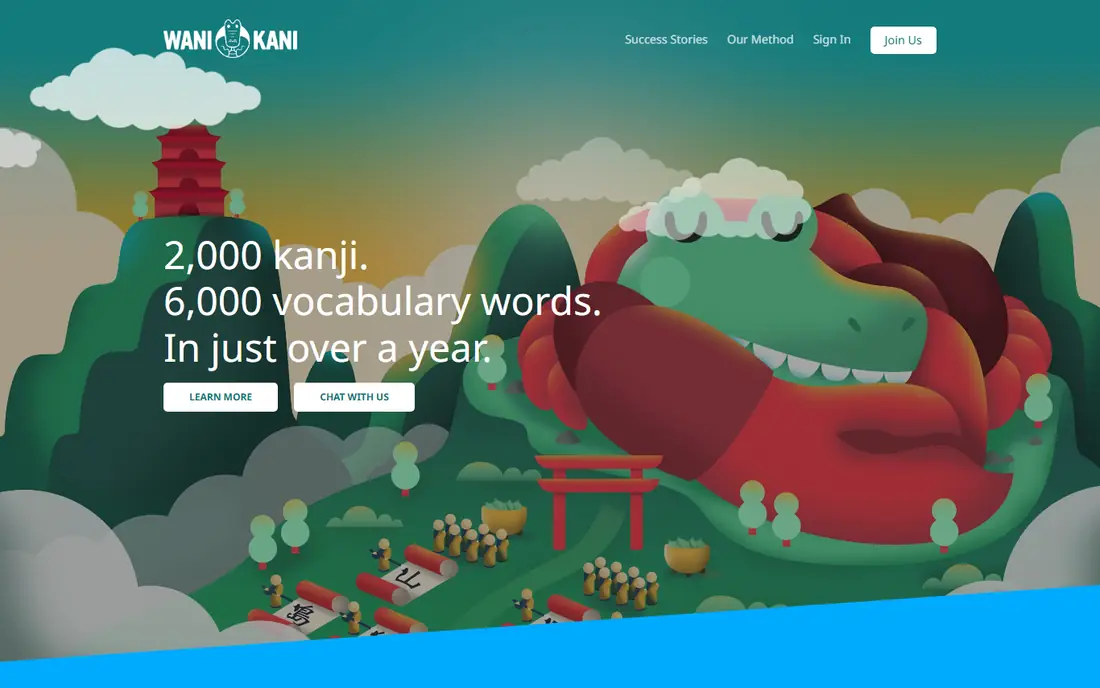
WaniKani is a specialist: it teaches the characters. The homepage says it covers radicals, over 2,000 hand-picked kanji and over 6,000 common vocabulary words, taught through mnemonics with spaced repetition so reviews arrive at the right time.
According to WaniKani's help page, premium costs $9 per month, $89 per year or $299 one time, in US dollars. The homepage invites you to try it free, and the help page says you can try the free levels before upgrading. We could not confirm how many levels are free from official pages.
Learners often pair WaniKani with a grammar tool. If reading is your main goal, this is the most focused option here.
- Teaches radicals, more than 2,000 kanji and over 6,000 words
- Mnemonics and spaced repetition
- Lifetime option
- Focused on kanji only, not grammar or speaking
- Free levels are limited
Bunpro
Ideal for: Japanese grammar with spaced repetition

Bunpro is a grammar trainer. The App Store listing describes more than 900 grammar points with hand-crafted explanations, over 100,000 example sentences with audio, vocabulary decks drawn from anime, manga and textbooks, 25 JLPT practice tests with offline support and smart spaced repetition reviews.
The pricing page lists Free at $0 with limited access, such as viewing grammar and vocabulary pages, Premium at $5 per month with SRS reviews and decks, and Lifetime at $150 one time. New accounts get a 30-day free trial of Premium with no credit card, and the account then drops to Free.
It is low priced for what it offers. The catch is that it assumes you want to study grammar deliberately, so beginners who need alphabet basics may want a general course first.
- Free forever tier
- 30-day Premium trial with no credit card
- Over 900 grammar points and 100,000 example sentences
- Free tier is limited to browsing
- Focused on grammar and vocabulary reviews
renshuu
Ideal for: A free, all-around study site and app
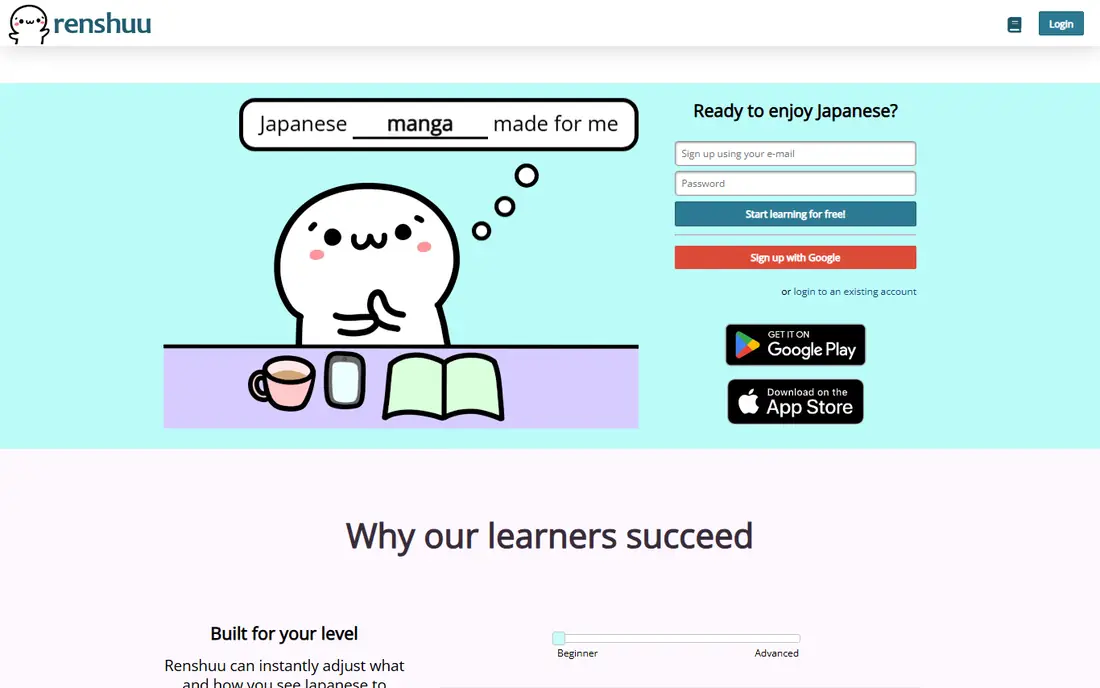
renshuu covers more ground than most single-purpose apps. Its site describes a Japanese-English dictionary plus vocabulary, kanji and grammar study, with quizzes that include multiple choice, typed answers and listening exercises, and pre-made lessons for textbooks such as Genki, Tobira and Minna no Nihongo.
The App Store listing claims the free version is unlimited with no timer before you have to pay. It also lists over 12,000 kanji, 160,000 example sentences and more than 800 grammar expressions. The company describes itself as two people who answer questions directly.
We could not find a paid plan price. The app shows a 4.9 rating, though from about 1,400 ratings. It is a good choice if you want one free tool to explore before spending anything.
- Free version is unlimited, per its App Store listing
- Paths for textbooks, JLPT and Kanji Kentei
- Ad-free
- Paid plan price not found
- Smaller company and rating count
Bunpo
Ideal for: Speaking practice plus JLPT grammar
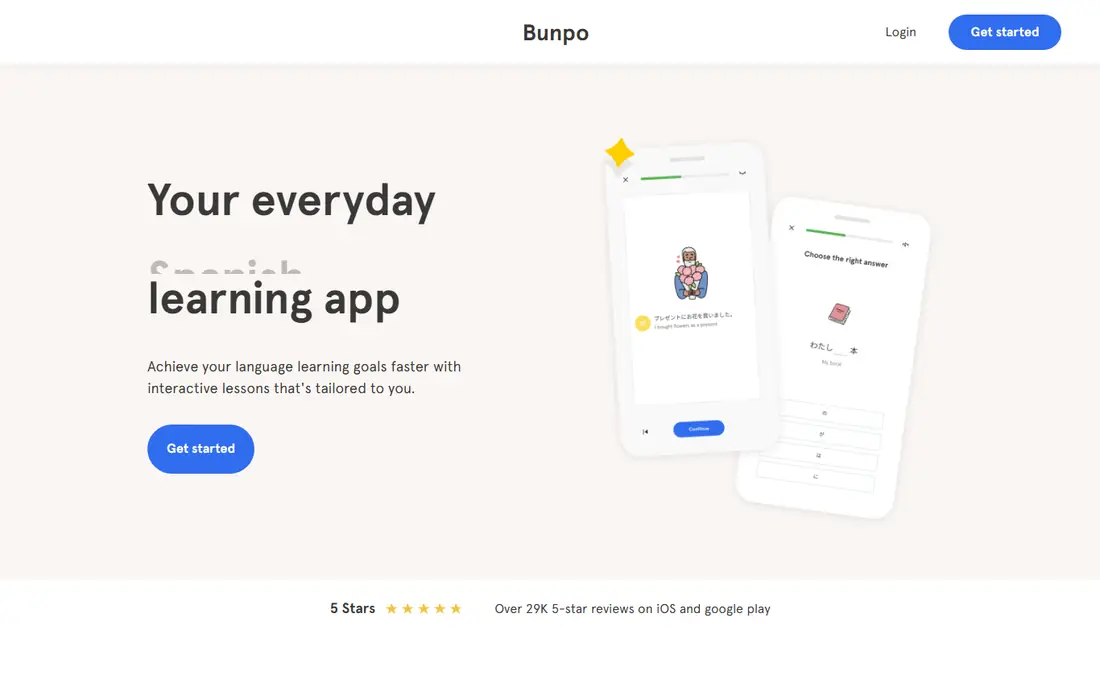
Bunpo covers several languages, and its Japanese course starts at hiragana and katakana and moves through grammar for every JLPT level. The App Store listing says you speak from day one using speech recognition, with plain-English grammar explanations and a personalized review plan.
The site says you can try starter lessons for free, and that a Bunpo Platinum plan includes all lessons in all 10 languages and every feature, including a video call option. It shows a prices page but we could not read amounts, so we marked the price See website.
The company claims over 5 million learners, which is its own figure. The iOS app has a 4.9 rating from more than 18,000 ratings.
- Speech recognition from the first lesson
- Grammar organized by JLPT level N5 to N1
- Smart review with spaced repetition
- Free access limited to starter lessons
- Price not shown on pages we read
Memrise
Ideal for: Native-speaker videos and conversation practice

Memrise is built around videos of real people speaking. The App Store listing says it offers Japanese among many languages, with lessons in vocabulary, listening and speaking, hundreds of real-life scenarios and role-play with AI Buddies.
The listing compares plans clearly. Pro includes all vocabulary lessons and videos and unlimited speaking practice, and removes ads, while the free plan has limited vocabulary lessons, limited videos and conversations, and ads. We could not find prices on pages we could read.
The iOS app has a 4.8 rating from more than 217,000 ratings. Memrise is better for listening and phrases than for systematic kanji or grammar study.
- Real native-speaker videos
- AI conversation practice with AI Buddies
- Japanese course available
- Free plan limits lessons and shows ads
- Pro price not found
Drops
Ideal for: Quick vocabulary games

Drops turns vocabulary practice into short, visual games. The App Store listing says Japanese is one of its languages, with custom illustrations for each word, a curated vocabulary list of more than 3,000 words and phrases, and practice reading characters in scripts such as Japanese.
Premium comes with a 7-day free trial, and the listing says to open the app to see membership options. Because the price is not listed, we marked it See website.
The App Store rating is 4.7 from more than 71,000 ratings. Drops works well as a daily warm-up for vocabulary, not as a complete course.
- Short game-like sessions
- Includes reading characters for scripts like Japanese
- 7-day Premium trial
- Vocabulary-focused, little grammar
- Premium price not shown
How we picked these
We compared each app's official site, pricing page and App Store listing, and we did not claim hands-on testing. We looked at what each app actually teaches (kana, kanji, grammar, speaking or vocabulary), which prices and free plans are stated, and which limits the company discloses.
We left out apps we could not verify as available for Japanese, and we used See website where a price was not visible.
How to choose a Japanese app
Japanese is easier to learn in layers, so match the app to your stage.
Start with sounds and kana
Learn hiragana and katakana first. Duolingo, LingoDeer, Bunpo and Drops all begin with the basics, and Pimsleur starts from speaking.
Add a specialist tool
After a few weeks, add a tool for what you are missing. WaniKani and renshuu are strong for kanji, Bunpro for grammar, and Pimsleur or Memrise for listening and speaking.
Watch the subscription math
Many of these prices are lower than a class, but they add up if you subscribe to several. Use free tiers and trials first: Bunpro offers 30 days, Drops 7 days and Duolingo's Super has a 14-day trial.
Frequently asked questions
What is the best app to learn Japanese?
There is no single best app. For most beginners, we would start with Duolingo, then add Bunpro for grammar or WaniKani for kanji once you have the basics.
What is the best free app to learn Japanese?
Duolingo lists its courses as free, and renshuu has an unlimited free version. Bunpro also has a free forever tier, but with limited access.
Which app is best for kanji?
WaniKani is built specifically for kanji, covering more than 2,000 characters and over 6,000 words with mnemonics. renshuu also lists over 12,000 kanji in its free version.
Can an app teach me to speak Japanese?
Apps help, but they cannot replace conversation with real people. Pimsleur focuses on speaking, Bunpo uses speech recognition, and Memrise offers native-speaker videos and AI practice.
Is Duolingo enough to learn Japanese?
It is a good start for habit and basics, but dedicated tools go deeper on grammar and kanji. Many learners use it alongside a second app.
Sources
- https://apps.apple.com/us/app/id570060128
- https://www.lingodeer.com/
- https://apps.apple.com/us/app/id1261193709
- https://www.pimsleur.com/pricing
- https://apps.apple.com/us/app/id1405735469
- https://www.wanikani.com/
- https://knowledge.wanikani.com/getting-started/account-and-membership/payment-and-billing/wanikani-premium-membership/
- https://bunpro.jp/pricing
- https://apps.apple.com/us/app/id1615337616
- https://www.renshuu.org/
- https://apps.apple.com/us/app/id1542730063
- https://www.bunpo.app/
- https://apps.apple.com/us/app/id1279720052
- https://apps.apple.com/us/app/id635966718
- https://apps.apple.com/us/app/id939540371