Best Apps to Sell Clothes in 2026: 8 Apps Compared

- Poshmark and Depop suit fashion resellers who want a social, buyer-led marketplace, while eBay suits broader resale including vintage and designer goods.
- ThredUp and Vestiaire Collective suit sellers who want a managed service, but commissions and control differ sharply.
- Fees range from a flat 20 percent on Poshmark to per-sale fees on eBay and Depop, so price with fees in mind.
- Good photos, honest condition notes and fair shipping are what actually move clothes, whatever app you choose.
- Our pick for most casual sellers is Poshmark, with eBay as the pick for vintage and higher-value items.
Quick comparison
| Product | Ideal for | Price from | Free version | |
|---|---|---|---|---|
 Poshmark | Social fashion resale | Free | Yes | Visit |
 Depop | Trendy and vintage fashion | Free | Yes | Visit |
 eBay | Broad resale and vintage | Free | Yes | Visit |
 Mercari | Simple general resale | Free | Yes | Visit |
 ThredUp | Managed clothing resale | Free | Yes | Visit |
 Vestiaire Collective | Designer and luxury resale | Free | Yes | Visit |
 Vinted | Low-fee secondhand fashion | Free | Yes | Visit |
 Etsy | Handmade and vintage clothing | Free | Yes | Visit |
The best apps to sell clothes
Selling clothes online works best when the app matches what you sell: fast fashion, vintage, designer, or everyday secondhand. The apps below differ in fees, buyer audience and how much work the seller does. We compared official fee pages, feature lists and public reviews.
Poshmark
Ideal for: Social fashion resale
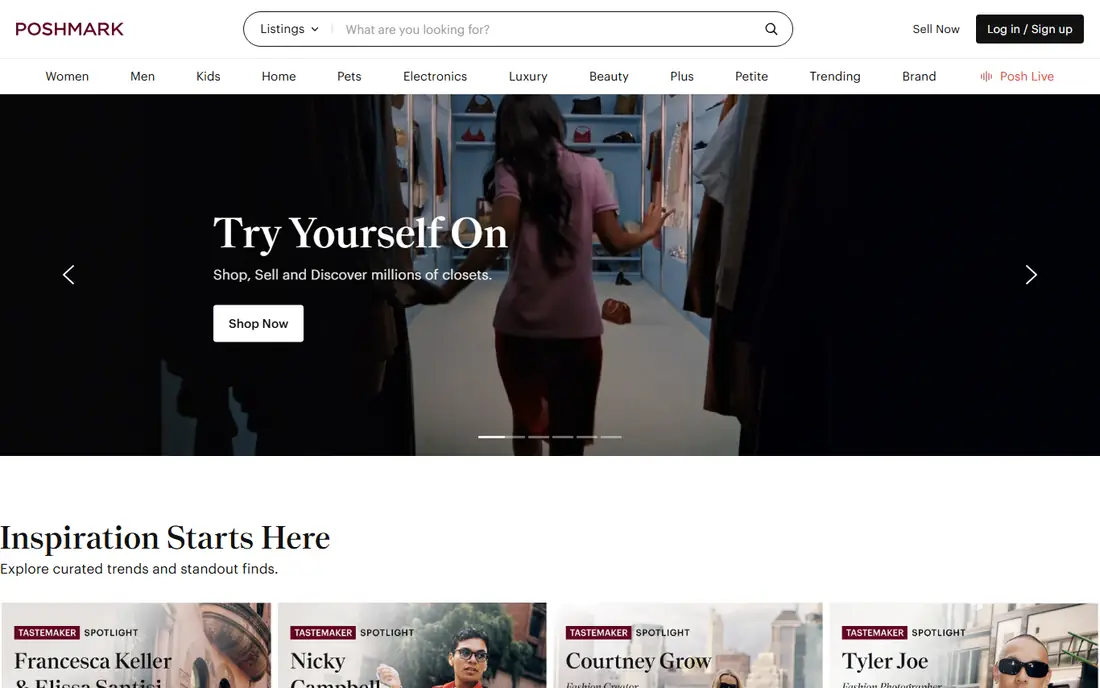
Poshmark is our pick for most casual fashion sellers because its audience is already shopping for clothes, and its social features help listings get seen. Sharing listings, following other sellers and joining themed parties can lift a closet's visibility without paid ads. Seller protection and prepaid shipping labels simplify the sale once an item moves.
The fee is the catch. Poshmark takes 20 percent of sales of $15 or more, and a flat $2.95 on sales under $15, which is high compared with Vinted or eBay. Price items with that commission in mind, and focus on mid-range and higher items where the fee hurts less.
- Large fashion buyer audience
- Social sharing drives discovery
- Seller protection on shipped orders
- 20 percent commission on sales of $15 or more
- Social sharing takes time
Depop
Ideal for: Trendy and vintage fashion
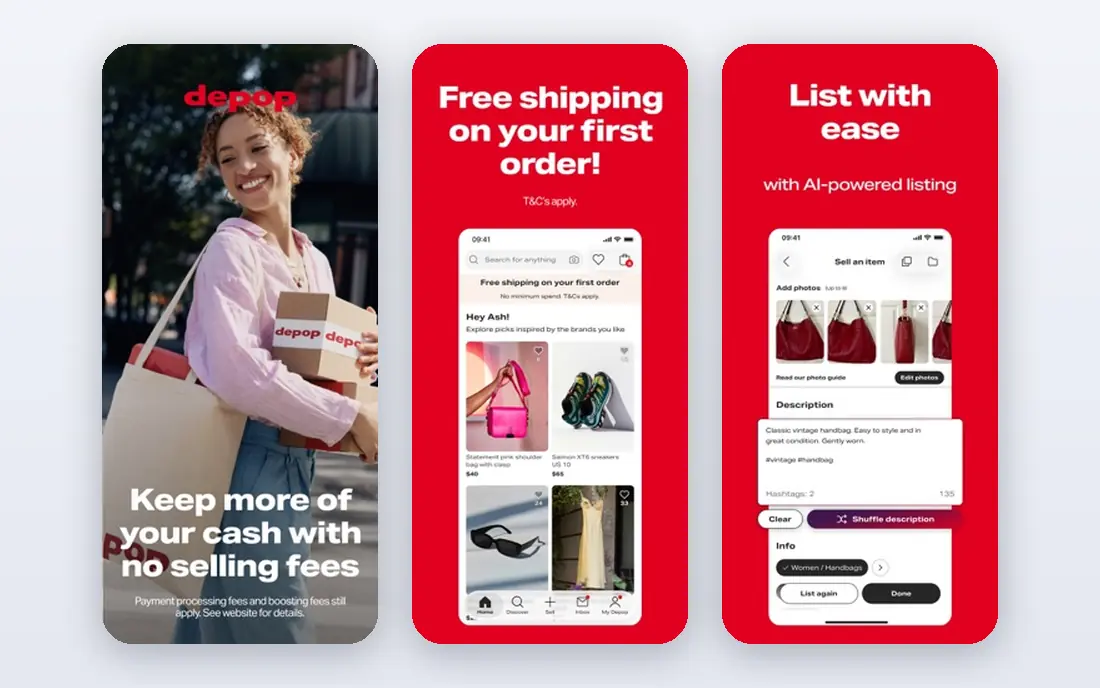
Depop suits sellers with trendy, vintage or streetwear pieces and a good eye for photos. Its feed-led design rewards strong styling and regular posting, and its buyer audience skews younger and trend-aware. A well-curated shop can build a following that buys repeatedly.
Fees include a selling fee plus payment processing, so check the current fee page before pricing. Demand is also trend-driven: a style that sells fast one month may slow the next. Sellers who follow trends and refresh listings often do best here.
- Young, trend-led buyer audience
- Strong for vintage and streetwear
- Easy listing
- Fees plus payment processing
- Trend-driven demand can be uneven
eBay
Ideal for: Broad resale and vintage

eBay is our pick for vintage, rare and higher-value clothing, plus sellers who want the largest possible audience. Auctions let the market set the price for rare pieces, fixed-price listings suit everyday resale, and the buyer pool is far larger than any fashion-only app. Designer, band tees and true vintage often fetch more here than on social marketplaces.
Fees include a final value fee plus a per-order fee in most categories, and seller policies on returns and condition descriptions matter for account standing. Describe condition honestly, photograph flaws, and price with fees included. For a broad or high-value closet, eBay is hard to beat.
- Largest resale audience
- Auctions for rare items
- Strong for vintage and designer
- Final value fees
- Returns and seller policies need care
Mercari
Ideal for: Simple general resale
Mercari suits a seller who wants to clear a closet quickly without learning a social marketplace. Listing takes minutes, categories cover far more than clothes, and the checkout flow is simple for buyers. A household clearing clothes, shoes and accessories together will find Mercari convenient.
The fee model changed over time, with service fees shifting between buyers and sellers, so check the current fee page before listing. Fashion discovery is also weaker than Poshmark or Depop, since Mercari is a general marketplace rather than a fashion community.
- Very simple listing
- Broad categories beyond clothes
- Seller-friendly flow
- Service fee model changed over time, so confirm current fees
- Less fashion discovery than Poshmark
ThredUp
Ideal for: Managed clothing resale
ThredUp is the hands-off option. Order a clean-out bag, send your clothes, and ThredUp photographs, lists and ships accepted items. For a busy seller with a large closet to clear, that convenience is the whole appeal, and there is no per-item listing work.
Payouts are the trade-off. Many everyday items earn little, some items are not accepted, and the seller has less control over pricing than on Poshmark or eBay. Use ThredUp to clear volume with minimal effort, and sell higher-value pieces yourself elsewhere.
- Send a bag and ThredUp handles listing and shipping
- No seller effort per item
- Low payouts on many items
- Seller controls price less
- Acceptance varies by brand and condition
Vestiaire Collective
Ideal for: Designer and luxury resale
Vestiaire Collective is the pick for designer and luxury clothing, bags and shoes. Items are authenticated, which builds buyer trust for high-value pieces, and the global audience includes buyers willing to pay for verified designer goods. A authenticated designer bag will usually sell better here than on a general marketplace.
Commissions and authentication add cost and processing time, and everyday fast fashion does not belong here. For luxury resale, that trade is worth it. For a closet of everyday brands, Poshmark or Vinted will be faster and cheaper.
- Authentication for designer items
- Global luxury buyer audience
- Strong for high-value pieces
- Commission and authentication steps add cost and time
- Not for everyday clothes
Vinted
Ideal for: Low-fee secondhand fashion
Vinted appeals to sellers who dislike high commissions, since sellers generally do not pay a commission in many markets and buyers pay a protection fee instead. Listing is simple, and the app is strong for everyday secondhand fashion. For a seller clearing everyday clothes, keeping the full sale price is a real advantage.
The buyer protection fee can put off some buyers, and US fashion discovery is still smaller than Poshmark. Check the current fee structure for your country, since Vinted fees vary by market. For low-fee everyday resale, it is worth trying alongside Poshmark.
- No seller commission in many markets
- Simple listing
- Strong in Europe and growing in the US
- Buyer protection fee can deter some buyers
- Less US fashion discovery than Poshmark
Etsy
Ideal for: Handmade and vintage clothing
Etsy suits sellers of true vintage clothing, defined as 20 years or older, and handmade garments. Buyers search Etsy specifically for vintage and unique pieces, and a well-described vintage shop can build repeat buyers. Handmade sellers also fit naturally here.
Everyday used fast fashion does not belong on Etsy, and fees include a listing fee, transaction fee and processing. For vintage and handmade clothing, though, Etsy offers a focused buyer audience that general marketplaces do not match.
- Strong for true vintage over 20 years old
- Handmade clothing fits well
- Search-driven buyers
- Listing and transaction fees
- Not suited to everyday used fast fashion
How we picked these
We compared official fee pages, feature lists and public reviews for clothing resale apps available in the US in October 2026. We favored apps with real buyer traffic, seller protection, and a working official homepage. We left out apps we could not verify as live or whose fees we could not confirm.
What to check before you list
Fees decide your real return, so calculate them before pricing. A $30 sale keeps far less on Poshmark at 20 percent than on Vinted with no seller commission, but Poshmark may sell faster, which matters if speed beats margin. Price for the app you are on, not for a generic sale price.
Photos and condition sell clothes
Photograph each item in good light, on a person or hanger where possible, and show flaws honestly. Write the brand, size, measurements, fabric and condition in plain words, and state whether the item comes from a smoke-free or pet-free home if relevant. Honest listings get fewer returns and better reviews, which lift future sales.
Try the free tier for a full week before paying
The free tier or trial for most apps in this list is enough to judge whether the app fits your routine, but only if you use it for a full week rather than an afternoon. Set it up properly on day one, including notifications, reminders, and any import from your current app, so the trial reflects real use instead of a half-finished setup. Use it at the same times you would normally use such an app, and note what annoys you by day three, since small annoyances grow into reasons to quit. Check whether your data exports cleanly, whether the app works offline when you need it, and whether support answers a real question promptly. If the app still earns its place after a week of honest use, the paid plan is an easy decision, and if it does not, you have saved a subscription you would have cancelled later.
Frequently asked questions
What is the best app to sell clothes?
Poshmark is our pick for most casual fashion sellers, thanks to its fashion audience and social discovery. eBay suits vintage and higher-value items, Depop suits trendy and streetwear, and Vinted suits low-fee everyday resale.
How much do clothing resale apps charge?
Poshmark charges 20 percent on sales of $15 or more, eBay charges a final value fee plus a per-order fee, and Depop charges a selling fee plus processing. Vinted generally charges sellers no commission in many markets, with buyers paying a protection fee instead.
Is it better to sell clothes on Poshmark or eBay?
Poshmark suits fashion sellers who benefit from social sharing and a fashion-only audience. eBay suits vintage, rare and designer items where a larger audience or auction format earns more, and where condition and brand details matter most.
How do I sell clothes fast online?
Price fairly for the app's fees, photograph well, write honest condition notes, and share or refresh listings regularly. Trending brands and good photos move faster than a large, poorly described closet.
Should I use ThredUp or sell items myself?
Use ThredUp to clear a large closet with minimal effort, accepting lower payouts. Sell higher-value, designer or vintage pieces yourself on Poshmark, eBay or Vestiaire Collective, where you control pricing and keep more of the sale.