Best Apps for Daily Planning in 2026: 8 Apps Compared

- Prices and free plans vary widely, so check the current plan page before you pay.
- The best choice depends on how much you will actually use each week, not on the longest feature list.
- Start with a free plan or trial where one exists, then upgrade only when you hit a real limit.
- Read the privacy and cancellation terms, especially for subscriptions that renew automatically.
Quick comparison
| Product | Ideal for | Price from | Free version | |
|---|---|---|---|---|
 Todoist | Daily task lists with priorities | See website | Yes | Visit |
 TickTick | Lists, habits and calendar in one app | See website | Yes | Visit |
 Microsoft To Do | Free lists for Microsoft users | Free | Yes | Visit |
 Any.do | Simple lists with reminders and calendar | See website | Yes | Visit |
 Things 3 | Apple only daily planning | See website | No | Visit |
 Google Tasks | Simple lists inside Google apps | Free | Yes | Visit |
 Sunsama | Guided daily planning with calendar | See website | Free trial | Visit |
 Notion | Flexible planning pages and databases | See website | Yes | Visit |
The best apps for daily planning
We compared official feature pages, pricing pages, app store listings, privacy policies and public reviews to build this list. Our pick for most people is the option that gives the clearest value for its price, but the right choice for you depends on your budget, your devices and how often you will use it.
Todoist
Ideal for: Daily task lists with priorities
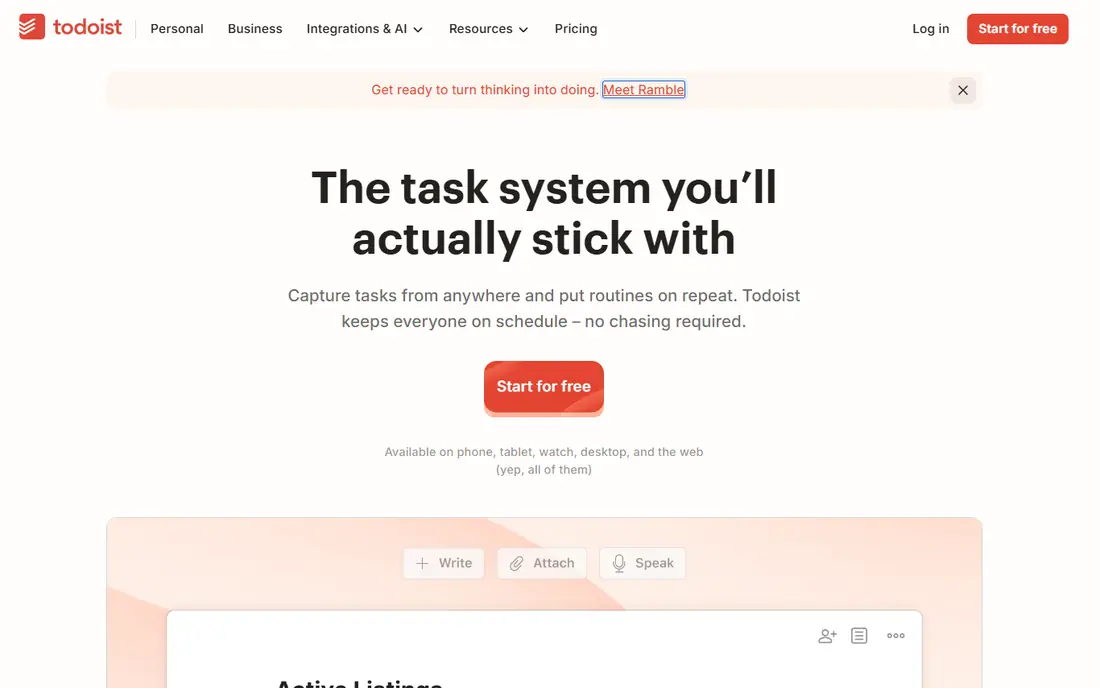
Todoist fits daily task lists with priorities. Its simple list system suits people who plan days around clear tasks. That focus shows in day to day use, where the main tools are easy to find and the extras do not get in the way. The catch is worth knowing before you commit. Calendar heavy planners may want a tool with time blocking. Check the current price, the renewal terms and what is included on the plan you actually want, since entry plans often leave out the features shown in marketing. If that trade off still works for your routine, this is an easy option to recommend.
- Clean lists
- Priorities
- Recurring tasks
- Free plan limits features
- No built in calendar planning
TickTick
Ideal for: Lists, habits and calendar in one app

For lists, habits and calendar in one app, TickTick is a strong place to start. Users who want habits and tasks together get good value. It is a practical choice when you want results without a long setup process. The catch is worth knowing before you commit. If you only need a list, it may feel like too much. Check the current price, the renewal terms and what is included on the plan you actually want, since entry plans often leave out the features shown in marketing. If that trade off still works for your routine, this is an easy option to recommend.
- Tasks, habits and calendar
- Pomodoro timer
- Reminders
- Interface can feel busy
- Some features need Premium
Microsoft To Do
Ideal for: Free lists for Microsoft users

If free lists for microsoft users is your main need, Microsoft To Do deserves a close look. Microsoft users get a free, reliable daily list without a new subscription. The design keeps the core job front and centre. The catch is worth knowing before you commit. Power users may miss advanced filters and views. Check the current price, the renewal terms and what is included on the plan you actually want, since entry plans often leave out the features shown in marketing. If that trade off still works for your routine, this is an easy option to recommend.
- Free
- My Day planning
- Microsoft integration
- Fewer power features
- Limited calendar planning
Any.do
Ideal for: Simple lists with reminders and calendar
Any.do fits simple lists with reminders and calendar. Its clean design suits people who want a list and reminders, nothing more. That focus shows in day to day use, where the main tools are easy to find and the extras do not get in the way. The catch is worth knowing before you commit. Heavy planners may need stronger project features. Check the current price, the renewal terms and what is included on the plan you actually want, since entry plans often leave out the features shown in marketing. If that trade off still works for your routine, this is an easy option to recommend.
- Clean design
- Reminders
- Calendar view
- Premium needed for full features
- Task limits on free
Things 3
Ideal for: Apple only daily planning
For apple only daily planning, Things 3 is a strong place to start. Apple users get a polished Today view that makes daily planning pleasant. It is a practical choice when you want results without a long setup process. The catch is worth knowing before you commit. Android and Windows users cannot use it at all. Check the current price, the renewal terms and what is included on the plan you actually want, since entry plans often leave out the features shown in marketing. If that trade off still works for your routine, this is an easy option to recommend.
- Beautiful design
- Today view
- Projects and areas
- Apple only
- One time purchase per device
Google Tasks
Ideal for: Simple lists inside Google apps
If simple lists inside google apps is your main need, Google Tasks deserves a close look. Google users get a free list that sits beside Calendar and Gmail. The design keeps the core job front and centre. The catch is worth knowing before you commit. Anyone needing priorities or projects should pick a fuller app. Check the current price, the renewal terms and what is included on the plan you actually want, since entry plans often leave out the features shown in marketing. If that trade off still works for your routine, this is an easy option to recommend.
- Free
- Google Calendar integration
- Simple lists
- Very basic
- No priorities or rich features
Sunsama
Ideal for: Guided daily planning with calendar
Sunsama fits guided daily planning with calendar. Its guided plan helps users build a realistic day, not just a long list. That focus shows in day to day use, where the main tools are easy to find and the extras do not get in the way. The catch is worth knowing before you commit. The price is hard to justify for simple list needs. Check the current price, the renewal terms and what is included on the plan you actually want, since entry plans often leave out the features shown in marketing. If that trade off still works for your routine, this is an easy option to recommend.
- Daily planning ritual
- Calendar sync
- Task import
- Higher price
- No free plan
Notion
Ideal for: Flexible planning pages and databases
For flexible planning pages and databases, Notion is a strong place to start. Users who already plan in Notion can build a daily system to fit their work. It is a practical choice when you want results without a long setup process. The catch is worth knowing before you commit. If you want a ready made daily planner, setup time may put you off. Check the current price, the renewal terms and what is included on the plan you actually want, since entry plans often leave out the features shown in marketing. If that trade off still works for your routine, this is an easy option to recommend.
- Flexible templates
- Databases
- Docs and tasks together
- Needs setup
- Daily planning needs a template
How we picked these
We started with the products that appear most often in this category, then kept only the ones that exist and work today, with a clear official homepage and a plan structure we could describe honestly. We compared official feature pages, pricing pages, app store listings, privacy policies and public reviews, and we left out products whose prices or homepages we could not verify. We did not claim hands on testing that did not happen, and we favoured products with clear terms over products that hide limits in fine print. We also weighed fit over fame. A well known name can be the wrong pick if its plan is built for a different kind of user, while a smaller option can be better when it matches your daily routine. That is why each write up names who the product suits, one concrete strength and one honest weakness, so you can judge the trade off for yourself.
Plan a day you can actually finish
Limit the day to three priorities
A long list creates guilt, not progress. Pick three priorities, then add smaller tasks only if time remains.
Time block the hard task first
Put the hardest task on the calendar before email and meetings fill the day. A task without a time slot often slips.
Review at the end of the day
Move unfinished tasks deliberately, not by default. That review keeps tomorrow realistic instead of overloaded. Before you decide, shortlist two options and test them side by side for a few days of normal use. Note what slows you down, what costs extra, and what you would miss if you switched. That short test usually reveals the right choice faster than reading another ten reviews, because it is based on your routine, your devices and your budget rather than on a generic ranking. Also check support and cancellation before you pay for a year in advance. A clear help centre, a reachable support team and a simple cancel button are worth more than a small discount, because they decide how painful it is to fix a billing problem or leave later. If support is hard to reach during a trial, treat that as a warning sign, not as a minor detail, and choose the option with clearer terms even if its headline price is slightly higher.
Frequently asked questions
What is the best app for daily planning?
Todoist suits simple lists, TickTick suits lists plus habits, and Sunsama suits guided calendar planning. The best pick depends on how you plan.
What is the best checklist app?
Microsoft To Do and Google Tasks suit simple free checklists, while Todoist and TickTick suit richer lists with priorities and reminders.
What is the best to do list software?
For most people, Todoist or TickTick offer the best mix of simplicity and power. Apple users should also consider Things 3.
Are there free daily planning apps?
Yes, Microsoft To Do, Google Tasks and Todoist offer free plans. Paid plans add reminders, filters and calendar features.
How do I stick to a daily plan?
Keep the list short, time block priorities, and review at day end. A plan that fits your real schedule beats a perfect plan you ignore.