Best Apps for Mental Health Free in 2026: 10 Apps Compared

- 1
 MindShift CBTAnxiety, using CBT toolsVisit
- 2
 Insight TimerThe largest free meditation libraryVisit
- 3
 MeditoMeditation with no ads or paywallsVisit
- 4
 Healthy Minds ProgramLearning skills for stress and focusVisit
- 5
 How We FeelNaming and tracking emotionsVisit
- Five apps on this list are fully free with no paid tier we could find: Medito, Healthy Minds Program, How We Feel, MindShift CBT and the VA's PTSD Coach.
- MindShift CBT is the best free app for anxiety, with real CBT tools such as thought records and a fear ladder, and published peer-reviewed evidence, according to its site.
- Insight Timer has the biggest free meditation library, with thousands of free guided practices; Premium is optional at $59.99 per year.
- Wysa and 7 Cups offer free chat support, but neither replaces a therapist or crisis care.
- These apps are self-help tools, not treatment. If you are in crisis in the US, call or text 988.
Quick comparison
| Product | Ideal for | Price from | Free version | |
|---|---|---|---|---|
| MindShift CBT | Anxiety, using CBT tools | Free | Yes | Visit |
| Insight Timer | The largest free meditation library | Free | Yes | Visit |
| Medito | Meditation with no ads or paywalls | Free | Yes | Visit |
| Healthy Minds Program | Learning skills for stress and focus | Free | Yes | Visit |
| How We Feel | Naming and tracking emotions | Free | Yes | Visit |
 Finch | Gentle daily self-care habits | Free | Yes | Visit |
 Daylio | Private mood and activity tracking | Free | Yes | Visit |
 Wysa | Talking through feelings with an AI chatbot | Free | Yes | Visit |
 7 Cups | Free chat with a volunteer listener | Free | Yes | Visit |
 PTSD Coach | Managing trauma and PTSD symptoms | Free | Yes | Visit |
The best free mental health apps
Important: this is general information, not medical advice. These apps can help with everyday stress, anxiety and low mood, but they are not a substitute for a doctor or therapist. If you are thinking about harming yourself or are in danger, call or text 988 (the Suicide and Crisis Lifeline in the US) or call 911.
MindShift CBT
Ideal for: Anxiety, using CBT tools
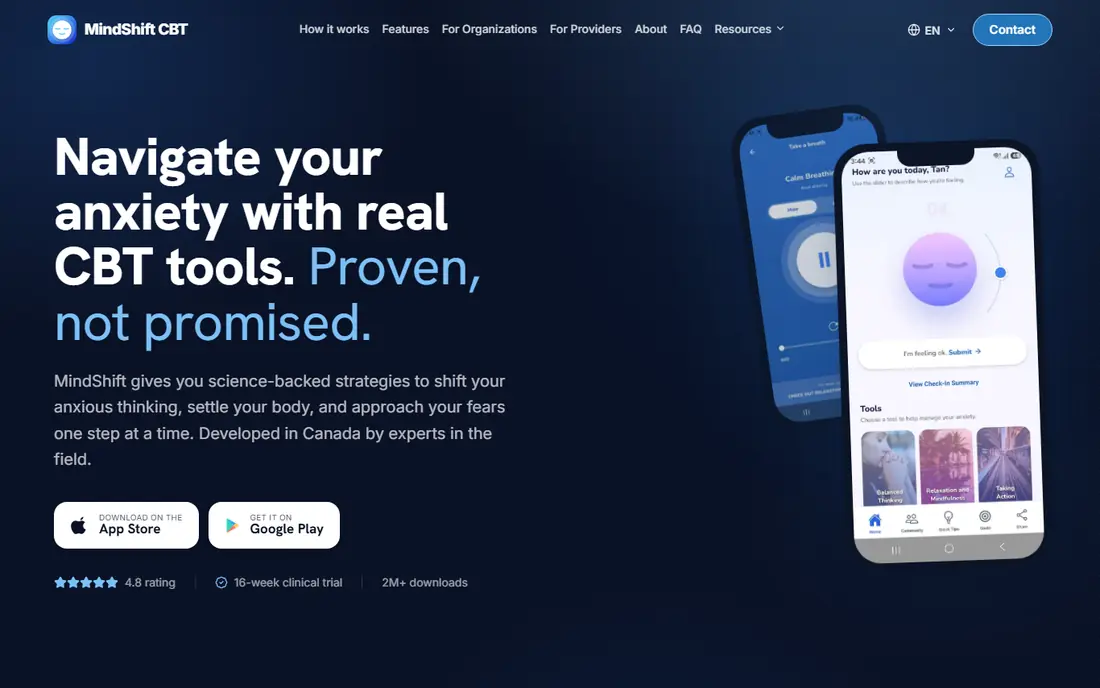
MindShift CBT is our pick for the best free app for anxiety. It was originally developed in partnership with Anxiety Canada, and its site says it is one of the few anxiety apps with published, peer-reviewed evidence. The App Store listing promises it is always free, with no subscriptions or hidden costs.
The tools are the same ones a cognitive behavioral therapist would use. You get a thought journal, a fear ladder for facing fears step by step, coping statements, behavioral experiments, guided relaxation and daily mood check-ins. There is also a community forum.
The honest catch is that CBT works when you practice, and an app cannot make you do it. The site is also clear that MindShift is a self-help tool, not a medical device and not a replacement for therapy or crisis care.
- Always free with no subscriptions, per its App Store listing
- Real CBT tools such as thought records, a fear ladder and behavioral experiments
- Originally developed with Anxiety Canada
- Fewer ratings than the big meditation apps
- Self-guided, so it takes some effort to use well
Insight Timer
Ideal for: The largest free meditation library
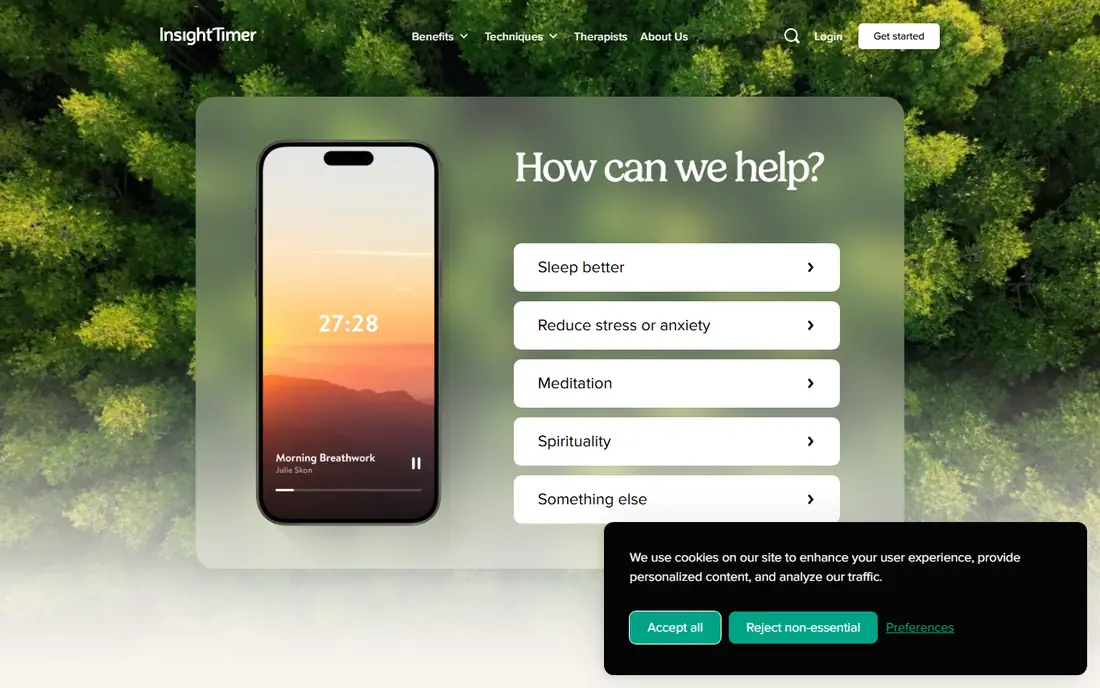
Insight Timer is the app we would hand to someone who wants meditation without paying for Calm or Headspace. The App Store listing describes thousands of free guided meditations and mindfulness practices from many teachers, with more than 100 new free practices added daily.
Premium is optional. It costs $59.99 per year or $9.99 per month and adds Insight Courses, offline listening, an advanced player and higher-quality audio. Most people will never need it.
The downside of so much free content is choice. Search for a topic like anxiety, sleep or stress and follow one teacher for a week instead of jumping around.
- Thousands of free guided meditations
- More than 100 new free practices added daily, per the listing
- 4.9 rating from about 448,000 App Store ratings
- The huge library can feel overwhelming
- Courses and offline listening need Premium
Medito
Ideal for: Meditation with no ads or paywalls
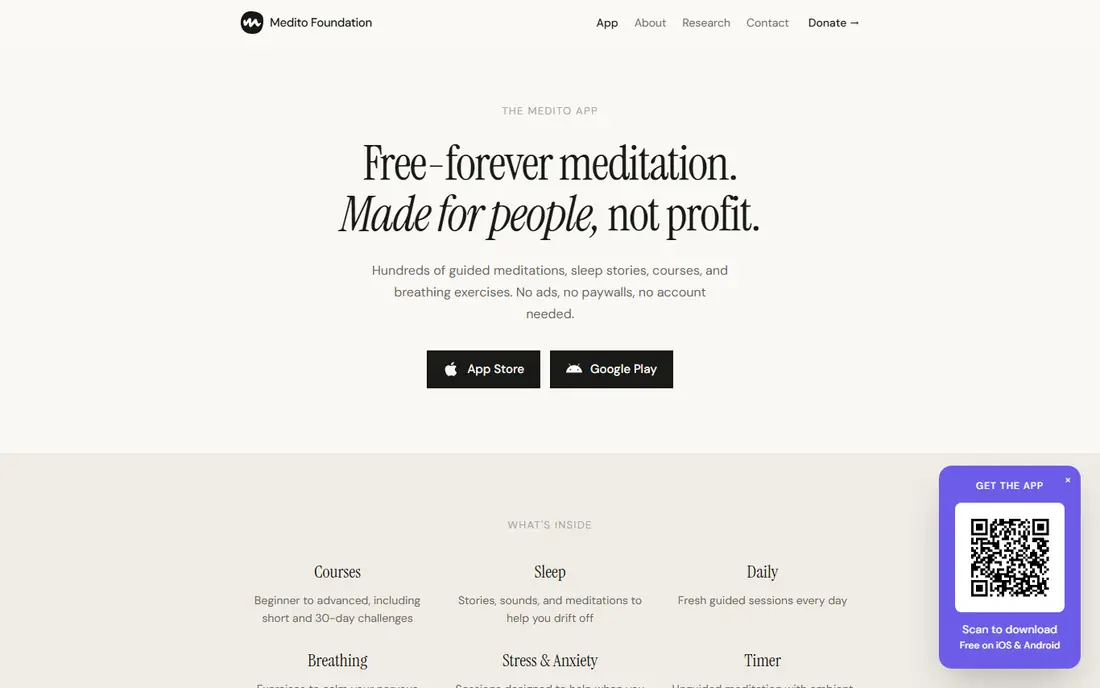
Medito is run by the Medito Foundation, a non-profit, and its website promises free-forever meditation with no ads and no paywalls. That makes it the cleanest free meditation app we found, with nothing to upsell.
It covers guided meditations, mindfulness courses, breathing exercises, body scans, sleep stories and soundscapes. Unlike many free apps, it lets you download sessions for offline listening, and it tracks streaks and syncs with Apple Health. The App Store rating is 4.9.
The library is smaller than Insight Timer's, so you have fewer teachers and voices to choose from. For a calm, ad-free daily habit, that is rarely a problem.
- 100% free and non-profit
- No ads or paywalls, per its website
- Offline downloads included
- Smaller library than Insight Timer
- Fewer ratings, about 4,300 on the App Store
Healthy Minds Program
Ideal for: Learning skills for stress and focus
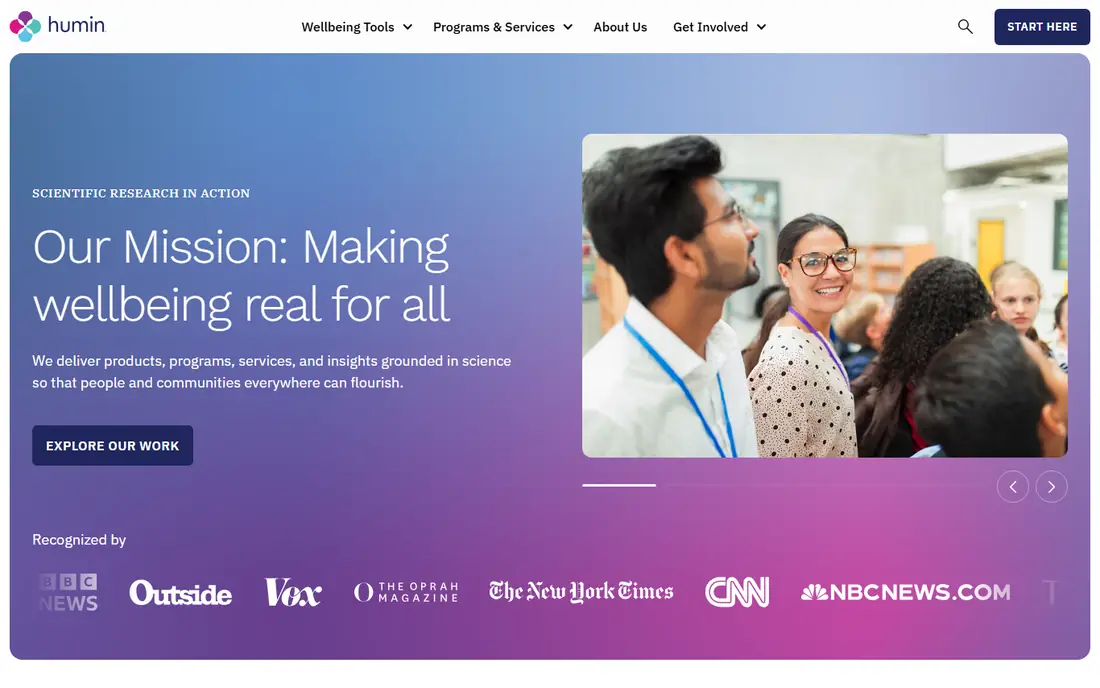
The Healthy Minds Program comes from Humin, the non-profit formerly called Healthy Minds Innovations, and is grounded in the research of Dr. Richard Davidson. Its site says the program offers up to 600 days of guided practices, completely free, and it is funded by donations instead of subscriptions.
The app mixes guided and unguided meditations with podcast-style lessons, courses on focus, stress and social connection, and well-being assessments. It follows a guided path, which suits people who like a course more than a random playlist. It holds a 4.9 App Store rating from about 9,200 ratings.
It feels more like a class than a relaxation app. If you want a quick sleep story at midnight, Insight Timer or Medito will suit you better.
- Completely free and supported by donations
- Up to 600 days of guided practices
- Built on wellbeing research from a non-profit
- Lessons are more structured than casual
- Less content focused specifically on sleep
How We Feel
Ideal for: Naming and tracking emotions
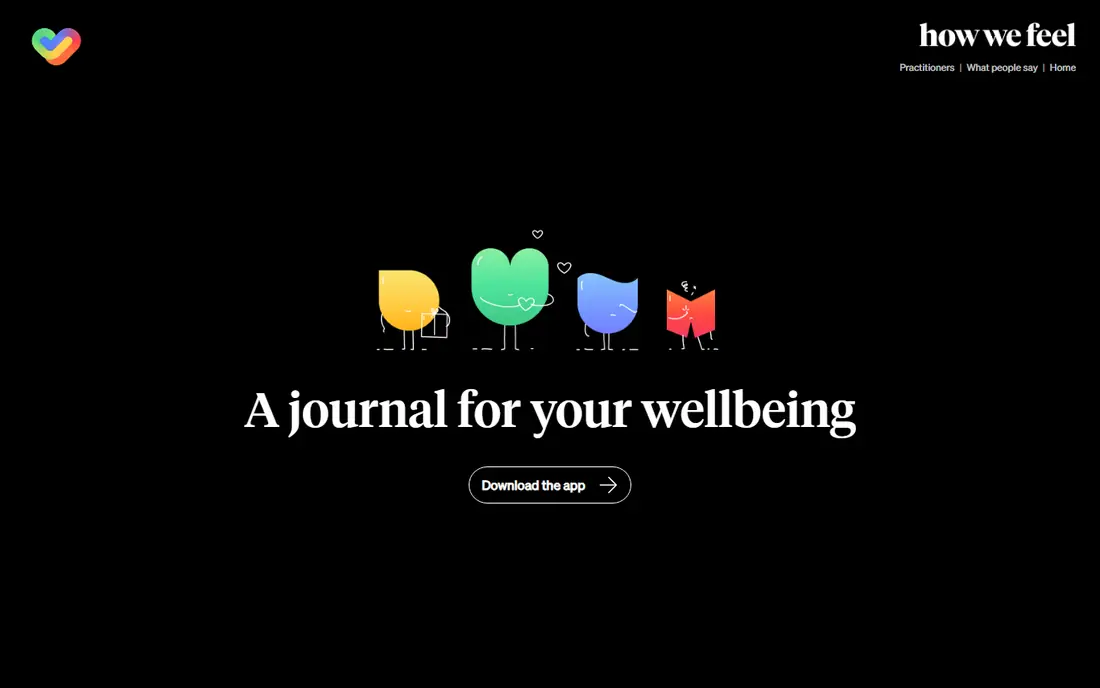
How We Feel helps you put a name to what you feel, which sounds small but makes a difference. It was built by The How We Feel Project, a non-profit, with Yale University's Center for Emotional Intelligence, based on Dr. Marc Brackett's work. Check-ins use a color-coded emotion grid, and the app can pull in sleep and exercise data to show patterns.
When you notice a hard feeling, it offers short video strategies in four themes: change your thinking, move your body, be mindful and reach out. You can also share check-ins with trusted friends. The App Store lists it as an Editors' Choice with a 4.9 rating from about 30,000 ratings.
The developer says your data stays on your device unless you opt in to share anonymized check-ins for research. Its App Store privacy label, however, lists some data such as a name and user ID as linked to you, so read the policy if privacy matters to you.
- Free app from a non-profit, created with Yale's Center for Emotional Intelligence
- One-minute video strategies for tough moments
- Says data stays on your device unless you opt in to research
- App privacy label still lists some data linked to you
- Needs iOS 17 or later on iPhone
Finch
Ideal for: Gentle daily self-care habits
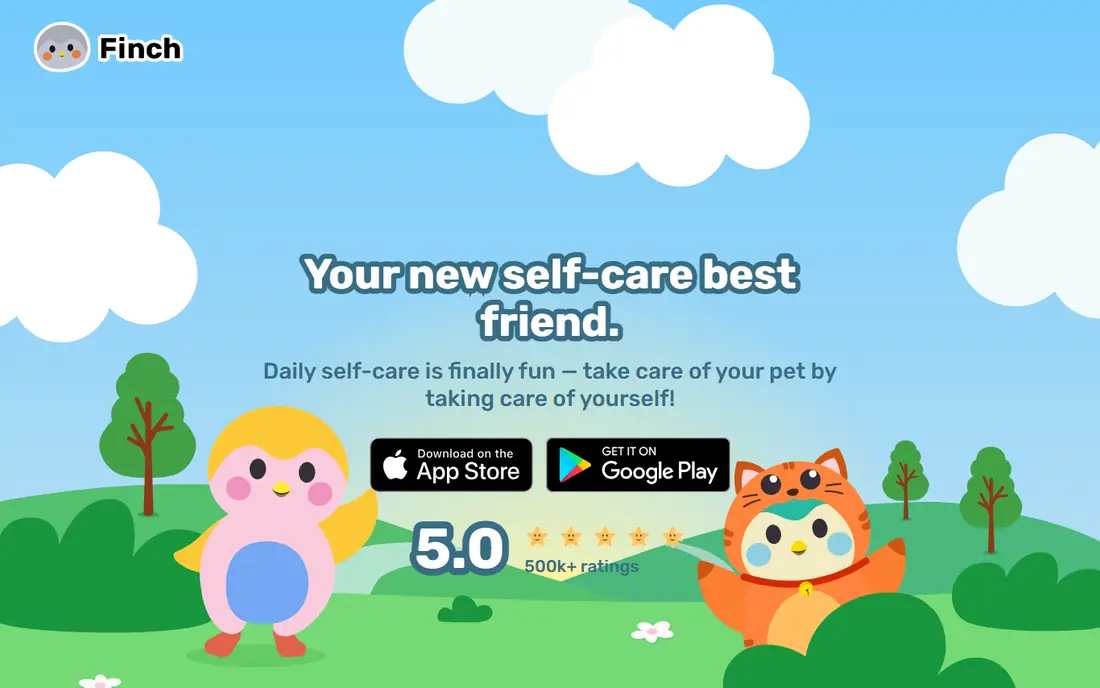
Finch is a self-care app disguised as a game. You look after a small pet bird, and it grows when you complete little goals like drinking water, stretching or writing a journal entry. For people who find standard wellness apps too clinical, that playful hook is the whole point.
The listing includes a goal tracker, bullet journaling, breathing exercises, quizzes, a mood tracker, sleep tools and insights. Reviewers say the free version covers a lot, and Finch Plus adds more options. In-app purchase prices range from $5.99 to $69.99, without a clear plan breakdown.
It is a strong fit for teens and adults who struggle with motivation. If you want structured therapy-style exercises, MindShift CBT goes deeper.
- Turns self-care into caring for a virtual pet
- Goal tracker, mood tracker, journaling and breathing tools
- 4.9 rating from about 768,000 App Store ratings
- Some features need Finch Plus
- Prices for Plus are not clearly broken down on the listing
Daylio
Ideal for: Private mood and activity tracking
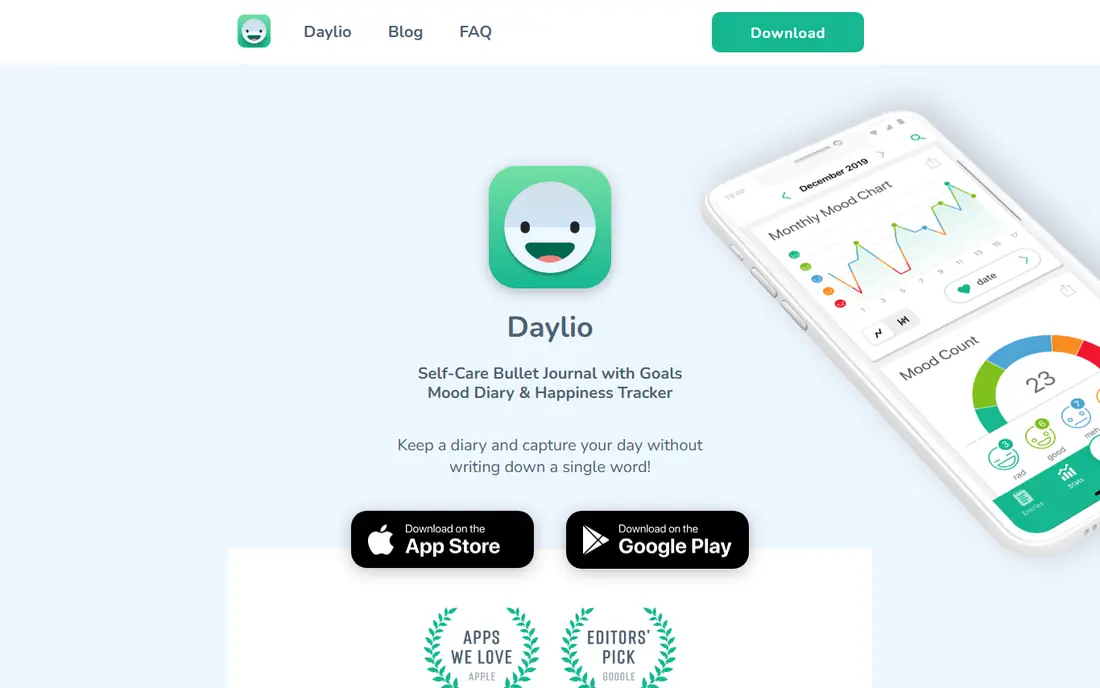
Daylio is a micro-diary. You tap a mood and the activities you did, and over weeks it shows what lifts or drains you. The developer says it does not store or collect your data and that entries live on your phone, with optional backups to your own cloud storage.
That privacy approach is rare among mood trackers. The app adds statistics, a calendar, Year in Pixels, goals, reminders and a PIN lock, and it holds a 4.8 rating from about 62,000 App Store ratings. Daylio Premium is an in-app purchase, and its listing shows several price points without saying which is which.
Daylio is a tracker, not a coach. Pair it with a skills app if you want help changing what the data shows.
- Log mood and activities in seconds without typing
- Entries stored locally on your phone, per the developer
- Statistics, Year in Pixels and PDF or CSV export
- Some features are Premium-only
- It tracks patterns but does not teach coping skills
Wysa
Ideal for: Talking through feelings with an AI chatbot
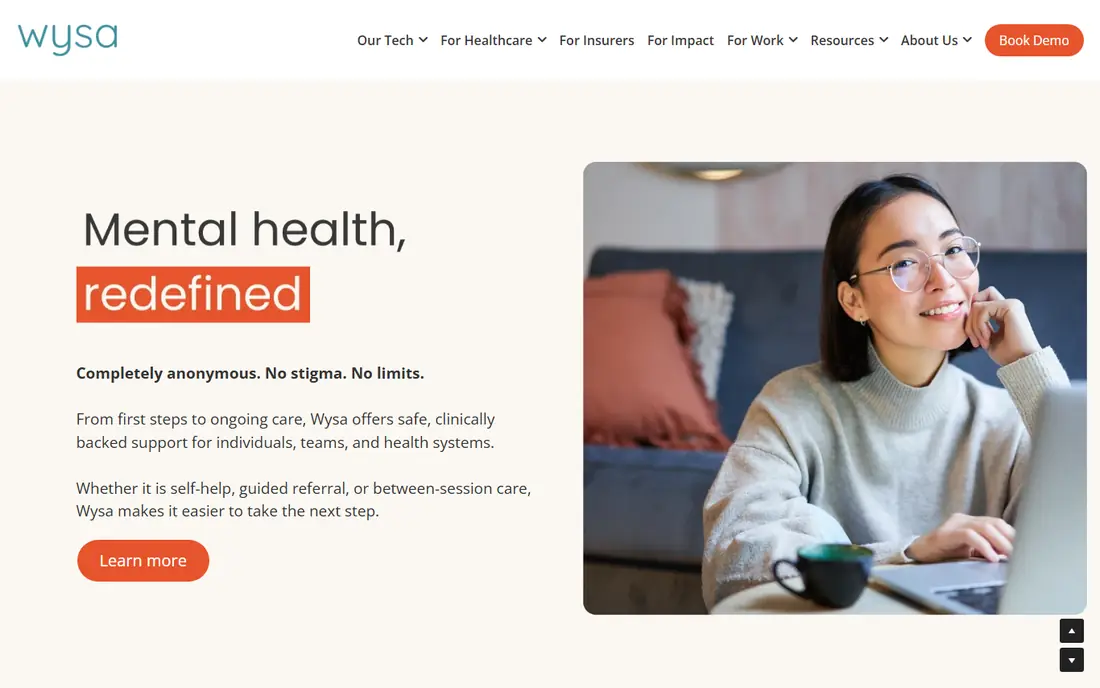
Wysa is an AI chatbot, shaped like a penguin, that helps you talk through everyday emotions. The App Store listing says chats are free and that its techniques are inspired by research-backed approaches such as CBT and DBT. The company says over 6 million people have used it.
Paid tiers add more tools and human coaching. The listing mentions Premium and Premium Plus, with in-app prices from $4.99 up to $99.99, plus separate guided support packages, and the figures do not line up neatly.
Be clear about what it is. Wysa says it offers no diagnosis or treatment advice, and the listing does not describe a built-in crisis feature. Use it for low-stakes venting and practice, not in an emergency.
- Free chats with an AI chatbot, available any time
- Techniques inspired by CBT and DBT
- Anonymous use, per the company
- An AI chatbot is not a therapist and offers no diagnosis or treatment
- Paid tools and human coaching are expensive and the listed prices are confusing
7 Cups
Ideal for: Free chat with a volunteer listener
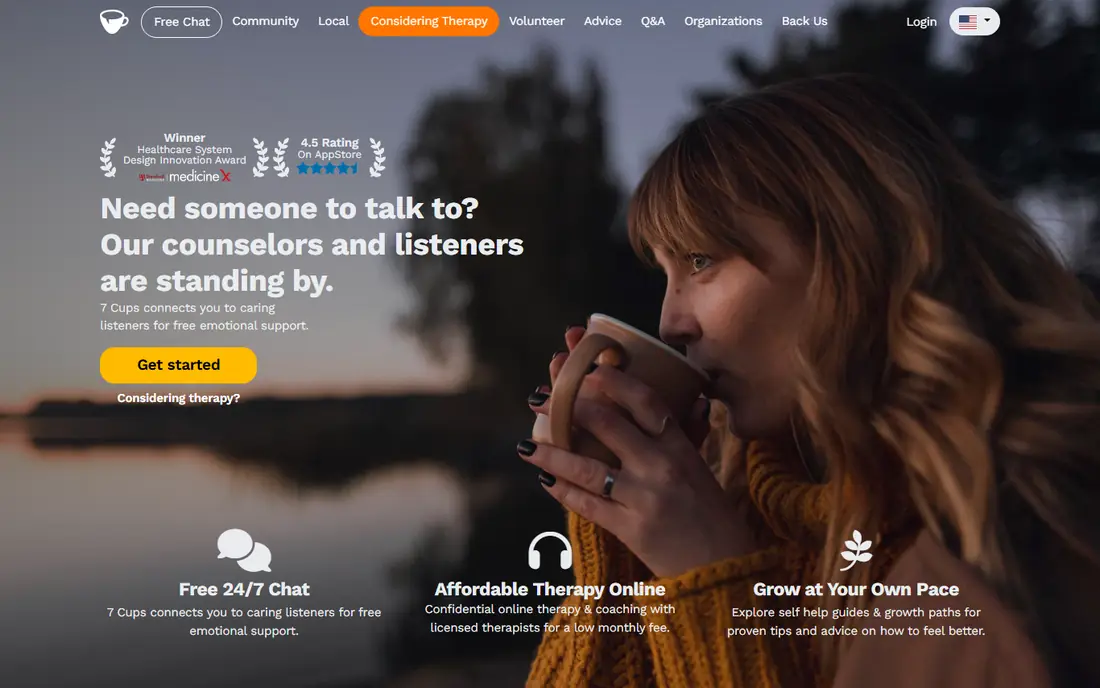
7 Cups connects you with a real person to talk to, for free. Its App Store listing says all listeners are available to chat 100% free, and that its listeners are volunteers who are not paid. The service cites over 450,000 trained listeners, licensed therapists and social workers in its network.
If you want more, 7 Cups also sells online therapy with licensed therapists for a monthly fee, though the listing does not state the current price. The app is rated 4.4 from about 5,700 ratings and is listed for ages 13 and up.
Because listeners are volunteers, the experience depends on who you get. It can be a comfort on a lonely night, but it is not crisis support. Call or text 988 if you are in danger.
- Free 24/7 chat with trained listeners
- Community forums and self-help paths
- Paid therapy with licensed therapists is available
- Listeners are unpaid volunteers, not professionals
- Quality of conversations can vary
PTSD Coach
Ideal for: Managing trauma and PTSD symptoms
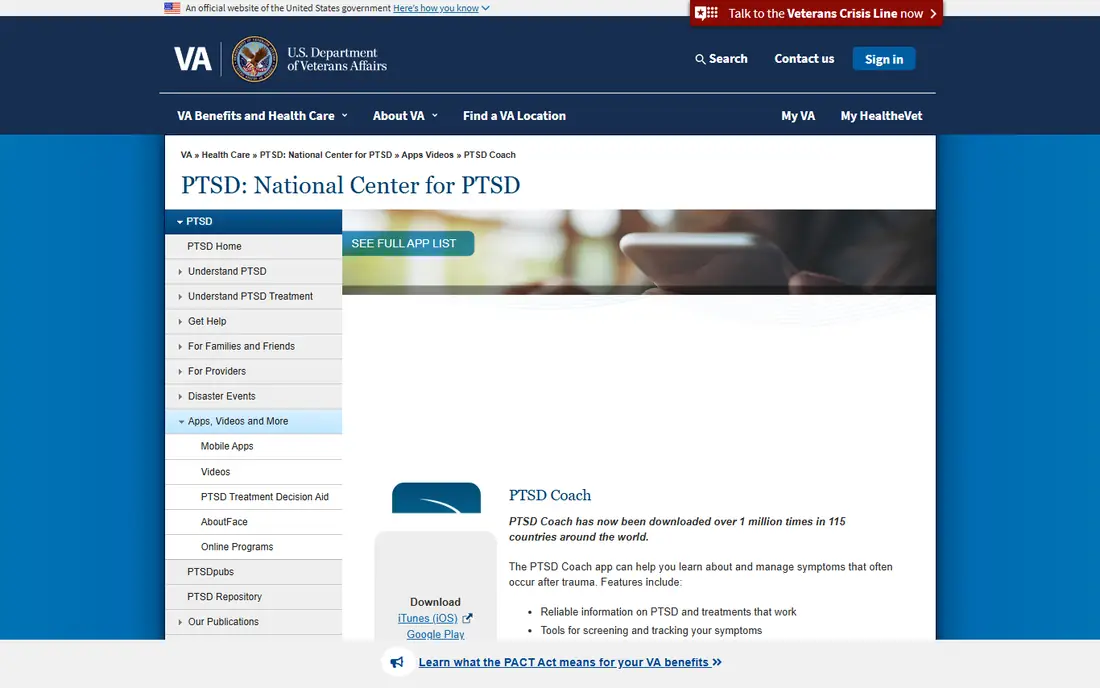
PTSD Coach was created by the US Department of Veterans Affairs' National Center for PTSD with the Department of Defense. It is free, and you do not need to be a veteran or in treatment to use it. The listing shows no in-app purchases.
It includes education about PTSD, a self-assessment, tools for stress, anger and negative thoughts that you can personalize with your own contacts, photos and music, plus progress tracking and a safety plan. The App Store rating is 4.7 from about 4,300 ratings.
It is not flashy, and it is built for trauma symptoms rather than everyday worry. For anyone living with the after-effects of a traumatic event, it is one of the most trustworthy free apps available.
- Made by the VA's National Center for PTSD
- Self-assessment, coping tools and a safety plan
- Free with no in-app purchases listed
- Focused on PTSD, so less useful for general stress
- Plain design compared with commercial apps
How we picked these
We looked for apps that are free to use in a meaningful way, not just free to download, and that come from developers with a clear purpose and visible privacy practices. For each one we read the official website, the App Store listing (features, in-app purchases, ratings and privacy labels) and, where available, the developer's own statements about evidence and limits.
We favored non-profit and research-backed apps, and we flagged where a chatbot or volunteer service has limits. We did not test these apps clinically, and we are not health professionals. Ratings and prices were checked in October 2026 and can change.
How to choose a free mental health app that helps
Start with what you need most right now. A good app for one problem can be a poor fit for another.
Match the app to the problem
For anxiety, CBT tools like MindShift CBT give you exercises with a track record. For stress and racing thoughts, meditation apps like Insight Timer, Medito or Healthy Minds are a gentle start. For low mood or patterns you cannot quite see, a tracker like Daylio or How We Feel can reveal what helps.
Check what is really free
Many popular apps, including Calm and Headspace, are mainly paid after a trial. The apps on our list let you use the core features without paying, and five have no paid tier we could find.
Read the privacy details
Mental health data is sensitive. Check the App Store privacy label and the developer's policy, prefer apps that store data on your device, and avoid sharing anything you would not want stored on a server.
Know when an app is not enough
If symptoms last more than two weeks, affect work, sleep or relationships, or include thoughts of self-harm, talk to a doctor or licensed therapist. Apps work best alongside real support, not instead of it.
Frequently asked questions
What is the best free mental health app?
It depends on your goal. MindShift CBT is the best free pick for anxiety, Insight Timer for meditation, and How We Feel for understanding your emotions. All three can be used without paying.
What are the best free apps for anxiety and depression?
MindShift CBT uses cognitive behavioral therapy tools that suit anxiety, and the Healthy Minds Program teaches skills for stress and mood. Daylio can help you spot patterns linked to low mood. For depression in particular, an app should support professional care, not replace it.
Are there free therapy apps?
Not for therapy with a licensed professional. 7 Cups offers free chat with trained volunteer listeners, and Wysa offers free chats with an AI chatbot, but both charge for sessions with professionals or coaches. Some insurers and employers cover therapy apps, so check your benefits.
Are mental health apps safe and private?
It varies. Medito, Daylio and How We Feel describe privacy-friendly approaches, such as storing data on your device, but you should still read each app's privacy label and policy. Use apps from known developers and be careful with apps that ask for unnecessary personal details.
Can an app replace therapy?
No. Apps can teach skills, help you track mood and offer support between appointments, but they cannot diagnose or treat a mental health condition. If you are struggling, a doctor or therapist is the right next step, and 988 is available any time in the US.
Sources
- https://www.mindshiftcbt.com/
- https://apps.apple.com/us/app/mindshift-cbt-anxiety-relief/id634684825
- https://apps.apple.com/us/app/insight-timer-meditation-app/id337472899
- https://medito.app/
- https://apps.apple.com/us/app/medito-meditation-sleep/id1500780518
- https://humin.org/
- https://apps.apple.com/us/app/healthy-minds-program/id1326310617
- https://apps.apple.com/us/app/how-we-feel/id1562706384
- https://apps.apple.com/us/app/finch-self-care-pet/id1528595748
- https://daylio.net/
- https://apps.apple.com/us/app/daylio-journal-daily-diary/id1194023242
- https://www.wysa.com/
- https://apps.apple.com/us/app/wysa-mental-health-support/id1166585565
- https://www.7cups.com/
- https://apps.apple.com/us/app/7-cups-online-therapy-chat/id921814681
- https://www.ptsd.va.gov/appvid/mobile/ptsdcoach_app.asp
- https://apps.apple.com/us/app/ptsd-coach/id430646302