Best Apps for Mental Health in 2026: 7 Apps Compared

- These apps support everyday wellbeing, but they are not a substitute for therapy, medical care, or crisis support. If you feel unsafe, contact local emergency services or a crisis line immediately.
- Headspace and Calm suit meditation and sleep, while Daylio suits mood tracking and journaling.
- BetterHelp and Talkspace connect users with licensed therapists online, subject to availability and state rules.
- Check privacy policies carefully, since mental health data is sensitive, and choose apps that explain data use and deletion clearly.
Quick comparison
| Product | Ideal for | Price from | Free version | |
|---|---|---|---|---|
 Headspace | Meditation and mindfulness for wellbeing | See website | No | Visit |
 Calm | Sleep and daily calm for wellbeing | See website | No | Visit |
 Daylio | Mood tracking and micro-journaling | See website | Yes | Visit |
 BetterHelp | Online therapy with licensed therapists | See website | No | Visit |
 Talkspace | Online therapy and psychiatry options | See website | No | Visit |
 MoodTools | Free tools for depression support | Free | Yes | Visit |
 Finch | Self-care companion with a virtual pet | See website | Yes | Visit |
The best apps for mental health
We compared official feature pages, pricing pages, app store listings, privacy policies and public reviews to build this list, focusing on products that fit the topic closely and are still available in October 2026.
Headspace
Ideal for: Meditation and mindfulness for wellbeing
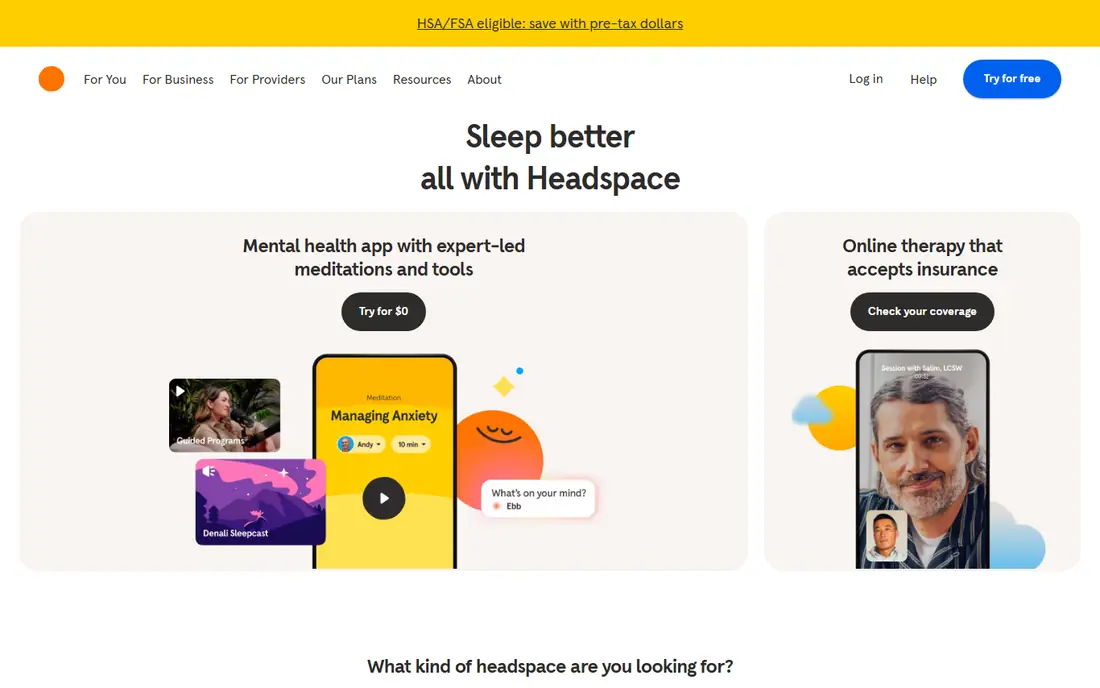
Headspace supports mental wellbeing through structured meditation, breathing, and sleep content, with courses for stress, anxiety, and focus. That regular practice helps many users manage everyday stress and improve sleep, which supports overall mental health. The friendly guidance makes starting easy.
Headspace is not therapy and does not replace professional care for depression, anxiety disorders, or trauma. A subscription is also needed after a trial. Headspace suits users who want meditation as part of a wellbeing routine, alongside professional support if needed.
- Structured meditation courses
- Sleepcasts
- Sessions for stress and anxiety
- Subscription needed
- Not a therapy service
- Library smaller than Insight Timer
Calm
Ideal for: Sleep and daily calm for wellbeing
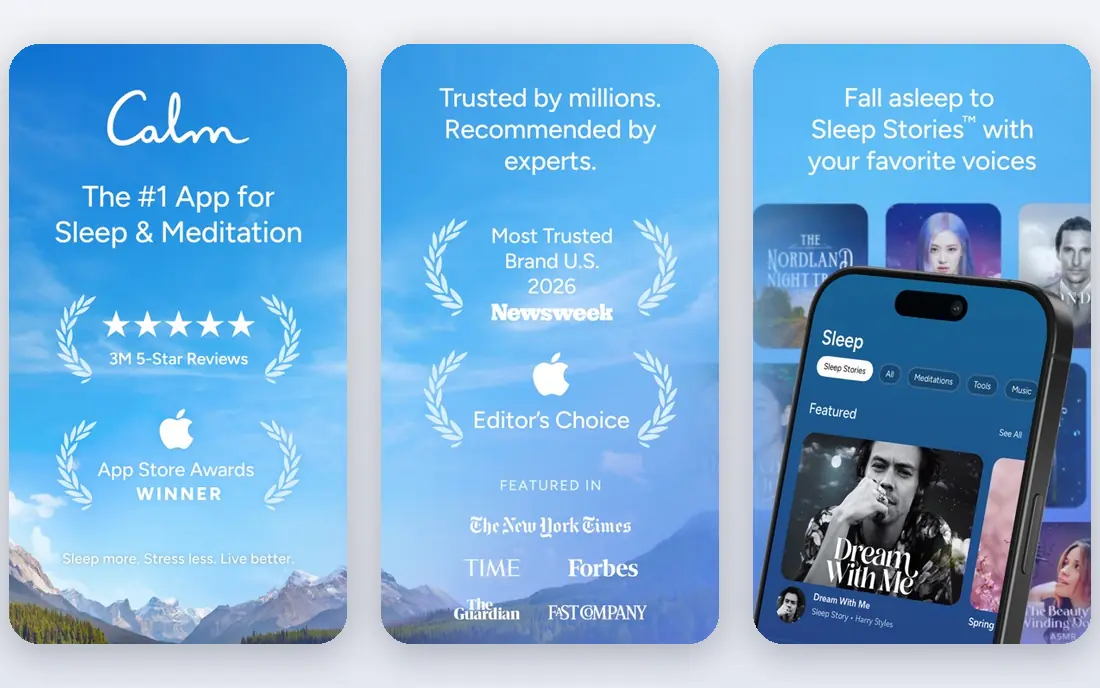
Calm supports wellbeing through daily meditation, Sleep Stories, breathing exercises, and relaxing music, which help many users unwind and sleep better. Better sleep and a short daily calm practice can improve mood and stress resilience for everyday life.
Calm is not therapy or medical treatment, and it should not be used alone for serious mental health conditions. A subscription is required for full access. Calm suits users who want sleep and daily calm support as part of a broader wellbeing plan, with professional help when needed.
- Daily Calm sessions
- Sleep Stories
- Breathing and music tools
- Subscription needed
- Not a therapy service
- Some content is relaxation rather than treatment
Daylio
Ideal for: Mood tracking and micro-journaling
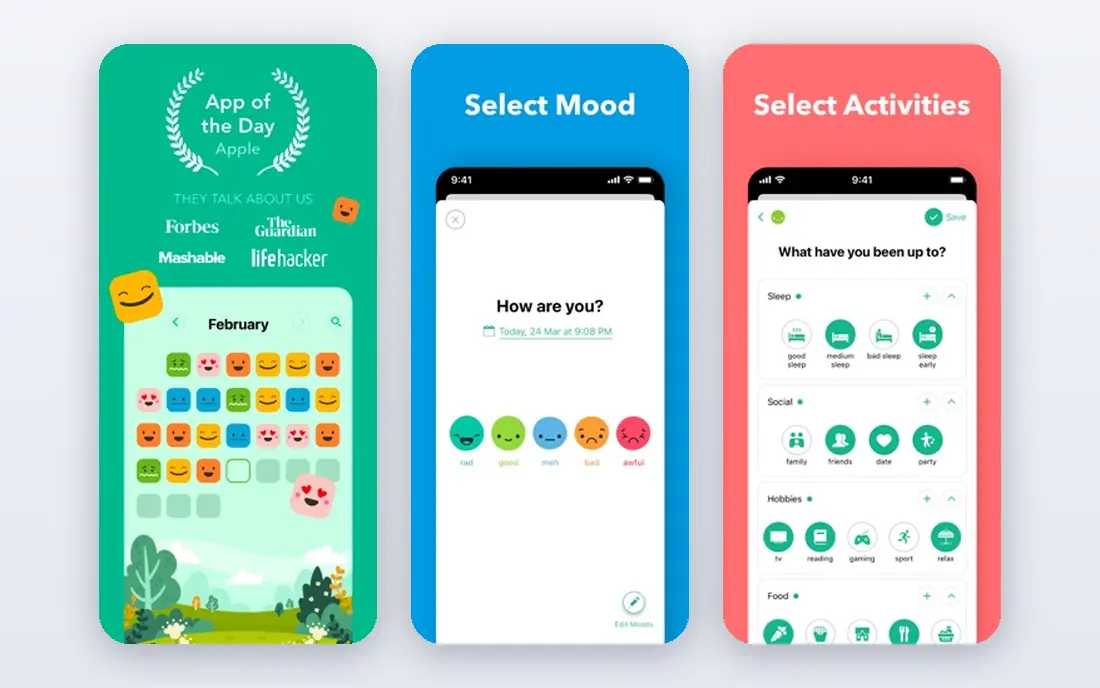
Daylio helps users understand patterns in mood by tracking mood and activities in seconds each day, with charts that show what correlates with better or worse days. That self-awareness can help you notice triggers, such as poor sleep or skipped exercise, and discuss patterns with a therapist if you have one.
Daylio is not therapy, and insights need consistent tracking over weeks to be useful. The free tier also has limits on entries and features. Daylio suits users who want a private, quick mood diary to spot patterns, paired with professional support for any serious concerns.
- Quick mood tracking with activities
- Charts and patterns
- Private journal entries
- Free tier has limits
- Not a therapy app
- Insights need consistent tracking
BetterHelp
Ideal for: Online therapy with licensed therapists
BetterHelp connects users with licensed therapists for message, phone, and video sessions, with flexible scheduling that suits busy lives and rural areas with few local therapists. That access helps many people start therapy who otherwise would not, especially for anxiety, depression, and relationship issues.
A subscription is required, therapist matching quality varies, and BetterHelp is not suitable for crisis situations or severe conditions that need in-person care. Check therapist credentials, state licensing, and privacy terms before starting. BetterHelp suits users seeking regular online therapy who understand its limits.
- Access to licensed therapists by message, phone, and video
- Flexible scheduling
- Subscription needed
- Therapist matching varies
- Not suitable for crisis situations
Talkspace
Ideal for: Online therapy and psychiatry options
Talkspace offers online therapy by message and video, with psychiatry options in some states for medication management, subject to local rules. Some insurance plans may cover Talkspace, which can lower cost compared with paying fully out of pocket. That combination of therapy and psychiatry support appeals to users who need both.
Prices and availability vary by state and plan, and Talkspace is not suitable for crisis situations. Therapist matching also varies. Talkspace suits users who want online therapy, possibly with psychiatry, and who will check insurance coverage and therapist credentials before starting.
- Licensed therapists by message and video
- Psychiatry options in some states
- Insurance may cover some plans
- Prices vary
- Availability varies by state
- Not for crisis care
MoodTools
Ideal for: Free tools for depression support
MoodTools is a free app based on cognitive behavioural principles, offering a thought diary, activity scheduling, a safety plan tool, and educational information about depression. That free, evidence-informed toolkit helps users practise skills between therapy sessions or while waiting for care, without a subscription.
MoodTools is not therapy and does not replace professional care, especially for severe depression or suicidal thoughts. If you feel unsafe, seek emergency help or a crisis line immediately rather than relying on an app. MoodTools suits users who want free, practical tools alongside professional support.
- Free thought diary, activities, and safety plan tools
- Based on cognitive behavioural principles
- Not a therapy service
- Interface is simple
- No therapist access
Finch
Ideal for: Self-care companion with a virtual pet
Finch turns self-care into a gentle game, where completing tasks like drinking water, breathing, and journaling helps a virtual pet grow. Mood check-ins, breathing exercises, and journal prompts support daily wellbeing, and the cute design makes self-care feel less like a chore for many users.
The game style will not suit everyone, and Finch is not therapy. Full features need a subscription, though a free tier covers basics. Finch suits users who struggle to maintain self-care routines and enjoy a playful, low-pressure app, alongside professional help if mental health concerns are serious.
- Self-care tasks with a virtual pet reward
- Mood check-ins
- Breathing and journaling
- Game style is not for everyone
- Not a therapy app
- Full features need a subscription
How we picked these
We compared official feature pages, pricing pages, app store listings, privacy policies and public reviews for each option in this guide. We checked that each product is still offered in October 2026, that its homepage loads, and that its price or free tier could be confirmed or marked as See website when it could not. We did not claim hands-on testing. We favoured products that fit the topic closely, explain their limits clearly, and give readers a practical way to try them before paying. We also checked that each app still offers a clear route to sign up or download, and we left out any app that had moved to a closed member only service with no public consumer offer. That check matters for this topic, since an app that cannot be downloaded by a new reader cannot help that reader, even if older reviews still praise it. Where prices change often, we say so and point readers to the vendor page for the current figure.
How to choose a mental health app
Start with what you need: meditation for stress, mood tracking for patterns, self-care routines for daily habits, or therapy for ongoing support. Check privacy policies, since mental health data is sensitive, and choose apps that allow data deletion. If symptoms persist, worsen, or include thoughts of harming yourself, seek professional help or crisis support immediately, rather than relying on an app alone.
Before you pay,try the free tier or trial first and check the exact limits that matter to you, such as device support, export options, or cancellation terms. Set a short trial period for yourself, such as two weeks, and note whether you open the app most days, whether the exercises feel useful, and whether the reminders help or annoy you. If the app does not fit your routine in that trial, cancel before the paid period starts and try the next option on this list instead of paying for a full year at once. Read the privacy policy for any app that handles personal, financial, or health data, and check whether your data can be exported or deleted. The cheapest option is not always the best value if it lacks a feature you will use every week, and the most expensive option is rarely worth it if you only need the basics.
Frequently asked questions
What is the best mental health app?
Headspace and Calm are best for meditation and sleep, Daylio is best for mood tracking, and BetterHelp and Talkspace are best for online therapy. MoodTools is the best free CBT-based tool.
Can mental health apps replace therapy?
No, apps support wellbeing and teach skills, but they do not replace therapy or medical care for depression, anxiety disorders, trauma, or other serious conditions. Use apps alongside professional support, not instead of it.
What should I do if I feel unsafe?
Contact local emergency services or a crisis line immediately, such as 988 in the US for the Suicide and Crisis Lifeline, or go to your nearest emergency department. Do not rely on an app alone in a crisis.
Are mental health apps private?
Privacy varies by app, so read the policy for data collection, sharing, and deletion before entering sensitive information. Choose apps that explain data use clearly and allow you to delete your data.
What is the best free mental health app?
MoodTools is a strong free option based on cognitive behavioural principles, while Daylio, Headspace, and Calm offer free tiers with limits. Smiling Mind also offers a free meditation programme for wellbeing.