Best Apps for Mindfulness in 2026: 8 Apps Compared

- 1
 HeadspaceStructured mindfulness for beginnersVisit
- 2
 CalmDaily mindfulness and sleep storiesVisit
- 3
 Insight TimerLargest free mindfulness libraryVisit
- 4
 Waking UpMindfulness theory and deep practiceVisit
- 5
 Ten Percent HappierPractical mindfulness for scepticsVisit
- Headspace and Calm are the largest mindfulness apps, with daily sessions for stress, sleep, and focus.
- Insight Timer offers the largest free library, while Smiling Mind offers a fully free programme for adults and children.
- Mindfulness apps help many people with everyday stress, but they are not a substitute for therapy or medical care for serious conditions.
- Try several teacher voices in free trials, pick a short daily session you can keep, and build consistency before extending sessions.
Quick comparison
| Product | Ideal for | Price from | Free version | |
|---|---|---|---|---|
| Headspace | Structured mindfulness for beginners | See website | No | Visit |
| Calm | Daily mindfulness and sleep stories | See website | No | Visit |
| Insight Timer | Largest free mindfulness library | See website | Yes | Visit |
| Waking Up | Mindfulness theory and deep practice | See website | No | Visit |
| Ten Percent Happier | Practical mindfulness for sceptics | See website | No | Visit |
 Smiling Mind | Free mindfulness for all ages | Free | Yes | Visit |
 Balance | Personalised mindfulness plans | See website | No | Visit |
 Aura | Personalised daily mindfulness sessions | See website | No | Visit |
The best apps for mindfulness
We compared official feature pages, pricing pages, app store listings, privacy policies and public reviews to build this list, focusing on products that fit the topic closely and are still available in October 2026.
Headspace
Ideal for: Structured mindfulness for beginners
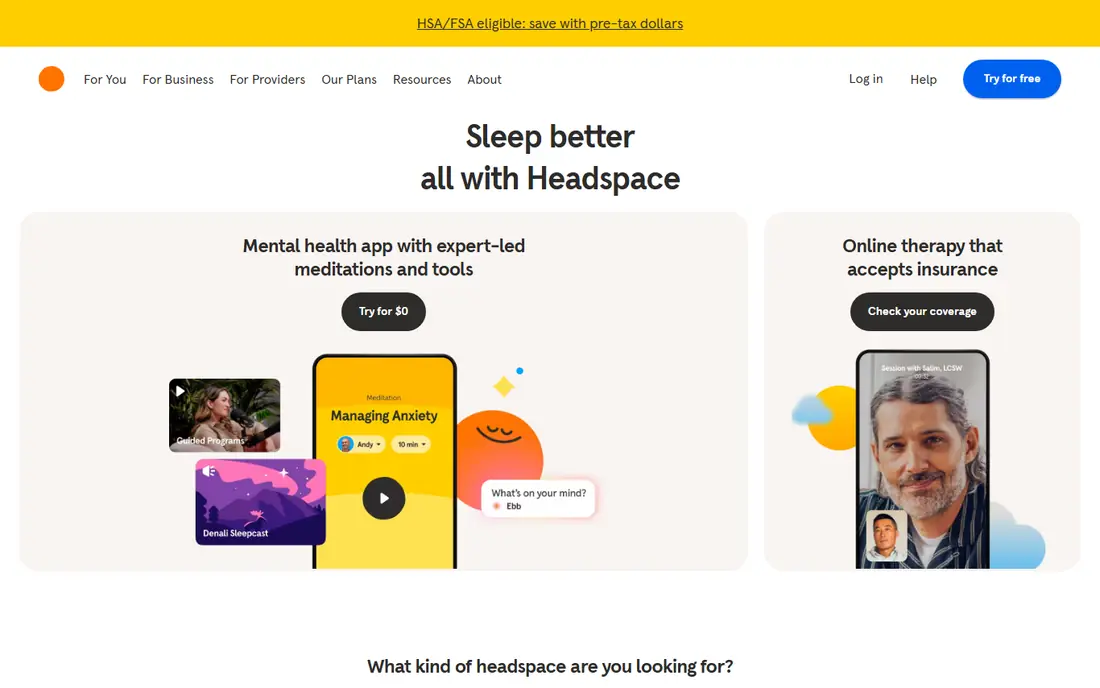
Headspace teaches mindfulness step by step, which makes it the best starting point for beginners. Courses explain attention, breathing, and awareness in plain language, with daily sessions for stress, focus, and sleep. Sleepcasts and focus music extend the app beyond formal meditation.
A subscription is needed after the trial, and the library is smaller than Insight Timer. Headspace suits beginners who want a guided course and a consistent voice. Experienced practitioners who want variety or theory may prefer Insight Timer or Waking Up.
- Structured courses
- Daily sessions for stress and focus
- Sleepcasts and focus music
- Subscription needed after trial
- Library smaller than Insight Timer
Calm
Ideal for: Daily mindfulness and sleep stories
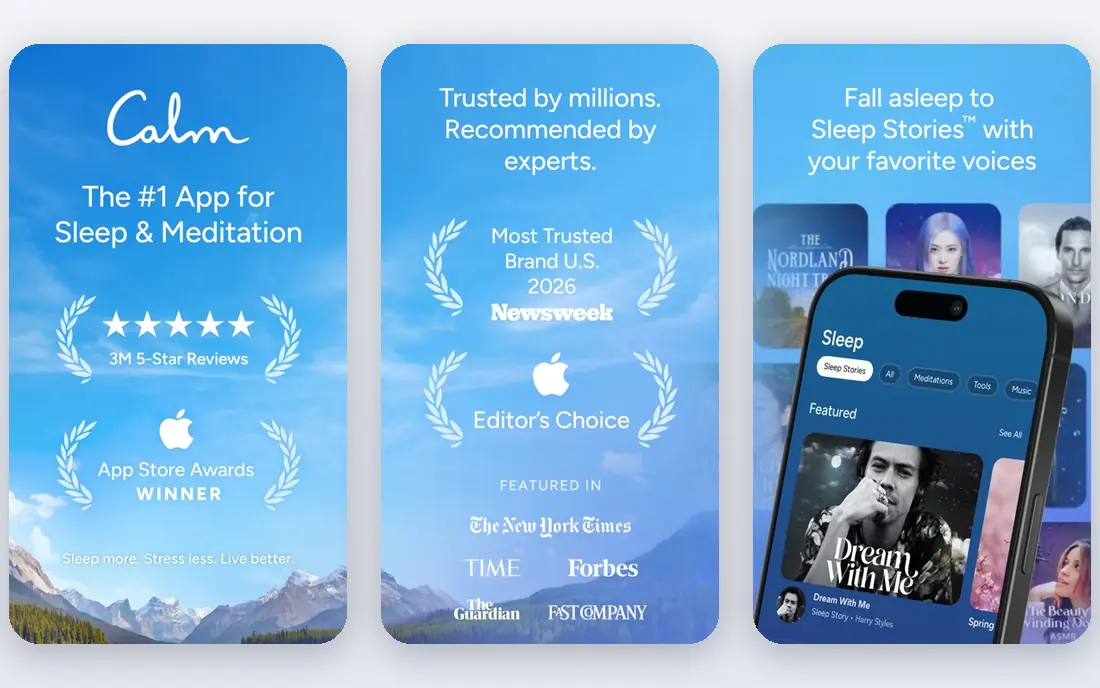
Calm suits readers whose mindfulness practice is tied to sleep and daily calm. Daily Calm sessions offer a short daily practice, Sleep Stories help with bedtime, and breathing exercises and music provide quick relief during stressful moments. The polished design makes daily use easy.
A subscription is required for full access, and some content feels more like relaxation entertainment than mindfulness teaching. Calm suits sleep-focused users and families. Readers who want deep mindfulness theory should compare Waking Up or Ten Percent Happier.
- Daily Calm sessions
- Sleep Stories
- Breathing exercises and relaxing music
- Subscription needed
- Some content is relaxation rather than mindfulness teaching
Insight Timer
Ideal for: Largest free mindfulness library

Insight Timer offers the largest free mindfulness library, with thousands of guided sessions, talks, and courses from many teachers, plus a timer for silent practice. That variety lets you try different traditions and voices without paying, which is ideal if you do not yet know what suits you.
Quality varies by teacher, so save favourites and search carefully. Premium features, including offline listening and advanced courses, need a paid plan. Insight Timer suits experienced practitioners and budget-conscious users who want variety and a free timer for silent practice.
- Huge free library
- Timer for silent practice
- Live events and courses
- Quality varies by teacher
- Premium features need a paid plan
- Interface can feel busy
Waking Up
Ideal for: Mindfulness theory and deep practice
Waking Up suits readers who want to understand mindfulness deeply, not just follow a relaxing voice. An introductory course builds practice step by step, theory lessons explain how attention works, and conversations with teachers add perspective. That depth makes it a course as much as an app.
A subscription is required, and sleep content is thinner than Calm. The intellectual style will not suit readers who just want to relax. Waking Up suits curious practitioners who want theory and a structured practice, and who will commit to a course over time.
- Introductory course
- Theory lessons on attention and awareness
- Conversations with teachers
- Subscription needed
- Less sleep content than Calm
- Intellectual style is not for everyone
Ten Percent Happier
Ideal for: Practical mindfulness for sceptics
Ten Percent Happier presents mindfulness as a practical skill for stress and focus, without mystical language, which helps sceptics start. Courses from well-known teachers explain practices clearly, and interviews discuss evidence and everyday use. That tone makes mindfulness feel accessible rather than esoteric.
A subscription is needed after a trial, and the library is smaller than Calm or Headspace. Ten Percent Happier suits beginners and sceptics who want clear, practical teaching. If you want sleep stories or a huge free library, Calm or Insight Timer may fit better.
- Practical, sceptic-friendly teaching
- Courses with known teachers
- Good for beginners
- Subscription needed
- Library smaller than Calm or Headspace
Smiling Mind
Ideal for: Free mindfulness for all ages
Smiling Mind is a fully free mindfulness app from an Australian nonprofit, with programmes for adults, children, schools, and workplaces. That makes it an excellent choice for families, teachers, and anyone who wants a structured programme without a subscription. Sessions are clear and practical.
The library is smaller than Calm or Headspace, and sleep story content is thinner. Smiling Mind suits budget-conscious users, families, and schools that need a free, structured programme. It covers mindfulness basics well, even if it lacks the breadth of paid rivals.
- Fully free programmes for adults and children
- School and workplace programmes
- Library smaller than commercial rivals
- Fewer sleep stories than Calm
Balance
Ideal for: Personalised mindfulness plans
Balance builds a personalised mindfulness plan that adapts to your goals, experience, and feedback after each session. That adaptation feels more tailored than a fixed course, and the app often offers a discounted first year. Sessions cover stress, sleep, focus, and anxiety in a clean interface.
A subscription is needed after the introductory offer, and the library is smaller than Calm or Headspace. Balance suits readers who want a plan that adapts to them rather than browsing a large library. If you prefer free choice, Insight Timer gives more variety.
- Personalised plans that adapt to feedback
- Sessions for stress, sleep, and focus
- Subscription needed after offer
- Library smaller than leaders
Aura
Ideal for: Personalised daily mindfulness sessions
Aura personalises daily mindfulness sessions based on your mood and goals, which helps readers who do not want to choose each day. Content covers meditation, sleep, anxiety, and focus, with life coaching on higher plans. The short, tailored sessions suit busy readers who want a daily practice without browsing.
A subscription is needed for full access, and the library is smaller than Calm or Headspace. Coaching features vary by plan. Aura suits readers who want a short, personalised daily session and mood-based recommendations, rather than a large library to explore.
- Daily sessions personalised by mood
- Sleep, anxiety, and focus content
- Coaching on higher plans
- Subscription needed
- Library smaller than Calm
- Coaching varies by plan
How we picked these
We compared official feature pages, pricing pages, app store listings, privacy policies and public reviews for each option in this guide. We checked that each product is still offered in October 2026, that its homepage loads, and that its price or free tier could be confirmed or marked as See website when it could not. We did not claim hands-on testing. We favoured products that fit the topic closely, explain their limits clearly, and give readers a practical way to try them before paying. Where prices change often, we say so and point readers to the vendor page for the current figure.
How to choose a mindfulness app
Decide whether your main goal is stress relief, sleep, focus, or learning mindfulness theory, then pick the app that serves that goal. Listen to several teachers, since voice matters, and start with ten minutes daily rather than a long session you abandon. If stress, anxiety, or sleep problems persist or worsen, seek professional help rather than relying on an app alone.
Before you pay,try the free tier or trial first and check the exact limits that matter to you, such as device support, export options, or cancellation terms. Read the privacy policy for any app that handles personal, financial, or health data, and check whether your data can be exported or deleted. The cheapest option is not always the best value if it lacks a feature you will use every week, and the most expensive option is rarely worth it if you only need the basics.
Frequently asked questions
What is the best mindfulness app?
Headspace is best for beginners, Calm is best for sleep, Insight Timer is best for a large free library, and Waking Up is best for theory. Smiling Mind is best for a fully free programme.
Are mindfulness apps free?
Insight Timer and Smiling Mind offer large free libraries, while Headspace, Calm, Waking Up, and others require a subscription after a trial. Try free tiers first to find a teacher voice you enjoy.
Can mindfulness apps help with stress?
Mindfulness apps can help many people manage everyday stress and improve focus, especially with regular short practice. They are not a substitute for therapy or medical care for serious anxiety, depression, or trauma.
How long should I practise mindfulness each day?
Ten minutes daily is a good starting point, and consistency matters more than length. Short daily sessions build a habit, and you can extend to twenty minutes or more as practice becomes comfortable.
What is the difference between mindfulness and meditation?
Mindfulness is a quality of attention to the present moment, while meditation is a practice that cultivates it. Many apps use the terms interchangeably, offering guided meditations, breathing exercises, and daily mindfulness sessions.