Best Apps to Buy Cars in 2026: 8 Apps Compared

- CarGurus is the best starting point for most used-car shoppers, thanks to deal ratings that flag overpriced listings at a glance.
- Carvana and CarMax suit buyers who want no-haggle pricing, with home delivery and return windows that reduce the risk of buying unseen.
- Autotrader and Cars.com carry the widest dealer and private-seller inventory, so they are the best places to search when choice matters most.
- Edmunds and TrueCar are best used as research tools before you buy, since their pricing data shows what similar cars actually sell for.
- Always run a vehicle history report and arrange an inspection for private-party cars, since marketplace listings carry less protection than retailer purchases.
Quick comparison
| Product | Ideal for | Price from | Free version | |
|---|---|---|---|---|
 CarGurus | Spotting fair-priced deals | Free | Yes | Visit |
 Carvana | Buying fully online | Free | Yes | Visit |
 CarMax | No-haggle retail buying | Free | Yes | Visit |
 Autotrader | Widest dealer listings | Free | Yes | Visit |
 Cars.com | Dealer listings and reviews | Free | Yes | Visit |
 Edmunds | Research and pricing | Free | Yes | Visit |
 TrueCar | Transparent new-car pricing | Free | Yes | Visit |
 Facebook Marketplace | Local private-party deals | Free | Yes | Visit |
The best apps to buy cars
These eight apps cover online retailers, dealer marketplaces and research tools. We compared official feature pages, return policies, delivery options and pricing tools, along with public reviews of the buying experience.
CarGurus
Ideal for: Spotting fair-priced deals
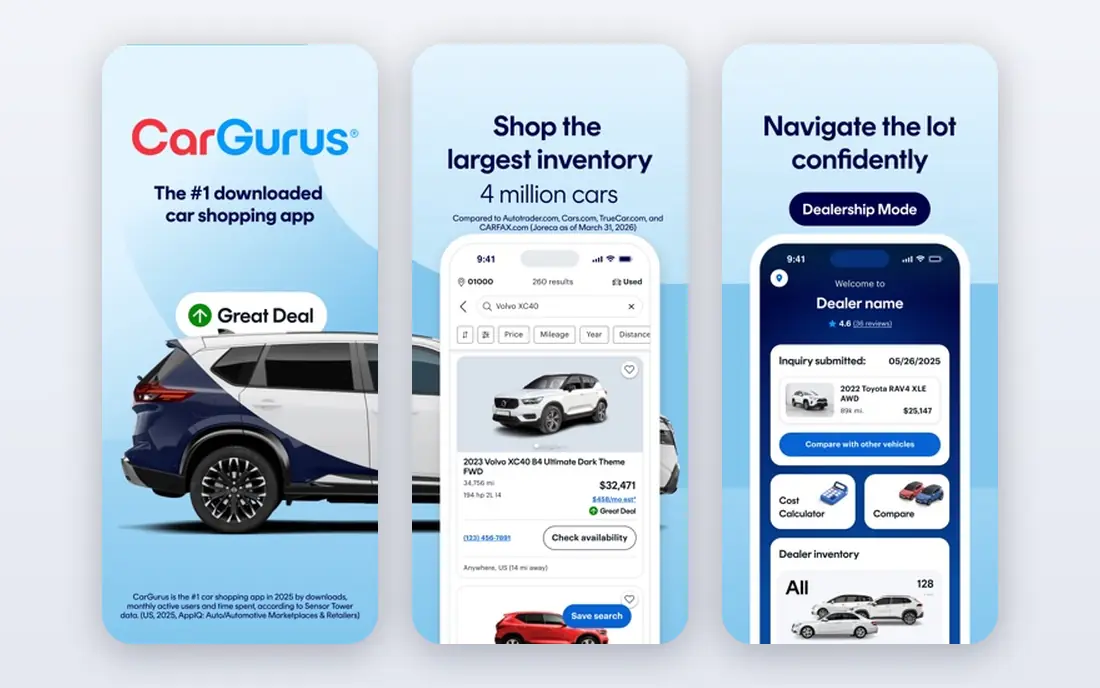
CarGurus is our pick for most used-car shoppers because it answers the hardest question first: is this price fair. Every listing carries a deal rating based on comparable cars, so Great Deal, Good Deal, Fair Deal and Overpriced tags let you filter out inflated listings without doing the math yourself. Price history and alerts help you watch a car and move when the price drops.
The limit is that CarGurus connects you with dealers rather than selling the car itself, so delivery, financing and return terms vary by seller. Treat it as the smartest search tool in the list, then check the dealer's terms, history report and inspection options before you commit.
- Deal ratings on every listing
- Large dealer inventory
- Price history and alerts
- It is a marketplace, not the seller, so purchase terms depend on the dealer
Carvana
Ideal for: Buying fully online
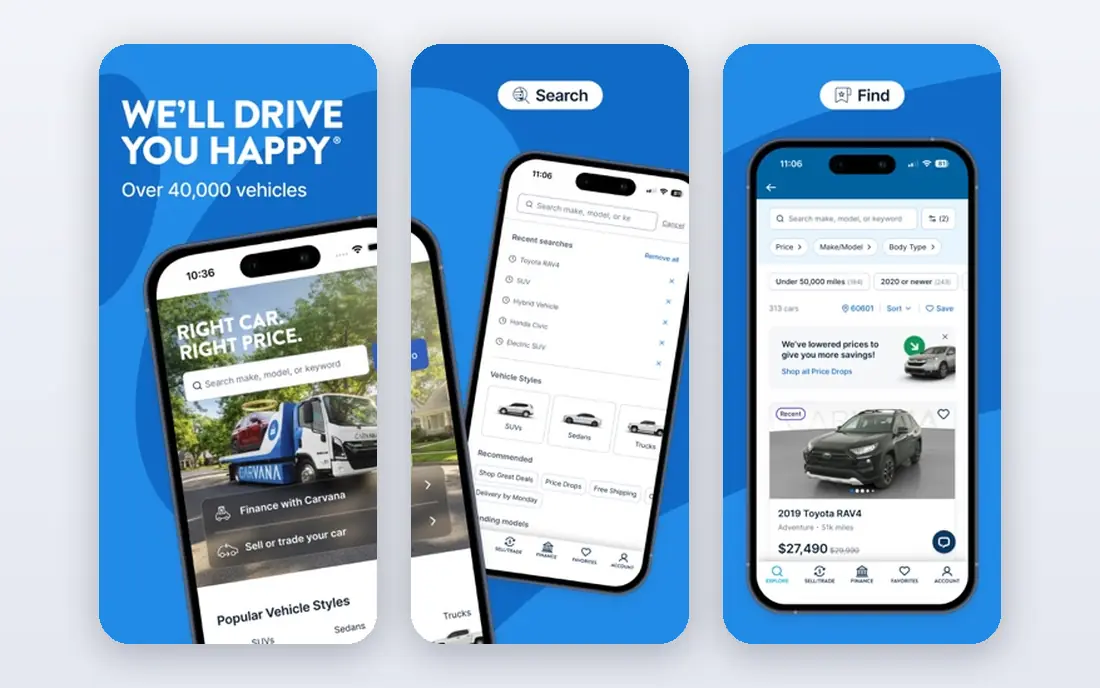
Carvana is the best option when you want to skip the dealership entirely. You browse, finance, sign and schedule delivery online, and cars arrive at your home or a vending machine pickup point. Each car gets a 150-point inspection, and the 7-day money-back guarantee gives you a real window to live with the car before the purchase is final.
The trade-offs are price and choice. You pay for the convenience, and inventory is smaller than an aggregator that lists every dealer in the country. Delivery fees can also apply depending on distance. If you value a simple, no-negotiation purchase and a return window, Carvana is hard to beat.
- Fully online purchase and delivery
- 7-day money-back guarantee
- 150-point inspection
- Delivery fees can apply
- Inventory is smaller than large marketplaces
- Prices can run above private-party deals
CarMax
Ideal for: No-haggle retail buying
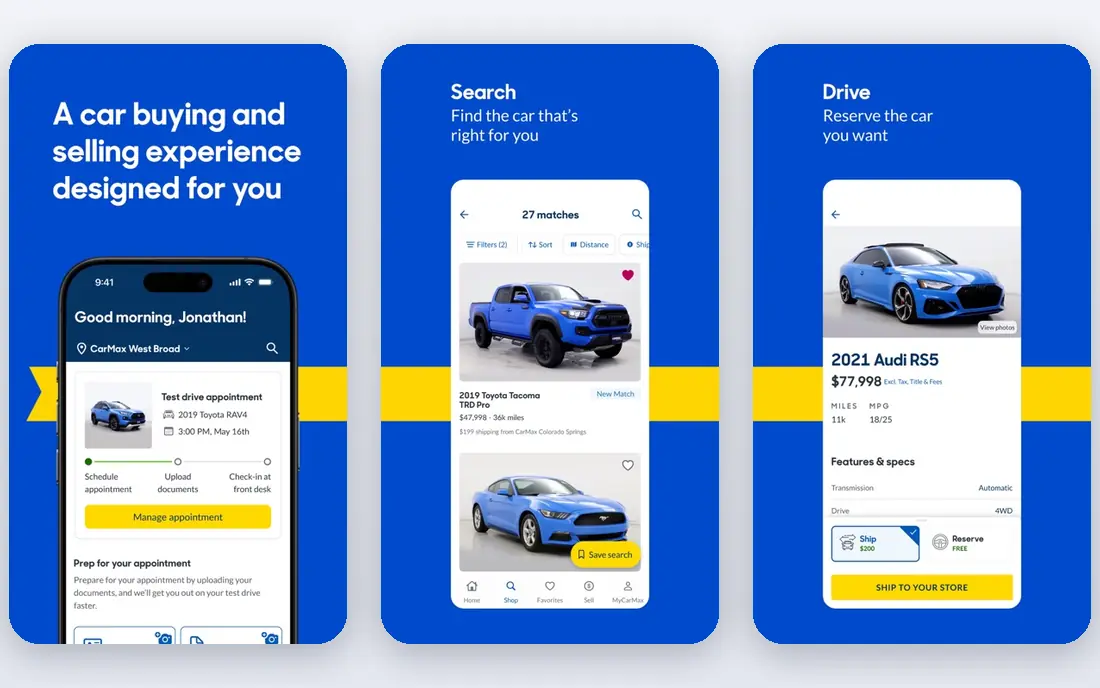
CarMax blends online shopping with physical stores, which suits buyers who want fixed pricing plus a chance to sit in the car first. You can reserve online, test drive at a store, and trade in your old car in the same visit. The 10-day money-back guarantee is among the most generous in this list, giving you time to spot problems after purchase.
The catch is that prices are firm, so skilled negotiators may find a better deal at a traditional dealer. Transfer fees can also apply when a car sits at a distant store. If you want a low-pressure purchase with a strong return policy, CarMax is a reliable choice.
- No-haggle pricing
- Physical stores for test drives
- 10-day money-back guarantee
- Transfer fees can apply for distant cars
- Prices are firm, so haggling will not help
Autotrader
Ideal for: Widest dealer listings
Autotrader has been a go-to car marketplace for years, and its depth is still its strength. It carries dealer and private-seller listings across the country, with filters for price, mileage, trim and features that make a broad search manageable. Built-in Kelley Blue Book tools help you judge whether an asking price sits in a fair range.
As with any marketplace, the seller sets the terms, so delivery, warranty and return options vary. Private-party listings in particular need a history report and an independent inspection. Use Autotrader for breadth, then verify the car before money changes hands.
- Very large dealer and private inventory
- Strong filters
- Kelley Blue Book price tools
- Purchase terms vary by seller
- Private listings need extra checks
Cars.com
Ideal for: Dealer listings and reviews
Cars.com is a strong alternative to Autotrader for dealer shopping. Its inventory is large, dealer reviews help you spot sellers with a good record, and many listings link to CARFAX history reports, which saves a step in your checks. The search tools are clear, and price-drop alerts help patient buyers.
It leans more toward dealer listings than private-party bargains, so if your budget depends on a private sale, pair it with Facebook Marketplace. For a dealer purchase with solid research tools, Cars.com is a dependable pick.
- Large dealer inventory
- Dealer reviews
- CARFAX history links on many listings
- Fewer private-party listings than some rivals
- Terms depend on the dealer
Edmunds
Ideal for: Research and pricing
Edmunds is best used before you buy, not as the place you buy. Its True Market Value tool estimates what buyers actually pay for a given model and trim, based on transaction data, which gives you a firm anchor for negotiation. Expert reviews, ownership costs and safety data round out the research picture.
Listings exist, but the research tools are the reason to open Edmunds. Check the value of any car you are considering here first, then take that number into your negotiation on CarGurus, Autotrader or Cars.com. A buyer who knows the market value is much harder to overcharge.
- True Market Value pricing
- Expert reviews
- Large research library
- Listings are secondary to research
- Buying terms depend on the dealer
TrueCar
Ideal for: Transparent new-car pricing
TrueCar focuses on price transparency for new cars, showing what buyers in your area paid for the same model. That data removes much of the guesswork from negotiation, and its certified dealer network commits to upfront pricing. For a new-car buyer who dislikes haggling, that is a real benefit.
Used-car shoppers will find less depth here than on CarGurus or Autotrader, and dealer coverage varies by region. Use TrueCar when you are buying new and want a fair-price anchor, and use a used-car marketplace when you are shopping pre-owned.
- Shows what others paid in your area
- Certified dealer network
- Upfront pricing
- Stronger for new cars than used
- Dealer coverage varies by area
Facebook Marketplace
Ideal for: Local private-party deals
Facebook Marketplace is where local bargains live. Private sellers list cars nearby, often below dealer prices, and you can message the seller directly, view their profile and arrange a viewing quickly. For a buyer with a tight budget and the patience to sort through listings, it can produce the best deal in this list.
The risk is equally real. Most sales are as-is, with no return policy and no platform guarantee, and scams are common. Never pay in advance, always meet in a safe public place, run a history report, and pay for an independent inspection before you buy. The savings are real, but only when you do the checks.
- Huge local inventory
- No platform fees for most listings
- Direct seller contact
- No buyer protection on most sales
- Scams and misrepresented cars are a real risk
How we picked these
We compared official feature pages, return policies and pricing tools for the major car buying apps available in the United States, along with public reviews of the purchase experience. We favored apps with large, current inventory, clear pricing information and a purchase path that works in October 2026. Apps limited to a single region or a single brand were left out.
What to check before you buy a car through an app
Start with price research. Check the same car on CarGurus for a deal rating, on Edmunds for True Market Value, and on at least one more marketplace, so you know the fair range before you talk to any seller. That single step prevents most overpayments.
Then verify the car itself. Get a vehicle history report, check the title status, and arrange an independent pre-purchase inspection for any private-party or high-mileage car. For online retailers, read the return policy carefully, including mileage limits and restocking terms, and confirm delivery fees and timing before you sign.
Finally, sort out money and paperwork in advance. Get pre-approved financing so you can compare the dealer's offer, confirm the total out-the-door price including taxes and fees, and never send payment before you have seen the car or confirmed the retailer's guarantee. A careful hour of checks can save thousands.
Frequently asked questions
What is the best app to buy a used car?
CarGurus is the best starting point for most used-car buyers, thanks to deal ratings and large dealer inventory. Carvana and CarMax are better when you want a no-haggle purchase with a return window, while Autotrader and Cars.com offer the widest choice.
Is it safe to buy a car online?
Buying from an established retailer with a return policy, such as Carvana or CarMax, is much safer than an unprotected private sale. For marketplace purchases, always run a history report and arrange an independent inspection before paying.
Which app has the best prices for used cars?
CarGurus deal ratings make it easiest to spot underpriced listings, and Facebook Marketplace often has the lowest asking prices from private sellers. Use Edmunds True Market Value to check whether any listing is fairly priced.
Can I buy a new car through an app?
Yes, TrueCar and Amazon Autos connect buyers with dealers for new cars, and many dealer sites now support online purchase. TrueCar is the best pick in this list for transparent new-car pricing.
Should I get a car inspected before buying?
Yes, especially for private-party and high-mileage cars. An independent inspection costs far less than a hidden mechanical problem, and it gives you room to negotiate or walk away.