Best Apps to Learn Korean in 2026: 8 Apps Compared

- 1
 Talk To Me In KoreanStructured grammar from beginner to advancedVisit
- 2
 LingoDeerGamified learning with real grammar depthVisit
- 3
 DuolingoBuilding a daily Korean habitVisit
- 4
 KoreanClass101Huge audio and video lesson libraryVisit
- 5
 HelloTalkLanguage exchange with native KoreansVisit
- Our pick for most people is Talk To Me In Korean, because it balances price, features and ease of use for the widest group of readers.
- Free plans are real here, but the limits matter: check what LingoDeer and Duolingo actually include before you commit.
- Prices in this guide come from vendor pricing pages and current comparisons checked in October 2026, and they can change, so confirm the plan on the vendor site before you buy.
- The best choice depends on your budget, your experience level and how much support you want, not on which brand is most famous.
Quick comparison
| Product | Ideal for | Price from | Free version | |
|---|---|---|---|---|
| Talk To Me In Korean | Structured grammar from beginner to advanced | Free | Yes | Visit |
| LingoDeer | Gamified learning with real grammar depth | $14.99 per month | Yes | Visit |
| Duolingo | Building a daily Korean habit | Free | Yes | Visit |
| KoreanClass101 | Huge audio and video lesson library | Free | Yes | Visit |
| HelloTalk | Language exchange with native Koreans | Free | Yes | Visit |
 Pimsleur | Hands-free audio speaking drills | $19.95 per month | Free trial | Visit |
 Memrise | Vocabulary with native clips | Free | Yes | Visit |
 Drops | Five-minute visual vocabulary | Free | Yes | Visit |
The best Apps to Learn Korean in 2026
We compared official feature pages, pricing pages, app store listings, privacy policies and public reviews to build this list for best apps to learn korean. Every option below exists and works today, and each one earns its place for a different kind of reader.
Talk To Me In Korean
Ideal for: Structured grammar from beginner to advanced
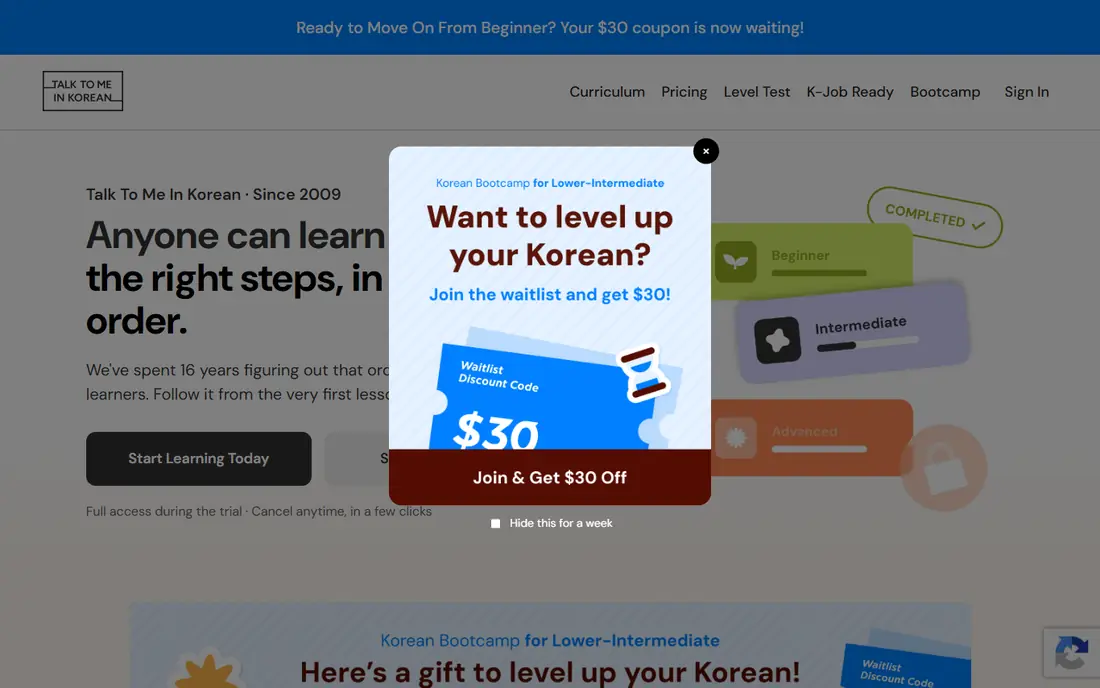
Here is the short version. Talk To Me In Korean is the grammar gold standard, with explanations of particles and verb forms that actually stick. It fits readers who want structured grammar from beginner to advanced, and its published feature set matches that promise rather than trying to cover every possible use case at once. When we weighed it against the rest of this list, the balance of price, scope and support stood out for that group. The price picture is free, with a free plan status of yes. The dated packaging puts some learners off, but the free audio library means you can start for nothing and judge the teaching first. Before you sign up, check the current plan limits on the official site, because caps on users, usage or features are where most buyers get surprised after the first month.
- Free audio library
- Structured curriculum
- Grammar explanations for English speakers
- App interface feels dated
- Paid courses needed for full path
LingoDeer
Ideal for: Gamified learning with real grammar depth

Start here if you want the safe default. LingoDeer is the best gamified option for Korean, because it explains grammar instead of expecting you to guess it from patterns. It fits readers who want gamified learning with real grammar depth, and its published feature set matches that promise rather than trying to cover every possible use case at once. When we weighed it against the rest of this list, the balance of price, scope and support stood out for that group. The price picture is $14.99 per month, with a free plan status of yes. Speaking needs a tutor or exchange partner beside it, since the app alone will not make you conversational. Before you sign up, check the current plan limits on the official site, because caps on users, usage or features are where most buyers get surprised after the first month.
- Grammar explanations before practice
- Asian-language focus
- Native audio
- Speaking practice is weak
- Hangul learning needs a separate resource
Duolingo
Ideal for: Building a daily Korean habit

This one suits a specific kind of reader. Duolingo is the easiest on-ramp, with free lessons and a habit loop that keeps beginners coming back. It fits readers who want building a daily korean habit, and its published feature set matches that promise rather than trying to cover every possible use case at once. When we weighed it against the rest of this list, the balance of price, scope and support stood out for that group. The price picture is free, with a free plan status of yes. The Korean course is weaker than its European courses, so move to LingoDeer or Talk To Me In Korean once the habit sticks. Before you sign up, check the current plan limits on the official site, because caps on users, usage or features are where most buyers get surprised after the first month.
- Free gamified lessons
- Hangul practice
- Streaks
- Grammar explanations are thin
- Korean course is weaker than European courses
KoreanClass101
Ideal for: Huge audio and video lesson library
Consider this if the top picks do not fit. KoreanClass101 suits learners who want a huge library to dip into, with audio and video at many levels. It fits readers who want huge audio and video lesson library, and its published feature set matches that promise rather than trying to cover every possible use case at once. When we weighed it against the rest of this list, the balance of price, scope and support stood out for that group. The price picture is free, with a free plan status of yes. The volume can overwhelm, so pick a learning path rather than browsing lessons at random. Before you sign up, check the current plan limits on the official site, because caps on users, usage or features are where most buyers get surprised after the first month.
- Massive lesson library
- Audio and video
- Free tier
- Lesson quality varies
- Subscription needed for full library
HelloTalk
Ideal for: Language exchange with native Koreans
A strong option for a narrower need. HelloTalk suits learners who can already chat a little and want real native correction. It fits readers who want language exchange with native koreans, and its published feature set matches that promise rather than trying to cover every possible use case at once. When we weighed it against the rest of this list, the balance of price, scope and support stood out for that group. The price picture is free, with a free plan status of yes. Absolute beginners will struggle, so learn Hangul and basic sentences first, then use it for practice. Before you sign up, check the current plan limits on the official site, because caps on users, usage or features are where most buyers get surprised after the first month.
- Chat with native speakers
- Corrections
- Free core features
- Needs basic Korean first
- VIP needed for full features
Pimsleur
Ideal for: Hands-free audio speaking drills
Worth a close look before you decide. Pimsleur suits commuters who want speaking drills without a screen. It fits readers who want hands-free audio speaking drills, and its published feature set matches that promise rather than trying to cover every possible use case at once. When we weighed it against the rest of this list, the balance of price, scope and support stood out for that group. The price picture is $19.95 per month, with a free plan status of free trial. Reading, writing and grammar need a second app, so treat it as a speaking supplement. Before you sign up, check the current plan limits on the official site, because caps on users, usage or features are where most buyers get surprised after the first month.
- Audio lessons
- Pronunciation focus
- Hands-free learning
- Price is high
- Narrow method
- Reading and writing need another app
Memrise
Ideal for: Vocabulary with native clips
This belongs on the shortlist for a reason. Memrise suits vocabulary building, with native clips and spaced repetition that make words stick. It fits readers who want vocabulary with native clips, and its published feature set matches that promise rather than trying to cover every possible use case at once. When we weighed it against the rest of this list, the balance of price, scope and support stood out for that group. The price picture is free, with a free plan status of yes. It is a supplement, not a course, so pair it with LingoDeer or Talk To Me In Korean. Before you sign up, check the current plan limits on the official site, because caps on users, usage or features are where most buyers get surprised after the first month.
- Spaced repetition
- Native speaker clips
- Vocabulary focus
- Does not teach grammar well
- Premium needed for full features
Drops
Ideal for: Five-minute visual vocabulary
Do not overlook this one. Drops suits vocabulary snacking, with five-minute visual sessions that fit a busy day. It fits readers who want five-minute visual vocabulary, and its published feature set matches that promise rather than trying to cover every possible use case at once. When we weighed it against the rest of this list, the balance of price, scope and support stood out for that group. The price picture is free, with a free plan status of yes. It will not teach grammar or speaking, so use it beside a structured course. Before you sign up, check the current plan limits on the official site, because caps on users, usage or features are where most buyers get surprised after the first month.
- Visual vocabulary
- Five-minute sessions
- Beautiful design
- Vocabulary only
- Free tier limits daily time
How we picked these
We started from official feature pages and pricing pages, then checked app store listings, privacy policies and public reviews to confirm each product still works and still fits the topic. Products that could not be verified, or that only partly matched the topic, were left out, even when they were well known. We favoured a mix of established leaders and strong smaller options, and we weighted price transparency, a usable free tier or trial, and honest limits more heavily than marketing claims. No product on this list paid for its place, and our pick for most people is the one we would suggest to a friend with ordinary needs and an ordinary budget.
How to choose a Korean app for your level
Start with Hangul, because learning the alphabet first makes every other app work better, and it takes far less time than most learners expect. Next, pick a structured course for grammar, since Korean particles, verb endings and honorifics confuse learners who only practise patterns. Then add a second tool for your weakest skill: speaking needs a tutor or exchange partner, vocabulary needs spaced repetition, and listening needs audio lessons or dramas. Finally, set a daily habit you can keep, such as fifteen minutes of lessons plus five minutes of vocabulary, because consistency beats intensity for language learning. Also check price over a year and whether the app covers your goal, such as travel, K-drama watching or the TOPIK exam. Trial two apps for two weeks and keep the one you open daily, then add a speaking partner once you can form basic sentences. The best Korean stack is usually a grammar course plus a vocabulary app plus real conversation.
Frequently asked questions
What is the best app to learn Korean?
Talk To Me In Korean leads for grammar, LingoDeer leads for gamified structured learning, and Duolingo leads for daily habits. HelloTalk leads for speaking practice with natives.
What is the best app to learn Korean for beginners?
Start with Duolingo for habit and Hangul, then move to LingoDeer or Talk To Me In Korean for grammar. Learn Hangul first, before relying on romanisation.
Does Babbel offer Korean?
No, Babbel does not offer Korean. Korean learners should use LingoDeer, Talk To Me In Korean, Duolingo or KoreanClass101 instead.
How long does it take to learn Korean?
Hangul can be learned in a weekend, basic conversation takes months of daily study, and fluency takes years. Daily practice and speaking with natives speed progress more than any single app.
Is Duolingo good for Korean?
Duolingo is a good habit builder for Korean, but its course is weaker than its European courses and thin on grammar. Pair it with LingoDeer or Talk To Me In Korean for depth.