8 Best ASPM Tools for 2026

- 1
 ApiiroApplication security posture with a deep context graphVisit
- 2
 ArmorCodeUnified exposure management across apps, cloud, and AIVisit
- 3
 CycodeAgentic development security with ASPM at its coreVisit
- 4
 Endor LabsSupply chain security with reachability-based prioritizationVisit
- 5
 Ox SecurityActive ASPM with code-to-cloud reachabilityVisit
- ASPM tools unify findings from many application security scanners into one prioritized, actionable view.
- Apiiro, ArmorCode, and Cycode are leading platforms for correlating findings across code, cloud, and pipelines.
- Endor Labs, Ox Security, and Legit Security add deep supply chain and reachability analysis.
- Arnica and Qwiet AI suit teams that want focused code and pipeline security with faster setup.
- The best ASPM tool is the one developers actually use, so trial it with your own repos and scanners.
Quick comparison
| Product | Ideal for | Price from | Free version | |
|---|---|---|---|---|
| Apiiro | Application security posture with a deep context graph | See website | No | Visit |
| ArmorCode | Unified exposure management across apps, cloud, and AI | See website | No | Visit |
| Cycode | Agentic development security with ASPM at its core | See website | No | Visit |
| Endor Labs | Supply chain security with reachability-based prioritization | See website | Yes | Visit |
| Ox Security | Active ASPM with code-to-cloud reachability | See website | No | Visit |
 Legit Security | ASPM and software supply chain security together | See website | No | Visit |
 Arnica | Code and pipeline risk management with fast setup | See website | No | Visit |
 Qwiet AI | AI-powered code security and vulnerability prioritization | See website | No | Visit |
The best ASPM tools
Apiiro
Ideal for: Application security posture with a deep context graph
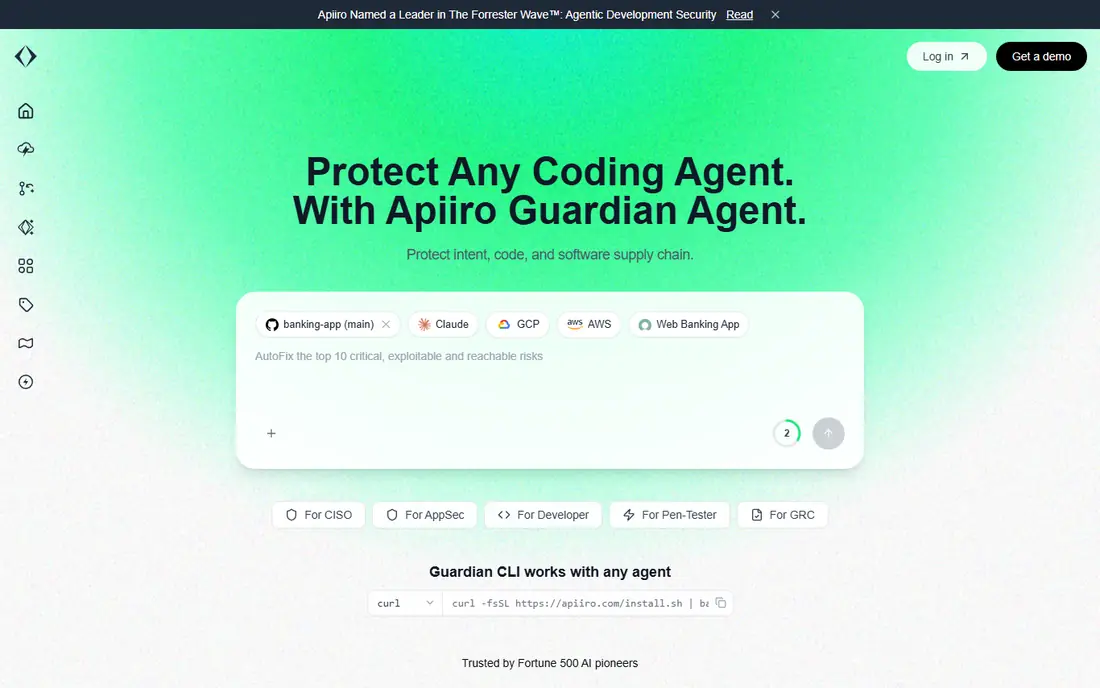
Apiiro is an application security platform built on a context graph that maps code, APIs, cloud resources, and pipelines, so findings can be prioritized by what they actually expose. Its Guardian Agent approach targets agentic development, where AI-generated code and autonomous agents expand the attack surface faster than traditional scanning can track. Apiiro correlates findings across scanners, traces them to owners and business impact, and drives remediation workflows into developer tools. Pricing is enterprise and quote-based. For organizations that want ASPM grounded in a deep understanding of how their applications are built and deployed, Apiiro is a leading platform.
- Context graph across code and cloud, risk prioritization, developer workflows
- Enterprise pricing, implementation needs planning
ArmorCode
Ideal for: Unified exposure management across apps, cloud, and AI
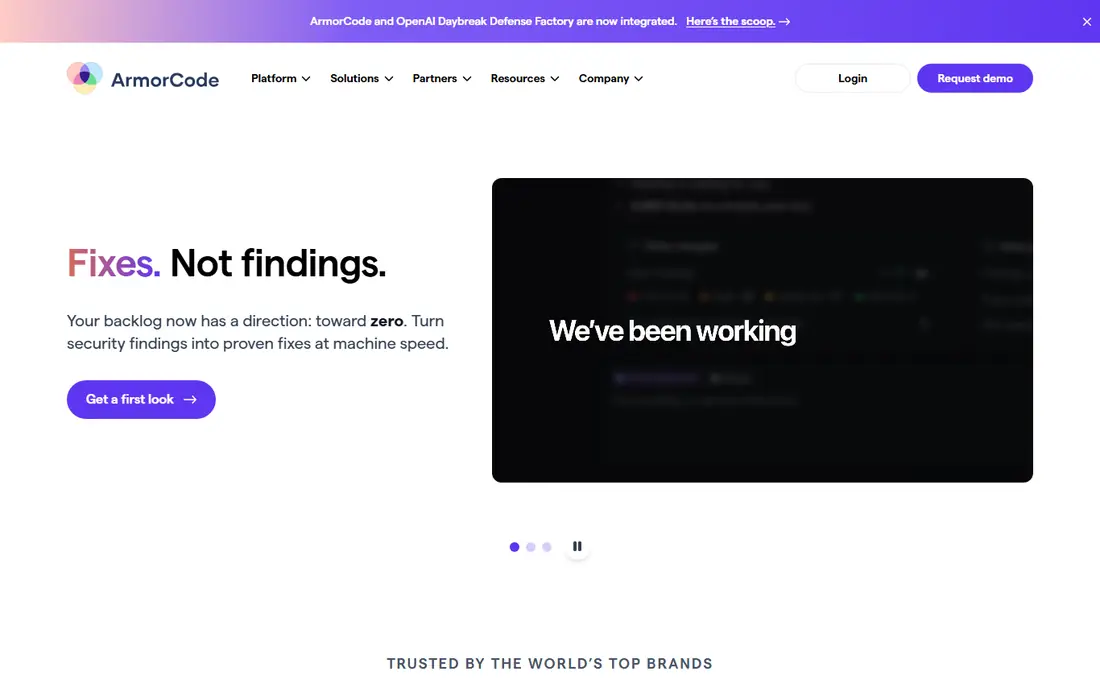
ArmorCode is an agentic control plane for unified exposure management, covering infrastructure, application, supply chain, and AI risk in one system. Its ASPM capability correlates findings across every AppSec tool, provides code-to-cloud traceability and ownership, and enforces policy-driven SLAs and gates in the software development lifecycle. Anya Agents triage findings, score risks, and generate remediation insights, with human approval for exceptions and remediations. ArmorCode reports processing hundreds of billions of findings annually across more than 400 integrations. Pricing is enterprise and quote-based. For organizations that want ASPM as part of a single exposure management program, ArmorCode is a strong choice.
- 400 plus integrations, ASPM plus RBVM and supply chain, agentic remediation
- Platform breadth needs scoping, enterprise pricing
Cycode
Ideal for: Agentic development security with ASPM at its core
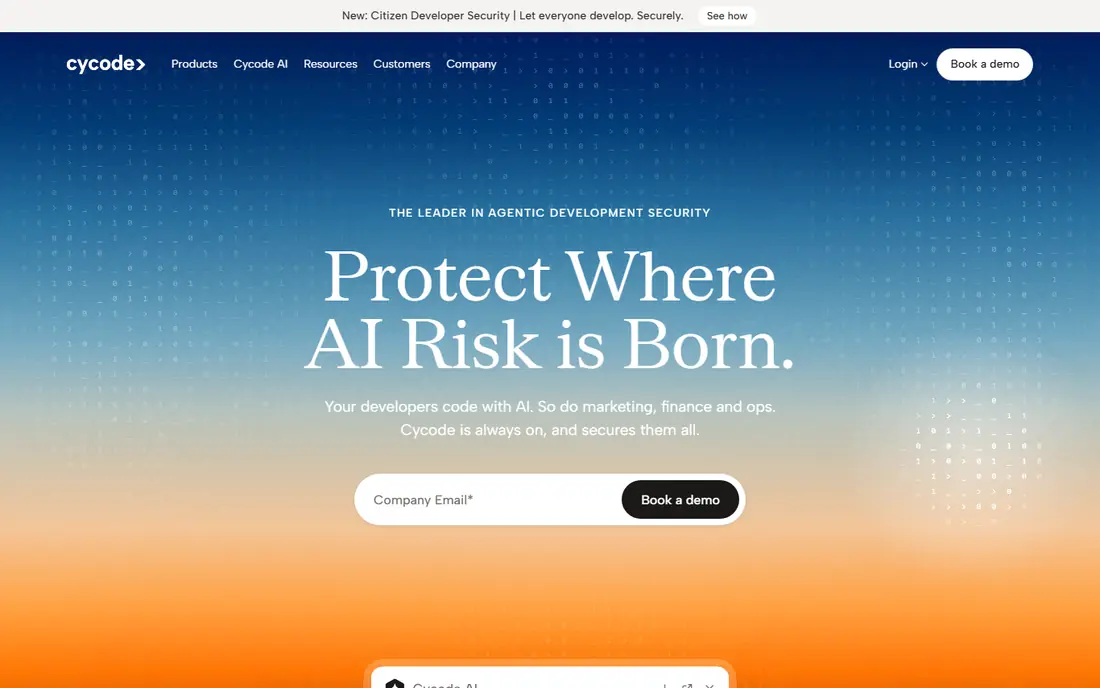
Cycode is an agentic development security platform that converges application security testing, software supply chain security, and ASPM, scanning the entire attack surface from code to AI features such as MCP servers and skills. Its exploitability agent confirms whether a vulnerability is actually reachable, its remediation agent generates pull-request-ready fixes with reasoning, and its context intelligence graph supports natural-language queries over the development lifecycle. Cycode's preventive guardrails work in the IDE, pull requests, CLI, and AI coding tools, so fixes happen before commit where possible. Pricing is enterprise and quote-based. For teams securing AI-assisted development, Cycode is a leading ASPM platform.
- Converged AST, SSCS, and ASPM, exploitability agent, remediation agent
- Enterprise pricing, broad platform needs scoping
Endor Labs
Ideal for: Supply chain security with reachability-based prioritization
Endor Labs is an agentic application security platform whose strength is supply chain security: understanding which open source dependencies are actually reachable and exploitable, rather than flagging every vulnerability in every package. Its AURI agent helps coding agents write secure code from the start, governs agent actions, blocks malicious packages before install, and flags secrets before they leak. Endor's review agents check pull requests for architectural risks that legacy scanners miss, such as an endpoint shipped without authentication. Its CLI tools for AI coding workflows are free. Pricing for the platform is quote-based. For teams drowning in dependency noise, Endor's reachability focus cuts the backlog to what matters.
- Reachability analysis, dependency upgrades, AI coding security, free CLI tools
- Supply chain focus, broader ASPM needs complementary tools
Ox Security
Ideal for: Active ASPM with code-to-cloud reachability
Ox Security provides active ASPM that traces vulnerabilities from code through pipelines to cloud runtime, so teams can tell whether a finding is actually exploitable in production. Its platform correlates findings across scanners, maps them to the code paths and infrastructure that expose them, and prioritizes by reachability and business context rather than severity alone. That active approach suits organizations whose main problem is not finding vulnerabilities but deciding which ones to fix first. Pricing is enterprise and quote-based. For teams that want ASPM with strong reachability evidence, Ox Security is a capable and fast-growing option.
- Reachability analysis, code-to-cloud tracing, risk prioritization
- Enterprise pricing, newer vendor profile than some rivals
Legit Security
Ideal for: ASPM and software supply chain security together
Legit Security is an ASPM platform that unifies application security visibility with software supply chain security, covering code, pipelines, and cloud. It correlates findings across scanners, tracks the software supply chain from development to deployment, and provides compliance reporting for frameworks that require supply chain controls. Legit's approach suits organizations that need a single view of application risk, including the pipelines and infrastructure that build and ship code, not just the code itself. Pricing is enterprise and quote-based. For teams that want ASPM plus supply chain security in one platform, Legit is a strong contender.
- Unified AppSec visibility, supply chain security, compliance reporting
- Enterprise pricing, platform breadth needs scoping
Arnica
Ideal for: Code and pipeline risk management with fast setup
Arnica is a code and pipeline risk management platform that helps security and engineering teams find and fix risks in code, dependencies, and pipelines without slowing developers down. Its approach emphasizes accurate, actionable findings and workflows that fit how developers already work, with prioritization based on real risk rather than scanner volume. Arnica suits mid-size teams that want ASPM-style correlation and prioritization with faster setup and a more focused scope than the largest enterprise platforms. Pricing is quote-based. For teams that need strong ASPM capability without enterprise platform complexity, Arnica is worth evaluating.
- Code risk management, pipeline security, developer-friendly workflows
- Smaller platform breadth than the largest ASPM vendors
Qwiet AI
Ideal for: AI-powered code security and vulnerability prioritization
Qwiet AI, formerly ShiftLeft, is an AI-powered code security platform that analyzes code to find vulnerabilities and prioritize them by reachability and exploitability. Its AI models understand code flow and data flow, which helps distinguish vulnerabilities that are actually reachable from those that are not, reducing the noise that overwhelms AppSec teams. Qwiet integrates into developer workflows and CI pipelines, with remediation guidance that fits how engineers work. Pricing is quote-based. For teams whose main ASPM problem is code-level findings, Qwiet AI offers a focused, AI-driven approach that complements broader posture platforms.
- AI code analysis, reachability-based prioritization, developer workflows
- Code focus, broader ASPM needs complementary tools
How we picked these
We looked for tools with genuine ASPM capability: ingesting findings from multiple scanners, correlating them with code and runtime context, prioritizing by risk, and driving remediation. We balanced full ASPM platforms, unified exposure management vendors, and focused supply chain and code security tools, because teams adopt ASPM at different scopes. We compared official feature pages, product documentation, and public reviews, and we left out single-scanner tools without correlation or prioritization. Where a vendor did not publish a current price, we wrote "See website" rather than repeat a third-party figure.
How to run an ASPM trial that tells you the truth
Connect the scanners you already use, not a demo set, and import findings from at least two real repositories. Check whether the platform correctly identifies owners, deduplicates the same issue across scanners, and prioritizes a known critical issue above routine noise. Ask developers to triage a sample of findings and report whether the remediation guidance is clear enough to act on without a security engineer in the room. Test the reporting: can you show leadership which risks are open, which are fixed, and how long each took? Finally, check policy gates: can the platform block a risky merge without blocking every merge? A trial that passes these tests will tell you more than any demo.
Frequently asked questions
What is ASPM?
Application Security Posture Management is the practice of unifying findings from many application security tools, correlating them with code and runtime context, and prioritizing and remediating them by real risk.
How is ASPM different from a vulnerability scanner?
A scanner finds issues in one area, such as code or dependencies. ASPM sits above scanners, combining their findings, deduplicating them, adding context, and driving prioritized remediation.
Do I need ASPM if I already have SAST and SCA?
If your scanners produce more findings than your team can triage, ASPM helps. If you have few findings and a small codebase, a scanner plus good triage habits may be enough.
What is reachability analysis?
It determines whether a vulnerability is actually reachable and exploitable in your application, by tracing code paths, data flows, and runtime exposure, so teams fix real risks first.
Can ASPM help with compliance?
Yes. ASPM platforms provide unified reporting, policy enforcement, and audit trails that support frameworks requiring application security and supply chain controls.
Should developers or security teams own ASPM?
Both. Security teams own policy and prioritization, while developers own fixes. The best ASPM tools give each group the view and workflow they need.