Best Auto Repair Shop Management Software in 2026: 8 Tools Compared

- 1
 ShopmonkeyModern cloud shop managementVisit
- 2
 TekmetricGrowing repair shopsVisit
- 3
 Mitchell 1Repair data and shop managementVisit
- 4
 Shop-WareCloud-based repair workflowVisit
- 5
 AutoLeapSmall to mid-size shopsVisit
- Shopmonkey, Tekmetric, and Shop-Ware lead for modern, cloud-based shop management, while Mitchell 1 suits shops that want deep repair data and catalogs.
- AutoLeap, RO Writer, and RepairShopr cover smaller shops and mixed repair businesses with simpler pricing and setup.
- Digital inspections, text approvals, and parts ordering are now core features, so compare those workflows, not just estimates and invoicing.
- Integration with parts suppliers and accounting tools saves more time than a slightly lower monthly fee, so check integrations before choosing.
Quick comparison
| Product | Ideal for | Price from | Free version | |
|---|---|---|---|---|
| Shopmonkey | Modern cloud shop management | See website | Free trial | Visit |
| Tekmetric | Growing repair shops | See website | Free trial | Visit |
| Mitchell 1 | Repair data and shop management | See website | Free trial | Visit |
| Shop-Ware | Cloud-based repair workflow | See website | Free trial | Visit |
| AutoLeap | Small to mid-size shops | See website | Free trial | Visit |
 RO Writer | Budget-friendly shop software | See website | Free trial | Visit |
 RepairShopr | Mixed repair businesses | See website | Free trial | Visit |
 ARI | Shop and fleet management | See website | Free trial | Visit |
The best auto repair shop management software
Auto repair shop software handles estimates, work orders, parts, labor, invoicing, customer communication, and scheduling in one system, replacing paper tickets and spreadsheets. The best tools also support digital vehicle inspections with photos, text approvals, and parts ordering, which customers now expect. We compared official feature pages, pricing pages, and public reviews, focusing on shop workflows rather than generic invoicing tools.
Shopmonkey
Ideal for: Modern cloud shop management
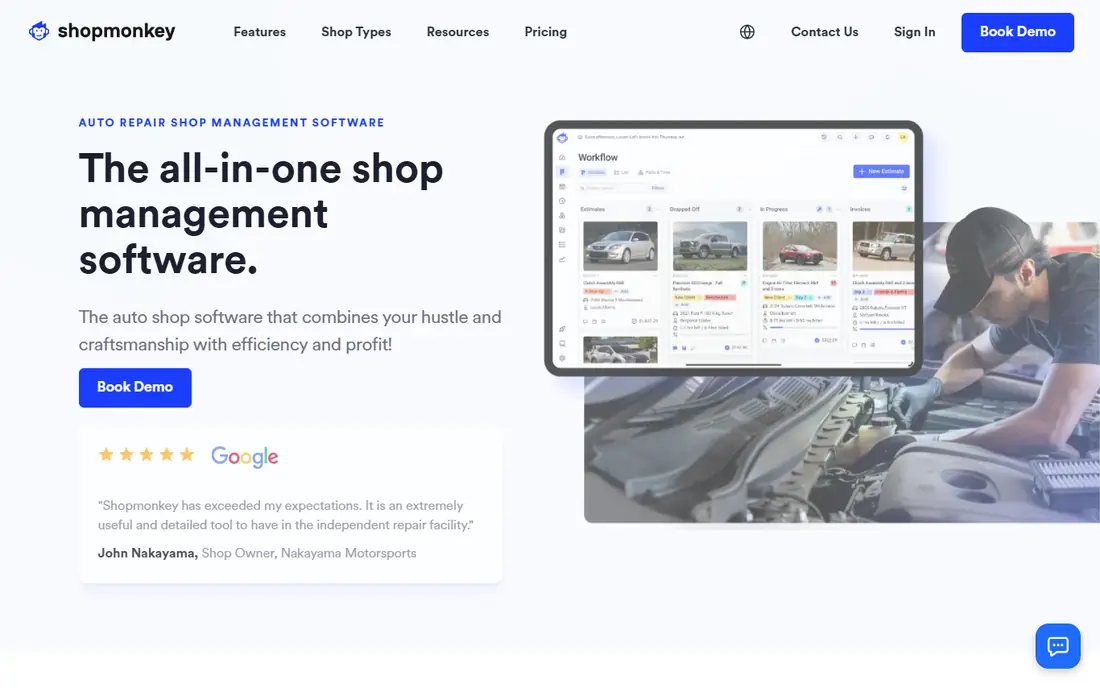
Shopmonkey is a cloud-based shop management platform with estimates, work orders, digital inspections, customer messaging, payments, and reporting in a modern interface. Its workflow follows a repair from estimate to approval to invoice without switching systems, and integrations cover parts suppliers and accounting tools. For shops moving from paper or an older desktop system, that modern flow is a major upgrade.
Pricing is typically per user or by plan, so larger teams should model total cost, and some advanced features sit on higher tiers. For shops that want a modern, cloud-based system, Shopmonkey is our pick.
- Modern cloud interface
- Estimates, inspections, and messaging in one flow
- Good integrations
- Pricing per user can add up
- Feature depth varies by plan
Tekmetric
Ideal for: Growing repair shops
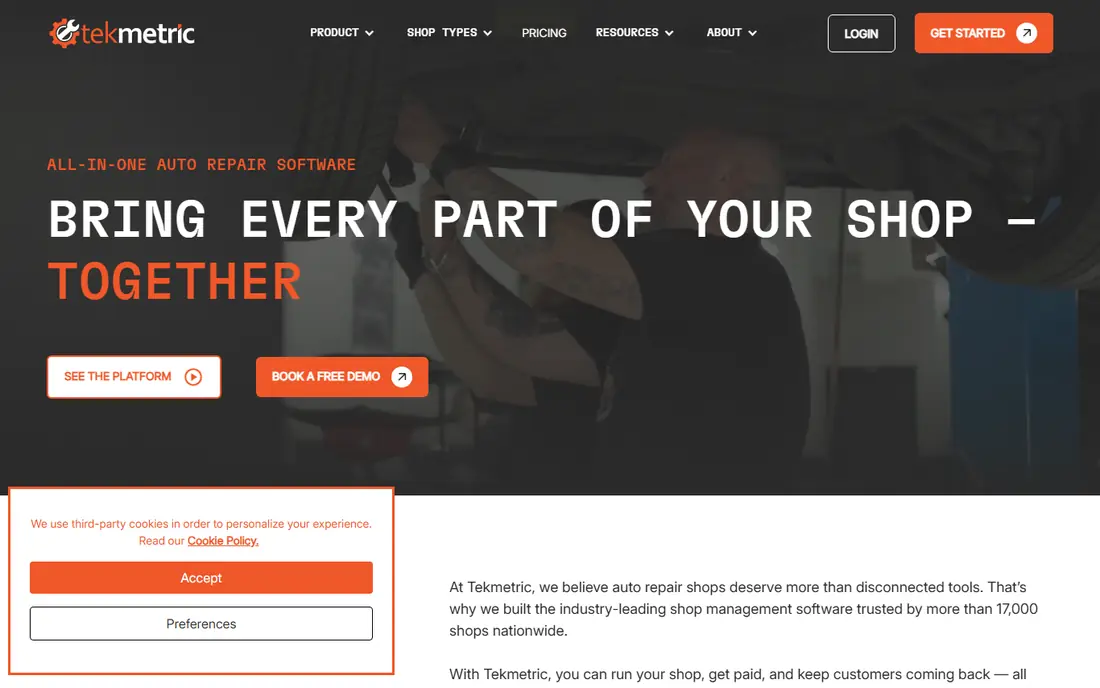
Tekmetric is a cloud shop management system known for estimates, digital vehicle inspections with photos, text message approvals, and reporting, plus support for multi-shop operations. Its inspection workflow helps shops show customers what needs work and get approvals quickly, which improves trust and average repair order value. Integrations cover parts and payments.
Pricing scales with users and locations, and onboarding a busy shop takes planning and data migration. For growing shops that want inspection-led selling and clear reporting, Tekmetric is a leading choice.
- Strong estimates and digital inspections
- Text approvals
- Reporting and multi-shop support
- Pricing scales with users and shops
- Onboarding takes planning
Mitchell 1
Ideal for: Repair data and shop management
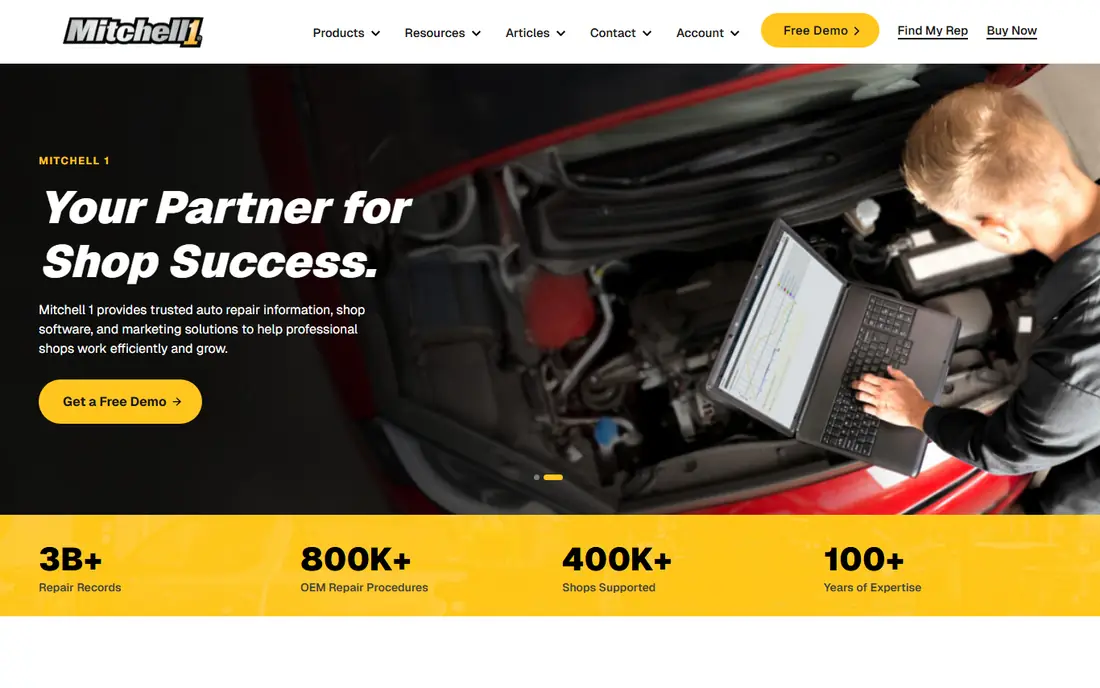
Mitchell 1 combines shop management software, known as Manager SE, with deep repair information, labor times, and parts data from its ProDemand product. That repair data is the differentiator: technicians can look up procedures, diagrams, and labor guides without a separate system. For shops that value accurate estimates built on real repair data, Mitchell 1 is hard to match.
The interface feels more traditional than Shopmonkey or Tekmetric, and pricing and modules require a sales discussion. For shops that prioritize repair information alongside management, Mitchell 1 is a strong, established choice.
- Deep repair information and labor guides
- Shop management plus parts catalog
- Long industry history
- Interface feels traditional
- Pricing and modules need discussion with sales
Shop-Ware
Ideal for: Cloud-based repair workflow
Shop-Ware is a cloud-based shop management platform covering estimates, work orders, digital inspections, parts ordering, and invoicing, with a workflow designed around the modern repair process. Its parts and labor tools help build accurate estimates, and customer communication keeps owners informed without phone tag. Cloud access means owners can check the shop from anywhere.
Pricing is per user, and Shop-Ware is a smaller vendor than the industry giants, so buyers should check support and integrations during a trial. For cloud-first shops, Shop-Ware is a capable and modern option.
- Cloud workflow from estimate to invoice
- Digital inspections
- Good parts and labor tools
- Pricing per user
- Smaller vendor than Mitchell 1
AutoLeap
Ideal for: Small to mid-size shops
AutoLeap offers shop management with estimates, scheduling, digital inspections, CRM, invoicing, and reporting, aimed at small to mid-size shops that want one system without enterprise complexity. Its CRM and marketing tools help shops stay in touch with customers for service reminders and follow-ups, which supports repeat business.
Larger multi-shop operations may find its multi-location features lighter than Tekmetric or Shopmonkey. For a single shop or small group, AutoLeap is an approachable and complete choice.
- All-in-one shop software with CRM
- Scheduling and inspections
- Approachable for smaller shops
- Feature depth varies by plan
- Multi-shop features are lighter than Tekmetric
RO Writer
Ideal for: Budget-friendly shop software
RO Writer is a budget-friendly shop management tool covering estimates, repair orders, parts, labor, invoicing, and customer history. Its appeal is value: shops get core management features without the higher per-user pricing of some cloud rivals. That makes it a good fit for smaller shops watching costs closely.
The interface is functional rather than polished, and marketing and CRM features are lighter than in AutoLeap or Shopmonkey. For shops that prioritize core functions and low cost, RO Writer is a practical pick.
- Affordable plans
- Estimates, work orders, and invoicing
- Parts and labor integration
- Interface is functional rather than modern
- Fewer marketing features than rivals
RepairShopr
Ideal for: Mixed repair businesses
RepairShopr is a repair business platform that covers auto repair alongside electronics, computer, and general repair, with ticketing, estimates, invoicing, and customer management. That breadth suits mixed repair businesses that fix more than cars, or shops that also handle other equipment. Pricing is approachable for small businesses.
Auto-specific depth, such as repair data and parts catalog integration, is lighter than in Mitchell 1 or Tekmetric. For a general repair business, or an auto shop that also repairs other items, RepairShopr is a flexible choice.
- Works for auto, electronics, and general repair
- Ticketing and invoicing
- Affordable plans
- Less auto-specific depth than Shopmonkey or Tekmetric
- Parts catalog integration is lighter
ARI
Ideal for: Shop and fleet management
ARI, formerly Auto Repair Software, offers shop management with work orders, estimates, invoicing, customer history, and fleet management features for businesses that maintain their own vehicles. That fleet angle suits shops that also service fleets, or businesses running an internal workshop. Entry pricing is approachable.
ARI is a smaller vendor, so buyers should check integrations and support during a trial, and feature depth varies by plan. For small shops and fleet workshops, ARI is a budget-friendly option worth testing.
- Shop management plus fleet features
- Work orders and invoicing
- Affordable entry plans
- Smaller brand presence
- Feature set varies by plan
How we picked these
We compared official feature pages, pricing pages, and public reviews for software built for auto repair shops, not generic invoicing or scheduling tools. We looked for estimates, work orders, digital inspections, parts and labor handling, customer messaging, and invoicing, plus integrations with parts suppliers and accounting. Tools without auto-specific workflows were left out.
What to check before you choose auto repair software
Start with the inspection and approval workflow, since that is where modern shop software earns its keep. Test a digital inspection with photos, send a text approval as a customer would receive it, and check how approved work flows into the invoice. A clumsy approval step will slow the shop more than any other feature gap.
Next, check parts and labor integration: confirm your main parts suppliers are supported and that labor guides match how your shop quotes. Ask about data migration from your current system, since customer and vehicle history is valuable. Finally, model total cost per user and per location, including texting and payment fees, and run a trial with real jobs before committing the whole shop.
Also test the customer communication side from the customer's phone, since text updates and digital inspections are now a major reason customers return. Check how estimates, approvals, and invoices look on mobile, and whether customers can pay online without calling the shop. A system that looks good on a desktop but confusing on a phone will create extra calls, which defeats the time savings the software should provide for a busy front desk.
Frequently asked questions
What is the best auto repair shop management software?
Shopmonkey and Tekmetric lead for modern cloud-based shops, Mitchell 1 leads for repair data depth, and AutoLeap suits smaller shops. The best choice depends on shop size, whether repair data matters most, and how much you value a modern interface.
Do these tools include digital vehicle inspections?
Yes, most tools in this list, including Shopmonkey, Tekmetric, Shop-Ware, and AutoLeap, include digital inspections with photos and text approvals. Check photo limits, customer-facing inspection pages, and approval workflows during a trial, since details vary.
Can shop software order parts?
Yes, most platforms integrate with parts suppliers or catalogs, letting shops check availability and pricing and add parts to estimates and work orders. Confirm your specific suppliers are supported before buying, since coverage varies by vendor and region.
How much does auto repair shop software cost?
Pricing is usually per user per month or by plan, and varies with features, locations, and add-ons such as texting and payments. Most vendors price by quote or trial, so request a full quote including user count and add-ons before comparing.
Can I migrate customer history from my old system?
Most vendors offer migration help from common shop systems and spreadsheets, but the ease depends on your current system and data quality. Ask about migration scope, cost, and timeline during the sales process, and keep a backup of your old data.