Best Automation Tools for Marketing in Healthcare in 2026: 7 Options Compared

- 1
 HubSpotAll-in-one healthcare marketingVisit
- 2
 Salesforce Marketing CloudEnterprise healthcare journeysVisit
- 3
 BrazeCross-channel patient engagementVisit
- 4
 IterableAI cross-channel journeysVisit
- 5
 ActiveCampaignSMB clinic automationVisit
- Marketing automation in healthcare covers appointment reminders, patient education, intake follow-up, and reactivation, with consent and privacy controls at every step.
- HubSpot, Salesforce, and Oracle Eloqua suit larger providers that need CRM depth, multi-location campaigns, and enterprise governance.
- Braze and Iterable suit providers that need cross-channel journeys across email, SMS, push, and in-app messages.
- ActiveCampaign suits smaller clinics and practices that want strong automation at a lower cost and with less setup.
- Our pick for most teams is a tool that handles consent properly, connects to the CRM or EHR-adjacent systems in use, and keeps patient data out of marketing lists by default.
Quick comparison
| Product | Ideal for | Price from | Free version | |
|---|---|---|---|---|
| HubSpot | All-in-one healthcare marketing | See website | Free tools | Visit |
| Salesforce Marketing Cloud | Enterprise healthcare journeys | See website | No | Visit |
| Braze | Cross-channel patient engagement | See website | Free trial | Visit |
| Iterable | AI cross-channel journeys | See website | No | Visit |
| ActiveCampaign | SMB clinic automation | See website | Free trial | Visit |
 Marketo Engage | Enterprise B2B healthcare marketing | See website | No | Visit |
 Oracle Eloqua | Enterprise healthcare campaigns | See website | No | Visit |
The best automation tools for marketing in healthcare
Healthcare marketing is different from retail marketing. Messages touch appointments, conditions, treatments, and follow-up care, so consent, privacy, and accuracy matter far more than clever copy. The best automation tools for healthcare help clinics, hospitals, and health brands send the right reminder, education series, or reactivation message at the right time, while keeping patient data controlled and auditable.
We compared official feature pages, pricing pages, and product documentation for automation tools used in October 2026, looking at journey builders, email and SMS, segmentation, CRM integration, analytics, and privacy and consent controls. We did not verify any vendor's HIPAA status from homepage copy alone, so teams should confirm business associate agreements and data handling directly with each vendor before sending patient-related messages.
HubSpot
Ideal for: All-in-one healthcare marketing
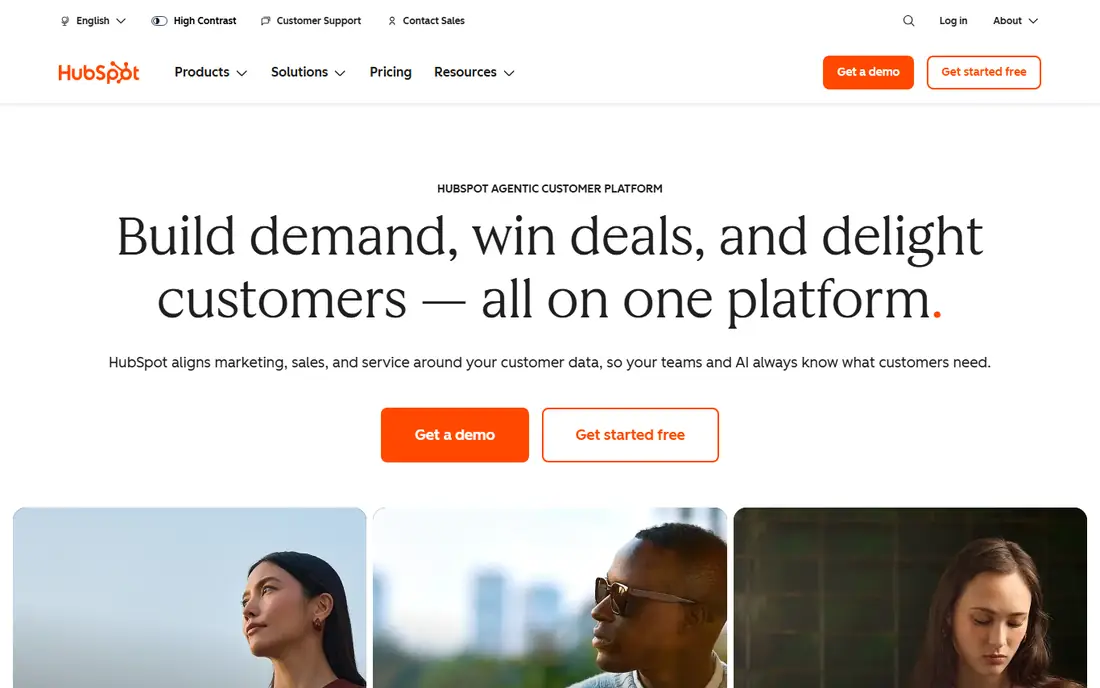
HubSpot combines a CRM with marketing automation, so clinics and health brands can track leads, patients who opted in, and referrers in one place, then build email journeys, landing pages, forms, and ad campaigns around them. Its homepage stresses an all-in-one platform for marketing, sales, and service, which suits providers that want one system for intake, follow-up, and retention.
The strength for healthcare is the joined-up view: a website enquiry can trigger a nurture series, a booked consultation can trigger reminders, and a lapsed patient can receive a reactivation offer, all from the same contact record. The trade-off is governance: teams must configure consent, data fields, and access controls carefully, and confirm how HubSpot handles any health-related data. For small to midsize providers that want one platform, HubSpot is a strong pick.
- CRM plus marketing automation in one platform
- Strong journey and form tools
- Free tier for small teams
- Advanced features sit on paid tiers
- Healthcare data handling needs careful setup
- Enterprise pricing by quote
Salesforce Marketing Cloud
Ideal for: Enterprise healthcare journeys
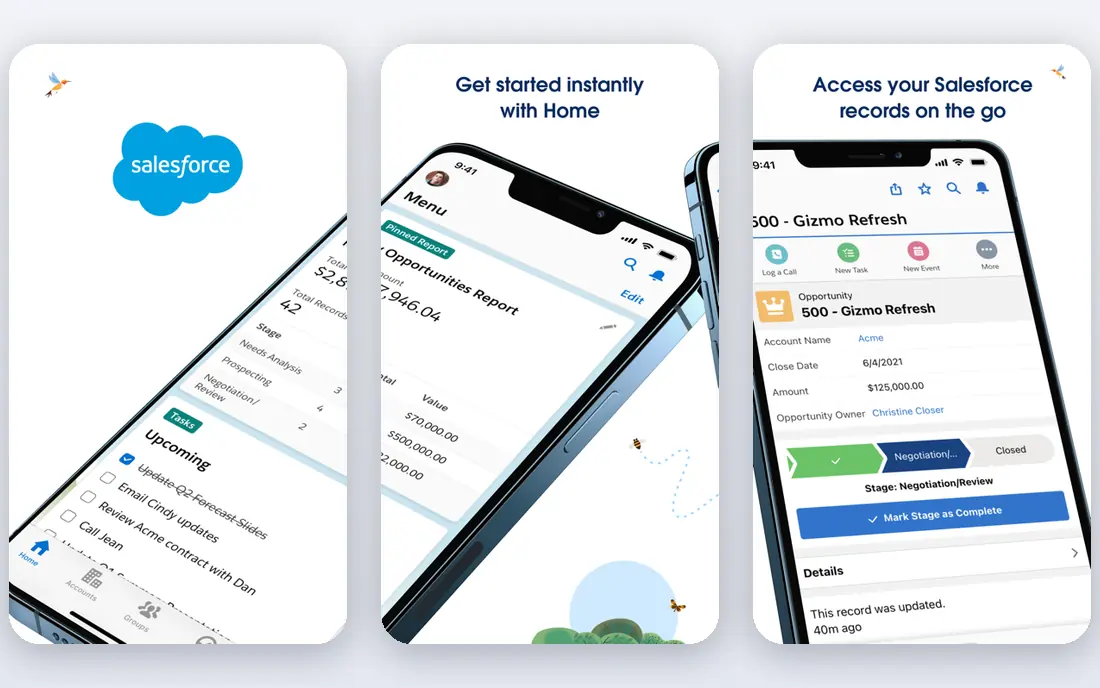
Salesforce Marketing Cloud is the enterprise marketing automation arm of Salesforce, built for cross-channel journeys across email, SMS, push, and advertising. For healthcare providers, its value grows when paired with Salesforce Health Cloud, which holds patient and member context that journeys can draw on, with enterprise access controls and audit trails.
The journey builder is the main draw: teams can design multi-step flows for appointment reminders, post-visit education, screening recalls, and program enrolment, with branching based on behavior and responses. The trade-off is enterprise weight: pricing is by quote and implementation needs skilled administrators. For hospitals and large health systems already on Salesforce, Marketing Cloud is a leading choice.
- Deep journey builder
- Strong Health Cloud links
- Enterprise scale and governance
- Enterprise pricing by quote
- Setup needs skilled admins
- Smaller clinics may find it heavy
Braze
Ideal for: Cross-channel patient engagement
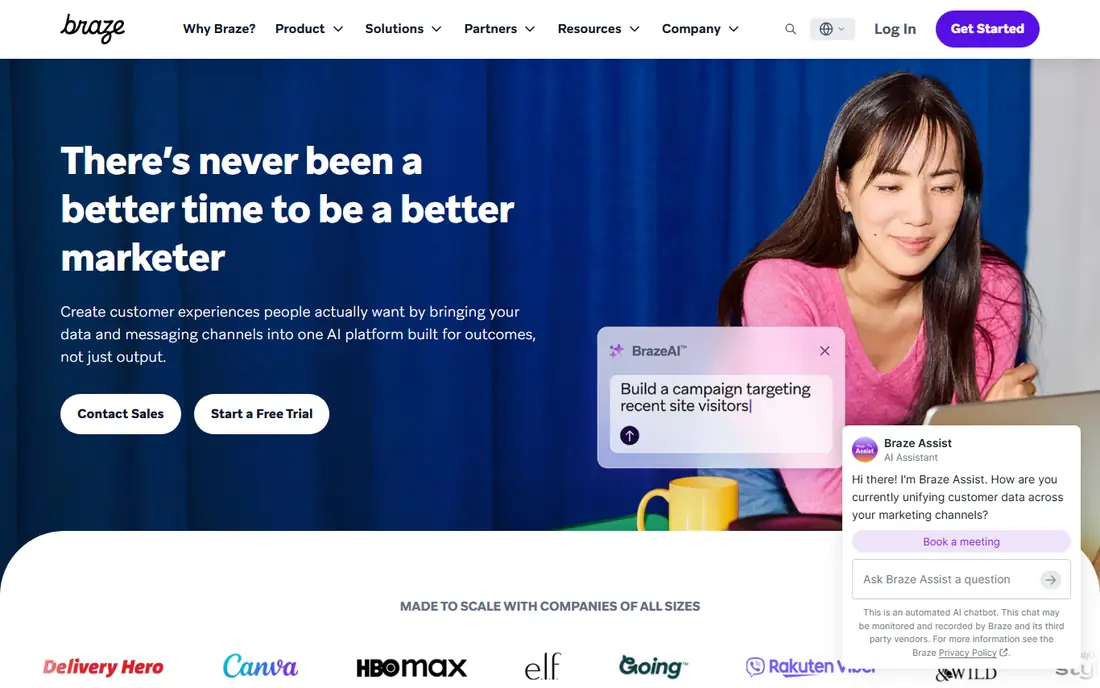
Braze is a customer engagement platform that brings data and messaging channels into one AI platform, covering email, SMS, push, and in-app messages. Its homepage stresses real-time customer profiles, AI-assisted campaign building, and cross-channel orchestration, which suits health brands with apps, portals, or multi-channel patient communication.
For healthcare, Braze fits providers that want to reach patients where they are: an appointment reminder by SMS, education content by email, and an in-app prompt to complete intake forms. The trade-off is scope and price: Braze is priced by quote and suits teams with real multi-channel volume. Smaller clinics should compare ActiveCampaign or HubSpot first. For larger providers with app-based engagement, Braze is a strong pick.
- Email, SMS, push, and in-app in one platform
- Real-time data and AI
- Free trial available
- Pricing by quote
- Best for teams with app or multi-channel needs
- Healthcare setup needs care
Iterable
Ideal for: AI cross-channel journeys
Iterable is an AI customer engagement platform built for real-time, personalized experiences across channels. Its homepage stresses AI decisioning powered by behavior and context, unified behavioral and engagement data, and a Nova intelligence layer that helps teams build audiences, journeys, and campaigns faster. That suits health brands running personalized education, wellness, or program journeys at scale.
The strength is adaptive journeys: messages can adjust based on what a patient opens, clicks, or completes, rather than following a fixed sequence. The trade-off is enterprise pricing by quote and the planning needed to feed the platform good data. For health brands with strong data and content teams, Iterable is a strong option.
- Real-time AI decisioning
- Strong journey and segmentation tools
- Cross-channel coverage
- No free plan listed
- Enterprise pricing by quote
- Needs data and content planning
ActiveCampaign
Ideal for: SMB clinic automation
ActiveCampaign is marketing automation for small and midsize businesses, with a visual automation builder, email and SMS, segmentation, and built-in AI that drafts campaigns, tests sends, and reports results. Its homepage stresses automation that runs with little manual work, plus a 14-day free trial with no credit card required.
For smaller clinics and practices, ActiveCampaign is the practical pick: a welcome series for new patients, reminders for follow-ups, and win-back flows for lapsed patients can all run from one account at a cost far below enterprise platforms. The trade-off is governance: teams must handle consent, list hygiene, and data handling themselves, and confirm suitability for any health-related messaging. For practices that want strong automation without enterprise cost, ActiveCampaign is a leading choice.
- Strong automation builder
- 14-day free trial
- Good value for small teams
- Less enterprise governance than Salesforce or Oracle
- Healthcare compliance needs manual checks
- Advanced reporting on higher tiers
Marketo Engage
Ideal for: Enterprise B2B healthcare marketing
Marketo Engage, part of Adobe, is enterprise marketing automation built around lead management, scoring, nurturing, and account-based marketing. For healthcare, it fits business-to-business use: medical device makers, pharma services, health IT vendors, and provider groups marketing to referrers, employers, or partner organizations.
The strength is mature lead handling: scoring, routing, and nurture programs that move a prospect from first enquiry to sales-ready, with reporting that ties campaigns to pipeline. The trade-off is enterprise scope and cost, plus the skilled marketing operations needed to run it well. Small clinics should look elsewhere. For healthcare B2B teams, Marketo Engage is a strong pick.
- Mature lead management and scoring
- Strong enterprise integrations
- Adobe ecosystem links
- Enterprise pricing by quote
- Setup needs skilled marketers
- Less suited to small clinics
Oracle Eloqua
Ideal for: Enterprise healthcare campaigns
Oracle Eloqua is enterprise marketing automation for campaign management, segmentation, lead scoring, and multi-channel execution. It suits large health systems, payers, and health brands that already run Oracle systems and want marketing automation with enterprise governance, reporting, and integration depth.
The draw is campaign control at scale: large, segmented campaigns across regions or service lines, with scoring and routing that feed sales or outreach teams. The trade-off is enterprise weight: pricing is by quote and setup needs skilled administrators. For large providers and health enterprises already in the Oracle world, Eloqua is a strong choice.
- Enterprise campaign management
- Strong segmentation
- Oracle ecosystem links
- Enterprise pricing by quote
- Setup needs skilled admins
- Smaller teams may find it heavy
How we picked these
We compared official feature pages, pricing pages, and product documentation for marketing automation tools available in October 2026. We favored tools with journey builders, email and SMS, segmentation, CRM integration, and analytics, and we weighted consent and privacy controls heavily given the healthcare setting. We did not claim hands-on testing, and we did not treat homepage copy as proof of HIPAA compliance; teams should confirm agreements and data handling directly with each vendor. Pricing is listed as "See website" where the vendor prices by quote or no public starting price was shown.
What to check before you buy healthcare marketing automation
Start with consent and data rules. Map which messages need opt-in, which data fields marketing may use, and which systems hold patient data, then confirm the tool can enforce those rules, including suppression lists, access controls, and audit logs. Ask each vendor directly about business associate agreements and data residency before any patient-related use.
Next, check channel fit and CRM links. Confirm the tool covers the channels patients actually use, whether that is email, SMS, or app messages, and that it connects cleanly to the CRM, scheduling, or portal systems in use. Then test a real journey end to end, from form or referral through reminders and follow-up, and compare reporting, deliverability, and total cost, including setup and training, before committing.
Frequently asked questions
What is marketing automation in healthcare?
Marketing automation in healthcare uses software to send appointment reminders, patient education, intake follow-up, and reactivation messages automatically, based on patient behavior, dates, or segments, rather than sending each message by hand.
Do these tools replace a CRM or EHR?
No. Marketing automation tools manage campaigns and journeys, while a CRM holds contact and relationship records and an EHR holds clinical records. The best setups connect automation to the CRM and keep clinical data out of marketing lists unless properly authorized.
Is email marketing allowed for healthcare providers?
Email marketing is allowed with proper consent and privacy controls, but rules vary by country and by message type. Appointment and care messages follow different rules than promotional messages, so teams should confirm consent, opt-out handling, and data use with legal counsel.
Should small clinics use enterprise tools like Salesforce or Oracle?
Usually not. Enterprise tools suit hospitals and large systems with dedicated marketing operations. Small clinics tend to get better value from HubSpot or ActiveCampaign, which offer strong automation with less setup and lower cost.
How do we handle SMS consent for appointment reminders?
SMS needs clear opt-in, a simple opt-out path, and records of consent for each number. Check that the chosen tool supports opt-in tracking, suppression, and quiet hours, and confirm carrier and legal requirements for healthcare messaging.
What should we measure in healthcare marketing automation?
Measure appointment bookings, show rates, form completions, education engagement, and reactivation, alongside deliverability, opt-outs, and complaints. Tie results back to consented contacts only, and review privacy metrics as closely as campaign results.