Best Aviation Authoring Software in 2026: 8 Tools Compared

- 1
 Boeing Spectrum S1000DDedicated S1000D publishingVisit
- 2
 Comply365 AuthoringAirline manuals and complianceVisit
- 3
 SiberLogic CSDB StudioS1000D authoring and publishingVisit
- 4
 Synaxiom NIVOMAXTechnical publication programsVisit
- 5
 Adobe FrameMakerStructured technical authoringVisit
- Boeing Spectrum and SiberLogic CSDB Studio lead for dedicated S1000D work in aviation and defense programs.
- Comply365 and Synaxiom NIVOMAX suit airlines and operators that must manage OEM manuals alongside their own content.
- Adobe FrameMaker and MadCap Flare fit teams that author structured content for several outputs, not only aviation manuals.
- The standard you must meet matters more than the editor, so confirm S1000D issue and ATA spec support before shortlisting.
- Budget for implementation and training, since aviation authoring tools are rarely plug-and-play purchases.
Quick comparison
| Product | Ideal for | Price from | Free version | |
|---|---|---|---|---|
| Boeing Spectrum S1000D | Dedicated S1000D publishing | See website | No | Visit |
| Comply365 Authoring | Airline manuals and compliance | See website | No | Visit |
| SiberLogic CSDB Studio | S1000D authoring and publishing | See website | Free trial | Visit |
| Synaxiom NIVOMAX | Technical publication programs | See website | No | Visit |
| Adobe FrameMaker | Structured technical authoring | See website | Free trial | Visit |
 MadCap Flare | Topic-based technical docs | See website | Free trial | Visit |
 PTC Arbortext | Enterprise structured authoring | See website | Free trial | Visit |
 oXygen XML Editor | XML authoring and validation | See website | Free trial | Visit |
The best aviation authoring software
Aviation authoring software creates the manuals that keep aircraft flying safely: maintenance manuals, flight operations manuals, and illustrated parts data, often built to strict standards such as S1000D or ATA iSpec 2200. These are specialist tools, sold mainly to airlines, manufacturers, maintenance organizations, and defense suppliers. The list below mixes dedicated aviation platforms with general structured authoring tools that aviation teams use every day.
Boeing Spectrum S1000D
Ideal for: Dedicated S1000D publishing
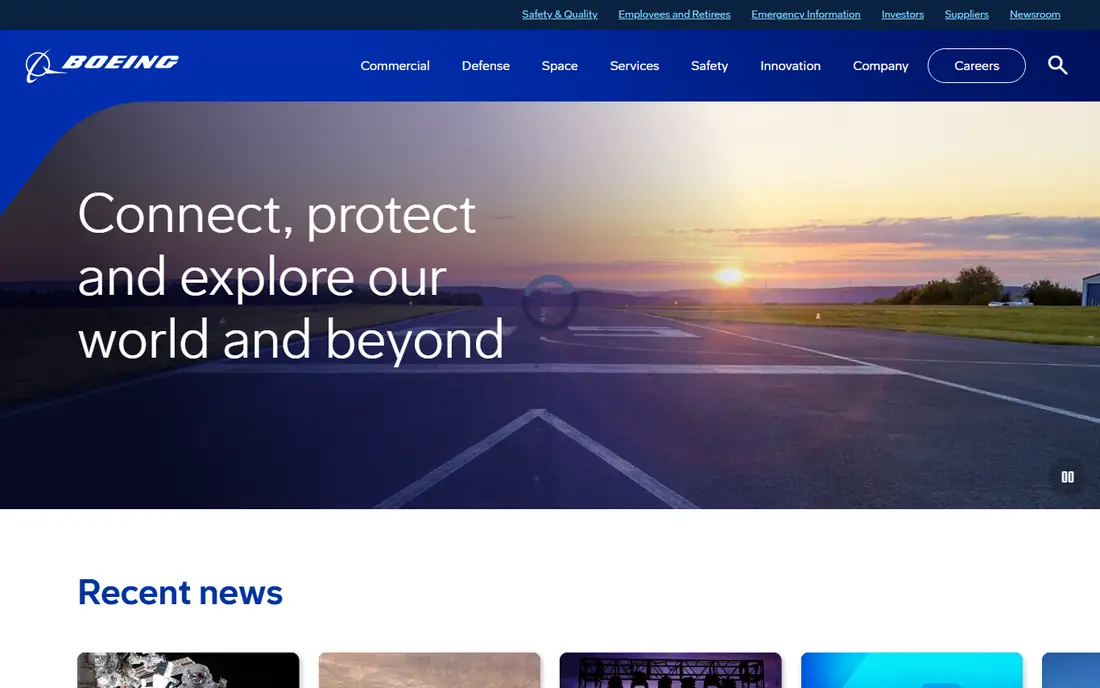
Boeing Spectrum is a dedicated S1000D platform that covers authoring, data validation, publishing, and viewing in one system. Its brochure notes support for S1000D versions from 1.6 through 5.0, including business rules validation, which matters because aviation programs often must match a specific issue of the standard. For a supplier delivering data modules to an OEM or a defense customer, that compliance depth is the point.
The trade-off is scale. Spectrum is an enterprise platform with per-user licensing, and it will be more than a small team needs for a simple manual. For a program where S1000D compliance is a contract requirement, though, it is one of the first platforms to evaluate.
- Built for S1000D projects from authoring to publishing
- Supports a wide range of S1000D issues
- Single platform for authoring, validation, and viewing
- Enterprise scope and pricing
- Best suited to larger programs rather than small teams
Comply365 Authoring
Ideal for: Airline manuals and compliance
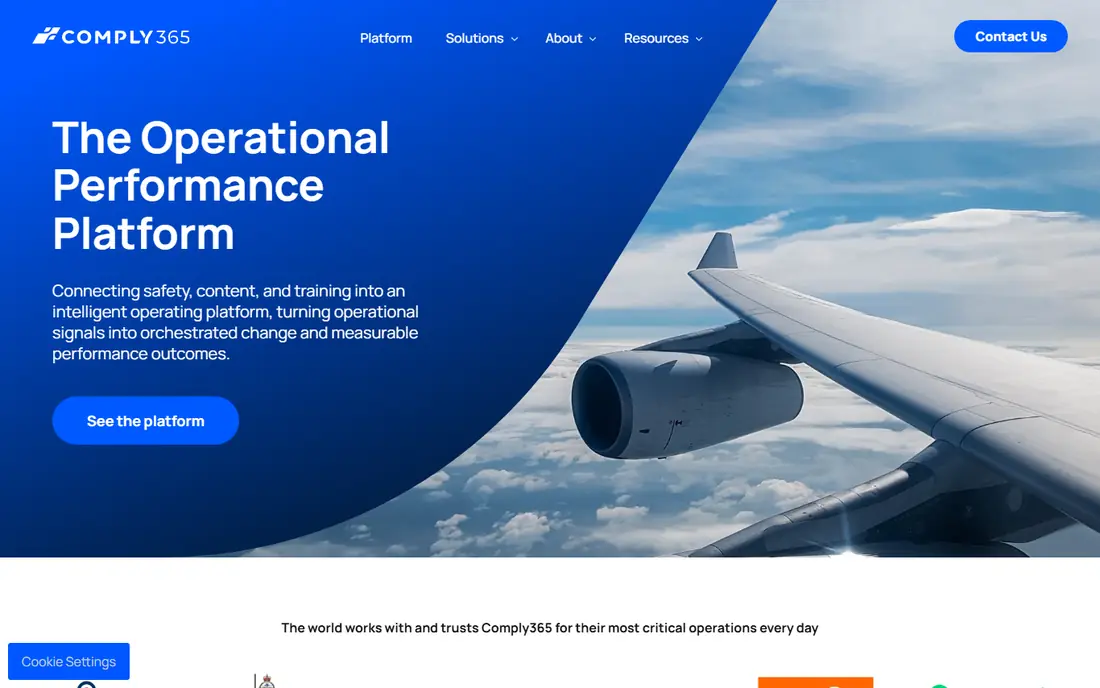
Comply365 offers an XML-based authoring solution, featuring ProAuthor, aimed at airlines and operators that must author, revise, and distribute manuals across departments. Its vendor page notes support for S1000D structure as well as iSpec 2100, 2200, and 2300 documents, plus revision management and targeted distribution with compliance tracking. That combination suits an airline that receives OEM manuals, adds its own procedures, and must prove crews received updates.
The catch is that Comply365 is a platform sale, not a simple editor license, so expect a demo and a quote rather than a download. For an airline consolidating manual management, that platform approach is a benefit, not a drawback.
- XML authoring without a steep XML learning curve
- Supports S1000D and ATA specs
- Revision and distribution tracking built in
- Airline focus means defense-only teams should check fit
- Pricing is quote based
SiberLogic CSDB Studio
Ideal for: S1000D authoring and publishing
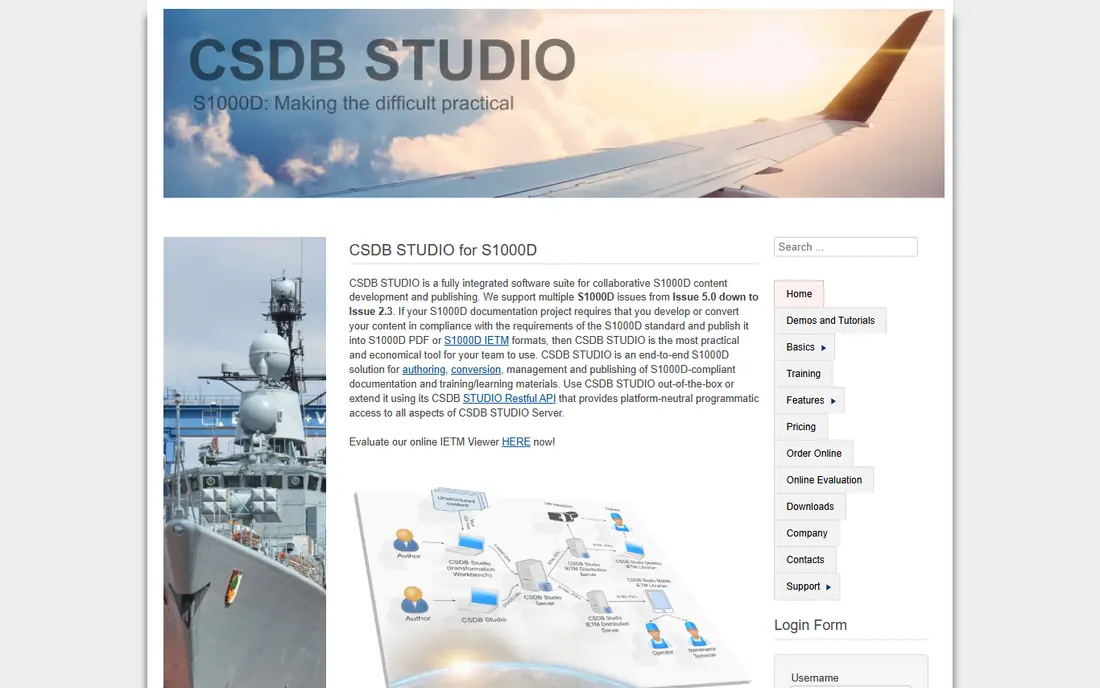
SiberLogic CSDB Studio is a fully integrated suite for collaborative S1000D content development and publishing. Its homepage states support for S1000D issues from 5.0 down to 2.3, with publishing to PDF and interactive electronic technical manual formats, plus an online evaluation option. The choice of perpetual purchase or monthly subscription is unusual in this market and gives smaller programs more flexibility.
The honest limitation is vendor size. SiberLogic is a specialist firm, so buyers should confirm support hours, training, and long-term roadmap during evaluation. For a team that needs real S1000D capability without an enterprise platform price, CSDB Studio is a strong contender.
- End-to-end S1000D authoring, conversion, and publishing
- Supports issues from 2.3 to 5.0
- Perpetual or subscription options
- Smaller vendor, so check support coverage for your region
- Interface reflects its specialist focus
Synaxiom NIVOMAX
Ideal for: Technical publication programs
Synaxiom NIVOMAX is a platform for civil aviation technical publication programs, with applications for authoring, publishing, publication sales, access control, and viewing. Its site notes support for S1000D, iSpec 2200, and ATA100 content, and it serves OEMs, operators, and maintenance organizations. That breadth suits an organization running a publication program, not just writing a single manual.
The drawback is effort. NIVOMAX is sold as a program with advisory, implementation, and training services, so buyers should budget for a project, not just a license. If your need is a complete publication operation, that service model is an advantage.
- Full publication program platform for civil aviation
- Supports S1000D, iSpec 2200, and ATA100
- Authoring, publishing, sales, and viewing apps
- Program-level platform, so implementation is a project
- Pricing is quote based
Adobe FrameMaker
Ideal for: Structured technical authoring
Adobe FrameMaker is a veteran structured authoring tool used across aerospace, defense, and manufacturing. It handles long, complex documents well, supports structured content with DITA and XML, and publishes to PDF, HTML, and other outputs. Many aviation teams already know it, which lowers training costs.
The caution is scope. FrameMaker is a general authoring tool, not a dedicated S1000D common source database, so a program with strict S1000D delivery requirements will need additional tooling or a dedicated platform. For mixed documentation that includes aviation manuals alongside other technical content, FrameMaker remains a practical choice.
- Long history in structured and unstructured technical docs
- Strong publishing to PDF and HTML
- Wide user community
- Not an S1000D platform on its own
- Aviation teams often pair it with other tools for compliance workflows
MadCap Flare
Ideal for: Topic-based technical docs
MadCap Flare is a topic-based authoring tool that lets teams write once and publish to web, PDF, and mobile outputs. Its vendor site stresses structured, reusable content and governed delivery, which fits documentation teams that maintain large libraries. Aviation teams use Flare for manuals, training, and support content where a dedicated S1000D system is not required.
As with FrameMaker, the limit is standards depth. If your contract requires S1000D data modules, Flare alone is unlikely to satisfy it, and you should shortlist a dedicated platform instead. For airline internal manuals and training content, Flare is a strong, modern option.
- Topic-based authoring with strong reuse
- Single-source publishing to web, PDF, and mobile
- Modern interface for documentation teams
- Not built as an S1000D database
- Aviation programs with S1000D delivery need to check fit carefully
PTC Arbortext
Ideal for: Enterprise structured authoring
PTC Arbortext is an enterprise structured authoring suite with a long presence in aerospace and defense documentation. It supports XML-based authoring at scale and connects with product lifecycle management, which matters when manuals must track engineering changes. Boeing's own S1000D material has referenced Arbortext as a third-party authoring option, which signals its standing in this market.
The trade-off is enterprise weight. Arbortext suits large organizations with dedicated documentation teams and lifecycle processes. Smaller teams will find it heavy and should look at Flare or FrameMaker first, unless their customer mandates it.
- Enterprise structured authoring with XML depth
- Used widely in aerospace and defense
- Ties into PTC product lifecycle tools
- Enterprise pricing and implementation
- Learning curve for new authors
oXygen XML Editor
Ideal for: XML authoring and validation
oXygen XML Editor is the tool many technical authors reach for when they need to work directly with XML. It offers editing, validation, transformation, and debugging across many schemas, and it is widely used in S1000D and DITA projects as the authoring front end. For a team that already has a content database or a simple file-based workflow, oXygen gives precise control at a modest price.
The limit is that oXygen does not manage a publication program on its own. There is no built-in distribution, acknowledgment tracking, or sales module, so teams must pair it with other tools or processes. As an authoring component in a larger workflow, though, it is excellent value.
- Powerful XML editing, validation, and transformation
- Supports many schemas including S1000D-related work
- Per-user pricing is clearer than platform quotes
- An editor, not a publication management platform
- Teams must build their own workflow around it
How we picked these
We compared official vendor pages, product brochures, and public reviews for tools used to author aviation technical publications, with weight given to S1000D and ATA spec support. We kept dedicated aviation platforms and general structured authoring tools with a real aviation user base, and we left out generic word processors, tools with no clear vendor homepage, and services that only write manuals for hire. Because most of these tools are quote priced, we used See website for pricing rather than inventing figures.
How to shortlist for your program
Start with the standard in your contract. If delivery must be S1000D data modules at a named issue, shortlist only platforms that state support for that issue, such as Spectrum or CSDB Studio. If the requirement is an airline operations manual in iSpec 2200 form, Comply365 and NIVOMAX move to the front. An editor alone will not satisfy a standard it does not implement.
Next, map the full workflow, not just authoring. Ask who reviews, who approves, who receives updates, and how you prove receipt. A platform with distribution and acknowledgment tracking saves manual work that an editor leaves to email and spreadsheets. Finally, run a pilot on a real chapter, including a revision cycle. Aviation documentation lives or dies on revisions, and a tool that authors well but revises poorly will cost you every month.
Frequently asked questions
What is aviation authoring software?
Aviation authoring software creates and manages technical manuals for aircraft, such as maintenance, operations, and parts manuals. It often supports standards such as S1000D or ATA iSpec 2200, which define how content is structured, reused, and published. The tools range from dedicated S1000D platforms to general structured editors.
What is S1000D?
S1000D is an international specification for technical publications that uses XML-based data modules stored in a common source database. It lets teams reuse content across manuals and publish to paper, PDF, and interactive electronic manuals from one source. It is widely used in civil aviation and defense.
Do small aviation teams need a dedicated S1000D platform?
Not always. A small team writing internal manuals may manage with FrameMaker, Flare, or oXygen. A team delivering S1000D data modules to an OEM or defense customer usually needs a dedicated platform, since the standard requires specific structures, validation, and exchange formats.
How much does aviation authoring software cost?
Most dedicated platforms are quote priced per user, with implementation and training extra. Editors such as oXygen have clearer per-user pricing, while enterprise platforms vary widely by program size. Always get a quote for your user count and required standards.
Can one tool cover both S1000D and ATA manuals?
Some platforms, such as Comply365 and NIVOMAX, state support for both S1000D and ATA specs, which suits airlines handling mixed fleets. Others focus on one standard. Confirm support for each spec you must deliver before shortlisting, and test both outputs in a pilot.