Best B2B Lead Generation Tools in 2026: 7 Tools Compared

- Our pick for most people is Apollo.io, which stands out for teams that want database plus outreach in one tool.
- ZoomInfo is the strongest alternative if you want enterprises that need deep company data, and it is worth comparing side by side with our top pick.
- 3 of the 7 options here offer a free plan, so you can test the core features before paying anything.
- Prices vary widely, and several options use quote based pricing, so check the official pricing page for your team size before you decide.
- The right choice depends on your budget, your must have features, and how much setup time you can spare, so use the buying guide below to narrow the list to two or three finalists.
Quick comparison
| Product | Ideal for | Price from | Free version | |
|---|---|---|---|---|
 Apollo.io | Teams that want database plus outreach in one tool | Free | Yes | Visit |
 ZoomInfo | Enterprises that need deep company data | See website | No | Visit |
 Lusha | Sales reps who need quick contact details | Free | Yes | Visit |
 Clearbit | Teams that want data enrichment | See website | No | Visit |
 Leadfeeder | B2B teams that want website visitor leads | See website | Free trial | Visit |
 LinkedIn Sales Navigator | Sales teams prospecting on LinkedIn | See website | Free trial | Visit |
 Hunter | Teams that need email finding and verification | Free | Yes | Visit |
The best B2B lead generation tools
We compared 7 options for best b2b lead generation tools, looking at features, pricing, free plans, and honest weaknesses, so you can choose with confidence. The list below mixes well known leaders with smaller options that punch above their weight, and every product block sets out who it fits best and where it falls short.
Apollo.io
Ideal for: Teams that want database plus outreach in one tool
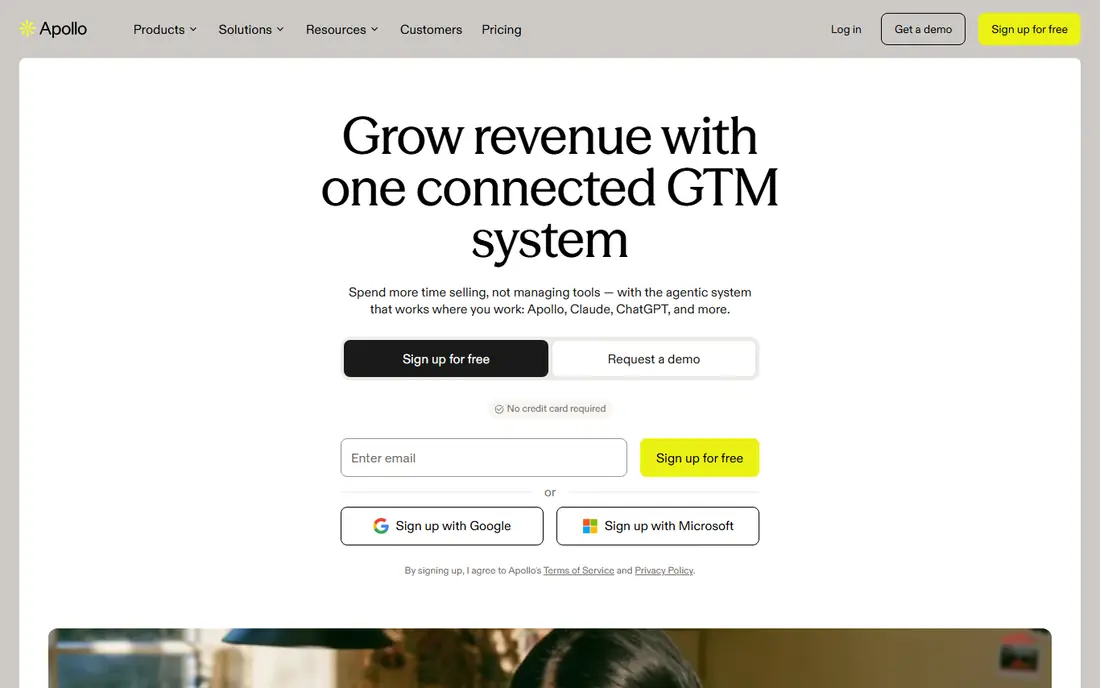
Apollo.io combines a large B2B contact database with outreach sequences and CRM integrations. Sales teams can find prospects, verify emails, and run email sequences from one platform, which suits small and mid sized teams.
Data accuracy varies by region and industry, so verify key contacts before big campaigns. For an all in one prospecting tool at a reasonable price, Apollo is popular for good reason.
Before you commit to Apollo.io, weigh the trade offs in the pros and cons above against your own priorities, and use the free plan to test it with a real task. Free access makes it easy to check the core experience, but watch for the limits that matter to you, such as the drawbacks noted above, before you build a routine around it.
- Large B2B database
- Outreach sequences
- Free plan to start
- Data accuracy varies by region
- Paid plans needed for scale
ZoomInfo
Ideal for: Enterprises that need deep company data
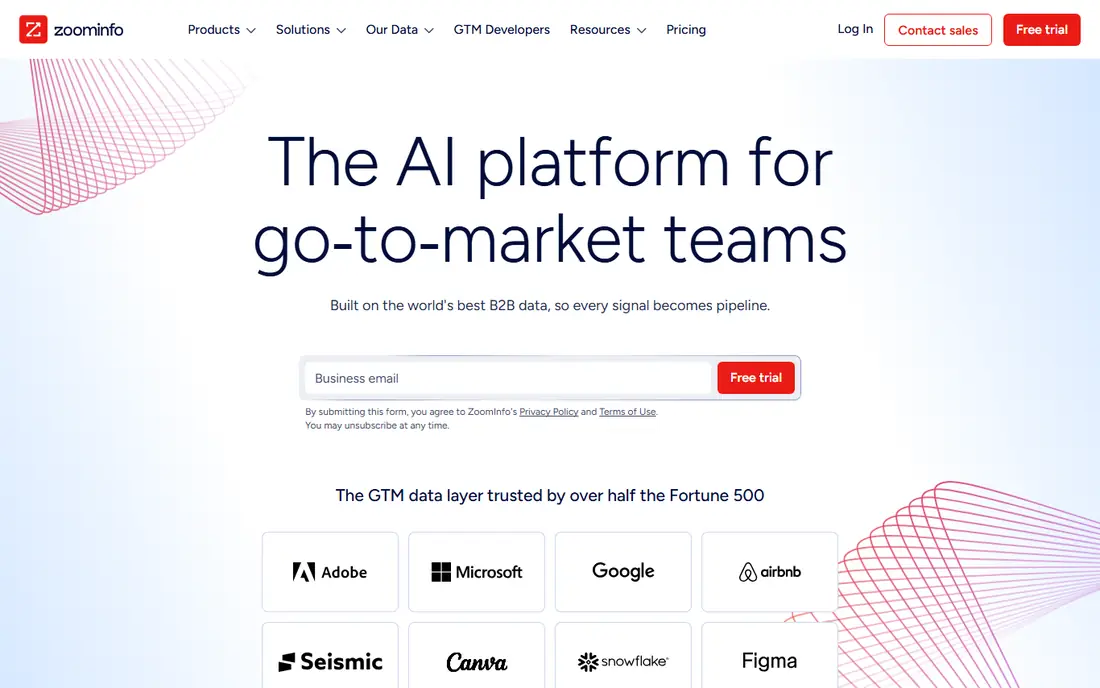
ZoomInfo offers deep company and contact data with intent signals and strong CRM integrations. Enterprise sales teams use it to build target account lists and prioritize outreach.
Pricing is enterprise level with minimums that suit larger teams. For companies that live by data quality and scale, ZoomInfo remains a leader.
Before you commit to ZoomInfo, weigh the trade offs in the pros and cons above against your own priorities, and ask for a demo or a clear quote for your size. With no free plan, the sales conversation matters more, so pin down the total cost, the setup help included, and the contract terms before you sign.
- Deep company and contact data
- Intent signals
- Strong integrations
- Enterprise pricing
- Minimums suit larger teams
Lusha
Ideal for: Sales reps who need quick contact details
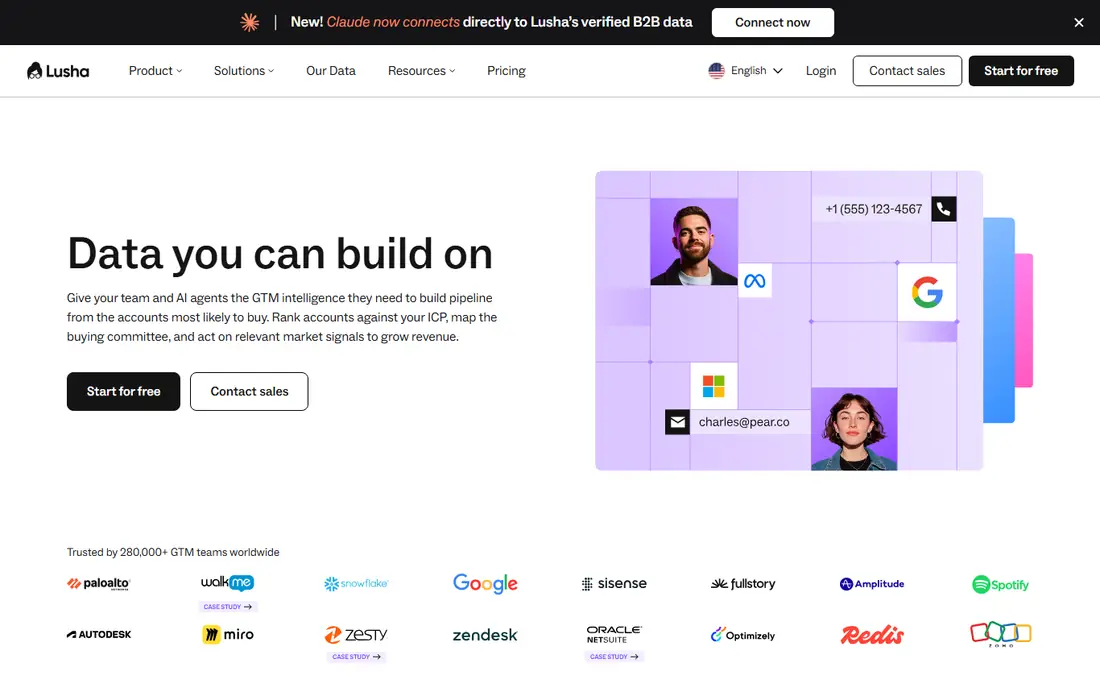
Lusha helps sales reps find emails and phone numbers quickly, with a browser extension that works on LinkedIn and company sites. Monthly free credits let individuals test it without a budget.
Free credits run out fast for heavy users, and data depth is below ZoomInfo. For quick lookups, Lusha is fast and easy.
Before you commit to Lusha, weigh the trade offs in the pros and cons above against your own priorities, and use the free plan to test it with a real task. Free access makes it easy to check the core experience, but watch for the limits that matter to you, such as the drawbacks noted above, before you build a routine around it.
- Quick contact lookup
- Browser extension
- Free credits monthly
- Free credits are limited
- Data depth below ZoomInfo
Clearbit
Ideal for: Teams that want data enrichment
Clearbit, now part of HubSpot, enriches lead data with company and contact details, improving forms, routing, and personalization. Teams use it to turn a bare email into a useful lead record.
Pricing varies by use, and the HubSpot connection shapes the roadmap. For enrichment inside a modern stack, Clearbit is a strong option.
Before you commit to Clearbit, weigh the trade offs in the pros and cons above against your own priorities, and ask for a demo or a clear quote for your size. With no free plan, the sales conversation matters more, so pin down the total cost, the setup help included, and the contract terms before you sign.
- Data enrichment for leads and forms
- Company intelligence
- API access
- Now part of HubSpot
- Pricing varies by use
Leadfeeder
Ideal for: B2B teams that want website visitor leads
Leadfeeder identifies companies visiting your website, even when visitors do not fill a form, and syncs those companies to your CRM with lead scoring. It turns anonymous traffic into a prospect list.
Data is company level, not individual contacts, and it needs meaningful website traffic to work. For B2B sites with steady traffic, it uncovers leads other tools miss.
Before you commit to Leadfeeder, weigh the trade offs in the pros and cons above against your own priorities, and use the free trial to test it with a real task. A trial is the best way to learn whether the strengths outweigh the drawbacks noted above, so run it with your actual workload rather than a sample project.
- Identifies companies visiting your site
- CRM integration
- Lead scoring
- Company level only, not individual contacts
- Needs website traffic
LinkedIn Sales Navigator
Ideal for: Sales teams prospecting on LinkedIn
LinkedIn Sales Navigator adds advanced search, lead recommendations, and InMail to LinkedIn, the main professional network. Sales teams use it to find decision makers and track job changes.
It covers LinkedIn only, so it pairs best with a contact database. For social prospecting, it is the standard tool.
Before you commit to LinkedIn Sales Navigator, weigh the trade offs in the pros and cons above against your own priorities, and use the free trial to test it with a real task. A trial is the best way to learn whether the strengths outweigh the drawbacks noted above, so run it with your actual workload rather than a sample project.
- Advanced LinkedIn search
- Lead recommendations
- InMail credits
- LinkedIn only
- Subscription cost per user
Hunter
Ideal for: Teams that need email finding and verification
Hunter finds and verifies professional email addresses by domain, with a free tier for monthly searches. It suits teams that already have target companies and just need reliable emails.
Data is email focused, without the full company intelligence of larger tools. For email finding on a budget, Hunter is simple and effective.
Before you commit to Hunter, weigh the trade offs in the pros and cons above against your own priorities, and use the free plan to test it with a real task. Free access makes it easy to check the core experience, but watch for the limits that matter to you, such as the drawbacks noted above, before you build a routine around it.
- Email finder and verifier
- Domain search
- Free monthly searches
- Contact data is email focused
- No full CRM features
How we picked these
We compared official feature pages, pricing pages, app store listings, privacy policies, and public reviews for each option, and we checked that every product website listed here loads and belongs to that product. We did not claim hands-on testing we did not do, and we favored products that are clearly available now, with pricing or free plan details we could verify or honestly mark as quote based.
We also weighed fit for the topic over raw popularity. A famous product that only partly covers the need lost ground to a smaller option built for the job, and we kept an eye on pricing at realistic team or household sizes rather than headline discounts that few buyers actually get.
How to pick a lead generation tool that fills the pipeline
Start with your must have features
Write down the three features you cannot do without, then score each finalist against that short list. A long feature list looks impressive, but most buyers use a small set of features daily, and the product that nails those three will serve you better than a broader tool with a weak core. Check the free plan or trial limits against your real workload, not a demo, so you learn about caps before you commit.
Compare total cost, not just the headline price
Look at the price at your actual size, including per user fees, add ons, and payment or transaction charges. A free plan can be the cheapest start, but it can also cost time if it lacks a feature you need every week. Ask what happens when you grow: does the next tier jump sharply, and does the product still fit at that size?
Test before you commit
Run a short trial with a real task from your daily work, not a sample project. Invite the people who will use the product every day, and watch where they get stuck. A tool that feels easy in a sales demo but confusing in daily use will cost you adoption, so trust the trial more than the brochure.
Check support and the exit route
Look at how you get help when something breaks: live chat, email, phone, or community forums, and whether support hours match your working hours. Also check how you export your data if you leave, since a tool that locks your work inside is a long term risk. A clear export path and responsive support are worth more than a small price difference.
Frequently asked questions
What is a B2B lead generation tool?
A B2B lead generation tool finds potential business customers, provides contact data, and helps teams reach them. Some focus on databases, others on outreach, intent data, or website visitor identification. The best tool depends on whether you need names, outreach, or both.
Are lead generation tools worth the cost?
They can be, if the data is accurate and your team follows up well. Bad data wastes sales time, so data quality matters more than database size. Trial the tool with your target market before committing to a large plan.
Is buying contact data legal?
It depends on your region and how the data was collected. In Europe, GDPR rules limit cold outreach, and in the US, state privacy laws and spam rules apply. Check compliance for your markets, and prefer tools that explain their data sources.
What is intent data?
Intent data shows which companies are researching topics related to your product, based on web behavior. It helps sales prioritize accounts that are actively looking. Intent data works best alongside a contact database, not instead of one.
Which lead generation tool is best for small businesses?
Small businesses suit affordable tools with clear pricing and easy setup, such as Apollo.io or Lusha starter plans. Enterprise databases may be overkill. Start with a small list, test outreach quality, and expand what works.