The 6 Best B2B Platforms to Shortlist in 2026

- Mirakl is the opening pick, best for building your own marketplace.
- Thomasnet fits North American manufacturing.
- 5 of 6 tools offer a free plan: Faire, DHgate, Alibaba, Amazon Business, Thomasnet.
- One limit worth knowing about Mirakl: custom enterprise licensing with high implementation cost.
- No starting price is published for Mirakl; expect a quote.
Direct answer
Mirakl leads the list, best for building your own marketplace. Look at Faire for teams comparing choices in this category, and at DHgate for small batch testing. The other 3 tools in the list cover narrower or pricier cases.
Quick comparison
| Product | Ideal for | Price from | Free version | |
|---|---|---|---|---|
 Mirakl | Building your own marketplace | See website | No | Visit |
 Faire | Teams comparing choices in this category | Free | Yes | Visit |
 DHgate | Small batch testing | Free | Yes | Visit |
 Alibaba | Global scale sourcing | Free | Yes | Visit |
 Amazon Business | Enterprise procurement | Free | Yes | Visit |
 Thomasnet | North American manufacturing | Free | Yes | Visit |
B2B Platforms compared in detail
Short on time? The summary and table above give the quick view of 6 B2B platforms, and the profiles that follow give the detail behind each entry.
Mirakl
Ideal for: Building your own marketplace

Where Mirakl fits: building your own marketplace. Licensing is custom enterprise with high implementation cost, and launching needs cross-functional resources across product, engineering, and operations.
Where it falls short: Custom enterprise licensing with high implementation cost.
Check the vendor site for Mirakl pricing; none is listed in this comparison. Mirakl has no permanent free option.
- Advanced seller onboarding
- Enterprise and retail agnostic
- Needs cross-functional resources
Faire
Ideal for: Teams comparing choices in this category
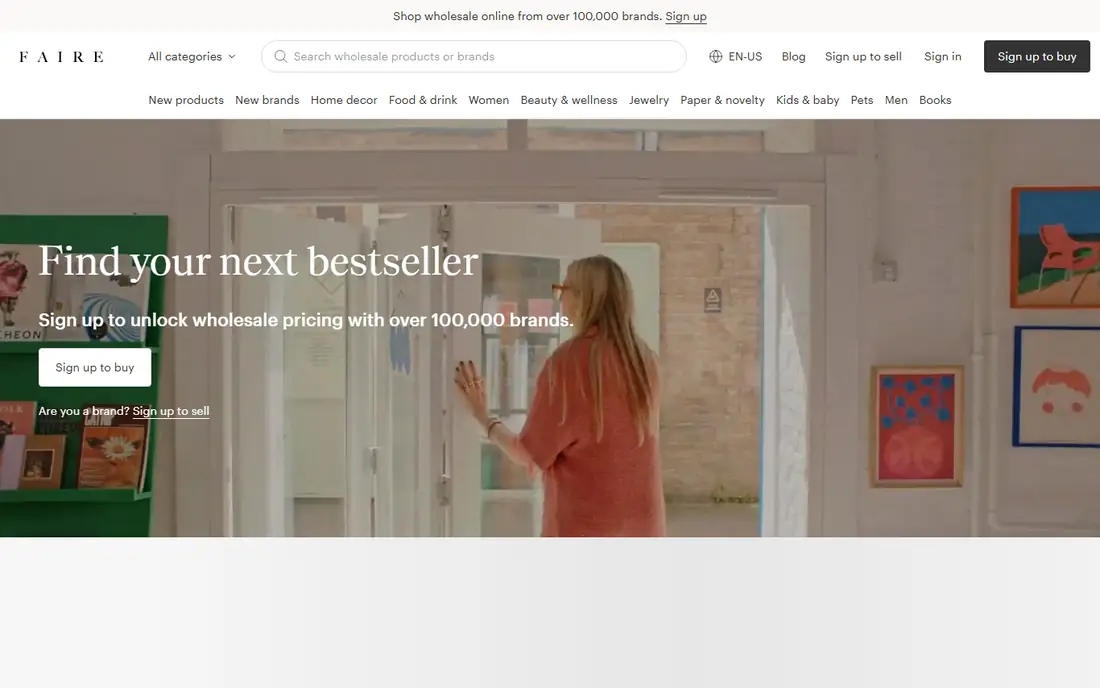
Faire is a good fit for teams comparing choices in this category. Faire Direct charges 0% commission on returning customers, which rewards brands that build repeat retail relationships.
Strengths: Shopify integration.
On top of that, Faire fits reselling others' brands, not sourcing your own manufactured products. What you pay to start with Faire: Free. A free plan is available with Faire.
What to check first: Resale of others' brands; Price parity required.
- Curated wholesale marketplace with 100,000 or more brands
- Free for retailers
- 15% commission plus a $10 first-order fee for brands
DHgate
Ideal for: Small batch testing

Where DHgate fits: small batch testing. Most sellers are trading firms instead of factories, so prices sit above factory direct, and quality varies.
DHgate pricing: Free. DHgate includes a free tier.
Best features of DHgate: Well suited to small batch product testing. Trade-offs to know: Best for testing, not scale; Prices above factory direct.
- Escrow style buyer protection
- Free for buyers
- Largely trading businesses instead of factories
Alibaba
Ideal for: Global scale sourcing
Alibaba is designed for Global scale sourcing. AI sourcing tools help narrow the huge supplier base.
Seller plans run $3,499 to $10,999 a year, whereas browsing and buying are free apart from card fees near 2.95% to 2.99%. The starting price for Alibaba: Free. Alibaba includes a free tier.
Limits to weigh: Price commoditization; Quality varies widely.
- 40 or more categories
- 240,000 or more paying suppliers
- Heavy supplier vetting required
Amazon Business
Ideal for: Enterprise procurement
Amazon Business is designed for enterprise procurement. Business pricing, multi-user approval controls, and spend analytics suit procurement teams that require controls and reporting, whereas Prime logistics speed delivery.
Reasons to shortlist it: Multi-user controls; Business pricing.
Watch-outs: Restricted buyer communication; High seller fees. It is free to join, with Business Prime from about $179 a year plus referral fees for sellers. On cost, Amazon Business starts like this: Free. Amazon Business offers a free plan.
- 11 million or more business customers
- Prime logistics
- Weak brand differentiation
Thomasnet
Ideal for: North American manufacturing
Thomasnet was built for North American manufacturing. Unit costs run higher than Asian sourcing, and consumer goods coverage is thin.
Points against: Consumer goods thin; Higher unit costs than Asian sourcing.
Registered and verified supplier levels help buyers judge credibility, and small runs are possible for custom parts. Thomasnet pricing: Free. Free access exists with Thomasnet.
- Small runs possible
- Verified US and Canadian suppliers
- Directory plus marketplace
How the list was put together
Selection started from tools commonly considered for B2B platforms, then narrowed to 6 that have clear pricing information or a clear quote process. Seat minimums, billing terms and add-ons can move the real cost, so the starting prices here are a guide and not a quote. The ranking is editorial: typical fit first, then clear pricing, then free access. If your needs are unusual, read the profiles rather than relying on position.
Questions to settle before buying
- Get a written quote from Mirakl; the list shows no starting price for them.
- Check what the free option really includes: Faire, DHgate, Alibaba and others offer a free plan, and usage caps differ.
- Read the limits listed for Mirakl first: custom enterprise licensing with high implementation cost.
- Check whether the features you need in DHgate sit on the entry plan or only on higher tiers.
- Confirm that Thomasnet connects to the apps your team already uses, on the plan you would actually buy.
Frequently asked questions
Which options for B2B platforms have a free plan?
Faire, DHgate, Alibaba, Amazon Business and Thomasnet offer a free plan in this list. Free plans usually cap users, projects or features, so check the limits on the vendor page.
How much does it cost to sell on a B2B marketplace?
It varies widely: Alibaba seller plans run $3,499 to $10,999 a year, Faire charges brands 15% plus a $10 first-order fee, Amazon Business charges referral fees plus Business Prime from about $179 a year, and Mirakl uses custom enterprise licensing.
Do these tools publish their prices?
Not all of them. Mirakl publishes no starting price, so expect a quote request for it. The rest, Faire included, show a starting price, though seats and billing terms still change the final cost.
How are the tools for B2B platforms ordered?
Mirakl sits first and Thomasnet last because the order follows typical fit for B2B platforms, then price clarity and free access. It is a judgement call, so read each profile for fit and limits.
What is a B2B system?
A B2B product is an online marketplace where companies buy and sell products from manufacturers, wholesalers, and distributors at wholesale terms, with minimum order quantities, requests for quotation, negotiated pricing, and recurring purchases, instead of single consumer sales.
Is Mirakl the right pick for everyone comparing B2B platforms?
No single tool suits every team. Mirakl comes first because it fits building your own marketplace, while Faire suits teams comparing options in this category and DHgate suits small batch testing. Match the tool to your own size, budget and workflow before deciding.