Best bakery software in 2026: 7 Options Compared

- BakeSmart and FlexiBake lead for bakeries needing production planning and costing.
- BakeDiary and Craftybase are simpler starting points for small bakeries.
- CakeBoss fits cake shops built around custom orders.
- Square and Toast cover point of sale and payments for counter service.
Quick comparison
| Product | Ideal for | Price from | Free version | |
|---|---|---|---|---|
 BakeSmart | bakeries needing production planning | See website | Free trial | Visit |
 FlexiBake | bakeries needing a full back office | See website | Free trial | Visit |
 BakeDiary | small bakeries and home bakers | See website | Free trial | Visit |
 CakeBoss | cake shops managing custom orders | See website | Free trial | Visit |
 Craftybase | small food makers tracking costs | See website | Free trial | Visit |
 Square | bakeries needing point of sale and payments | See website | Yes | Visit |
 Toast | bakeries with cafe or counter service | See website | Free trial | Visit |
The best bakery software
Our team compared official feature pages, pricing pages, app store listings, privacy policies, and public reviews to build this list. Every option below is a real product that works in October 2026, and each one fits bakery software in a different way. Read the quick comparison first, then use the write-ups to narrow the list to two or three options worth a trial.
BakeSmart
Ideal for: bakeries needing production planning

For teams that want a clear starting point, BakeSmart. BakeSmart is built for bakeries, with production planning and recipe costing at its core. It fits bakeries needing production planning, and it is a practical pick for buyers who want a tool that covers the core job without forcing a change to every other system they use. In daily use, the strengths come down to production planning; recipes and costing; order management That combination matters because most buyers in this category end up paying for breadth they never use, or they pick a narrow tool and outgrow it in a year. BakeSmart sits in the middle ground for many teams: capable enough for regular work, and clear enough about what it does well that you can judge the fit before you pay. The honest catch is that pricing is quote based; setup takes time for large menus Before you commit, run a trial with real data from your own work, check the pricing page for the plan that matches your team size, and confirm that support and onboarding match what your team will actually need. For many buyers, that trial tells you more than any feature list can.
- Production planning
- Recipes and costing
- Order management
- Pricing is quote based
- Setup takes time for large menus
FlexiBake
Ideal for: bakeries needing a full back office
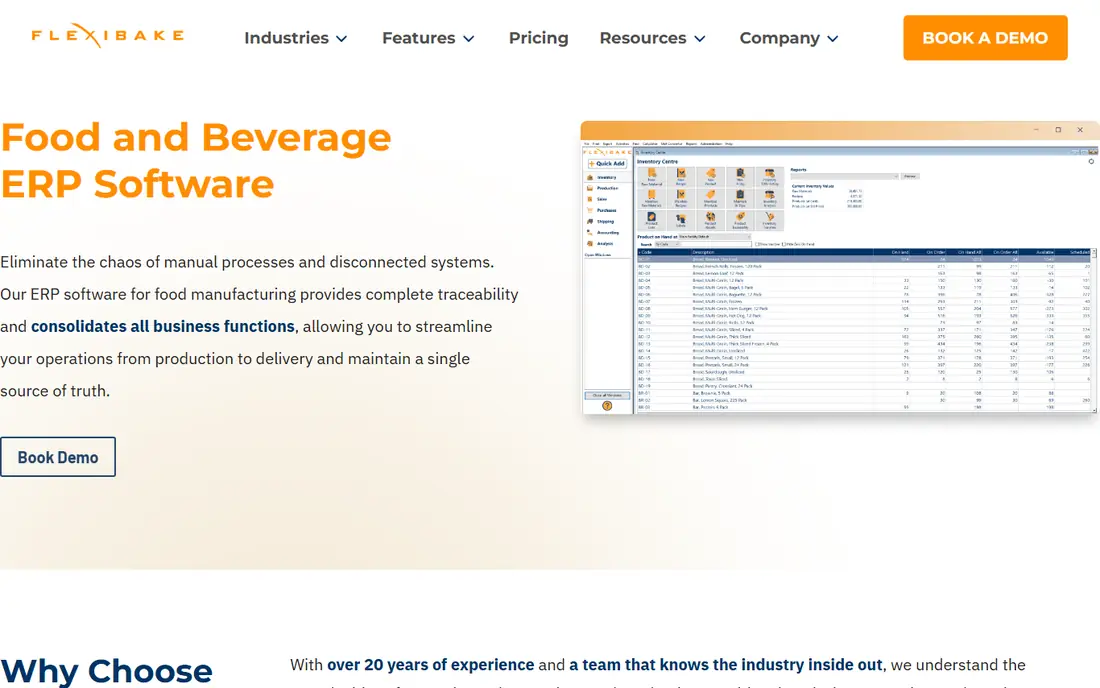
One option that earns a close look is FlexiBake. FlexiBake gives bakeries a full back office for recipes, inventory, production, and sales. It fits bakeries needing a full back office, and it is a practical pick for buyers who want a tool that covers the core job without forcing a change to every other system they use. In daily use, the strengths come down to recipe costing; inventory; production and sales reporting That combination matters because most buyers in this category end up paying for breadth they never use, or they pick a narrow tool and outgrow it in a year. FlexiBake sits in the middle ground for many teams: capable enough for regular work, and clear enough about what it does well that you can judge the fit before you pay. The honest catch is that interface feels dated; implementation needs planning Before you commit, run a trial with real data from your own work, check the pricing page for the plan that matches your team size, and confirm that support and onboarding match what your team will actually need. For many buyers, that trial tells you more than any feature list can.
- Recipe costing
- Inventory
- Production and sales reporting
- Interface feels dated
- Implementation needs planning
BakeDiary
Ideal for: small bakeries and home bakers
If your shortlist is still wide open, consider BakeDiary. BakeDiary is a simpler diary style tool for small bakeries that need orders and production planning without complexity. It fits small bakeries and home bakers, and it is a practical pick for buyers who want a tool that covers the core job without forcing a change to every other system they use. In daily use, the strengths come down to simple order and production diary; customer orders; low cost That combination matters because most buyers in this category end up paying for breadth they never use, or they pick a narrow tool and outgrow it in a year. BakeDiary sits in the middle ground for many teams: capable enough for regular work, and clear enough about what it does well that you can judge the fit before you pay. The honest catch is that features are lighter than full bakery erp tools; best for smaller operations Before you commit, run a trial with real data from your own work, check the pricing page for the plan that matches your team size, and confirm that support and onboarding match what your team will actually need. For many buyers, that trial tells you more than any feature list can.
- Simple order and production diary
- Customer orders
- Low cost
- Features are lighter than full bakery ERP tools
- Best for smaller operations
CakeBoss
Ideal for: cake shops managing custom orders
A different kind of choice on this list is CakeBoss. CakeBoss suits cake shops that live on custom orders, with tools for order details and production lists. It fits cake shops managing custom orders, and it is a practical pick for buyers who want a tool that covers the core job without forcing a change to every other system they use. In daily use, the strengths come down to custom cake order management; customer records; production lists That combination matters because most buyers in this category end up paying for breadth they never use, or they pick a narrow tool and outgrow it in a year. CakeBoss sits in the middle ground for many teams: capable enough for regular work, and clear enough about what it does well that you can judge the fit before you pay. The honest catch is that cake focus means general bakery features are lighter; pricing varies Before you commit, run a trial with real data from your own work, check the pricing page for the plan that matches your team size, and confirm that support and onboarding match what your team will actually need. For many buyers, that trial tells you more than any feature list can.
- Custom cake order management
- Customer records
- Production lists
- Cake focus means general bakery features are lighter
- Pricing varies
Craftybase
Ideal for: small food makers tracking costs
For buyers who value depth over simplicity, Craftybase. Craftybase helps small food makers track recipe costs and inventory, which fits artisan bakeries well. It fits small food makers tracking costs, and it is a practical pick for buyers who want a tool that covers the core job without forcing a change to every other system they use. In daily use, the strengths come down to recipe costing; inventory for makers; sales tracking That combination matters because most buyers in this category end up paying for breadth they never use, or they pick a narrow tool and outgrow it in a year. Craftybase sits in the middle ground for many teams: capable enough for regular work, and clear enough about what it does well that you can judge the fit before you pay. The honest catch is that best for small makers; large bakery operations may outgrow it Before you commit, run a trial with real data from your own work, check the pricing page for the plan that matches your team size, and confirm that support and onboarding match what your team will actually need. For many buyers, that trial tells you more than any feature list can.
- Recipe costing
- Inventory for makers
- Sales tracking
- Best for small makers
- Large bakery operations may outgrow it
Square
Ideal for: bakeries needing point of sale and payments
Another strong candidate is Square. Square gives bakeries a straightforward point of sale and payments system with online ordering options. It fits bakeries needing point of sale and payments, and it is a practical pick for buyers who want a tool that covers the core job without forcing a change to every other system they use. In daily use, the strengths come down to point of sale; payments; online ordering options That combination matters because most buyers in this category end up paying for breadth they never use, or they pick a narrow tool and outgrow it in a year. Square sits in the middle ground for many teams: capable enough for regular work, and clear enough about what it does well that you can judge the fit before you pay. The honest catch is that bakery production features are basic; advanced reporting costs more Before you commit, run a trial with real data from your own work, check the pricing page for the plan that matches your team size, and confirm that support and onboarding match what your team will actually need. For many buyers, that trial tells you more than any feature list can.
- Point of sale
- Payments
- Online ordering options
- Bakery production features are basic
- Advanced reporting costs more
Toast
Ideal for: bakeries with cafe or counter service
Rounding out the list is Toast. Toast suits bakeries with counter or cafe service that need a full restaurant point of sale. It fits bakeries with cafe or counter service, and it is a practical pick for buyers who want a tool that covers the core job without forcing a change to every other system they use. In daily use, the strengths come down to restaurant point of sale; payments; online ordering That combination matters because most buyers in this category end up paying for breadth they never use, or they pick a narrow tool and outgrow it in a year. Toast sits in the middle ground for many teams: capable enough for regular work, and clear enough about what it does well that you can judge the fit before you pay. The honest catch is that monthly hardware and plan costs; bakery production tools are basic Before you commit, run a trial with real data from your own work, check the pricing page for the plan that matches your team size, and confirm that support and onboarding match what your team will actually need. For many buyers, that trial tells you more than any feature list can.
- Restaurant point of sale
- Payments
- Online ordering
- Monthly hardware and plan costs
- Bakery production tools are basic
How we picked these
We started from the official product pages and pricing pages for each option, then checked app store listings, privacy policies, and public reviews to confirm that each product exists, works in October 2026, and truly fits this topic. We compared who each product is built for, what its free plan or trial covers, and where its limits show up in everyday use. We did not claim hands-on testing we did not do, and we did not invent prices, ratings, or user counts. Where a price could not be verified from the vendor, we wrote See website so you can check the current figure before you buy. Our pick for most people is the option that covers the core job well at a fair price, with a trial that lets you test it on your own work.
Choosing bakery software that fits how you sell
Start with your sales model: wholesale, retail counter, custom orders, or online. A custom cake shop needs order detail tools, while a wholesale bakery needs production planning and costing first. Check recipe costing, inventory, and production planning against your menu. Knowing the true cost of each item helps you price fairly and spot waste before it eats into margins. Finally, confirm the point of sale and online ordering fit. Customers should be able to order easily, and orders should flow into production lists without manual retyping.
Frequently asked questions
What is bakery software?
Bakery software helps bakeries manage orders, recipes, costing, inventory, production, and sales. Some tools focus on production planning, others on point of sale or custom cake orders.
What is the best bakery software for a small bakery?
BakeDiary and Craftybase are good starting points for small bakeries, while BakeSmart and FlexiBake suit larger operations needing production planning and costing.
Can bakery software help with recipe costing?
Yes, tools like BakeSmart, FlexiBake, and Craftybase calculate recipe costs from ingredient prices. That helps you set prices that cover costs and leave a margin.
Do I need point of sale software for a bakery?
If you sell at a counter or cafe, a point of sale system like Square or Toast handles payments and orders. Production focused bakeries may need a separate planning tool as well.
How much does bakery software cost?
Costs range from low cost plans for small bakeries to quote based pricing for full systems. Ask for a quote that covers your locations, users, and needed modules.