8 Best Batch Management Software Tools for 2026

- 1
 BatchMasterRecipe and formula-based process manufacturersVisit
- 2
 MRPeasySmall manufacturers that need MRP plus batch trackingVisit
- 3
 KatanaProduct businesses selling across channels with productionVisit
- 4
 FishbowlManufacturers and wholesalers needing inventory plus productionVisit
- 5
 VicinityFormula makers already running Microsoft Dynamics ERPVisit
- Batch management is about traceability first: every finished batch should trace back to its ingredients, lots, and production steps.
- Formula-based makers suit BatchMaster or Vicinity, while discrete and hybrid makers suit Katana, MRPeasy, or Fishbowl.
- Lot and serial tracking, recall readiness, and quality checks separate real batch tools from generic inventory software.
- Cloud tools suit small makers, while ERP-linked tools suit midsize process manufacturers with accounting depth.
- Pricing is mostly quote-based, so compare implementation and training costs alongside licenses.
Quick comparison
| Product | Ideal for | Price from | Free version | |
|---|---|---|---|---|
| BatchMaster | Recipe and formula-based process manufacturers | See website | No | Visit |
| MRPeasy | Small manufacturers that need MRP plus batch tracking | See website | No | Visit |
| Katana | Product businesses selling across channels with production | See website | Yes | Visit |
| Fishbowl | Manufacturers and wholesalers needing inventory plus production | See website | No | Visit |
| Vicinity | Formula makers already running Microsoft Dynamics ERP | See website | No | Visit |
 Deacom | Process manufacturers that need a full ERP with batch control | See website | No | Visit |
 Aptean | Manufacturers needing ERP across process and discrete production | See website | No | Visit |
 Prodsmart | Shop-floor batch and production tracking for small makers | See website | No | Visit |
The best batch management software
BatchMaster
Ideal for: Recipe and formula-based process manufacturers
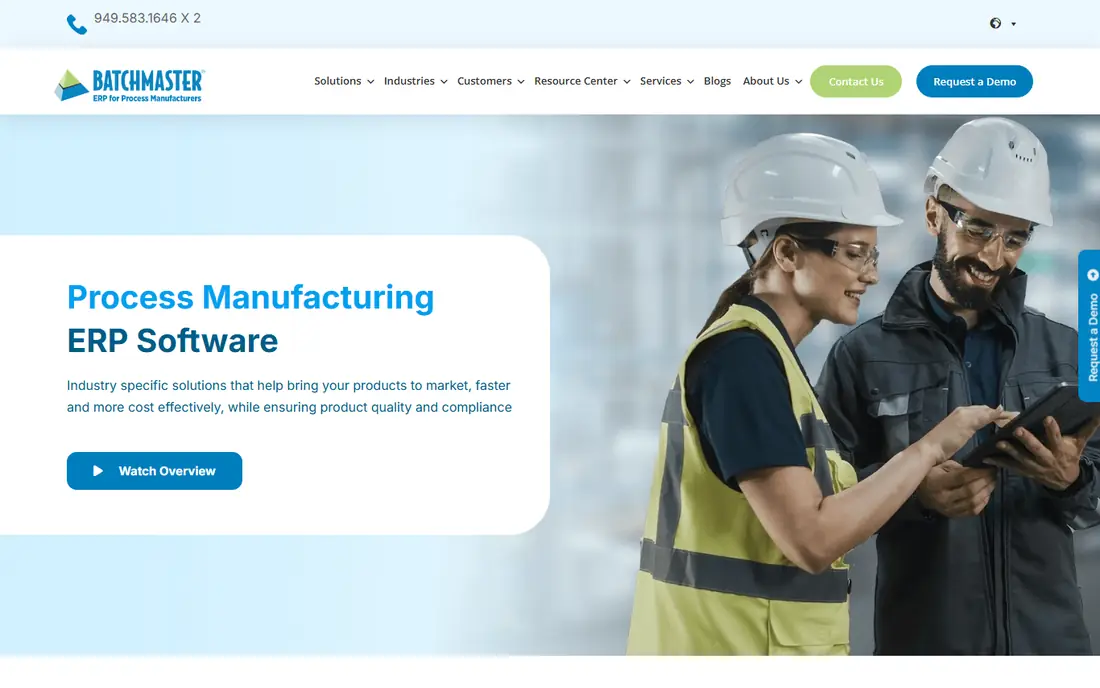
BatchMaster offers process manufacturing ERP software for growing, mid-market recipe- and formula-based manufacturers in food and beverage, chemicals, nutraceuticals, life sciences, and related industries. Its modules cover formulation, packaging management, costing, inventory, production, quality, planning and scheduling, lot traceability and recall, compliance, and mobile warehousing. The software works as a standalone ERP or as an add-on to existing financials including QuickBooks, SAP Business One, Microsoft Dynamics 365 Business Central, Dynamics GP, and Sage. That flexibility suits makers who like their accounting system but need real process manufacturing depth. Cloud and on-premises deployment are both available. For formula makers that need traceability from raw material to finished batch, BatchMaster is a specialist leader.
- Formula management, lot traceability and recall, compliance modules, ERP integration
- Implementation takes planning, pricing requires a quote
MRPeasy
Ideal for: Small manufacturers that need MRP plus batch tracking
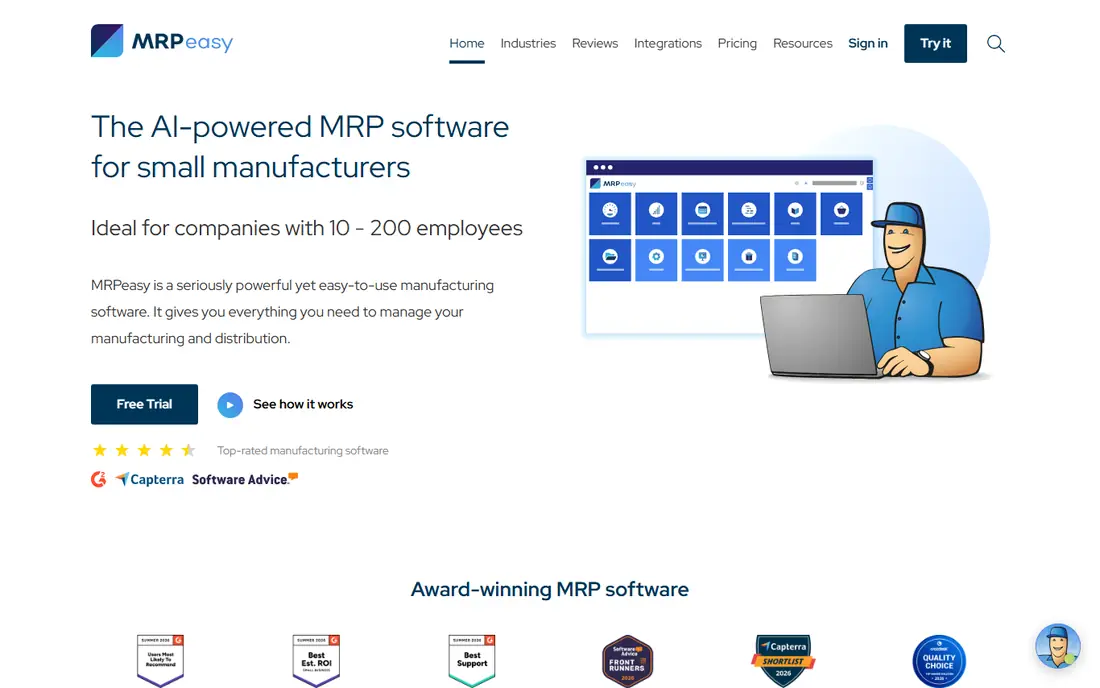
MRPeasy is manufacturing software for small manufacturers, typically companies with 10 to 200 employees, covering production planning, inventory, sales, procurement, workforce, and finances. For batch work, its lot and batch tracking, serial numbers, and barcodes give small makers traceability without enterprise complexity, and real-time inventory views prevent stockouts and excess. Production plans balance materials and capacity against demand, and orders flow from sales to production to shipping in one system. Customers report that auditors like the documentation inside the system, which matters for makers facing customer or regulatory audits. MRPeasy is cloud-based with a straightforward subscription model. For small batch makers that want one affordable system for production and inventory, it is an excellent fit.
- Production planning, lot tracking, inventory, procurement, easy to use
- Depth is lighter than full ERP, larger makers may outgrow it
Katana
Ideal for: Product businesses selling across channels with production
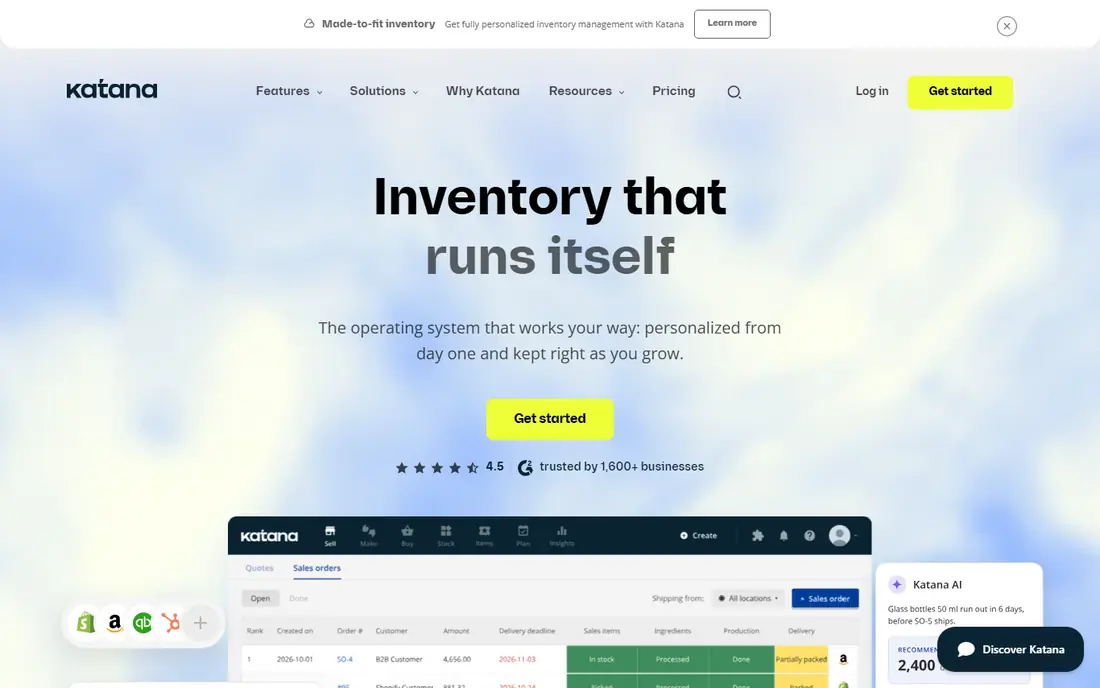
Katana is cloud inventory and manufacturing software giving product businesses full visibility over stock, orders, and production. It tracks lot and serial numbers across inventory and production, which gives batch makers recall-ready visibility from raw materials to finished goods, as shown in customer stories covering food and supplement production. Orders from Shopify, Amazon, WooCommerce, and wholesale flow into one system, stock updates automatically, and production is tied to inventory so materials and finished goods stay aligned. Implementation can start self-serve in a day, with guided onboarding reaching full visibility in about six weeks. Katana can be explored at no cost, with paid plans for full use. For product businesses that make in batches and sell across channels, Katana is a strong modern choice.
- Real-time inventory, lot and serial traceability, multi-channel order sync
- Full guided setup takes weeks, pricing is quote-based for full plans
Fishbowl
Ideal for: Manufacturers and wholesalers needing inventory plus production
Fishbowl is inventory management and manufacturing software that combines stock control, order management, production, and warehousing, with a long-standing integration to QuickBooks. For batch makers, it tracks inventory by lot and location, manages bills of materials and work orders, and supports barcode scanning on the warehouse floor. Its QuickBooks link keeps accounting in step with operations, which appeals to businesses that already run QuickBooks for finance. Fishbowl serves manufacturers, wholesalers, and distributors, and it offers both cloud and on-premises options through its product family. The interface is less modern than Katana or MRPeasy, and the most advanced manufacturing features sit on higher tiers. For QuickBooks-based makers that want proven inventory and batch capability, Fishbowl remains a solid option.
- Inventory and manufacturing in one system, QuickBooks integration, barcode support
- Interface feels dated, advanced manufacturing on higher tiers
Vicinity
Ideal for: Formula makers already running Microsoft Dynamics ERP
Vicinity Software extends Microsoft Dynamics ERP with industry-specific capabilities for formula- and batch-driven manufacturers in chemical, food, and brewing industries. Its pitch speaks directly to formula makers: you talk in formulas rather than bills of material, raw materials are measured by weight or volume, formulas change during production, and you speak in batch tickets rather than work orders. Vicinity handles variance and yield calculations, lot traceability, quality, scheduling, and compliance within Dynamics, with more than two decades of process manufacturing experience behind it. The requirement is Dynamics ERP, so it suits makers already on that platform rather than those choosing a first system. For Dynamics-based formula manufacturers, Vicinity adds the batch depth that generic ERP lacks.
- Formula and batch expertise, Dynamics integration, yield and variance handling
- Requires Dynamics ERP, niche focus
Deacom
Ideal for: Process manufacturers that need a full ERP with batch control
Deacom is an ERP system built for process manufacturers, covering formulation, production, inventory, quality, sales, purchasing, and accounting in a single system without bolt-on modules. That single-system design matters for batch traceability: a lot's journey from raw material through production to shipment lives in one database, which simplifies recalls and audits. Deacom serves food, beverage, chemical, pharmaceutical, and related process industries, with features for regulatory compliance and quality management. Implementation is an enterprise project with scoping, migration, and training. Pricing is quote-based. For midsize and larger process manufacturers that want one ERP rather than a patchwork of tools, Deacom is a serious contender.
- Single-system ERP, batch and lot traceability, formulation and quality
- Enterprise scope, implementation is a project
Aptean
Ideal for: Manufacturers needing ERP across process and discrete production
Aptean offers ERP and supply chain software for manufacturers across process and discrete industries, with industry editions for food and beverage, chemicals, and other sectors. Its batch and lot capabilities cover traceability, quality, and production management, while the wider ERP handles finance, supply chain, and customer management. That breadth suits manufacturers with mixed production, such as a company that both blends batches and assembles discrete products, because one vendor covers both modes. Selecting the right Aptean edition takes guidance, given the portfolio's size, and pricing is enterprise and quote-based. For manufacturers that want an ERP vendor with both process depth and discrete capability, Aptean is worth shortlisting.
- Broad ERP portfolio, industry editions, batch and lot capabilities
- Portfolio breadth can complicate selection, enterprise pricing
Prodsmart
Ideal for: Shop-floor batch and production tracking for small makers
Prodsmart is a shop-floor production tracking tool for manufacturers that need to capture what happens on the floor: which batch ran, what went into it, who worked on it, and what quality checks passed. Its mobile-friendly interface suits operators better than a desktop ERP screen, and its batch tracking gives small makers traceability without a full ERP rollout. Prodsmart fits makers that already have accounting and inventory tools but lack reliable production data from the floor. It offers less ERP breadth than BatchMaster or Deacom, so companies needing full financials and planning should look larger. For small batch makers whose main gap is shop-floor visibility, Prodsmart is a focused and affordable option.
- Shop-floor data capture, batch tracking, simple setup, mobile friendly
- Less ERP depth than larger tools, smaller vendor profile
How we picked these
We looked for tools with real batch capability: formula or recipe handling, lot and batch traceability, production scheduling, and quality checks, not generic inventory tools with a batch field. We balanced formula specialists, small-manufacturer MRP, inventory-led tools, and full ERP options, because batch makers range from artisan food producers to large chemical plants. We compared official feature pages, pricing pages, documentation, and public reviews, and we left out tools without clear batch or lot support. Where a vendor did not publish a current price, we wrote "See website" rather than repeat a third-party figure.
Recall readiness checklist
A batch system proves itself during a recall, so test that scenario before buying. Pick a finished batch and trace it backward to every ingredient lot, supplier, and production step, then trace one ingredient lot forward to every finished batch and customer it reached. Time both directions: if either takes more than minutes, the system is not ready. Check that quality holds block shipment of affected batches automatically, and that the audit trail shows who changed a formula and when. Finally, confirm that lot data survives the full product lifecycle, including returns and rework. A tool that passes this test protects your customers and your business when it matters most.
Frequently asked questions
What is batch management software?
It is software that manages production in batches, tracking formulas, ingredients, lots, production steps, quality checks, and finished goods, so each batch is traceable from raw material to customer.
What is lot traceability, and why does it matter?
Lot traceability records which ingredient lots went into each finished batch and where each batch was shipped. It matters for quality investigations and recalls, where speed and accuracy protect customers and limit scope.
How is batch manufacturing different from discrete manufacturing?
Batch manufacturing blends or processes materials in quantities, with yields that vary, while discrete manufacturing assembles distinct items. Batch tools handle formulas, weights, volumes, and yield variance that discrete tools do not.
Can small manufacturers use batch management software?
Yes. Tools such as MRPeasy, Katana, and Prodsmart suit small makers, while BatchMaster, Vicinity, Deacom, and Aptean suit midsize and larger process manufacturers.
Does batch software help with recalls?
Yes, when lot traceability is complete. A good system traces a problem batch backward to its ingredients and forward to its customers in minutes, which limits recall scope and cost.
How much does batch management software cost?
Small-maker tools start at modest monthly subscriptions, while ERP-linked tools are quote-based and include implementation costs. Get a written quote covering licenses, setup, and training.