Best Beauty Salon Management Software in 2026: 8 Tools Compared

- 1
 FreshaSalons wanting marketplace bookingsVisit
- 2
 GlossGeniusSolo stylists and small salonsVisit
- 3
 VagaroGrowing salons and spasVisit
- 4
 Square AppointmentsSalons already using SquareVisit
- 5
 BooksyClient discovery and bookingsVisit
- Fresha and Booksy suit salons that want a marketplace to bring in new clients, while GlossGenius and Mangomint focus more on a polished booking experience for existing clients.
- Most tools in this list cover online booking, reminders, payments, and client notes, so the deciding factors are usually price structure, staff tools, and marketing features.
- Commission-based pricing can look free at first but may cost more than a flat monthly plan once bookings grow, so compare total cost at your real booking volume.
- Vagaro and Boulevard are stronger picks for larger teams, since they offer deeper staff, payroll, and multi-location controls than simpler booking apps.
Quick comparison
| Product | Ideal for | Price from | Free version | |
|---|---|---|---|---|
| Fresha | Salons wanting marketplace bookings | Free | Yes | Visit |
| GlossGenius | Solo stylists and small salons | See website | No | Visit |
| Vagaro | Growing salons and spas | See website | Free trial | Visit |
| Square Appointments | Salons already using Square | Free | Yes | Visit |
| Booksy | Client discovery and bookings | See website | Free trial | Visit |
 Mangomint | Design-led salons | See website | Free trial | Visit |
 Boulevard | Multi-location salons | See website | No | Visit |
 Zenoti | Large salons, spas, and chains | See website | No | Visit |
The best beauty salon management software
Salon software should do more than hold a calendar. The best options handle bookings, reminders, payments, client history, and staff schedules in one place, so the front desk spends less time on admin. We compared official feature pages, pricing pages, and public reviews to pick tools that cover those basics well.
Fresha
Ideal for: Salons wanting marketplace bookings
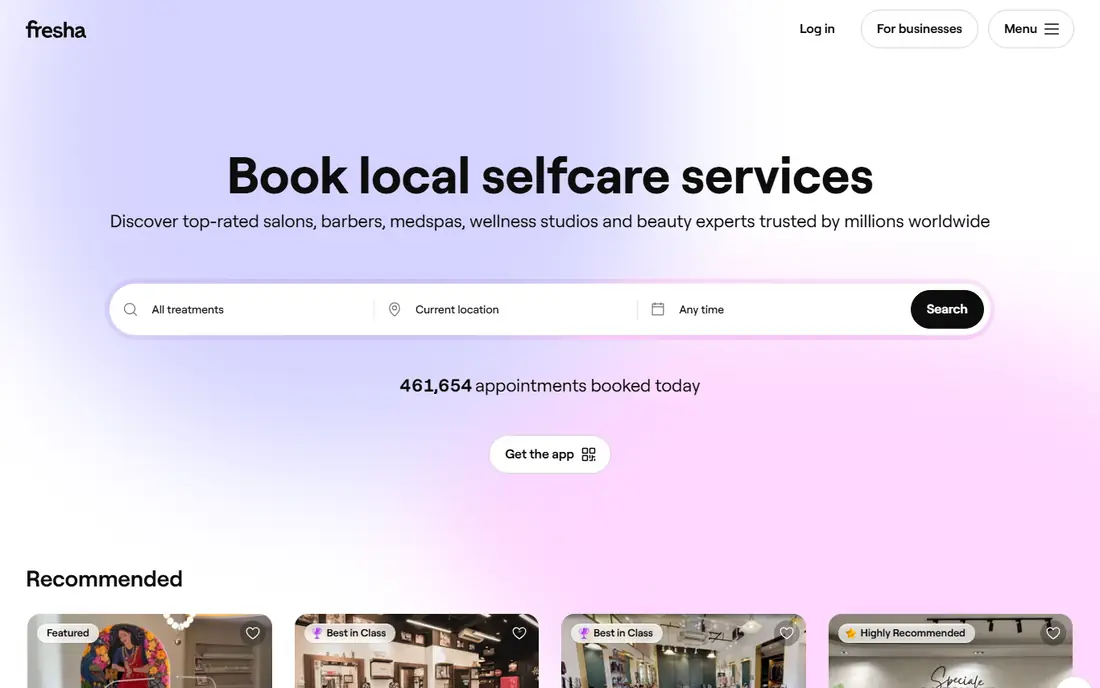
Fresha stands out because its core salon software is free to use, which makes it an easy first step for a new salon or a solo stylist who wants to stop juggling paper diaries and direct messages. Clients can book online, get reminders, and pay through the platform, while the salon keeps a record of visits, services, and preferences. That combination covers the daily work of a small salon without a monthly subscription hanging over it.
The trade-off is the marketplace model. Fresha earns money when new clients book through its marketplace, so a salon that gains many new clients that way will pay commission on those bookings. Salons that mostly serve repeat clients may feel less of that cost, and the paid add-ons for marketing and extra features are worth checking before committing. Still, for a salon that wants bookings and discovery in one place, Fresha is a practical place to start, and our pick for salons on a tight budget.
- Free core software
- Built-in marketplace for new clients
- Online booking and payments included
- Marketplace commission applies to new-client bookings
- Advanced marketing tools sit on paid tiers
GlossGenius
Ideal for: Solo stylists and small salons
GlossGenius is built around the look and feel of the booking experience, which matters when clients judge a salon from a link in an Instagram bio. Booking pages are tidy, payment can be taken at booking, and no-show protection tools such as card on file help solo stylists protect their time. It also includes tools for reviews, messaging, and simple marketing, so a small salon can stay in touch with clients without buying a separate tool.
The catch is scale. GlossGenius fits independent stylists and small teams best, and larger salons with complex payroll, inventory, or multi-site needs may find its controls lighter than those of enterprise tools. Pricing is also worth confirming for each team member, since costs rise as staff are added. For a small salon that wants bookings to feel easy and professional, though, it is one of the strongest options here, and a good fit for stylists building a personal brand.
- Clean, client-friendly booking pages
- Card-on-file and payments built in
- Good review and marketing tools
- Pricing is per user in practice
- Less suited to large multi-location chains
Vagaro
Ideal for: Growing salons and spas
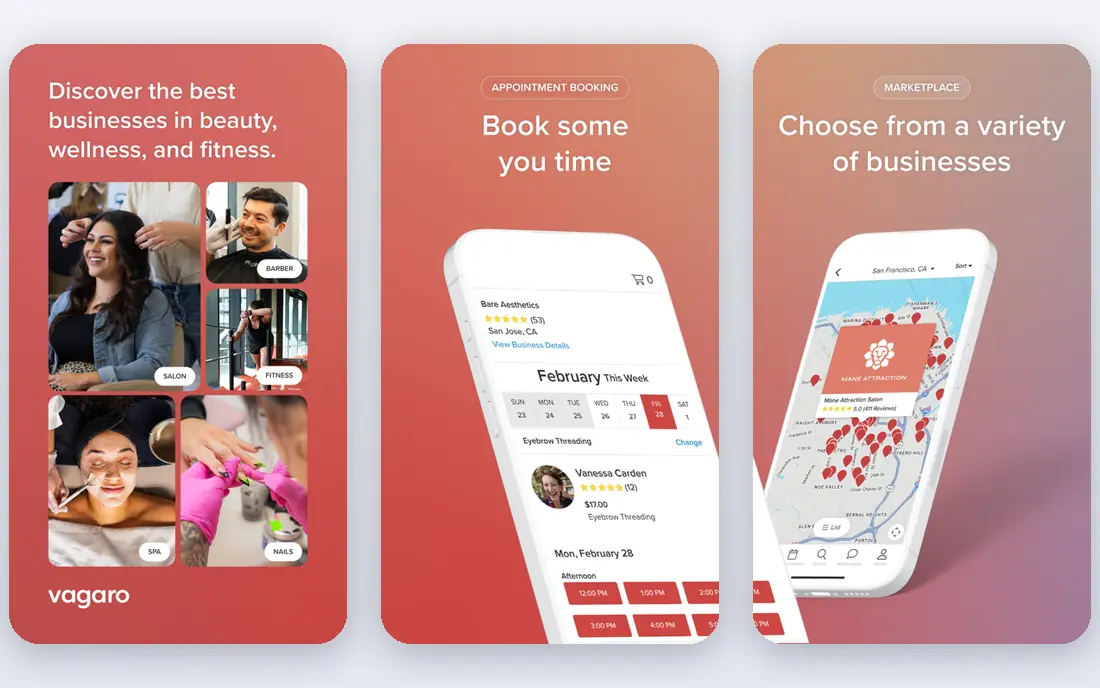
Vagaro is a long-running salon platform that covers booking, point of sale, customer records, marketing, and payroll in one system. That breadth makes it a natural step up from a simple booking app once a salon hires more staff or adds spa services. Clients can book through the salon website or the Vagaro marketplace, and staff can manage schedules, commissions, and service history from the same dashboard.
The downside of breadth is complexity. New users may need time to set up services, staff permissions, and pricing the way they want, and some features are paid add-ons rather than part of the base plan. Even so, the range is the point: a salon that expects to grow can stay on Vagaro rather than switching systems mid-growth. It is our pick for salons that want one system for booking, selling products, and paying staff.
- Broad feature set for salons and spas
- Online booking, POS, and payroll tools
- Marketplace exposure
- The full feature set can feel busy at first
- Some advanced features cost extra
Square Appointments
Ideal for: Salons already using Square
Square Appointments makes sense first for salons that already take card payments with Square. The free plan covers booking for an individual, and paid team plans add staff management and more booking options. Because payments, hardware, and booking live in the same ecosystem, reconciliation at the end of the day is simpler, and clients get familiar confirmation and reminder messages.
Where it falls short is salon-specific depth. Marketing, memberships, and detailed salon reporting are not as developed as in tools built only for salons, so a salon that leans on campaigns and packages may want a specialist instead. For a small salon that values simple payments and a low starting cost, though, Square Appointments is hard to beat, and it is easy to try without changing payment providers.
- Free plan for individual staff
- Tight link to Square payments and hardware
- Simple setup
- Advanced team features need paid plans
- Marketing tools are lighter than specialist salon platforms
Booksy
Ideal for: Client discovery and bookings
Booksy combines salon management software with a client app where people search for salons, barbers, and beauty services nearby. That discovery angle is its main selling point: a salon can be found by people who were not already following it on social media. Behind the scenes it handles calendars, client records, payments, and reminders, plus tools for marketing and reporting.
The cost question needs care. Booksy pricing and any marketplace fees vary by location and plan, so salons should confirm the full monthly cost and any per-booking charges before signing up. It also works best for salons comfortable with clients booking through a third-party app rather than only their own site. For salons in busy areas that want a steady stream of new clients, Booksy is a strong contender.
- Large client-facing marketplace
- Online booking and reminders
- Business management tools
- Marketplace fees can apply
- Pricing varies by market and plan
Mangomint
Ideal for: Design-led salons
Mangomint is a newer salon platform with a clear focus on a clean interface and a smooth experience for both staff and clients. Online booking, intake forms, messaging, payments, and client records are presented in a way that feels less cluttered than older salon systems. That polish suits salons that charge premium prices and want every client touchpoint, from booking link to checkout, to feel considered.
The price reflects that positioning, and salons should compare it against simpler tools if budget is the main concern. Mangomint also does not lean on a public marketplace for discovery in the way Fresha and Booksy do, so salons need their own marketing to fill chairs. For a salon that values design, ease of use, and a calm front-desk workflow, it is an appealing choice.
- Modern, easy-to-use interface
- Strong booking and client communication tools
- Good for high-end salons
- Priced above basic booking apps
- Fewer marketplace discovery features than Fresha or Booksy
Boulevard
Ideal for: Multi-location salons
Boulevard is aimed at salons, spas, and medspas that operate at larger scale, including multi-location groups. It covers booking, client records, payments, payroll, and reporting with controls that suit managers overseeing several sites. The platform also puts effort into the client experience, with booking flows and messaging designed to keep clients coming back.
That scale comes with cost and setup. A single-chair salon will likely find Boulevard more than it needs, and pricing is quote-based for larger operations. But for a growing group that needs consistent reporting across locations, shared client records, and staff management in one system, Boulevard is one of the most capable options in this list.
- Built for multi-location and enterprise salons
- Strong scheduling and reporting
- Client experience tools
- Enterprise pricing
- More setup than a small salon needs
Zenoti
Ideal for: Large salons, spas, and chains
Zenoti serves large salon, spa, and wellness chains, including franchises, with a platform that covers booking, memberships, packages, inventory, marketing automation, and multi-location reporting. Its strength is handling complexity: different locations, service menus, price lists, and staff roles can be managed centrally while each site runs its daily schedule.
For a small salon, Zenoti is almost certainly too much system and too much cost. Implementation takes planning, and the platform rewards teams that will use its marketing and membership tools fully. For a chain that needs one system across many sites, though, Zenoti is a proven choice, and its depth in memberships and packages is a real advantage for businesses built on repeat visits.
- Deep features for chains and franchises
- Inventory, memberships, and marketing automation
- Broad integrations
- Enterprise cost and implementation effort
- Overkill for a solo stylist
How we picked these
We compared official feature pages, pricing pages, app-store listings, and public reviews for salon platforms that serve beauty salons specifically, not generic booking tools. We looked for online booking, reminders, payments, client records, and staff scheduling as core requirements, then weighed price structure, marketplace discovery, and suitability for different salon sizes. Tools that only handled one part of the job, or that had no clear salon focus, were left out.
What to check before you choose salon software
Start with how clients find you. If most clients come from search or a marketplace, a tool with discovery built in can pay for itself. If clients come from your own social media and website, a clean booking link and good reminders may matter more than a marketplace, and a flat monthly plan may cost less over time.
Next, test the booking flow as a client would. Book an appointment, reschedule it, and pay for it, and check how reminders and cancellations work. Ask how card-on-file and no-show protection are handled, since missed appointments are lost income. Finally, confirm the total cost: monthly fees, per-booking charges, payment processing, and paid add-ons. A free plan with commission can cost more than a paid plan once you are busy, so run the numbers at your actual booking volume before deciding.
Frequently asked questions
What is the best beauty salon management software for a small salon?
For a small salon, Fresha, GlossGenius, and Square Appointments are strong starting points. Fresha offers free core software with marketplace bookings, GlossGenius gives a polished booking experience for solo stylists, and Square Appointments suits salons already using Square for payments. The best choice depends on whether you value low cost, design, or payment simplicity most.
Do salon management tools include online booking?
Yes, online booking is a core feature of every tool in this list. Clients can book through your website, a booking link, or in some cases a marketplace app, and the salon calendar updates in real time. Most tools also send automatic reminders to reduce no-shows.
How much does beauty salon management software cost?
Costs vary widely, from free core plans with Fresha and Square Appointments to quote-based enterprise pricing for Boulevard and Zenoti. Mid-range tools charge a monthly fee per location or per staff member, and marketplace tools may add commission on new-client bookings. Always confirm processing fees and add-ons before comparing headline prices.
Can salon software handle staff schedules and payroll?
Vagaro, Boulevard, and Zenoti include staff scheduling and payroll or commission tools, while simpler tools focus on calendars and bookings. If you have several stylists with different commission rates, choose a tool with staff management built in rather than tracking pay in a spreadsheet.
Is a marketplace salon app worth it?
A marketplace can help if you need new clients, since people searching for salons nearby can discover you. It is less valuable if you already have a full book from repeat clients and referrals. Weigh any commission or fee against the cost of finding those clients yourself through advertising or social media.