IBM DataStage is the first pick on this list for visual pipeline design and deployment. Google Cloud Dataflow is the stronger choice for managed streaming analytics, while Informatica Intelligent Data Management Cloud suits wide enterprise data management. The full list of 6 tools follows, with prices and free plan facts.
Choosing big data integration platforms for enterprise usually comes down to price, fit and limits. This Ainotely guide sets 6 tools side by side on those three points, with the facts kept short and checkable.
Key takeaways
IBM DataStage takes the first slot, best suited to visual pipeline design and deployment.
Qlik Talend Data Integration suits end-to-end integration with analytics.
No starting price is shown for any of the 6 tools, IBM DataStage and Qlik Talend Data Integration included, so plan time for sales calls.
IBM DataStage, Qlik Talend Data Integration and the 4 others all need a premium plan or a trial, since no free plan is listed.
IBM DataStage comes with a trade-off: visual approach may feel heavy for straightforward jobs.
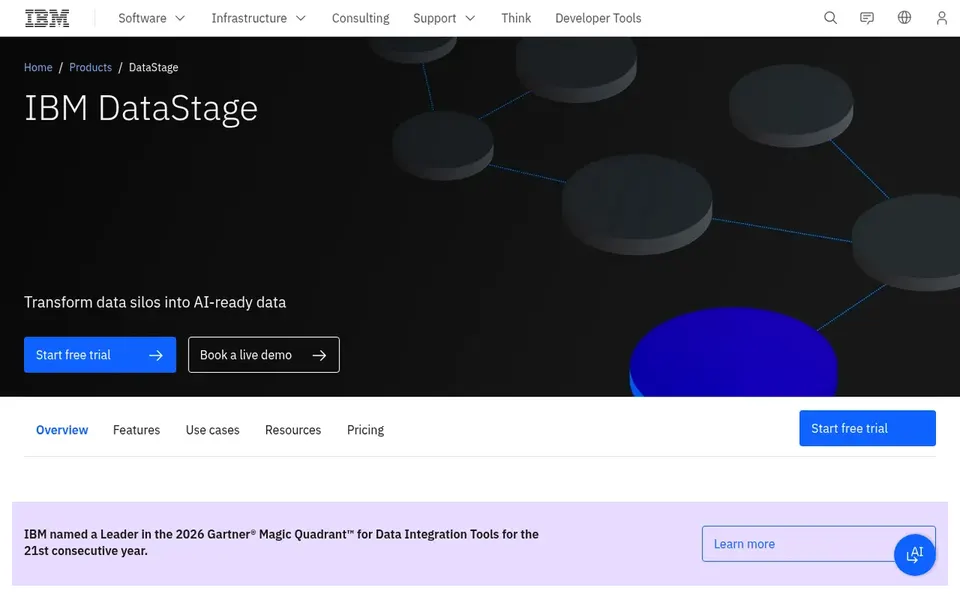
Think of IBM DataStage for visual pipeline design and deployment. Confirm current deployment choices and connectors on the vendor site before committing. The visual model can add overhead for small or highly code-driven teams.
Those working primarily in one public cloud may prefer that cloud's native integration service. In daily use, organizations already standardized on IBM products commonly find it a natural extension. This comparison lists no price for IBM DataStage; ask the vendor. Free plan details: Free trial.
Where it falls short: Visual approach may feel heavy for straightforward jobs.
Google Cloud Dataflow is built with managed streaming analytics in mind. Google Cloud Dataflow is a completely managed streaming analytics service that aims to cut latency and processing time through autoscaling and live data processing.
As for the details, streaming pipeline design needs specific skills. Worth adding: teams with purely batch workloads or non-Google estates may find other products more direct. Pricing for Google Cloud Dataflow is not stated here, so ask the vendor for current figures. Free access: Not stated.
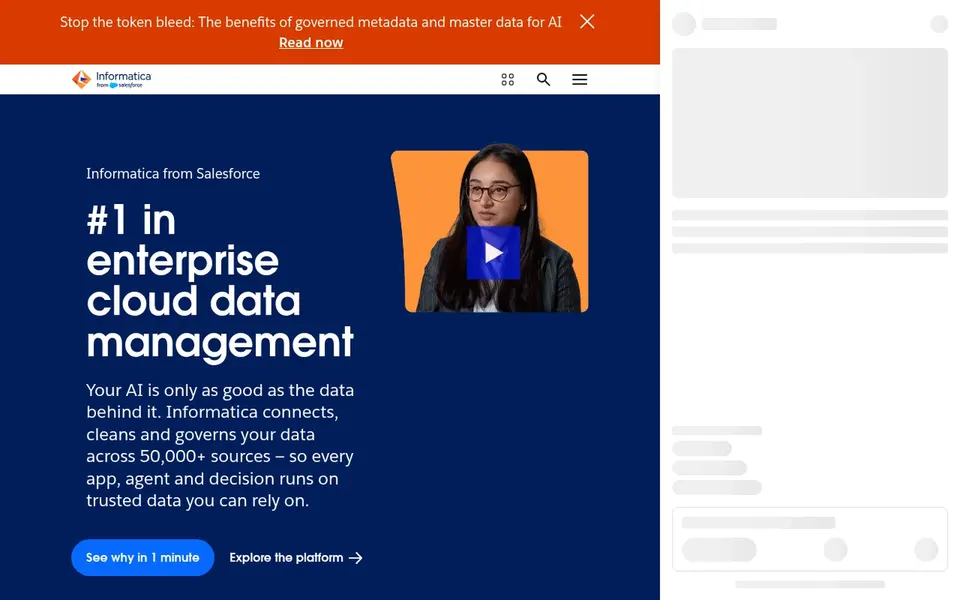
Pick Informatica Intelligent Data Management Cloud if this describes you: wide enterprise data management. Informatica Intelligent Data Management Cloud is a cloud data management product positioned around AI-ready data.
Its homepage emphasizes best-in-class enterprise cloud data management options, now under Salesforce ownership. Consider alternatives when your requirements are restricted to one cloud or one integration pattern. Informatica Intelligent Data Management Cloud does not show a starting price in this comparison, so check the vendor site for current pricing. Trial and free access: Not stated.
The main drawbacks: Overlap across modules needs planning.
Microsoft Azure Data Factory is aimed squarely at code-light hybrid integration on Azure. Its advantages concentrate around the Azure ecosystem, so multi-cloud or non-Microsoft estates may need additional planning.
Points against: Most solid fit is within Azure.
Beyond that, compare with AWS Glue or Google Cloud Dataflow if your data primarily lives on those products. Advanced transformations frequently call for companion services. This comparison lists no price for Microsoft Azure Data Factory; ask the vendor. Free access: Free trial.
AWS Glue is aimed squarely at serverless ETL on AWS. Serverless execution also rewards careful job design and monitoring. Consider Azure Data Factory or Google Cloud Dataflow when your primary system is elsewhere.
AWS Glue is a serverless data integration service that makes it simple to discover, prepare, integrate and modernize extract, transform and load processes. It does well alongside other AWS analytics services. Pricing for AWS Glue is not stated here, so ask the vendor for current figures. Free plan details: Not stated.
What to check first: Serverless model needs cost monitoring.
Where Qlik Talend Data Integration fits: end-to-end integration with analytics. Teams needing only entry-level pipelines may find the scope bigger than necessary.
Also, verify current packaging and capabilities straight with the vendor. Qlik Talend Data Integration does not show a starting price in this comparison, so check the vendor site for current pricing. Free options: Not stated.
Where it is weaker: Merged product lines need clarification.
Request quotes from IBM DataStage, Qlik Talend Data Integration and the others; the list shows no fixed prices.
Use real work to test the free trial from IBM DataStage and Microsoft Azure Data Factory, rather than a demo project.
Read the limits listed for IBM DataStage first: visual approach may feel heavy for straightforward jobs.
Find out what support Microsoft Azure Data Factory includes on your plan, and whether onboarding help costs extra.
Confirm that IBM DataStage connects to the apps your team already uses, on the plan you would actually buy.
How we picked
Ainotely used vendor pricing pages and product documentation as the base, then compared plans, free access and documented limits for 6 tools. Figures are shown as the vendors publish them. Billing terms, seat minimums and add-ons can change the real cost. The sequence is a judgement call: typical use case first, then pricing transparency, then free access. Use the profiles to check fit.
Every price and plan detail on this page comes from the vendors’ own websites. We did not run hands-on tests unless the text says so, and we do not publish star ratings or review scores. See how we score and our disclosure.
Keep your shortlist in one place
Paste prices, trial dates and notes from this guide into Ainotely, our AI note app. It files them into a topic and pulls out tasks like “cancel trial by Friday”. Free 7-day trial, no card needed.
How are the tools for big data integration platforms for enterprise ordered?
The order follows typical fit for big data integration platforms for enterprise, with IBM DataStage first and Qlik Talend Data Integration last, then price clarity and free access. It is editorial judgement, not a score, so another team could rank the tools differently.
Is IBM DataStage the right pick for everyone comparing big data integration platforms for enterprise?
No single tool suits every team. IBM DataStage comes first because it fits visual pipeline design and deployment, while Google Cloud Dataflow suits managed streaming analytics and Informatica Intelligent Data Management Cloud suits broad enterprise data management. Match the tool to your own size, budget and workflow before deciding.
Do these tools publish their prices?
No. None of the tools, from IBM DataStage to Qlik Talend Data Integration, shows a fixed starting price here, so budget time for quotes.
Can I try these tools before paying?
Often, yes. IBM DataStage and Microsoft Azure Data Factory offer a free trial. Use your own data and a real task during the test, and check what the free tier or trial limits before you rely on it.
Should I choose a cloud-native service or a vendor product?
Cloud-native services for example AWS Glue, Azure Data Factory and Google Cloud Dataflow fit teams already committed to one cloud. Vendor systems like Informatica, IBM DataStage and Qlik Talend suit multi-source estates that require broader governance and integration scope.
How do I handle streaming data in an enterprise integration stack?
Google Cloud Dataflow is positioned around managed streaming analytics with autoscaling. Beyond that, AWS Glue and Azure Data Factory also support data movement patterns that can contain streaming sources. Confirm live capabilities and latency expectations with each vendor.