Best Blogging Platform To Make Money in 2026: 8 Picks Compared

- WordPress suits bloggers who want full control and many monetisation options.
- Substack suits writers who want paid subscriptions and email delivery.
- Medium suits writers who want a built-in audience without managing a site.
- Ghost suits independent publishers who want memberships and newsletters.
- Wix and Squarespace suit beginners who want design and hosting together.
Quick comparison
| Product | Ideal for | Price from | Free version | |
|---|---|---|---|---|
 WordPress | full-control blogging and monetisation | See website | Yes | Visit |
 Substack | paid newsletter blogging | See website | Yes | Visit |
 Medium | writing for a built-in audience | See website | Yes | Visit |
 Ghost | independent membership publishing | See website | Free trial | Visit |
 Wix | beginner blogging with design tools | See website | Yes | Visit |
 Squarespace | design-led blogging | See website | Free trial | Visit |
 Blogger | free simple blogging | Free | Yes | Visit |
 Kit | email-led blogging income | See website | Yes | Visit |
The best blogging platforms to make money
We compared ownership, monetisation options, ease of use, traffic control and pricing from official pages and public reviews. Making money from blogging takes time and traffic, and no platform guarantees income. The best platform depends on whether you want ads, subscriptions, products or affiliate income.
WordPress
Ideal for: full-control blogging and monetisation
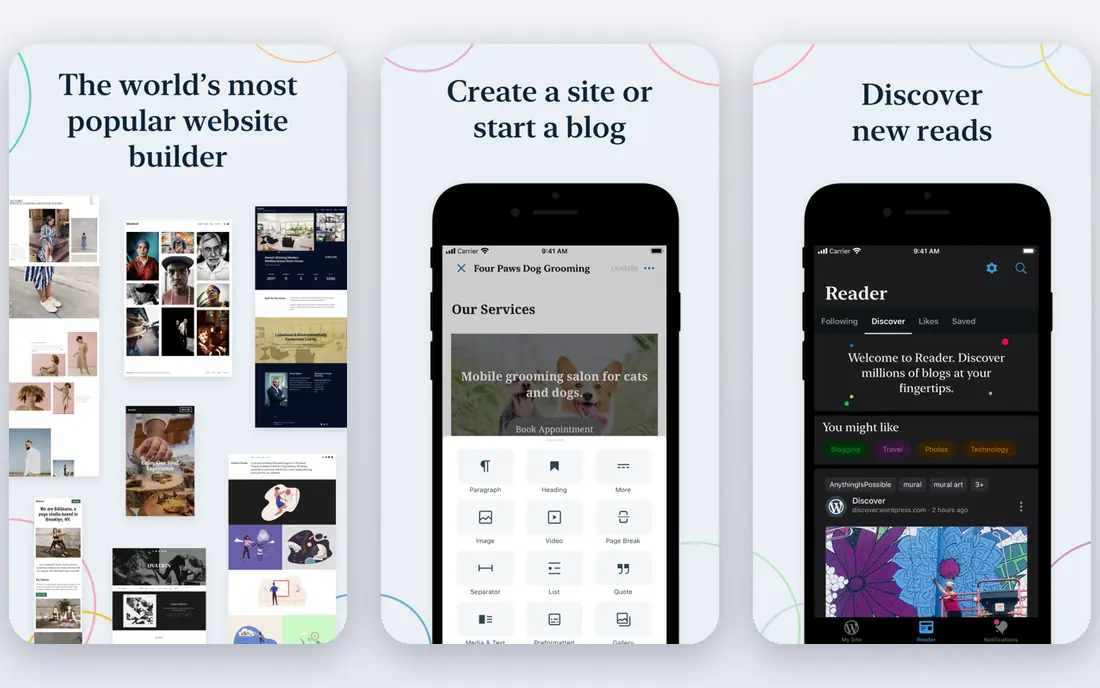
WordPress is our pick for full-control blogging and monetisation. WordPress gives bloggers the widest choice of ads, affiliate, product and membership options. We looked at its official feature page, pricing page and public reviews, and the overall picture was consistent with that strength.
What stood out to us was many monetisation options. That matters in daily use, because a tool that is strong on paper still has to feel good when you use it every week. Beginners should start on a hosted plan and move to self-hosting when ready. Check the official pricing page before you pay, since plans, limits and included features change over time.
The catch is self-hosted setup takes more work. If that trade-off is acceptable for your needs, WordPress is a solid choice. If it is not, another option in this list may fit better, so compare the next two entries before you decide.
- Many monetisation options
- Themes and plugins
- Ownership on self-hosted plans
- Self-hosted setup takes more work
- Hosted plans have limits
Substack
Ideal for: paid newsletter blogging
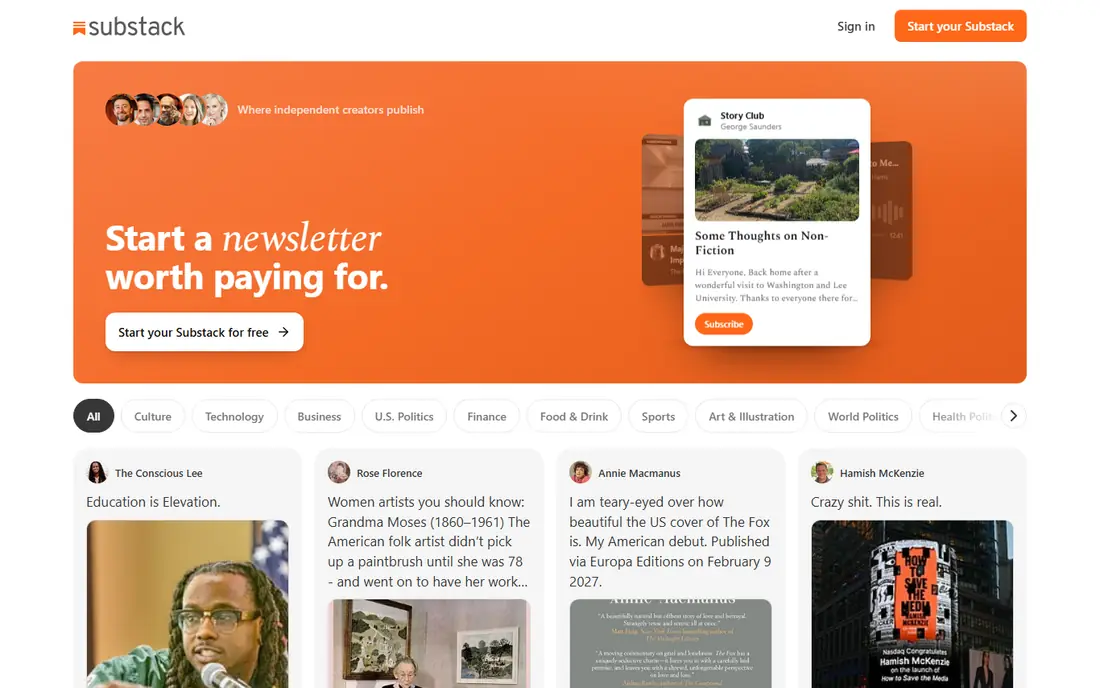
For paid newsletter blogging, Substack is a strong choice. Substack makes paid email writing simple, with discovery built in. We looked at its official feature page, pricing page and public reviews, and the overall picture was consistent with that strength.
What stood out to us was subscriptions. That matters in daily use, because a tool that is strong on paper still has to feel good when you use it every week. Bloggers who need a full website or ad control may find it narrow. Check the official pricing page before you pay, since plans, limits and included features change over time.
The catch is platform fee on paid subscriptions. If that trade-off is acceptable for your needs, Substack is a solid choice. If it is not, another option in this list may fit better, so compare the next two entries before you decide.
- Subscriptions
- Email delivery
- Simple writing tools
- Platform fee on paid subscriptions
- Design control is limited
Medium
Ideal for: writing for a built-in audience
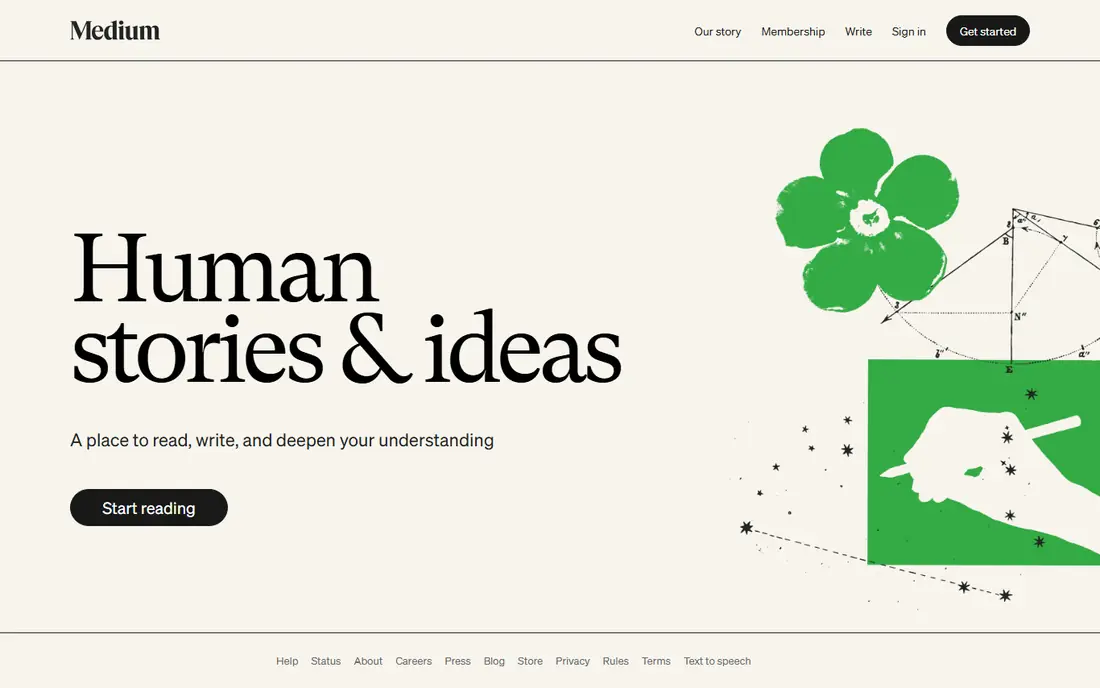
Medium stands out for writing for a built-in audience. Medium is best for writers who want readers without running a site. We looked at its official feature page, pricing page and public reviews, and the overall picture was consistent with that strength.
What stood out to us was built-in readers. That matters in daily use, because a tool that is strong on paper still has to feel good when you use it every week. It is not the best pick for bloggers who want full ad or product control. Check the official pricing page before you pay, since plans, limits and included features change over time.
The catch is monetisation control is limited. If that trade-off is acceptable for your needs, Medium is a solid choice. If it is not, another option in this list may fit better, so compare the next two entries before you decide.
- Built-in readers
- Clean writing experience
- Partner program in some regions
- Monetisation control is limited
- Earnings depend on program rules
Ghost
Ideal for: independent membership publishing
If you need independent membership publishing, start with Ghost. Ghost suits publishers who want membership income without a platform cut on subscriptions. We looked at its official feature page, pricing page and public reviews, and the overall picture was consistent with that strength.
What stood out to us was memberships and newsletters. That matters in daily use, because a tool that is strong on paper still has to feel good when you use it every week. Beginners may prefer Substack for the simplest start. Check the official pricing page before you pay, since plans, limits and included features change over time.
The catch is hosting costs apply. If that trade-off is acceptable for your needs, Ghost is a solid choice. If it is not, another option in this list may fit better, so compare the next two entries before you decide.
- Memberships and newsletters
- Clean publishing
- No platform fee on some plans
- Hosting costs apply
- Setup is more involved than Substack
Wix
Ideal for: beginner blogging with design tools
Wix fits readers who want beginner blogging with design tools. Wix is an easy way to launch a good-looking blog quickly. We looked at its official feature page, pricing page and public reviews, and the overall picture was consistent with that strength.
What stood out to us was drag-and-drop design. That matters in daily use, because a tool that is strong on paper still has to feel good when you use it every week. Serious bloggers who need deep customisation may outgrow it. Check the official pricing page before you pay, since plans, limits and included features change over time.
The catch is monetisation flexibility is less than WordPress. If that trade-off is acceptable for your needs, Wix is a solid choice. If it is not, another option in this list may fit better, so compare the next two entries before you decide.
- Drag-and-drop design
- Hosting included
- Blogging and commerce tools
- Monetisation flexibility is less than WordPress
- Plan limits apply
Squarespace
Ideal for: design-led blogging
For many readers, Squarespace is the practical pick for design-led blogging. Squarespace suits bloggers who care about design and simplicity. We looked at its official feature page, pricing page and public reviews, and the overall picture was consistent with that strength.
What stood out to us was polished templates. That matters in daily use, because a tool that is strong on paper still has to feel good when you use it every week. It is less flexible for complex monetisation or custom features. Check the official pricing page before you pay, since plans, limits and included features change over time.
The catch is less plugin flexibility than WordPress. If that trade-off is acceptable for your needs, Squarespace is a solid choice. If it is not, another option in this list may fit better, so compare the next two entries before you decide.
- Polished templates
- Hosting included
- Commerce options
- Less plugin flexibility than WordPress
- Pricing is plan-based
Blogger
Ideal for: free simple blogging
Blogger earns its place here for free simple blogging. Blogger is a zero-cost way to start writing. We looked at its official feature page, pricing page and public reviews, and the overall picture was consistent with that strength.
What stood out to us was free hosting. That matters in daily use, because a tool that is strong on paper still has to feel good when you use it every week. Bloggers planning a business should consider WordPress or Ghost for more control. Check the official pricing page before you pay, since plans, limits and included features change over time.
The catch is design and monetisation options are limited. If that trade-off is acceptable for your needs, Blogger is a solid choice. If it is not, another option in this list may fit better, so compare the next two entries before you decide.
- Free hosting
- Simple publishing
- Google integration
- Design and monetisation options are limited
- Platform future is uncertain for growth
Kit
Ideal for: email-led blogging income
When email-led blogging income is the priority, Kit deserves a close look. Kit, formerly ConvertKit, helps bloggers turn readers into email subscribers and buyers. We looked at its official feature page, pricing page and public reviews, and the overall picture was consistent with that strength.
What stood out to us was email capture and automation. That matters in daily use, because a tool that is strong on paper still has to feel good when you use it every week. Pair it with a blogging platform if you need a full website as well. Check the official pricing page before you pay, since plans, limits and included features change over time.
The catch is main strength is email, not full website design. If that trade-off is acceptable for your needs, Kit is a solid choice. If it is not, another option in this list may fit better, so compare the next two entries before you decide.
- Email capture and automation
- Creator commerce tools
- Landing pages
- Main strength is email, not full website design
- Pricing rises with subscribers
How we picked these
We compared official feature pages, pricing pages, app store listings, privacy policies and public reviews for each option in this list. We checked that each product exists and works in October 2026, that it truly fits the topic, and that its official homepage loads. We did not claim hands-on testing that did not happen, and we avoided products that did not fit, even when they were well known. Where a price or free tier could not be verified from the vendor own site, we wrote See website rather than guessing.
How to choose a blogging platform to make money
Decide how you plan to earn before you pick a platform. Ads need traffic and control over ad placement. Subscriptions need email and paywall tools. Product sales need checkout and email capture. Ownership matters too: a self-hosted WordPress site gives you more control, while a hosted platform is easier but can limit monetisation. Check fees on subscriptions and sales, since a small percentage adds up. Finally, pick a platform you will actually publish on every week, since consistent publishing matters more than a perfect theme.
Frequently asked questions
What is the best blogging platform for beginners?
Wix, Squarespace and WordPress.com are beginner-friendly starting points, while Substack is simplest for email-led writing.
What are the best blogging platforms to make money?
WordPress offers the most monetisation flexibility, Substack suits subscriptions, and Ghost suits memberships. The right pick depends on your income model.
Can I make money on Medium?
Medium offers a partner program in some regions, but earnings depend on readership and program rules. Check current eligibility before relying on it.
Is WordPress free?
WordPress software is free, but hosting, a domain and some themes or plugins cost money. WordPress.com also offers hosted plans with different limits.
How long does it take to make money blogging?
For most bloggers it takes months of consistent publishing and traffic growth. Treat early income as a bonus, not a guarantee, and diversify income sources.