F5 Distributed Cloud Bot Defense leads the list, best for protecting web, mobile, and APIs. Listed starting prices: DataDome from $3,830 per month. For a different need, Akamai Bot Manager covers edge-based bot detection and mitigation and Arkose Labs covers managing AI agents and dynamic threats. The other 2 tools in the list cover narrower or pricier cases.
If you are comparing Bot protection platforms, this page covers 5 tools in one place: what each is best for, what it costs to start, whether it has a free plan, and the main limit to know about.
Key takeaways
Number one here is F5 Distributed Cloud Bot Defense, a fit for protecting web, mobile, and APIs.
The cheapest monthly starting price in the list is $3,830 per month, offered by DataDome.
None of the 5 tools, from F5 Distributed Cloud Bot Defense to DataDome, has a free plan, so budget for a subscription or use a trial.
A fair warning about Arkose Labs: niche focus on AI agents.
F5 Distributed Cloud Bot Defense was built for protecting web, mobile, and APIs. F5 Distributed Cloud Bot Defense is meant to protect websites, mobile apps, and APIs from malicious bots. This option is a strong match for enterprises already using F5 products or those seeking a unified approach to bot defense that spans web and API traffic, with the benefits of a distributed cloud model.
Where it is weaker: May need F5 infrastructure.
Reasons to shortlist it: Integrated with F5 ecosystem.
More specifically, the product may be most beneficial for organizations invested in the F5 ecosystem, as integration with existing F5 services can simplify deployment. That said, for smaller businesses or those without F5 infrastructure, the setup might be more complicated. Worth adding: consider whether the distributed cloud model aligns with your architecture before committing. F5 Distributed Cloud Bot Defense shows no starting price here, so confirm the cost on the vendor site. Free options: Not stated.
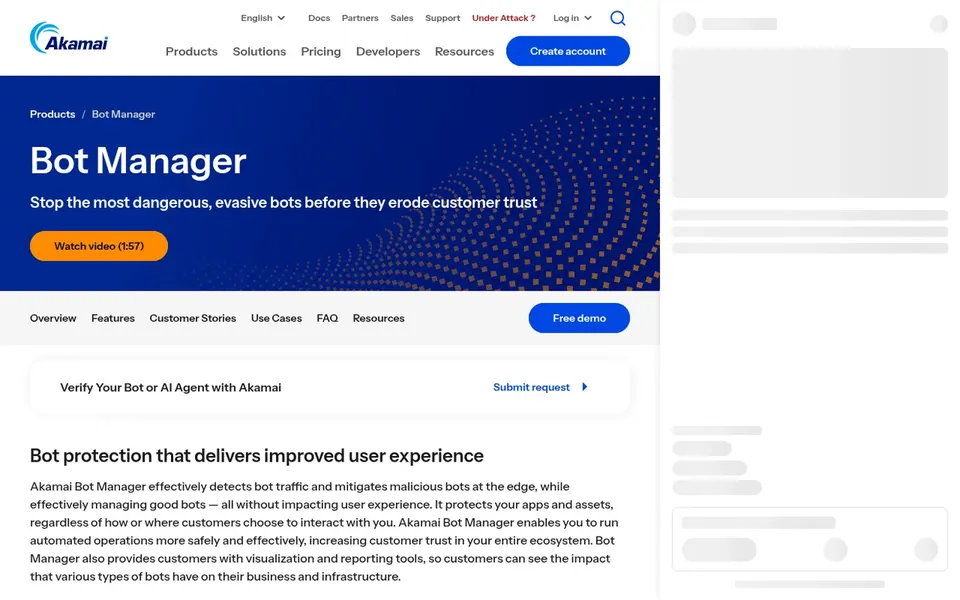
In short, Akamai Bot Manager is for edge-based bot detection and mitigation. Akamai Bot Manager is built to detect and handle bot activity at the edge server, taking action before traffic reaches your origin. This approach helps cut load on your infrastructure by forwarding only clean traffic.
It is well-suited for organizations that want to offload bot mitigation to the edge and minimize the impact on backend systems, notably those with high-traffic websites. Akamai's solution is feature-rich for web traffic, but if your primary concern is protecting mobile apps or APIs, you might need extra tools. Also, the edge-centric approach may not handle all bot vectors, so consider complementing it with a product that supplies broader coverage across different channels. Check the vendor site for Akamai Bot Manager pricing; none is listed in this comparison. Free options: Not stated.
The main drawbacks: Primarily concentrated on web traffic.
Arkose Labs is aimed squarely at managing AI agents and dynamic threats. Arkose Labs concentrates on seeing and managing AI agents, even as they change. Its Arkose Titan option lets you to decide what each AI agent can do, offering control over automatic interactions.
This is especially valuable for firms that require to handle the expanding presence of AI-driven agents and ensure they don't abuse services, whereas still allowing legitimate automation. Organizations looking for thorough bot mitigation across web, mobile, and APIs might have to pair it with other options. Whereas Arkose Labs excels at AI agent management, it may not be a full-suite bot protection product for all types of automatic threats. Check the vendor site for Arkose Labs pricing; none is listed in this comparison. Free options: Not stated.
Best for: Global bot mitigation with machine learning
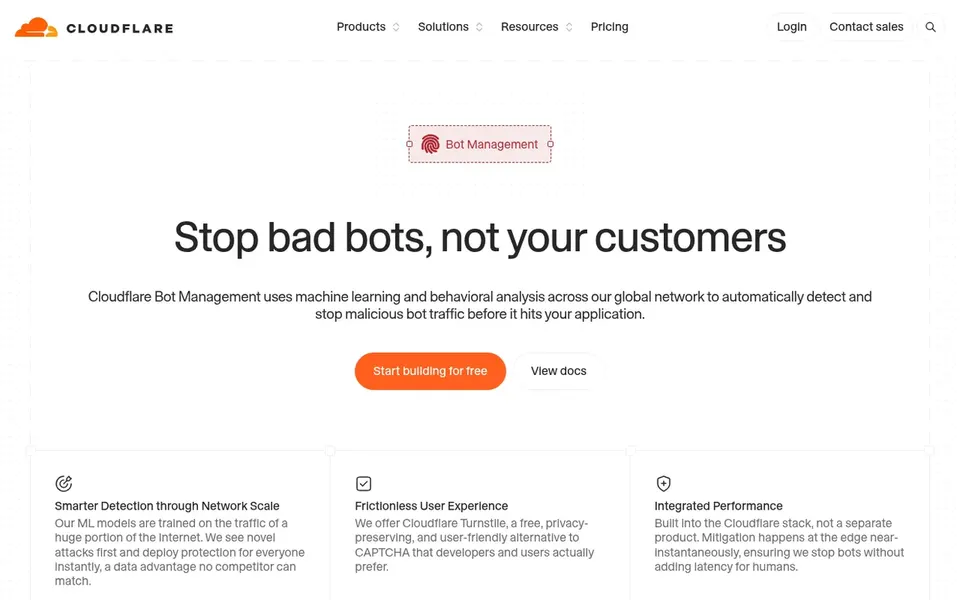
Cloudflare Bot Management makes the most sense for global bot mitigation with machine learning. It uses machine learning and behavioral analysis across a global network to detect and mitigate malicious bot traffic. This makes it a good fit for organizations with a global user base that require a scalable, automated option to protect their web properties from automatic threats.
For everyday use, Cloudflare is a solid choice for general web bot management. In such cases, systems with dedicated API protection or agent trust features might be worth considering. For everyday use, Whereas Cloudflare gives you broad protection, some businesses may find that they need more granular control over bot actions or specialized support for mobile app APIs. Check the vendor site for Cloudflare Bot Management pricing; none is listed in this comparison. Trial and free access: Not stated.
Trade-offs to know: May need tuning for specific traffic patterns.
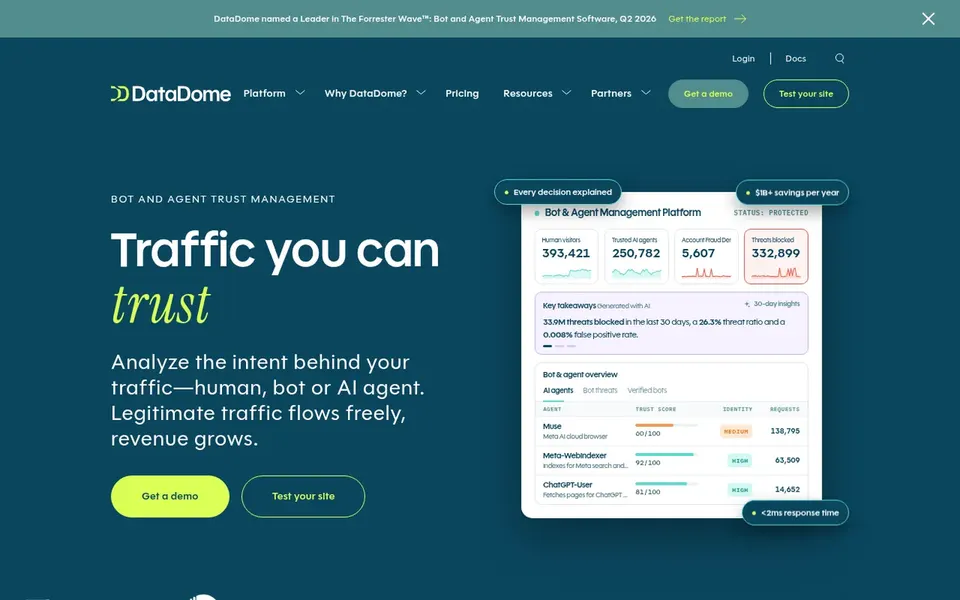
DataDome is built with AI traffic and agent trust management in mind. Also, the emphasis on AI traffic means that traditional bot protection features are still present but may not be the primary focus.
Drawbacks to consider: May be complex to integrate across all channels.
Reasons to shortlist it: Guards websites. DataDome starts at: $3,830 per month. DataDome has no permanent free option.
Ask F5 Distributed Cloud Bot Defense, Akamai Bot Manager, Arkose Labs and Cloudflare Bot Management for a written quote, since no starting price is shown.
Before choosing F5 Distributed Cloud Bot Defense, weigh its main limit: may need F5 infrastructure.
Run a one or two week pilot of Cloudflare Bot Management with the people who will use it every day.
See whether DataDome offers onboarding or training, and whether it is included in the price.
Ask whether F5 Distributed Cloud Bot Defense integrates with your current software, and whether that comes standard or as an add-on.
How we picked
For each of the 5 tools we noted price, free plan or trial, fit for Bot protection platforms and the main limit, using vendor pages and documentation. Plan names, prices and limits change often. Treat the figures here as a starting point and verify them with the vendor. Order on the page follows fit for the typical buyer first, then price transparency and free access. Your own requirements should decide the final pick.
Every price and plan detail on this page comes from the vendors’ own websites. We did not run hands-on tests unless the text says so, and we do not publish star ratings or review scores. See how we score and our disclosure.
Keep your shortlist in one place
Paste prices, trial dates and notes from this guide into Ainotely, our AI note app. It files them into a topic and pulls out tasks like “cancel trial by Friday”. Free 7-day trial, no card needed.
What is the cheapest option for Bot protection platforms in this list?
On published monthly entry prices, DataDome is the lowest here at $3,830 per month. Entry price is only part of the cost, because seats, add-ons and billing terms can change the total. The 5 tool cards above repeat this per product for Bot protection platforms, with the listed price or "pricing on request".
Is F5 Distributed Cloud Bot Defense the right pick for everyone comparing Bot protection platforms?
No single tool suits every team. F5 Distributed Cloud Bot Defense comes first because it fits protecting web, mobile, and APIs, while Akamai Bot Manager suits edge-based bot detection and mitigation and Arkose Labs suits managing AI agents and dynamic threats. Match the tool to your own size, budget and workflow before deciding.
Can I try these options before paying?
Not by default. None of the tools, from F5 Distributed Cloud Bot Defense to DataDome, lists a free plan or a free trial here, so ask each vendor for a demo before committing.
What is the difference between bot management and bot defense?
Some systems, like Akamai Bot Manager, emphasize taking action at the edge, whereas others like Cloudflare Bot Management stress allowing good bots whereas stopping bad ones.
How are the tools for Bot protection platforms ordered?
The order follows typical fit for Bot protection platforms, with F5 Distributed Cloud Bot Defense first and DataDome last, then price clarity and free access. It is editorial judgement, not a score, so another team could rank the tools differently.
What should I look for in a bot protection platform?
Look for coverage across your digital channels, detection methods like machine learning or behavioral analysis. The capacity to distinguish decent bots from bad.