Best Budgeting Apps for Couples in 2026: 8 Apps Compared

- 1
 HoneydueFree budgeting built only for couplesVisit
- 2
 Monarch MoneyFull household money picture for twoVisit
- 3
 YNABHands-on zero-based budgeting togetherVisit
- 4
 GoodbudgetEnvelope budgeting as a coupleVisit
- 5
 PocketGuardNot overspending togetherVisit
- Our pick for most people is Honeydue, because it covers free budgeting built only for couples with the fewest trade-offs in this group.
- If you want to start without paying, Honeydue is the strongest free option here, though its paid tier adds the deeper features.
- Monarch Money is the best second look when Honeydue does not fit, since it serves full household money picture for two rather than the same audience.
- Prices and plan limits change often, so confirm the current terms on each vendor site and read the fine print on limits, renewals and cancellation.
Quick comparison
| Product | Ideal for | Price from | Free version | |
|---|---|---|---|---|
| Honeydue | Free budgeting built only for couples | Free | Yes | Visit |
| Monarch Money | Full household money picture for two | $99.99 per year | Free trial | Visit |
| YNAB | Hands-on zero-based budgeting together | $109 per year | Free trial | Visit |
| Goodbudget | Envelope budgeting as a couple | Free | Yes | Visit |
| PocketGuard | Not overspending together | $74.99 per year | Free trial | Visit |
 Copilot Money | Design-focused couples on Apple devices | $95 per year | Free trial | Visit |
 EveryDollar | Simple zero-based budgeting for Ramsey fans | Free | Yes | Visit |
 Splitwise | Splitting shared expenses fairly | Free | Yes | Visit |
The best budgeting apps for couples
Choosing among best budgeting apps for couples comes down to fit, not fame. We compared official feature pages, pricing pages, app store listings, privacy policies and public reviews for each option below, and we weighed what you actually get on the entry plan against what stays behind a paywall. Honeydue leads this list because it handles free budgeting built only for couples well for the widest range of readers, but the right choice depends on your budget, your device and how much hand-holding you want. Read the shortlist with your own situation in mind. A cheaper tool that you actually use beats a powerful one that sits untouched, and a plan that looks cheap on the monthly line can cost more once add-ons and limits are counted. Agree on what is shared and what stays private before you link accounts. Most apps here let each partner choose sharing per account, which prevents most arguments about visibility.
Honeydue
Ideal for: Free budgeting built only for couples

Honeydue is the free couples pick, built only for two people with sharing controls per account. Its bill reminders and chat keep money talks inside the app, though it lacks investment tracking. For readers focused on free budgeting built only for couples, the appeal is built only for couples with per-account sharing. That strength matters in daily use, because it is the part you will notice every week, not a feature you open once and forget. Compare it against the rest of the list on that one point first, then look at price, platform support and how the company handles your data. The honest weakness is no desktop version. Investment tracking is absent Try it on a real task before you pay, and check whether the entry plan covers the feature you actually need.
- Built only for couples with per-account sharing
- Bill reminders and in-app chat
- Free with no subscription
- No desktop version
- Investment tracking is absent
Monarch Money
Ideal for: Full household money picture for two
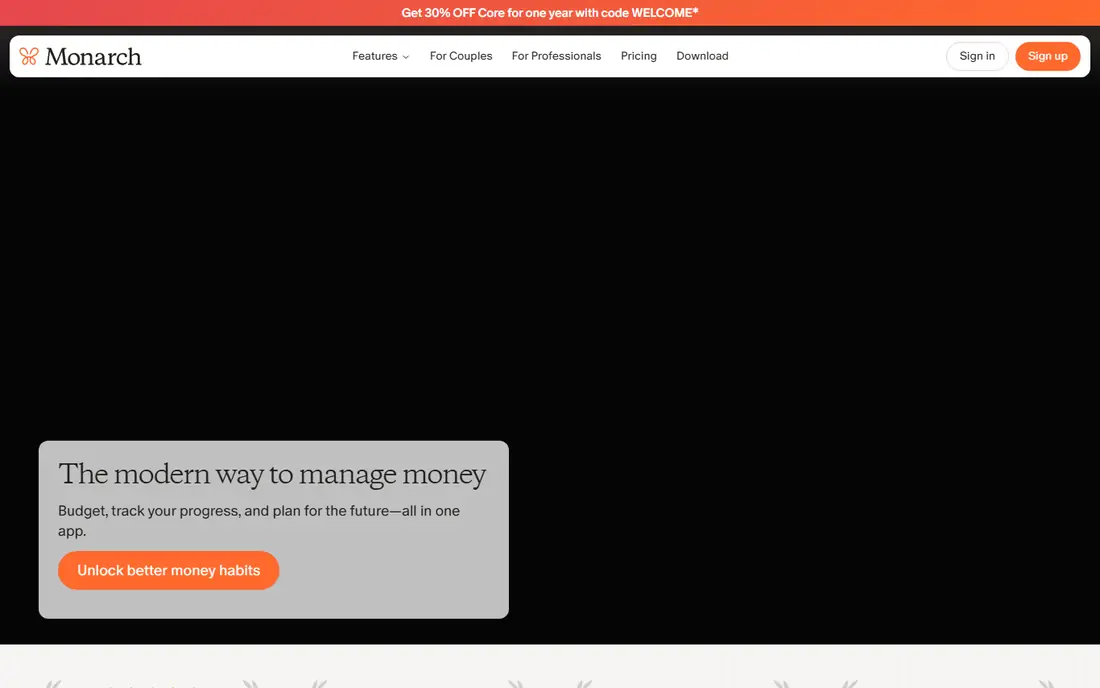
Monarch Money is the most complete couples app, covering budgets, bills and investments in one shared dashboard. Its yours, mine and ours tags solve the privacy question elegantly, though it needs bank linking. For readers focused on full household money picture for two, the appeal is shared dashboard with per-transaction privacy tags. That strength matters in daily use, because it is the part you will notice every week, not a feature you open once and forget. Compare it against the rest of the list on that one point first, then look at price, platform support and how the company handles your data. Watch out for no permanent free tier. Bank linking required for full value If you can live with that limit, the rest of the package is easy to recommend for its audience.
- Shared dashboard with per-transaction privacy tags
- Budgets, bills and investments together
- One subscription covers both partners
- No permanent free tier
- Bank linking required for full value
YNAB
Ideal for: Hands-on zero-based budgeting together
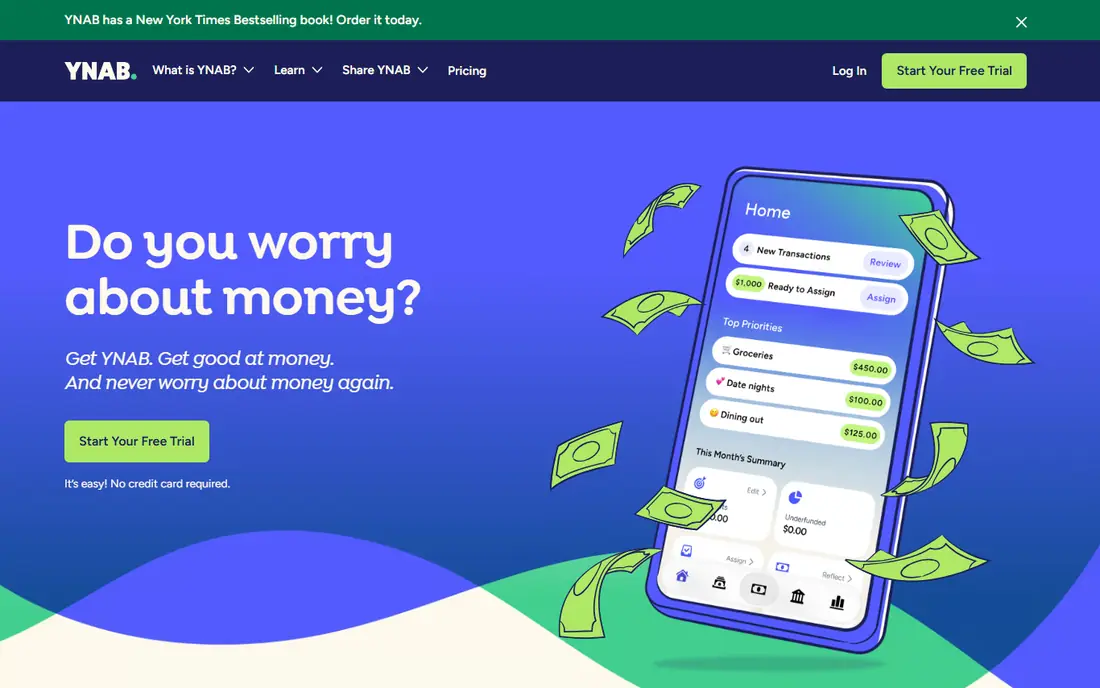
YNAB suits couples who want a hands-on system, with zero-based budgeting that forces a monthly conversation. That discipline helps debt payoff, though it fails when only one partner uses it. For readers focused on hands-on zero-based budgeting together, the appeal is zero-based method that assigns every dollar. That strength matters in daily use, because it is the part you will notice every week, not a feature you open once and forget. Compare it against the rest of the list on that one point first, then look at price, platform support and how the company handles your data. The catch is steep learning curve. Needs both partners engaged to work If that trade-off is acceptable for how you work, this is a solid choice, and a short trial will tell you more than any review can.
- Zero-based method that assigns every dollar
- Shared plan for up to six people
- Free workshops for couples
- Steep learning curve
- Needs both partners engaged to work
Goodbudget
Ideal for: Envelope budgeting as a couple
Goodbudget brings envelope budgeting to couples, with synced envelopes that both partners can see. It suits households that like the envelope method, though bank sync needs Premium. For readers focused on envelope budgeting as a couple, the appeal is envelope method synced across devices. That strength matters in daily use, because it is the part you will notice every week, not a feature you open once and forget. Compare it against the rest of the list on that one point first, then look at price, platform support and how the company handles your data. The honest weakness is bank sync only on Premium. Manual entry on the free tier Try it on a real task before you pay, and check whether the entry plan covers the feature you actually need.
- Envelope method synced across devices
- Shared envelopes for joint spending
- Free plan with limited envelopes
- Bank sync only on Premium
- Manual entry on the free tier
PocketGuard
Ideal for: Not overspending together
PocketGuard centers on one number: what is left after bills and goals, which couples can check at a glance. Its debt payoff tools help joint plans, though it lacks a true couples mode. For readers focused on not overspending together, the appeal is leftover figure shows what is safe to spend. That strength matters in daily use, because it is the part you will notice every week, not a feature you open once and forget. Compare it against the rest of the list on that one point first, then look at price, platform support and how the company handles your data. Watch out for no dedicated couples mode. Shared login shows all transactions If you can live with that limit, the rest of the package is easy to recommend for its audience.
- Leftover figure shows what is safe to spend
- Debt payoff calculator
- Bill and savings goal tracking
- No dedicated couples mode
- Shared login shows all transactions
Copilot Money
Ideal for: Design-focused couples on Apple devices
Copilot Money suits Apple-household couples who value design, with smart categorization and investment tracking. Its couples sharing is workable but less purpose-built than Honeydue or Monarch. For readers focused on design-focused couples on apple devices, the appeal is beautiful design with smart categorization. That strength matters in daily use, because it is the part you will notice every week, not a feature you open once and forget. Compare it against the rest of the list on that one point first, then look at price, platform support and how the company handles your data. The catch is iOS and Mac only. Couples sharing is limited compared with Monarch If that trade-off is acceptable for how you work, this is a solid choice, and a short trial will tell you more than any review can.
- Beautiful design with smart categorization
- Investment tracking included
- Good for Apple households
- IOS and Mac only
- Couples sharing is limited compared with Monarch
EveryDollar
Ideal for: Simple zero-based budgeting for Ramsey fans
EveryDollar is the simplest zero-based app here, built for Ramsey followers who plan income and spending. Its free tier covers manual budgeting, though bank sync needs the pricier Premium plan. For readers focused on simple zero-based budgeting for ramsey fans, the appeal is simple zero-based planning. That strength matters in daily use, because it is the part you will notice every week, not a feature you open once and forget. Compare it against the rest of the list on that one point first, then look at price, platform support and how the company handles your data. The honest weakness is bank sync needs Premium. Monthly Premium price is high Try it on a real task before you pay, and check whether the entry plan covers the feature you actually need.
- Simple zero-based planning
- Free manual-entry tier
- Official tool for Ramsey Baby Steps followers
- Bank sync needs Premium
- Monthly Premium price is high
Splitwise
Ideal for: Splitting shared expenses fairly
Splitwise is not a budget app, it is the expense-splitting tool couples use alongside one. It tracks who owes whom for rent, trips and dinners, which solves the shared-expense problem cleanly. For readers focused on splitting shared expenses fairly, the appeal is expense splitting for shared costs. That strength matters in daily use, because it is the part you will notice every week, not a feature you open once and forget. Compare it against the rest of the list on that one point first, then look at price, platform support and how the company handles your data. Watch out for not a full budgeting app. No bank linking or net worth view If you can live with that limit, the rest of the package is easy to recommend for its audience.
- Expense splitting for shared costs
- Groups for trips, rent and households
- Free basic tier
- Not a full budgeting app
- No bank linking or net worth view
How we picked these
We started from the topic itself and kept only products that exist and work today and truly fit it. For each one we checked the official homepage, the pricing page and the free tier, and we read app store listings, privacy policies and public reviews where they were relevant. Products with a homepage we could not verify were left out, and prices we could not verify are shown as See website rather than guessed. We favored a mix of well-known leaders and strong smaller options, and we weighed entry price, free tier, platform coverage and honest weaknesses. No product here paid for its place, and we did not claim hands-on testing we did not do. What follows is a comparison of published facts, so you can check any claim on the vendor site before you buy.
How couples should set up a shared budget app
Start by naming the job you need done, then match it to one entry plan, not to a whole product family. Check which devices are supported, whether your data can be exported, and what happens when you cancel. A tool that locks your work inside its own format costs more to leave later, even when the monthly price looks low. Next, test the free tier or trial on a real task from your own week, and watch for the limit that bites first. That limit is usually a seat count, a usage cap or a feature held back for a higher tier. YNAB and Goodbudget are worth comparing side by side here, because they serve different audiences at different prices, and the cheaper one is not always the weaker one for your case. Finally, read the renewal and cancellation terms before you enter payment details, and set a reminder to review the subscription after the first month. Many buyers keep paying for a tool they stopped opening, and a short review each quarter keeps the stack honest. If two options feel close, pick the one with clearer pricing and simpler cancellation.
Frequently asked questions
What is the best best budgeting apps for couples?
For most readers it is Honeydue, because it covers free budgeting built only for couples with a clear pricing page and broad support. Monarch Money is the best alternative when you need full household money picture for two instead. Try the free tier or trial of both before you decide, since daily feel matters as much as the feature list.
Is there a free best budgeting apps for couples?
Yes, several options here offer a free tier, including Honeydue, Goodbudget, EveryDollar. Free tiers usually limit seats, usage or advanced features, so check what is included before you rely on one for daily work.
How much should I expect to pay?
Entry prices in this list run from free up to the higher tiers shown in the comparison table, and the real cost depends on seats, usage and add-ons. Honeydue starts at free, which is a fair benchmark for the group. Always confirm the current price on the official site, since vendors change plans during the year.
Can I switch to a different option later?
In most cases yes, but the effort depends on how much data you have stored and whether it exports cleanly. Before you commit, check export options and whether a trial lets you import your existing work. Keeping a backup outside the tool makes any future switch far easier.
Can couples keep some spending private in a shared budget?
Yes, on several apps here. Honeydue lets each partner choose sharing per account, and Monarch lets you tag spending as yours, mine or ours, so privacy and shared visibility can coexist.