SAP Analytics Cloud comes first here, mainly for integrated BI, planning, and predictive analysis. Listed starting prices: Tableau from $15 per user per month. For a different need, Domo covers governed data for AI and business insights and Looker covers governed semantic layer and embedded analytics. The remaining 3 options are covered below with prices and limits.
Ainotely compared 6 tools for business analytics tool replacing legacy BI. The goal is a practical shortlist: published prices, free plan facts, best-fit use cases and honest limits for every entry.
Key takeaways
SAP Analytics Cloud is the opening pick, best for integrated BI, planning, and predictive analysis.
Only Tableau offers a free plan among these 6 tools.
Starting prices begin at $15 per user per month with Tableau.
Qlik Sense is the one to check for end-to-end data integration and analytics.
What to know about Oracle Analytics Cloud first: may need Oracle ecosystem familiarity.
Best for: Integrated BI, planning, and predictive analysis
SAP Analytics Cloud makes the most sense for integrated BI, planning, and predictive analysis. If you need a more straightforward standalone visualization tool, Tableau or Domo could be alternatives.
Limits to weigh: May be complicated to implement.
No starting price is listed for SAP Analytics Cloud here; confirm pricing on the vendor site. Free access: Not stated.
Best for: Governed data for AI and business insights
Domo targets governed data for AI and business insights. Domo strengthens the whole data journey with AI and data products. It links and moves data from any source, prepares and expands data access for exploration, and accelerates business-critical insights.
Limits to weigh: Can be overwhelming for small teams.
More specifically, if you need a more straightforward visualization tool, consider Tableau or Looker. Worth adding: Domo's thorough approach may need significant setup and governance planning, which could be heavy for smaller teams. No starting price is listed for Domo here; confirm pricing on the vendor site. Free access: Free trial.
Best for: Governed semantic layer and embedded analytics
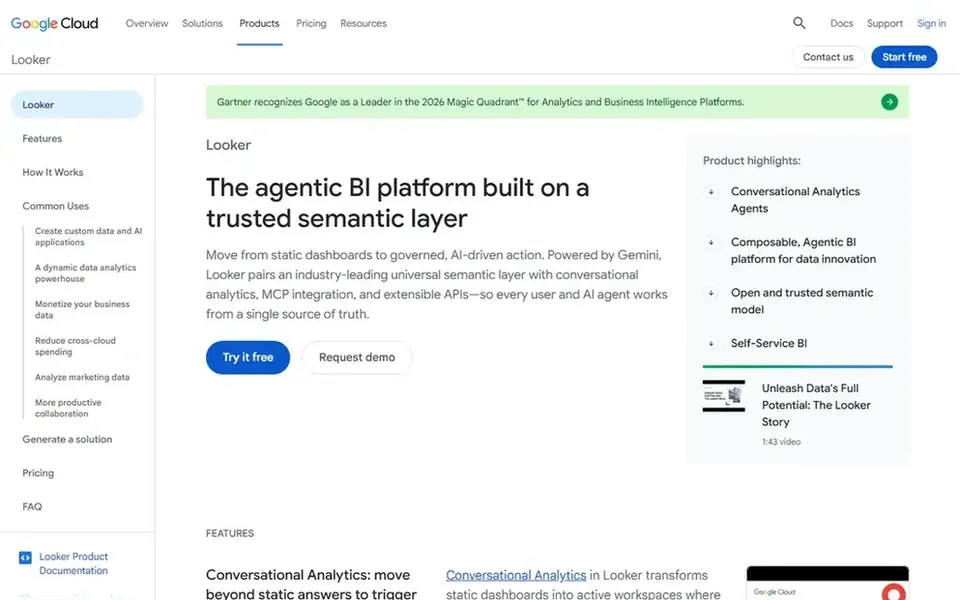
Think of Looker for governed semantic layer and embedded analytics. Looker is Google Cloud's agentic business intelligence and embedded analytics product.
Where it falls short: May be less adaptable for ad hoc visual exploration.
It brings together metrics with a trusted semantic layer and Gemini agents, making it a good match for organizations that require consistent definitions and embedded analytics in other applications. As for the details, if you need fast, drag-and-drop visual exploration without broad modeling, Tableau might be a better fit. Check the vendor site for Looker pricing; none is listed in this comparison. Trial and free access: Not stated.
Best for: Self-service discovery with enterprise reporting
Oracle Analytics Cloud is built with self-service discovery with enterprise reporting in mind. It helps uncover hidden data insights with predictive capabilities.
Highlights: Advanced analytics and predictive capabilities.
If you seek a more simplified visualization experience, consider Tableau or Qlik Sense. Check the vendor site for Oracle Analytics Cloud pricing; none is listed in this comparison. On free options: Not stated. Points against: May need Oracle ecosystem familiarity.
Best for: Visual analytics and wide data connectivity
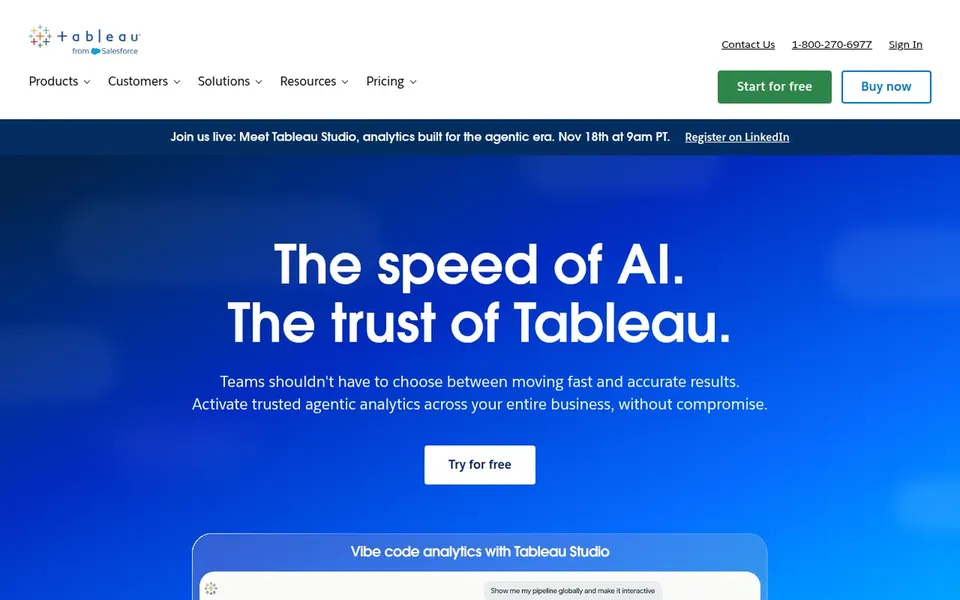
Tableau is designed for visual analytics and wide data connectivity. Tableau is a business intelligence and analytics system that helps users see and understand their data.
If you need a tightly governed semantic layer or embedded analytics, consider Looker instead. For everyday use, Tableau's adaptability can come with a ramp-up time for complicated examines, and performance may vary with very large datasets. Price to start with Tableau: $15 per user per month. Tableau includes a free tier.
Trade-offs to know: May need training for advanced use.
Best for: End-to-end data integration and analytics
Where Qlik Sense fits: end-to-end data integration and analytics. If you prefer a more focused visualization tool, consider Tableau.
Points against: Integration with Talend can add complexity.
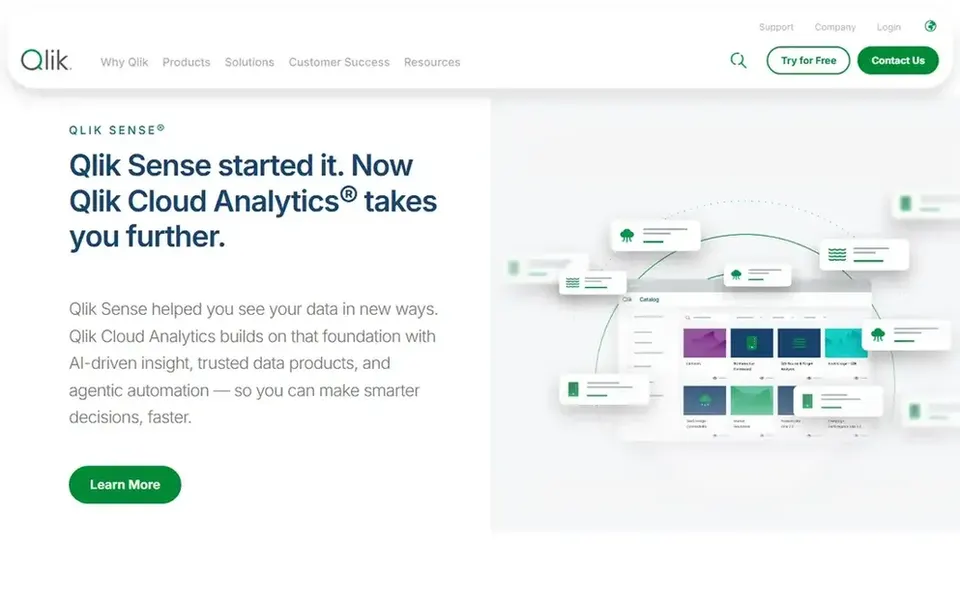
Also, Qlik Sense, now with Talend, provides a data fabric and next-level insights through end-to-end data integration, data quality, and analytics options. The breadth of Qlik's system can mean a steeper ramp-up time, and managing the combined stack may need dedicated resources. This comparison lists no price for Qlik Sense; ask the vendor. Free plan details: Not stated.
Confirm the entry price on the vendor page. For SAP Analytics Cloud, Domo, Looker and others that means a quote rather than a fixed price.
Look at the free plan from Tableau closely: its caps decide whether it is usable for real work.
Use real work to test the free trial from Domo, rather than a demo project.
Before choosing SAP Analytics Cloud, weigh its main limit: may be complicated to implement.
Before you load data into Tableau, check what an export looks like and who can run it.
Total up the real monthly cost of SAP Analytics Cloud, including add-ons, extra users and usage-based fees.
How we picked
We compared the tools on published pricing, free plan or trial availability, feature coverage for business analytics tool replacing legacy BI, and the limits each vendor documents. Seat minimums, billing terms and add-ons can move the real cost, so the starting prices here are a guide and not a quote. The order reflects how well each tool fits the most common buying scenario for business analytics tool replacing legacy BI, then price clarity, then free plan access. It is a starting point, not a verdict.
Every price and plan detail on this page comes from the vendors’ own websites. We did not run hands-on tests unless the text says so, and we do not publish star ratings or review scores. See how we score and our disclosure.
Keep your shortlist in one place
Paste prices, trial dates and notes from this guide into Ainotely, our AI note app. It files them into a topic and pulls out tasks like “cancel trial by Friday”. Free 7-day trial, no card needed.
What is the cheapest option for business analytics tool replacing legacy BI in this list?
On published monthly entry prices, Tableau is the lowest here at $15 per user per month. Entry price is only part of the cost, because seats, add-ons and billing terms can change the total. Each of the 6 options in this business analytics tool replacing legacy BI guide has its own card above with the price, free plan and limits.
How does Tableau compare to Looker for replacing legacy BI?
Tableau excels at visual exploration and wide data connectivity, whereas Looker emphasizes a governed semantic layer and embedded analytics. Tableau may be better for ad hoc analysis, whereas Looker fits organizations needing consistent metrics across applications.
What should I look for in a legacy BI replacement?
Consider whether you need embedded analytics, planning capabilities, or AI-driven insights. Also evaluate deployment options and total cost of ownership beyond licensing.
How are the tools for business analytics tool replacing legacy BI ordered?
The order follows typical fit for business analytics tool replacing legacy BI, with SAP Analytics Cloud first and Qlik Sense last, then price clarity and free access. It is editorial judgement, not a score, so another team could rank the tools differently.
Can I try these tools before paying?
Often, yes. Tableau has a free plan and Domo offers a free trial. Use your own data and a real task during the test, and check what the free tier or trial limits before you rely on it. All 6 picks in this business analytics tool replacing legacy BI comparison show their pricing, free plan details and main limits on the cards above.
Is SAP Analytics Cloud the right pick for everyone comparing business analytics tool replacing legacy BI?
No single tool suits every team. SAP Analytics Cloud comes first because it fits integrated BI, planning, and predictive analysis, while Domo suits governed data for AI and business insights and Looker suits governed semantic layer and embedded analytics. Match the tool to your own size, budget and workflow before deciding.