Best business process automation software in 2026: 7 compared

- 1
 ZapierNo code app automationVisit
- 2
 MakeVisual automation builderVisit
- 3
 UiPathRobotic process automationVisit
- 4
 Automation AnywhereEnterprise RPAVisit
- 5
 Microsoft Power AutomateMicrosoft 365 automationVisit
- Our pick for most people is Zapier, because it covers the core needs of this category with a clear setup and broad support.
- 2 of the 7 options offer a free plan, so you can test the basics before you pay for a subscription.
- Make is a strong second choice for readers who want a simpler setup, while Automation Anywhere suits readers who need more depth.
- Prices and free plans change often, so check the official pricing page linked in Sources before you buy.
- The best choice depends on your budget, your device, and how much setup time you are willing to spend, not only on the feature list.
Quick comparison
| Product | Ideal for | Price from | Free version | |
|---|---|---|---|---|
| Zapier | No code app automation | Free | Yes | Visit |
| Make | Visual automation builder | Free | Yes | Visit |
| UiPath | Robotic process automation | See website | Free trial | Visit |
| Automation Anywhere | Enterprise RPA | See website | Free trial | Visit |
| Microsoft Power Automate | Microsoft 365 automation | See website | Free trial | Visit |
 Nintex | Process automation and forms | See website | Free trial | Visit |
 Kissflow | Low code process apps | See website | Free trial | Visit |
The best business process automation software
We compared official feature pages, pricing pages, app store listings, privacy policies, and public reviews for best business process automation software. The seven options below cover well known leaders and strong smaller choices, and each one is suited to a different kind of reader. Read the short comparison above first, then use the detailed notes to narrow the list to two or three options worth a trial.
Zapier
Ideal for: No code app automation
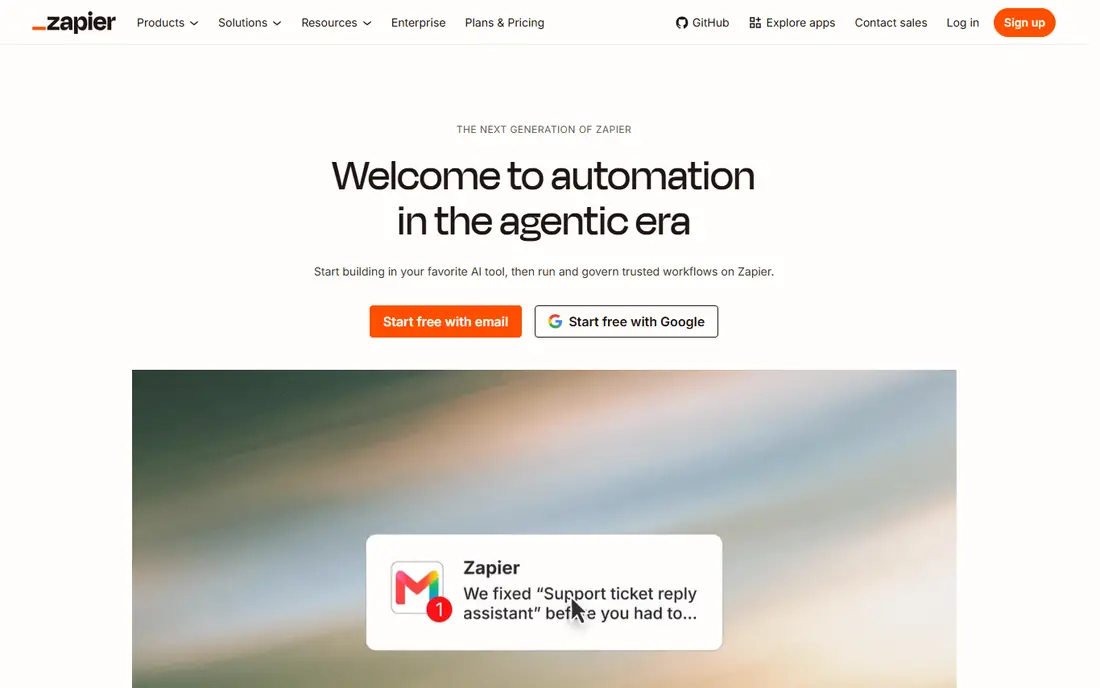
Zapier connects apps with automated workflows, so a form entry can update a CRM, send a message, and create a task without code. For readers who want no code app automation, this is a natural first option to test, and our notes below explain where it shines and where it falls short. We based this assessment on the official feature and pricing pages, plus app store listings and public reviews, rather than on marketing claims alone. The strengths are clear in daily use. Huge app catalog; simple zaps; AI helpers If you compare this option with the others in the list, pay attention to how those strengths fit your own workflow, since a strength that you never use adds no value. The honest catch is worth weighing before you commit. Task based pricing can grow fast; complex logic needs care We would suggest a short trial with your real tasks, and a check of the pricing page for your exact plan, before you move important work into this product.
- Huge app catalog
- Simple zaps
- AI helpers
- Task based pricing can grow fast
- Complex logic needs care
Make
Ideal for: Visual automation builder
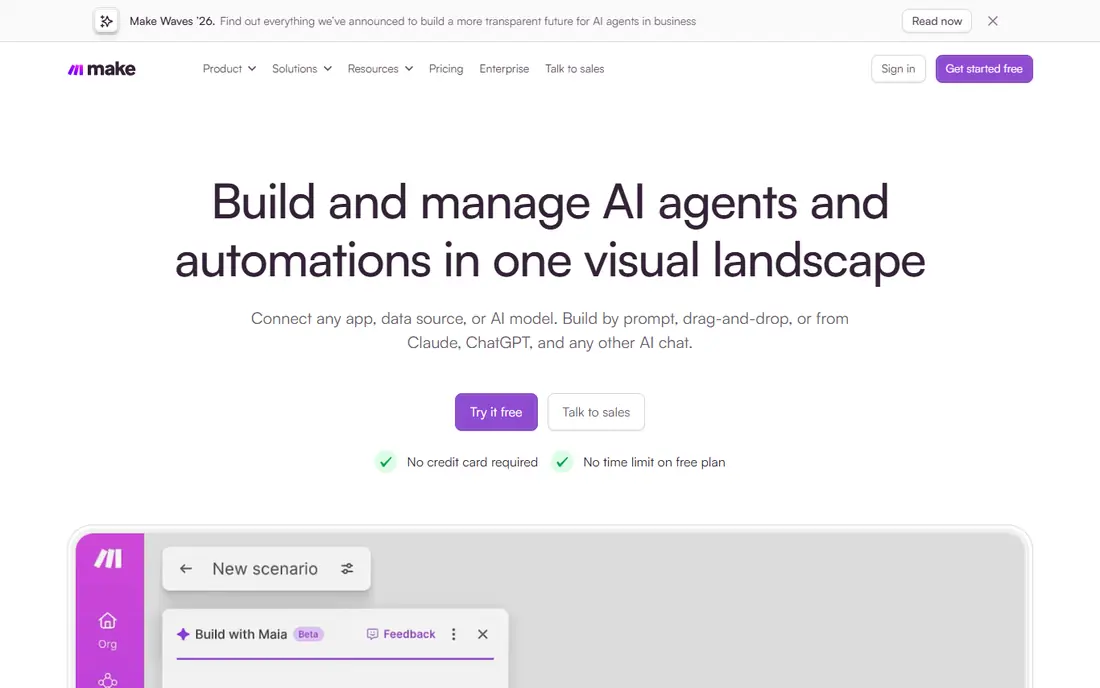
Make builds automations visually, with branching, filters, and data tools for teams that outgrow simple triggers. For readers who want visual automation builder, this is a natural first option to test, and our notes below explain where it shines and where it falls short. We based this assessment on the official feature and pricing pages, plus app store listings and public reviews, rather than on marketing claims alone. The strengths are clear in daily use. Visual workflow builder; flexible logic; generous free tier If you compare this option with the others in the list, pay attention to how those strengths fit your own workflow, since a strength that you never use adds no value. The honest catch is worth weighing before you commit. Learning curve for complex scenarios; pricing by operations We would suggest a short trial with your real tasks, and a check of the pricing page for your exact plan, before you move important work into this product.
- Visual workflow builder
- Flexible logic
- Generous free tier
- Learning curve for complex scenarios
- Pricing by operations
UiPath
Ideal for: Robotic process automation

UiPath automates repetitive computer tasks with software robots, plus AI tools for documents and decisions. For readers who want robotic process automation, this is a natural first option to test, and our notes below explain where it shines and where it falls short. We based this assessment on the official feature and pricing pages, plus app store listings and public reviews, rather than on marketing claims alone. The strengths are clear in daily use. Strong RPA for repetitive desktop work; AI features; enterprise controls If you compare this option with the others in the list, pay attention to how those strengths fit your own workflow, since a strength that you never use adds no value. The honest catch is worth weighing before you commit. Cost and setup suit larger firms; needs process expertise We would suggest a short trial with your real tasks, and a check of the pricing page for your exact plan, before you move important work into this product.
- Strong RPA for repetitive desktop work
- AI features
- Enterprise controls
- Cost and setup suit larger firms
- Needs process expertise
Automation Anywhere
Ideal for: Enterprise RPA
Automation Anywhere provides cloud based robots for repetitive business processes, with document and AI features. For readers who want enterprise rpa, this is a natural first option to test, and our notes below explain where it shines and where it falls short. We based this assessment on the official feature and pricing pages, plus app store listings and public reviews, rather than on marketing claims alone. The strengths are clear in daily use. Cloud RPA; document processing; governance tools If you compare this option with the others in the list, pay attention to how those strengths fit your own workflow, since a strength that you never use adds no value. The honest catch is worth weighing before you commit. Enterprise pricing; implementation takes planning We would suggest a short trial with your real tasks, and a check of the pricing page for your exact plan, before you move important work into this product.
- Cloud RPA
- Document processing
- Governance tools
- Enterprise pricing
- Implementation takes planning
Microsoft Power Automate
Ideal for: Microsoft 365 automation
Power Automate builds flows across Microsoft 365 and other apps, including desktop automation for repetitive tasks. For readers who want microsoft 365 automation, this is a natural first option to test, and our notes below explain where it shines and where it falls short. We based this assessment on the official feature and pricing pages, plus app store listings and public reviews, rather than on marketing claims alone. The strengths are clear in daily use. Deep Microsoft 365 integration; desktop flows; AI builder If you compare this option with the others in the list, pay attention to how those strengths fit your own workflow, since a strength that you never use adds no value. The honest catch is worth weighing before you commit. Licensing is complex; best value inside Microsoft 365 We would suggest a short trial with your real tasks, and a check of the pricing page for your exact plan, before you move important work into this product.
- Deep Microsoft 365 integration
- Desktop flows
- AI builder
- Licensing is complex
- Best value inside Microsoft 365
Nintex
Ideal for: Process automation and forms
Nintex automates workflows, forms, and documents, with process mapping to help teams redesign work before automating it. For readers who want process automation and forms, this is a natural first option to test, and our notes below explain where it shines and where it falls short. We based this assessment on the official feature and pricing pages, plus app store listings and public reviews, rather than on marketing claims alone. The strengths are clear in daily use. Workflow, forms, and document automation; process mapping If you compare this option with the others in the list, pay attention to how those strengths fit your own workflow, since a strength that you never use adds no value. The honest catch is worth weighing before you commit. Pricing is custom; setup benefits from process design work We would suggest a short trial with your real tasks, and a check of the pricing page for your exact plan, before you move important work into this product.
- Workflow, forms, and document automation
- Process mapping
- Pricing is custom
- Setup benefits from process design work
Kissflow
Ideal for: Low code process apps
Kissflow lets teams build approval workflows and process apps with low code tools, without a large development project. For readers who want low code process apps, this is a natural first option to test, and our notes below explain where it shines and where it falls short. We based this assessment on the official feature and pricing pages, plus app store listings and public reviews, rather than on marketing claims alone. The strengths are clear in daily use. Low code forms and workflows; approvals; dashboards If you compare this option with the others in the list, pay attention to how those strengths fit your own workflow, since a strength that you never use adds no value. The honest catch is worth weighing before you commit. Advanced features need higher plans; smaller app ecosystem We would suggest a short trial with your real tasks, and a check of the pricing page for your exact plan, before you move important work into this product.
- Low code forms and workflows
- Approvals
- Dashboards
- Advanced features need higher plans
- Smaller app ecosystem
How we picked these
We started with the topic and the related search terms for this article, then checked which products truly fit that topic and still work in October 2026. We compared official feature pages, pricing pages, app store listings, privacy policies, and public reviews for each option. We left out products that had closed, changed focus, or did not fit the topic, even when they were popular in other categories. We also weighed who each product serves best, what it costs to start, whether a free plan exists, and what users complain about most often. A product earned a place here because it serves a clear use case well, not because it topped every chart. Prices and plans change, so we used See website where a price could not be verified from the vendor, and we recommend a final check before you pay.
How to automate a process without creating a mess
Document the process on paper first and remove steps that add no value, since automating a bad process only speeds up the waste. Start with one high volume, low risk workflow and measure time saved before you expand. Check error handling, since a failed automation that silently drops data is worse than manual work. Keep an owner for each workflow who can fix it when an app changes its API or format. Before you pay, check the official pricing page for your exact plan and region, since prices, limits, and free plans vary. Look at the support options too, because a product with slow support can cost you more time than a slightly higher price. If you can, run a trial with a colleague or a friend, and test the one task you will do most often. That single test usually tells you more than a long feature list, and it helps you avoid a subscription you stop using after a month.
Frequently asked questions
What is the best option for most people?
For most readers, Zapier is a safe starting point because it covers the core needs well and is easy to set up. Readers with a simpler need may prefer Make, while readers who need more depth should look at Automation Anywhere. The right answer still depends on your budget and your daily tasks, so trial two options before you commit.
Are there free options in this list?
Yes. 2 of the 7 options offer a free plan, and several others offer a free trial. Free plans usually limit advanced features, storage, or seats, so check the limits against your real use. A free plan is a good way to test the interface, but it may not show how the paid plan performs at full scale.
How much should I expect to pay?
That depends on the product and the plan, and prices change often. Some options in this list are free to start, while others use custom pricing that depends on seats, volume, or features. Where we could not verify a current price from the vendor, we wrote See website. Always check the official pricing page for your region before you budget for a year.
What should I check before I choose?
Check device support, pricing for your team size, and the limits of the free or trial plan. Read the privacy policy if the product handles personal or business data, and confirm that support is available in your time zone. A short trial with your real tasks will reveal problems that a feature list hides.
Does this guide cover best business process automation tools?
Yes, the options above were chosen with best business process automation tools in mind, along with the main topic of this article. The comparison table and the buying guide should help you weigh those related needs too. If that related need is your main priority, start with the products whose best for note matches it most closely.