Best Business Travel Expense App in 2026: 8 Apps Compared

- Navan and TravelPerk are our top picks for combined travel booking and expense management in one system.
- Ramp and Brex suit companies that want corporate cards with built in expense controls and real time visibility.
- Expensify and SAP Concur cover classic expense reporting, with Concur leading for large enterprises.
- Emburse and Zoho Expense offer strong alternatives for midsize teams and companies already using Zoho tools.
- Pick the tool that fits your travel volume and finance workflow, not the one with the longest feature list.
Quick comparison
| Product | Ideal for | Price from | Free version | |
|---|---|---|---|---|
 Navan | Travel booking and expense in one place | See website | No | Visit |
 TravelPerk | Travel booking with expense tools | See website | No | Visit |
 Ramp | Corporate cards with expense controls | Free | Yes | Visit |
 Brex | Cards and spend management for startups | Free | Yes | Visit |
 Expensify | Simple expense reporting for teams | Free | Yes | Visit |
 SAP Concur | Enterprise travel and expense | See website | No | Visit |
 Emburse | Midsize expense and travel spend | See website | No | Visit |
 Zoho Expense | Affordable expense tracking | Free | Yes | Visit |
The best business travel expense app
Business travel creates two jobs: booking the trip and accounting for the spend. The best tools combine those jobs, so a flight booking flows into an expense report without manual entry. This list covers combined platforms, card first tools and classic expense apps.
Navan
Ideal for: Travel booking and expense in one place

Navan, formerly TripActions, combines travel booking with expense management, so employees book flights and hotels inside policy and expenses flow from bookings automatically. That combination reduces out of policy bookings and cuts the manual work of matching receipts to trips.
Pricing is quote based, and the platform suits companies with regular travel volume rather than occasional trips. Implementation takes planning, especially for policy setup and finance integration. For a company where travel is a major cost, Navan gives the clearest control in this list.
- Book travel and manage expenses together
- Good policy controls
- Real time visibility
- Pricing is quote based
- Best for companies with regular travel
TravelPerk
Ideal for: Travel booking with expense tools
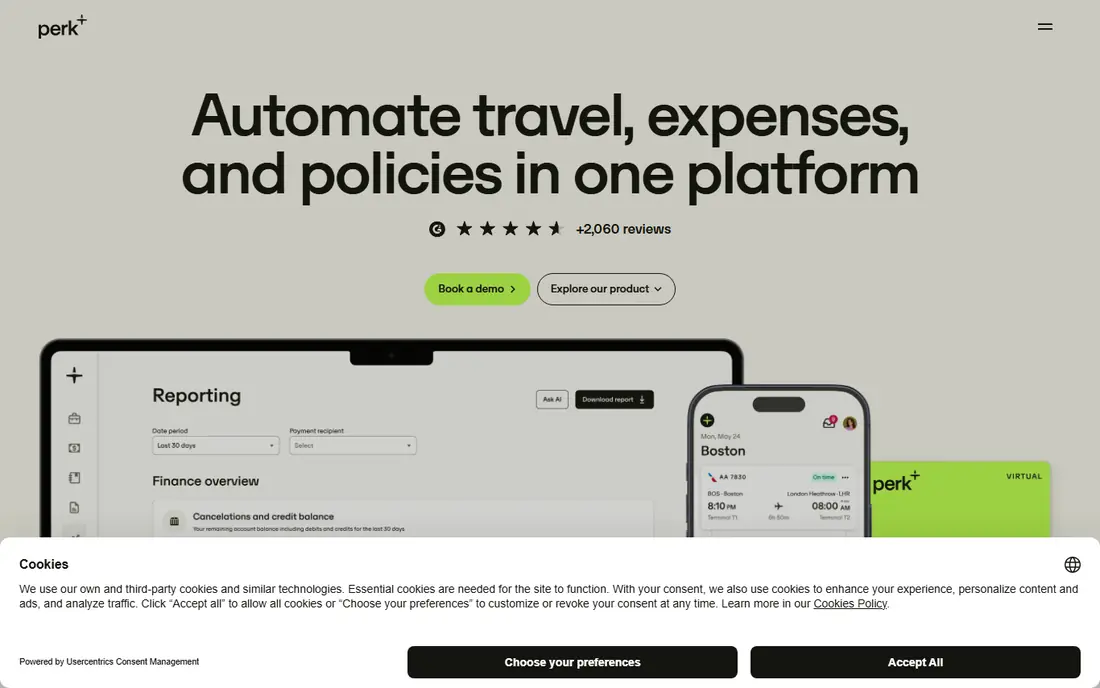
TravelPerk is a business travel platform that covers flights, hotels, trains and cars, with expense integrations and policy controls. Its flexible booking options, including flexible cancellation on many rates, help when business plans change, which they often do.
Pricing varies by plan, and smaller teams may not need every feature. For a growing company that books travel weekly, TravelPerk balances inventory, flexibility and cost control well. Test the booking flow with a real trip before committing, since traveler experience drives adoption.
- Large travel inventory
- Flexible booking and cancellation
- Expense integrations
- Pricing varies by plan
- Smaller teams may need fewer features
Ramp
Ideal for: Corporate cards with expense controls
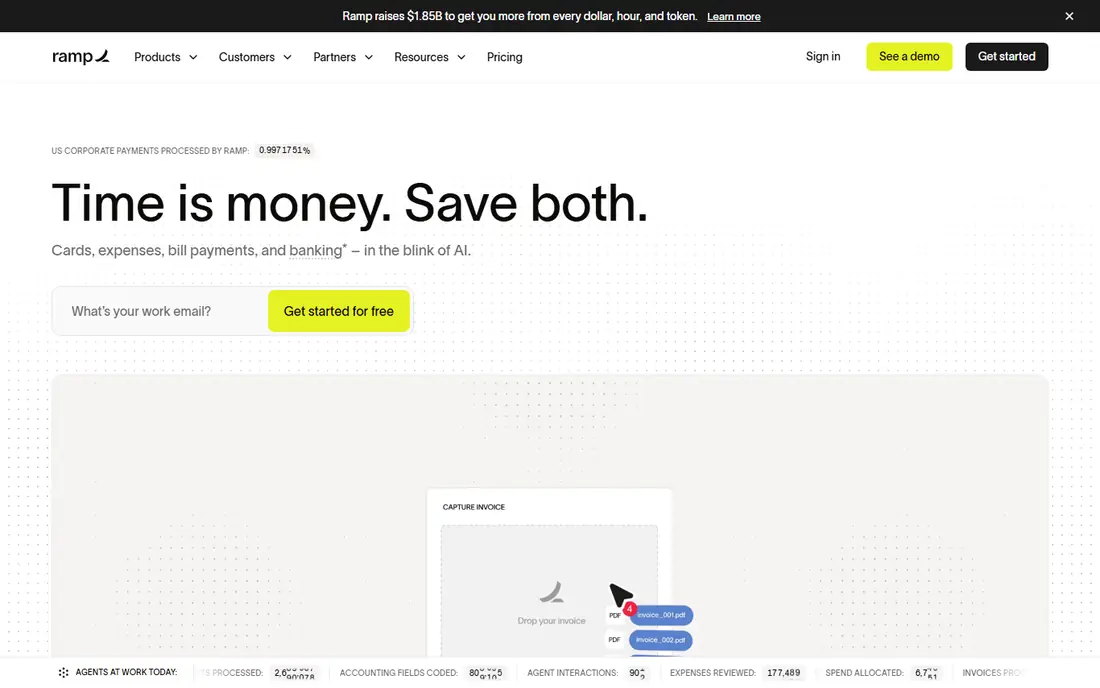
Ramp gives companies corporate cards with built in controls, real time spend visibility and automated expense handling. Employees spend on a Ramp card, receipts are matched automatically, and finance sees spend as it happens rather than at month end. That visibility is the main draw.
Travel booking is lighter than dedicated travel platforms, so companies with heavy travel may pair Ramp with Navan or TravelPerk. Ramp suits US companies best, and its free starter tier makes it easy to test. For spend control first and travel second, Ramp is a strong pick.
- Free starter tier
- Real time spend visibility
- Automated receipt matching
- Travel booking is lighter than Navan
- Best for US companies
Brex
Ideal for: Cards and spend management for startups
Brex offers corporate cards, spend management and automated expenses, with a focus on startups and fast growing companies. Cards come with controls and rewards, expenses are captured automatically, and finance teams get real time visibility into burn and budgets.
Eligibility criteria apply, and travel booking tools are lighter than Navan or TravelPerk. For a startup that wants cards and expenses sorted quickly, Brex is an excellent choice. Pair it with a travel tool if your team travels heavily.
- Corporate cards with rewards
- Automated expenses
- Good for startups and tech teams
- Eligibility criteria apply
- Travel tools are lighter than specialists
Expensify
Ideal for: Simple expense reporting for teams
Expensify is the classic expense app: scan a receipt, categorize it, submit it, and get reimbursed. Its receipt scanning is fast, the interface is friendly, and card integrations reduce manual entry. Small and midsize teams adopt it quickly because employees need little training.
It does not book travel, so you will still need a separate travel tool if booking matters. Advanced features such as deep approvals and integrations sit on higher plans. For expense reporting alone, Expensify remains one of the easiest tools to roll out.
- Easy receipt scanning
- Good for small and midsize teams
- Card integrations
- Travel booking is not included
- Advanced features need higher plans
SAP Concur
Ideal for: Enterprise travel and expense
SAP Concur is the enterprise standard for travel and expense, with deep policy controls, global compliance tools and integration with SAP finance systems. Large companies use it to manage travel bookings, expenses, approvals and audits across many countries.
The cost and complexity are real, and implementation is a project, not a signup. Smaller companies will find it heavy. For a large enterprise that needs global control and SAP integration, Concur is the safest choice, and its scale justifies the effort.
- Deep enterprise features
- Global compliance
- Integrates with SAP systems
- Expensive and complex
- Implementation is a project
Emburse
Ideal for: Midsize expense and travel spend
Emburse offers expense management, cards and travel spend tools aimed at midsize companies. Its approval workflows and audit friendly records suit finance teams that need control without enterprise complexity. The platform covers receipt capture, approvals and reimbursements in one flow.
Pricing is quote based, and the interface varies across its product lines, since Emburse grew through acquisitions. Ask for a demo on the exact product you would use. For a midsize team that has outgrown Expensify but does not need Concur, Emburse is a sensible middle step.
- Good approval workflows
- Card and expense tools
- Audit friendly records
- Pricing is quote based
- Interface varies by product line
Zoho Expense
Ideal for: Affordable expense tracking
Zoho Expense is the budget friendly option in this list, with a free tier for small teams and strong integration with Zoho Books and other Zoho apps. Receipt scanning, approvals and mileage tracking cover the core expense job well, and the interface is straightforward.
Travel booking is not included, so pair it with a travel tool if needed. Advanced features need paid plans, but the free tier is genuinely useful for a small team. For a company already using Zoho, or a small team watching costs, Zoho Expense is the best value choice.
- Free tier for small teams
- Integrates with Zoho books and apps
- Simple receipt scanning
- Travel booking not included
- Advanced features need paid plans
How we picked these
We compared official feature pages, pricing pages and public reviews for each tool, focusing on products that are still maintained and work in October 2026. We favored tools with a clear travel or expense job, real finance integrations, and a track record with companies of a defined size. We left out discontinued tools, consumer travel apps with no expense features, and tools that required enterprise contracts to try. Prices change, so check the vendor site before you buy.
How to roll out travel and expense software
Start with policy, not software. Decide your rules for flight class, hotel caps, meal limits and approval thresholds before you demo any tool, since the tool should enforce your policy, not invent it. Write the policy in one page that employees can actually read.
Next, run a pilot with your most frequent travelers and your finance team. Book real trips, submit real expenses, and test the approval and reimbursement flow end to end. A pilot reveals friction, such as receipt handling or approval delays, before the whole company feels it.
Finally, measure adoption and cycle time. Track how many trips are booked in policy, how fast expenses are submitted, and how long reimbursement takes. If adoption is low, the problem is usually traveler experience, not policy, so fix the booking flow first and train managers on approvals.
Finance teams should test the approval chain with real managers before rolling a tool out company wide. A system that works for a solo traveler can still fail when a trip needs two approvals, a cost center split, and a receipt in a foreign currency. Check how the tool handles per diem rates, mileage, and personal card versus corporate card spending, since those edge cases generate most support tickets. A pilot with ten frequent travelers will surface these issues while they are still cheap to fix.
Receipt handling for cash expenses and foreign currency trips is where many expense systems frustrate travelers most. Test how the app captures a paper receipt in poor light, converts a foreign amount, and handles a split receipt shared between two projects. If those edge cases are painful, travelers will delay submissions and finance will chase paper, which defeats the purpose of the tool. A pilot that includes at least one international trip will reveal these issues before rollout.
Frequently asked questions
What is the best business travel expense app?
Navan and TravelPerk lead for combined booking and expenses, while Ramp and Brex lead for card based spend control. Expensify is best for simple expense reporting, and SAP Concur is best for large enterprises. Match the tool to your travel volume.
Do I need separate tools for travel and expenses?
Not necessarily. Combined platforms such as Navan and TravelPerk cover both, which reduces manual matching. Card tools such as Ramp cover expenses well but book travel lightly, so heavy travelers may still need a booking tool.
Are there free business expense apps?
Yes, Ramp, Brex, Expensify and Zoho Expense offer free tiers for small teams. Free tiers cover core expense work, while advanced approvals, integrations and travel booking usually need paid plans.
How do corporate cards help with expenses?
Corporate cards capture spend automatically, match receipts, enforce limits and give finance real time visibility. They reduce reimbursement work and out of policy spending, especially when paired with an expense app.
What should a small business use for travel expenses?
A small team can start with Zoho Expense or Expensify for expenses, plus a travel booking tool or direct booking for trips. As travel grows, move to a combined platform such as TravelPerk or Navan for policy control.