Best calendar apps in the United States in 2026: 8 Compared

- 1
 Google Calendarmost Android users in the USVisit
- 2
 Microsoft Outlookwork users who schedule from emailVisit
- 3
 Apple CalendariPhone and Mac householdsVisit
- 4
 Calendlyprofessionals booking meetings without email chainsVisit
- 5
 FantasticalApple users who want fast event entryVisit
- Our top choice for most readers is Google Calendar, which balances coverage, ease of use, and clear pricing for best calendar apps in the United States.
- Microsoft Outlook is a strong alternative when work users who schedule from email matters more than a single all round option.
- Prices and free plans vary widely across this list, so check the vendor website for the current plan that fits your budget.
- We compared official feature pages, pricing, app-store listings, privacy policies, and public reviews for every option below.
Quick comparison
| Product | Ideal for | Price from | Free version | |
|---|---|---|---|---|
| Google Calendar | most Android users in the US | Free | Yes | Visit |
| Microsoft Outlook | work users who schedule from email | Free | Yes | Visit |
| Apple Calendar | iPhone and Mac households | Free | Yes | Visit |
| Calendly | professionals booking meetings without email chains | Free | Yes | Visit |
| Fantastical | Apple users who want fast event entry | See website | No | Visit |
 Any.do | people who want tasks and calendar together | Free | Yes | Visit |
 TimeTree | families and groups sharing one calendar | Free | Yes | Visit |
 Notion Calendar | Notion users planning work and life together | Free | Yes | Visit |
The best calendar apps in the United States
US calendar users often juggle work, school, and family schedules across time zones, so we compared sharing, time zone handling, holiday calendars, and phone support. We compared official feature pages, pricing, app-store listings, privacy policies, and public reviews to build this list, and we focused on options that work in October 2026.
Google Calendar
Ideal for: most Android users in the US
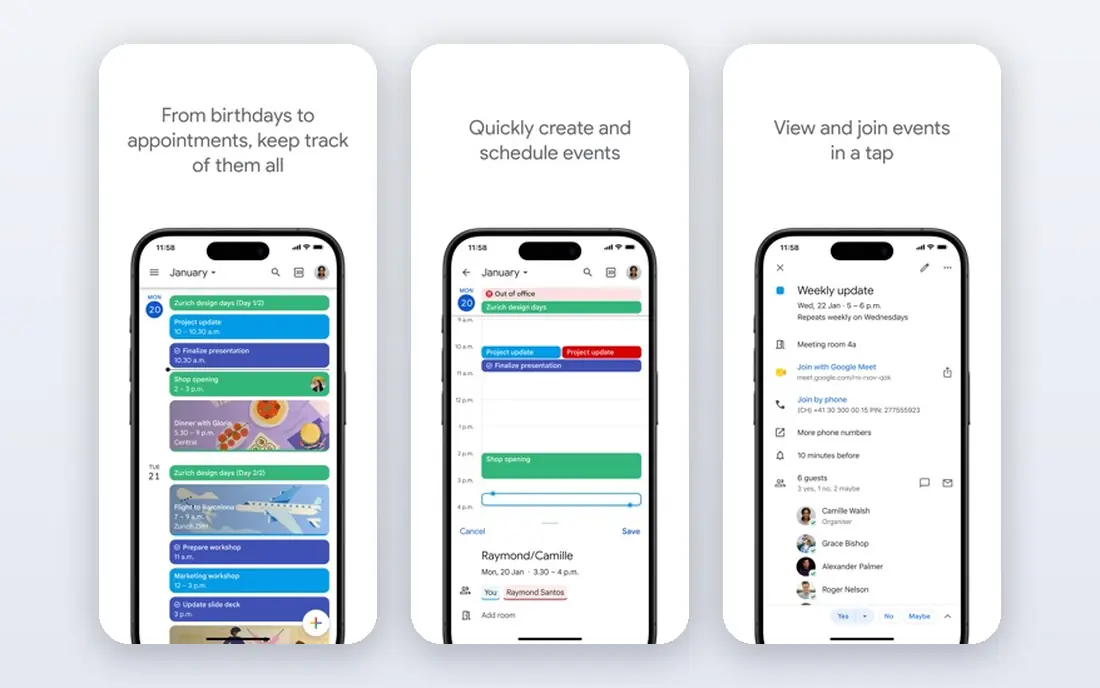
Google Calendar fits most Android users in the US. Google Calendar is the default for many US users, with holiday calendars, sharing, and strong Android support. The starting price is free, and a free plan is available. Review sharing settings, since defaults may share more than you intend.
What stood out in our comparison was US holiday calendars. The honest catch is privacy settings need review. Support and setup matter here too, so check help pages and onboarding before you commit to a paid plan.
If most Android users in the US is your main need, Google Calendar deserves a close look, but check web version is richer before you commit. We also weighed how clearly Google Calendar explains its pricing and privacy terms, since vague terms often hide extra costs. Our pick for most readers in this group is the option that balances price, coverage, and ease of use.
- US holiday calendars
- Easy sharing
- Android integration
- Privacy settings need review
- Web version is richer
Microsoft Outlook
Ideal for: work users who schedule from email
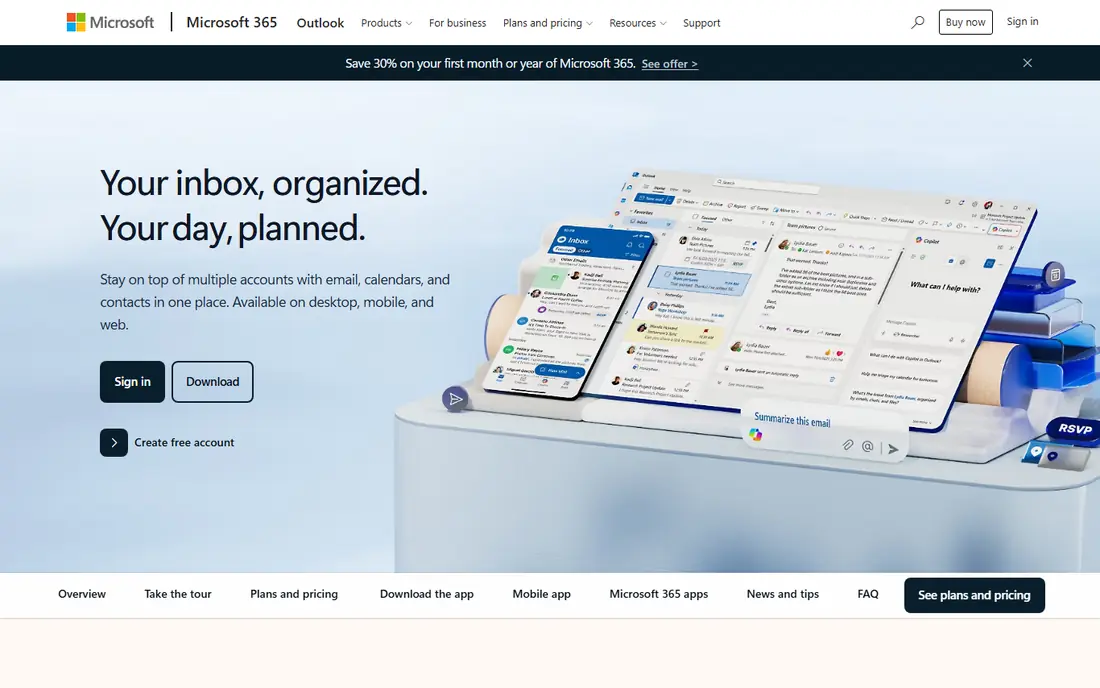
Microsoft Outlook fits work users who schedule from email. Outlook suits US office workers who schedule from email, with meetings and files in one app. The starting price is free, and a free plan is available. Personal users who only need reminders may find it heavier than simpler rivals.
What stood out in our comparison was email plus calendar. The honest catch is busy interface. Integration with tools you already use can matter as much as the headline feature, so confirm that link early.
If work users who schedule from email is your main need, Microsoft Outlook deserves a close look, but check some features need a subscription before you commit. We also weighed how clearly Microsoft Outlook explains its pricing and privacy terms, since vague terms often hide extra costs. We would shortlist this one beside the category leader and compare them on a real trial.
- Email plus calendar
- Teams links
- Meeting tools
- Busy interface
- Some features need a subscription
Apple Calendar
Ideal for: iPhone and Mac households
Apple Calendar fits iPhone and Mac households. Apple Calendar is calm and reliable for iPhone households, with family sharing that works well. The starting price is free, and a free plan is available. Android users should choose a cross platform calendar instead.
What stood out in our comparison was clean design. The honest catch is limited outside Apple devices. Privacy terms deserve a read as well, especially where personal or payment data is involved.
If iPhone and Mac households is your main need, Apple Calendar deserves a close look, but check fewer power features before you commit. We also weighed how clearly Apple Calendar explains its pricing and privacy terms, since vague terms often hide extra costs. This is a solid second choice when the leading option does not cover your area or budget.
- Clean design
- Apple sync
- Family sharing
- Limited outside Apple devices
- Fewer power features
Calendly
Ideal for: professionals booking meetings without email chains
Calendly fits professionals booking meetings without email chains. Calendly removes scheduling back and forth for US freelancers, sales teams, and recruiters. The starting price is free, and a free plan is available. The free tier covers one event type, while varied meetings need a paid plan.
What stood out in our comparison was booking links. The honest catch is free tier limits event types. Trial periods and free tiers are worth using first, since a short test often reveals more than a feature list.
If professionals booking meetings without email chains is your main need, Calendly deserves a close look, but check branding on free links before you commit. We also weighed how clearly Calendly explains its pricing and privacy terms, since vague terms often hide extra costs. It earns a place here on the strength of its core feature, even though it is not the best all rounder.
- Booking links
- Time zone handling
- Calendar sync
- Free tier limits event types
- Branding on free links
Fantastical
Ideal for: Apple users who want fast event entry
Fantastical fits Apple users who want fast event entry. Fantastical lets Apple users add events in plain words, which makes scheduling fast. The starting price is shown on the vendor website, and there is no free plan. Its subscription and Apple focus rule it out for Android users.
What stood out in our comparison was natural language entry. The honest catch is subscription cost. Long term cost matters as much as the starting price, so check what happens when you add users or usage.
If Apple users who want fast event entry is your main need, Fantastical deserves a close look, but check Apple focused before you commit. We also weighed how clearly Fantastical explains its pricing and privacy terms, since vague terms often hide extra costs. We kept it in the list because it serves a specific need better than more general rivals.
- Natural language entry
- Attractive widgets
- Good design
- Subscription cost
- Apple focused
Any.do
Ideal for: people who want tasks and calendar together
Any.do fits people who want tasks and calendar together. Any.do suits people who plan days as tasks with times, in one app. The starting price is free, and a free plan is available. Complex team calendars are better handled by a dedicated calendar service.
What stood out in our comparison was tasks plus calendar. The honest catch is premium features cost extra. Customer reviews can highlight recurring problems, so look for patterns rather than single complaints.
If people who want tasks and calendar together is your main need, Any.do deserves a close look, but check team features basic before you commit. We also weighed how clearly Any.do explains its pricing and privacy terms, since vague terms often hide extra costs. It is worth a trial if its main strength matches the problem you are trying to solve.
- Tasks plus calendar
- Reminders
- Clean mobile app
- Premium features cost extra
- Team features basic
TimeTree
Ideal for: families and groups sharing one calendar
TimeTree fits families and groups sharing one calendar. TimeTree is built for shared family and group calendars, which suits households and clubs. The starting price is free, and a free plan is available. Work users who need meeting tools may want a second work calendar.
What stood out in our comparison was shared calendars. The honest catch is fewer work features. Ease of use for everyone on your team counts, since a tool only one person understands will not stick.
If families and groups sharing one calendar is your main need, TimeTree deserves a close look, but check basic calendar depth before you commit. We also weighed how clearly TimeTree explains its pricing and privacy terms, since vague terms often hide extra costs. We would test it for a week on a real task before moving a whole team or household to it.
- Shared calendars
- Chat and memos
- Easy family use
- Fewer work features
- Basic calendar depth
Notion Calendar
Ideal for: Notion users planning work and life together
Notion Calendar fits Notion users planning work and life together. Notion Calendar suits people who already plan in Notion, since docs, tasks, and dates sit together. The starting price is free, and a free plan is available. It is overkill for simple reminders, and setup takes longer than a basic calendar.
What stood out in our comparison was Notion integration. The honest catch is needs Notion. Check update frequency and support responsiveness, because neglected apps fall behind quickly.
If Notion users planning work and life together is your main need, Notion Calendar deserves a close look, but check heavier than a simple calendar before you commit. We also weighed how clearly Notion Calendar explains its pricing and privacy terms, since vague terms often hide extra costs. It stands out for value rather than breadth, which suits buyers with a clear single need.
- Notion integration
- Clean scheduling
- Team views
- Needs Notion
- Heavier than a simple calendar
How we picked these
We started from the topic itself and shortlisted products that genuinely fit it, rather than adding well known names that only partly match. For each candidate we checked its official feature pages and pricing, looked at its app-store listing where one exists, and read its privacy terms and public reviews for recurring problems. Products that were discontinued, region locked for the stated market, or impossible to verify were left out. We then ranked the list by fit for the stated need, breadth of coverage, clarity of pricing, and ease of use for ordinary readers. No product paid for a place on this list, and our pick for most people is the one that balances those factors best, not the one with the longest feature list.
How to pick a calendar app in the US
Use the points below as a checklist before you sign up, since the right choice depends on your budget, your device, and how often you will actually use the service.
Check US federal holiday calendars plus your state and school holidays, since one list rarely covers all three.
If your team spans time zones, test how clearly the app shows meeting times in each zone.
Pick an app your family or team will actually use, since the best calendar is the one everyone keeps updated.
Frequently asked questions
What is the best option for best calendar apps in the United States?
For most readers, Google Calendar is a strong starting point because it covers most Android users in the US well and its pricing is clear. That said, the best choice depends on your budget, your location, and how often you will use it. Shortlist two or three options from this list and test them before you commit.
Are there free options for best calendar apps in the United States?
Yes, several options in this list offer a free plan or a free tier, including Google Calendar where a free plan is listed. Free plans usually limit features, storage, or usage, so check those limits against your needs. If you use the service daily, a paid plan often works out better than juggling free limits.
How much do these options cost?
Costs vary widely, and several vendors list pricing only on their own websites, so we mark those as See website in the comparison table. Compare the total monthly cost, including extra users, add ons, and transaction fees, rather than the headline price alone. A free trial is a good way to test value before paying.
How do I choose between the top options?
Start with the problem you need to solve, then check coverage for your area, device support, and pricing. Read the privacy terms if the service handles personal data, and look for recent public reviews that mention support quality. A short trial on a real task usually makes the choice clear.
Can I switch later if I pick the wrong one?
In most cases yes, though switching takes more effort when you have stored data, scheduled items, or a team using the service. Export your data before you cancel, and check whether the new service can import it. Keep your old account active until the new setup is working smoothly.