Best Card Scanner Apps in 2026: 8 Options Compared

- 1
 CollXscanning sports cards for valueVisit
- 2
 Collectrtracking trading card collectionsVisit
- 3
 TCGplayer Appscanning trading cards for market pricesVisit
- 4
 Card Laddersports card values and collection trackingVisit
- 5
 Ludexscanning Pokemon and trading cardsVisit
- CollX and Card Ladder suit sports card collectors who track values.
- TCGplayer and Ludex suit trading card game and Pokemon collectors.
- Collectr suits collectors who want portfolio views across card types.
- PSA suits graded card collectors, while Beckett suits price guide history.
Quick comparison
| Product | Ideal for | Price from | Free version | |
|---|---|---|---|---|
| CollX | scanning sports cards for value | Free | Free | Visit |
| Collectr | tracking trading card collections | Free | Free | Visit |
| TCGplayer App | scanning trading cards for market prices | Free | Free | Visit |
| Card Ladder | sports card values and collection tracking | See website | Free trial | Visit |
| Ludex | scanning Pokemon and trading cards | Free | Free | Visit |
 Sports Cards Pro | free sports card price checks | Free | Free | Visit |
 PSA App | graded card scanning and verification | Free | Free | Visit |
 Beckett | price guides for sports and trading cards | See website | Free trial | Visit |
The best card scanner apps
We compared official feature pages, pricing, app store listings, privacy policies and public reviews for this list. The options below cover different budgets and needs, so read the best for line first and then the full write up for the products that match your situation.
CollX
Ideal for: scanning sports cards for value
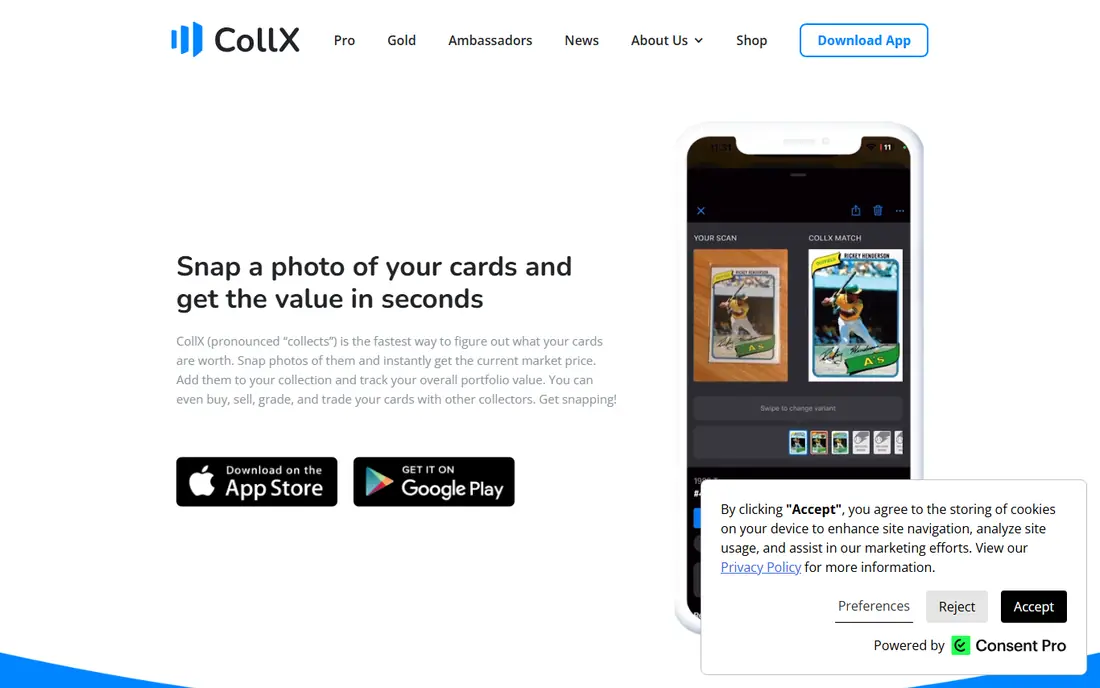
CollX fits scanning sports cards for value. Its scanning and value guides suit sports card collectors tracking a collection. The strengths we noted were card scanning with value estimates; collection tracking; marketplace links. For many readers, that mix makes it worth a close look before deciding.
The honest catch is that collectors should treat value estimates as guides and check recent sales. Pricing is listed as Free, with a free plan status of Free. Before you commit, try the free tier or trial with your real work, and check the limits that matter for your use. That short test will tell you more than any feature list.
- Card scanning with value estimates
- Collection tracking
- Marketplace links
- Value estimates are guides, not guarantees
- Free tier limits scans
Collectr
Ideal for: tracking trading card collections
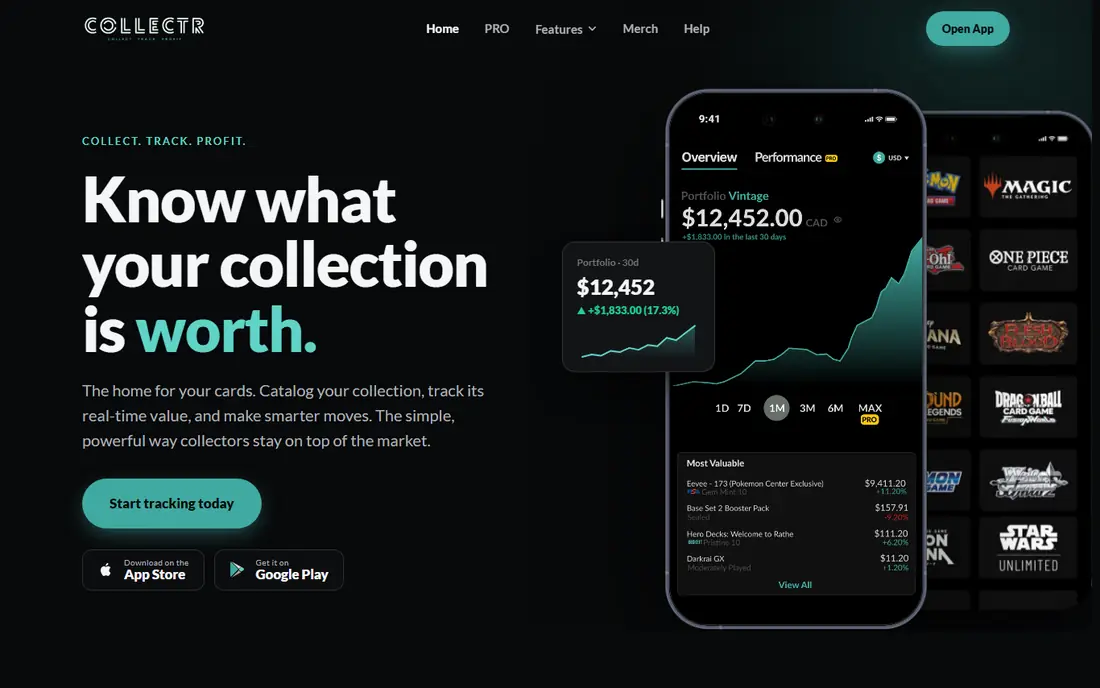
For tracking trading card collections, Collectr is a natural first candidate. Its portfolio views suit collectors who want collection value at a glance. In practice, that means collection tracking for trading cards; value tracking; portfolio views. It is not perfect for everyone, but the fit is clear for this use.
On the downside, collectors of niche card types should check coverage before switching. The starting price is Free, and the free plan status is Free. We suggest testing it with a real task, checking support and export options, and confirming that the plan you need covers your team or household size.
- Collection tracking for trading cards
- Value tracking
- Portfolio views
- Coverage varies by card type
- Some features need a paid plan
TCGplayer App
Ideal for: scanning trading cards for market prices
TCGplayer App is aimed at scanning trading cards for market prices, and the fit shows in daily use. Its market price links suit trading card game collectors. Readers who value card scanning tied to tcgplayer market prices; buying and selling links will see the appeal quickly.
The trade off is that sports card collectors should choose CollX or Card Ladder instead. Starting price is Free, with free plan status Free. A trial with your own data is the best next step, since it reveals setup time, limits and everyday friction that a sales page hides.
- Card scanning tied to TCGplayer market prices
- Buying and selling links
- Market focus is trading card games, so sports cards are less covered
Card Ladder
Ideal for: sports card values and collection tracking
If you need a tool for sports card values and collection tracking, start with Card Ladder. Its sales history suits sports collectors who follow market values closely. The result is a product that covers sports card scanning with value tracking; sales history; collection tools without forcing a complex setup.
Keep in mind that trading card game collectors should choose TCGplayer or Collectr. It lists a starting price of See website and a free plan status of Free trial. Compare the total cost for your real use, including any add ons, before you settle on it.
- Sports card scanning with value tracking
- Sales history
- Collection tools
- Full features need a paid plan
- Focus is sports cards
Ludex
Ideal for: scanning Pokemon and trading cards
Ludex fits scanning Pokemon and trading cards. Its Pokemon focus suits collectors of popular trading card sets. The strengths we noted were card scanning for pokemon and trading cards; value estimates; collection tools. For many readers, that mix makes it worth a close look before deciding.
The honest catch is that collectors of rare or older sets should verify scan accuracy. Pricing is listed as Free, with a free plan status of Free. Before you commit, try the free tier or trial with your real work, and check the limits that matter for your use. That short test will tell you more than any feature list.
- Card scanning for Pokemon and trading cards
- Value estimates
- Collection tools
- Value estimates vary by market
- Coverage is best for popular sets
Sports Cards Pro
Ideal for: free sports card price checks
For free sports card price checks, Sports Cards Pro is a natural first candidate. Its free price guide suits casual sports collectors. In practice, that means sports card price guide with scanning; collection tracking; free access. It is not perfect for everyone, but the fit is clear for this use.
On the downside, serious collectors may want Card Ladder for deeper sales history. The starting price is Free, and the free plan status is Free. We suggest testing it with a real task, checking support and export options, and confirming that the plan you need covers your team or household size.
- Sports card price guide with scanning
- Collection tracking
- Free access
- Price data is a guide
- App features are simpler than paid rivals
PSA App
Ideal for: graded card scanning and verification
PSA App is aimed at graded card scanning and verification, and the fit shows in daily use. Its graded card tools suit collectors who buy and hold PSA graded cards. Readers who value scanning for psa graded cards; verification and population data; collection tools will see the appeal quickly.
The trade off is that raw card collectors should choose a broader scanner first. Starting price is Free, with free plan status Free. A trial with your own data is the best next step, since it reveals setup time, limits and everyday friction that a sales page hides.
- Scanning for PSA graded cards
- Verification and population data
- Collection tools
- It focuses on graded cards, so raw card coverage is limited
Beckett
Ideal for: price guides for sports and trading cards
If you need a tool for price guides for sports and trading cards, start with Beckett. Its long running guides suit collectors who trust Beckett pricing history. The result is a product that covers long running price guides; card scanning in app; marketplace links without forcing a complex setup.
Keep in mind that app first collectors may find the interface more traditional than CollX. It lists a starting price of See website and a free plan status of Free trial. Compare the total cost for your real use, including any add ons, before you settle on it.
- Long running price guides
- Card scanning in app
- Marketplace links
- Full price guide access needs a paid plan
- Interface feels traditional
How we picked these
We compared official feature pages, pricing pages, app store listings, privacy policies and public reviews. We checked that each product exists and works today, that it truly fits the topic, and that its official homepage loads. We favoured products with clear pricing or a clear free tier, honest limits, and a distinct use case, rather than listing near duplicates.
We did not claim hands on testing that did not happen. Where pricing was quoted rather than listed, we wrote See website rather than guessing a number. Where a product had a known limit, such as a watermark on a free plan or a state limit on cover, we stated it plainly so readers can judge the trade off. Readers should also check the current plan details on the vendor site before buying, since prices and free tiers change over time.
How to choose a card scanner app
Start with your card type. Sports cards, trading card games and Pokemon cards need different databases and price sources. A scanner that works well for one type may miss another, so test with cards from your own collection.
Next, check scan accuracy and value sources. Scan the same card in two apps and compare the result and price guide. Value estimates are guides, so check recent sales for cards you plan to sell.
Finally, check collection and selling features. Some apps focus on tracking, others on market prices and selling. Pick the balance that matches whether you collect, trade or sell most often.
Frequently asked questions
What is the best card scanner app?
CollX suits sports cards, TCGplayer suits trading card games, and Ludex suits Pokemon cards. Collectr suits portfolio tracking across types.
How accurate are card value estimates?
Estimates use recent sales and guide data, but condition, grading and market shifts change real prices. Treat estimates as guides and check recent sales before selling.
Can card scanners identify any card?
Most handle popular modern sets well, but rare, older or misprinted cards can be missed. Check scan results against the physical card before recording it.
Do I need to pay for a card scanner?
Many offer free scanning with limits, while full value history and unlimited scans need paid plans. Casual collectors can start free and upgrade if needed.
What is the difference between raw and graded cards?
Raw cards are ungraded, while graded cards have a professional condition grade. PSA tools focus on graded cards, while other scanners cover both.