Best Cell Phone Services for Small Business in 2026: 7 Options Compared

- 1
 Verizon BusinessSmall businesses that want broad coverageVisit
- 2
 AT&T BusinessSmall businesses that want coverage and bundlesVisit
- 3
 T-Mobile for BusinessSmall businesses that want fast 5G and valueVisit
- 4
 US Mobile BusinessSmall businesses that want flexible low-cost linesVisit
- 5
 VisibleVery small businesses that want simple unlimited linesVisit
- Our pick for most people is Verizon Business, because it balances price, features and support for everyday use.
- AT&T Business is the strongest alternative if you want a different balance of cost and features, so compare it directly with our top pick.
- Free plans or trials are available from several options here, including T-Mobile for Business, but always check the limits before you rely on a free tier.
- The cheapest headline price is not always the cheapest total cost, since per-user fees, add-ons and usage limits change what you pay each month.
- Check availability, contract terms and support hours for your situation before you sign up, because those details vary more than the marketing suggests.
Quick comparison
| Product | Ideal for | Price from | Free version | |
|---|---|---|---|---|
| Verizon Business | Small businesses that want broad coverage | See website | No | Visit |
| AT&T Business | Small businesses that want coverage and bundles | See website | No | Visit |
| T-Mobile for Business | Small businesses that want fast 5G and value | See website | No | Visit |
| US Mobile Business | Small businesses that want flexible low-cost lines | See website | Free trial | Visit |
| Visible | Very small businesses that want simple unlimited lines | See website | No | Visit |
 Xfinity Mobile Business | Xfinity business internet customers | See website | No | Visit |
 Cricket Wireless Business | Small businesses that want stores and simple lines | See website | No | Visit |
The best cell phone services for small business
We compared the options below on official feature pages, pricing pages, app store listings and public reviews, looking at price, features, support and ease of use. The right choice depends on your budget, your team size and the tasks you will do most often, so use the comparison table and the notes under each product to narrow the list to two or three finalists.
Verizon Business
Ideal for: Small businesses that want broad coverage
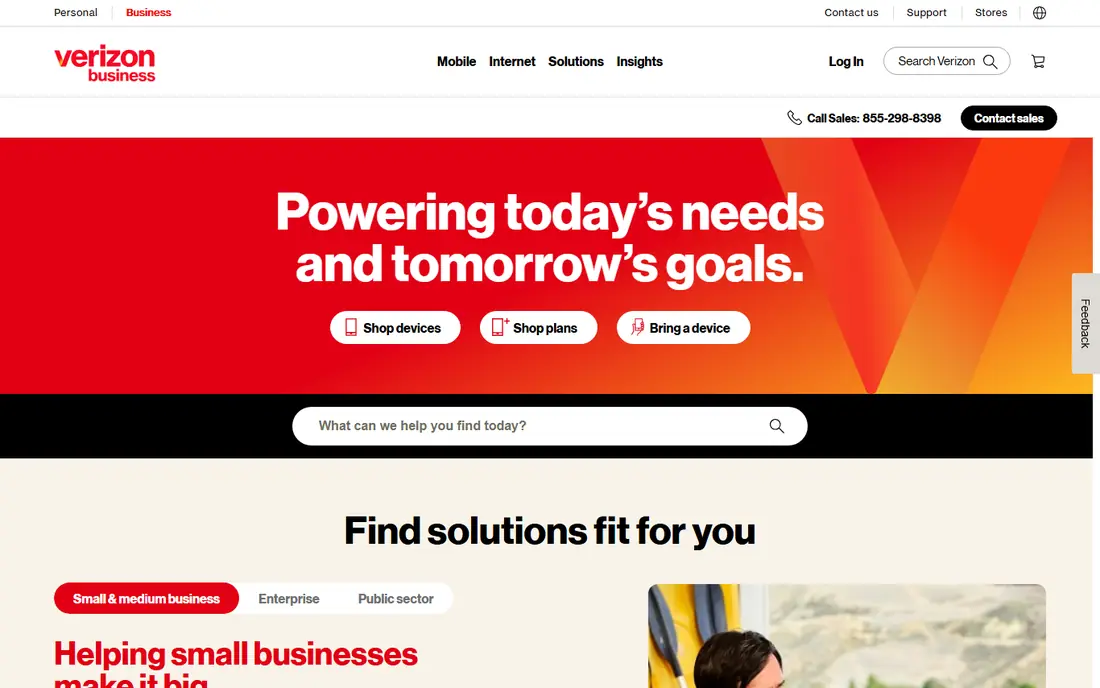
For most readers, this is a strong place to start. Verizon Business gives small businesses strong nationwide coverage, business support and device deals, which suits firms whose staff travel or work in rural areas. Business plans add controls and support that consumer plans lack. The drawback is price: business plans cost more than prepaid rivals, so firms with light usage should compare the total against US Mobile or Visible before paying for premium coverage.
Before you commit, check the current pricing page and confirm what is included at the tier you actually need, since add-ons and per-user charges change the total. Support hours and setup help matter too, especially if you are moving from another provider and cannot afford downtime. Read the terms on cancellation and data export before you pay, so leaving later stays simple. For Verizon Business, the main strength to weigh is strong nationwide coverage, while the main drawback to accept is higher prices. If that trade-off suits you, it is worth a trial or a closer look at the current pricing page.
- Strong nationwide coverage
- Business plans and support
- Device deals
- Higher prices
- Plan details vary by account size
AT&T Business
Ideal for: Small businesses that want coverage and bundles

This one stands out for a specific kind of buyer. AT&T Business offers small businesses broad coverage, bundles with AT&T internet and, where eligible, FirstNet for first responders. It suits firms that want one carrier for phones and office connectivity. The catch is deal terms: device and bundle savings often depend on agreements, so read the full monthly cost and contract length before signing.
The practical test is whether it fits your daily routine without extra workarounds. Look at setup steps, admin controls and the help pages for the tasks you will do most often. If a free trial is offered, use it for a real task rather than a quick tour, and note where you get stuck. That short trial usually tells you more than a feature list. For AT&T Business, the main strength to weigh is broad coverage, while the main drawback to accept is pricing varies. If that trade-off suits you, it is worth a trial or a closer look at the current pricing page.
- Broad coverage
- Bundles with internet
- FirstNet options where eligible
- Pricing varies
- Deals often need device agreements
T-Mobile for Business
Ideal for: Small businesses that want fast 5G and value

Put this on your shortlist if the details below match your situation. T-Mobile for Business suits small businesses in cities and suburbs that want fast 5G, competitive pricing and modern devices. Business plans add support and management tools for small teams. The drawback is rural reach: staff who travel to remote areas should check coverage for those routes, since T-Mobile can lag Verizon there.
Price alone rarely decides a good purchase, since limits on users, storage, calls or messages can push you to a higher tier quickly. Compare the total monthly cost for your real team size or usage, not the headline rate for one user. Also check contract length, renewal terms and whether support is included or billed separately. For T-Mobile for Business, the main strength to weigh is fast 5g in cities, while the main drawback to accept is rural coverage can lag rivals. If that trade-off suits you, it is worth a trial or a closer look at the current pricing page.
- Fast 5G in cities
- Competitive business plans
- Perks on some plans
- Rural coverage can lag rivals
- Perks change
US Mobile Business
Ideal for: Small businesses that want flexible low-cost lines
This option earns its place through a clear, practical strength. US Mobile Business lets small firms choose a major network and build flexible plans, with pooled data options that suit teams with varied usage. It is a strong value choice for firms that manage phones themselves. The catch is business depth: management and support features are lighter than the big carriers, so firms that need dedicated account support may prefer Verizon or AT&T.
A good next step is to list your must-have features and your deal-breakers before you compare plans. Then test the top two options side by side on the same task, such as setting up an account, inviting a colleague or completing a typical job. The option that feels plain and dependable in that test is usually the right one. For US Mobile Business, the main strength to weigh is network choice, while the main drawback to accept is support is mainly online. If that trade-off suits you, it is worth a trial or a closer look at the current pricing page.
- Network choice
- Flexible plans
- Pooled data options
- Support is mainly online
- Business features are lighter
Visible
Ideal for: Very small businesses that want simple unlimited lines
Consider this one when the more famous names do not fit your budget or workflow. Visible works for very small businesses that want a simple unlimited line per person on the Verizon network, with taxes and fees included. It suits solo owners and tiny teams who do not need business management tools. The drawback is business fit: there is no dedicated business support tier, and hotspot limits apply, so larger teams should choose a business plan instead.
Check recent user reviews and the provider's own status or help pages for signs of steady service and honest communication about outages. A provider that explains problems clearly and fixes them promptly is worth more than one with a longer feature list and slow support. Keep your own backup or exit plan, even with a provider you trust. For Visible, the main strength to weigh is simple unlimited plans, while the main drawback to accept is no business support tier. If that trade-off suits you, it is worth a trial or a closer look at the current pricing page.
- Simple unlimited plans
- Verizon network
- Taxes and fees included
- No business support tier
- Hotspot limits apply
Xfinity Mobile Business
Ideal for: Xfinity business internet customers
This is a sensible pick for buyers who want fewer surprises. Xfinity Mobile Business runs on the Verizon network and offers value to firms already on Xfinity business internet. It suits small businesses that want to bundle mobile with office connectivity. The catch is dependence: the best value needs Xfinity business internet, and availability is regional, so firms outside Xfinity areas cannot use it.
Think about who else will use this service and how much training they will need. A tool that one person loves can fail if the rest of the team finds it confusing or if customers dislike the experience. Ask about onboarding help, documentation and whether you can adjust settings without calling support for every small change. For Xfinity Mobile Business, the main strength to weigh is verizon network, while the main drawback to accept is requires xfinity business internet for best value. If that trade-off suits you, it is worth a trial or a closer look at the current pricing page.
- Verizon network
- Discounts with Xfinity business internet
- Flexible data
- Requires Xfinity business internet for best value
- Regional availability
Cricket Wireless Business
Ideal for: Small businesses that want stores and simple lines
Shortlist this one if you value the strength described below more than a lower price. Cricket Wireless suits small businesses that want in-store help, simple plans and multi-line discounts on the AT&T network. It is a practical choice for firms with a few lines and light management needs. The drawback is business depth: features are basic compared with carrier business plans, and speed caps on cheaper plans matter for heavy data users.
Watch for hidden effort as well as hidden cost: migration, setup, training and ongoing admin all take time. A slightly higher price can be good value if it saves hours each week or avoids mistakes. On the other hand, a cheap plan that needs constant workarounds often costs more in staff time than it saves in fees. For Cricket Wireless Business, the main strength to weigh is at&t network, while the main drawback to accept is speed caps on cheaper plans. If that trade-off suits you, it is worth a trial or a closer look at the current pricing page.
- AT&T network
- Stores
- Multi-line discounts
- Speed caps on cheaper plans
- Business features are basic
How we picked these
We started from the official website, pricing page and help documentation for each product, then checked app store listings and public reviews for signs of steady service and common complaints. We left out products that no longer work, that did not fit the topic, or that we could not verify from a real homepage. We did not claim hands-on testing we did not do, and we kept the focus on facts a buyer can check before paying.
We also weighed total cost rather than headline price alone, since per-user charges, usage limits and add-ons change the monthly bill. Support quality, setup effort and contract terms counted too, because a cheap service that is hard to leave or hard to get help with can cost more over time. The list mixes well-known providers with smaller options that serve a clear niche well.
How to choose the right option for you
Start by writing down the job you need done, how often you will use the service, and how many people will use it. That short list keeps you from paying for features you will never open, and it makes the comparison table above much easier to use. Then check the two or three finalists against that list, not against every feature on their websites.
Check the total cost
Add up per-user fees, add-ons, taxes and any setup charges for your real usage, and compare that total across providers. Ask whether the price is locked for a term or can change at renewal, and whether a free tier or trial covers the features you actually need. A plan that looks cheap for one user can become costly for a team, so run the numbers for your full group.
Test support and setup before you commit
Use a free trial for a real task, contact support with a genuine question, and read the help pages for setup and migration. Note how long answers take and whether the guidance is clear. If setup looks long or support looks thin, factor that time into your decision, especially if you are switching from a service you already rely on.
Plan your exit before you enter
Check how you can export your data, cancel your plan and move to another provider, and whether any contract or notice period applies. Services that make leaving simple tend to treat customers better while they stay. Keep a copy of your important data outside the service, and avoid long contracts until you are sure the service fits your daily work.
Frequently asked questions
What is the best option for best cell phone service for small business?
There is no single best option for everyone, because price, features and support matter differently for each buyer. Our top pick, Verizon Business, suits most people, while AT&T Business is a strong alternative. Compare two or three finalists on total cost and on the tasks you will do most often, then use a trial where one is offered.
How much do these services usually cost?
Prices vary widely, and many providers charge per user or per unit of usage, so the headline rate is only part of the total. Check the pricing page for the tier you need, add any required add-ons, and watch for renewal or contract terms. Where we could not verify a current price, we wrote See website so you can check the live price before buying.
Is there a free option worth trying?
Several options on this list offer a free plan or a free trial, but free tiers usually limit features, users or usage. A free plan works well for light or occasional use and for testing whether a service fits you. For regular business use, expect to pay for a plan that removes those limits and includes support.
How do I switch from my current provider?
Start by exporting your data from the old service and checking what the new provider can import. Run both services in parallel for a short period if you can, so nothing is lost during the move. Tell your team or customers about any change that affects them, and keep the old account active until the new one is working well.
What should I check before I pay?
Check the total monthly cost for your real usage, the contract and cancellation terms, support hours and response times, and how you can export your data. Read recent reviews for common complaints, and confirm availability for your location or use case where that applies. A short trial on a real task usually answers the remaining questions.