Best Cellular Services in 2026: 8 Services Compared

- Verizon is our pick for overall coverage, especially outside cities, while T-Mobile leads on 5G speed and value.
- AT&T suits families and bundles, especially if you already use AT&T internet or TV services.
- Prepaid carriers like Mint Mobile, Visible and Cricket offer major savings if you do not need in store support.
- Coverage matters more than headline speed, so check carrier maps for your home, work and travel routes.
- Prices below are starting prices for single lines and vary by plan, lines and promotions, so check the carrier page before signing.
Quick comparison
| Product | Ideal for | Price from | Free version | |
|---|---|---|---|---|
 Verizon | Overall coverage | See website | No | Visit |
 T-Mobile | 5G speed and value | See website | No | Visit |
 AT&T | Families and bundles | See website | No | Visit |
 Mint Mobile | Low cost prepaid | See website | No | Visit |
 Visible | Simple unlimited | See website | No | Visit |
 Cricket Wireless | AT&T network prepaid | See website | No | Visit |
 Google Fi | Flexible and international | See website | No | Visit |
 US Mobile | Customisable plans | See website | No | Visit |
The best cellular services
Cellular service in the US means choosing between three major networks and a range of prepaid carriers that use those same networks. We compared official coverage pages, plan pages and public reviews to find services that still serve US customers well in October 2026. Coverage, price and perks all vary by location, so use carrier coverage maps for your own area before deciding.
Verizon
Ideal for: Overall coverage
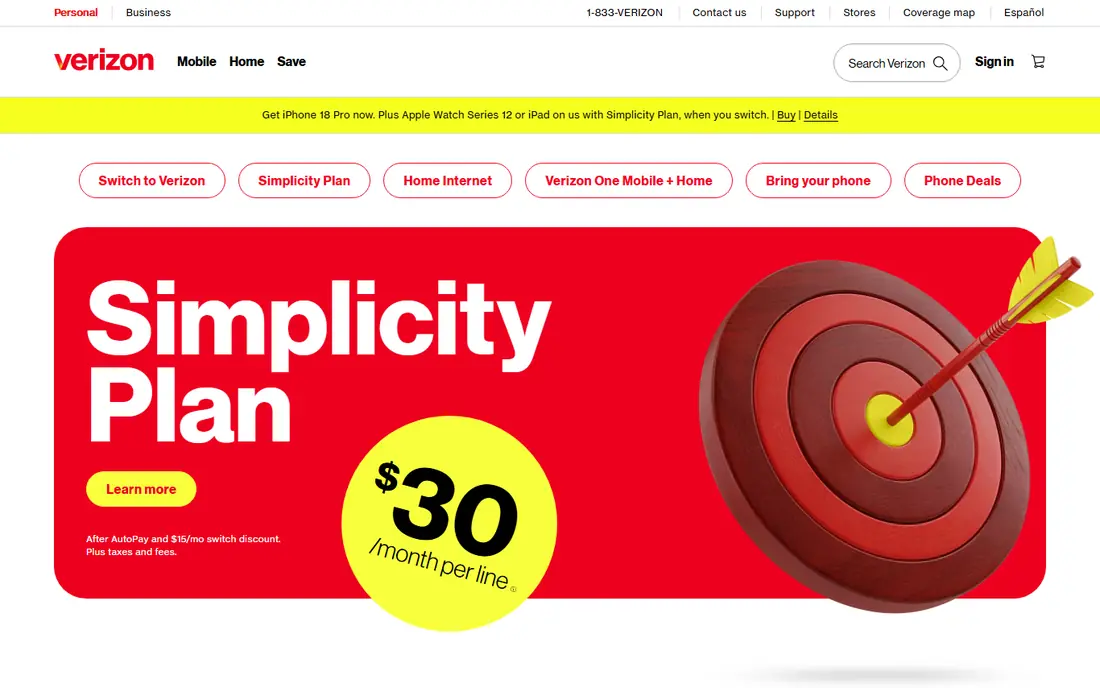
Verizon is the safest choice if coverage is your top priority, especially outside major cities and on rural highways. Its network is consistently rated for reliability, and its premium unlimited plans include perks such as streaming bundles and hotspot data. For travellers, remote workers and rural users, that coverage is often worth the higher price.
The cost is the catch. Verizon's postpaid plans are more expensive than prepaid alternatives, and the best perks sit on higher tiers. If you live in a city with strong T-Mobile or AT&T coverage, you may get similar everyday performance for less, so check coverage at your actual locations before paying a premium.
- Widest overall coverage, especially rural
- Reliable network
- Strong perks on premium plans
- Higher prices than prepaid rivals
- Premium plans needed for best perks
- Taxes and fees add cost
T-Mobile
Ideal for: 5G speed and value
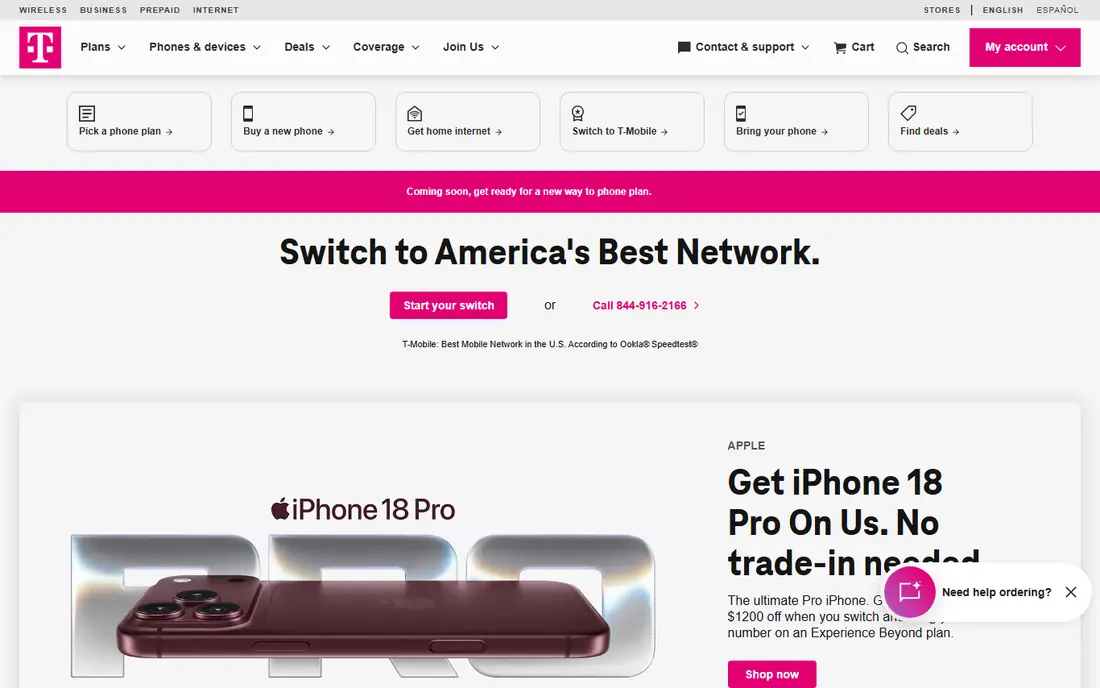
T-Mobile is our pick for most city and suburban users who want fast 5G and good value. Its mid band 5G network delivers high speeds in many urban areas, and its postpaid plans are often cheaper than Verizon or AT&T for similar data. Perks such as streaming services, travel benefits and free international data on some plans add real value.
Rural coverage has improved, but Verizon still leads in some remote areas, so check the map for your routes. If your home, work and travel are mostly urban or suburban, T-Mobile offers the best balance of speed, price and perks for most users.
- Fast 5G in many cities
- Competitive postpaid pricing
- Perks like streaming and travel benefits
- Rural coverage can lag Verizon in some areas
- Plan perks vary by tier
AT&T
Ideal for: Families and bundles
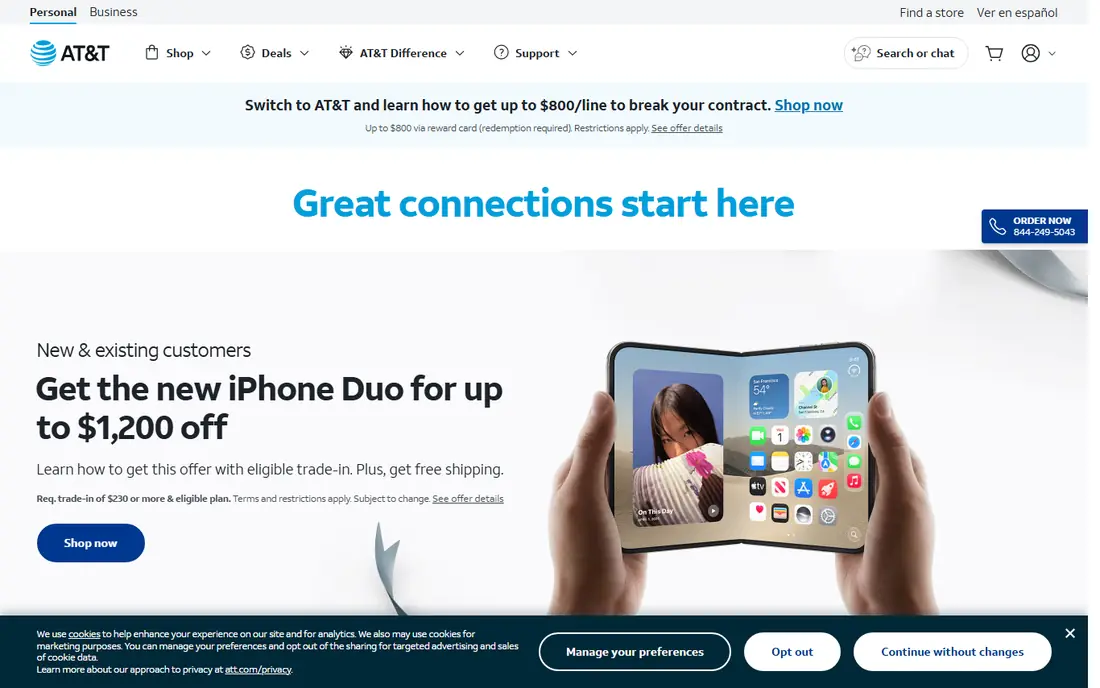
AT&T suits families and households that already use AT&T services, since bundling mobile with internet or TV can bring discounts and simpler billing. Its nationwide coverage is strong, sitting between Verizon and T-Mobile in many rural comparisons, and its family plans offer good per line value when several lines are added. FirstNet, its dedicated network for first responders, is also a notable strength.
Single line prices are higher than prepaid carriers, and plan tiers can be confusing, with different hotspot, streaming and international benefits. If you need one line only and do not bundle, a prepaid carrier may save you more, but for families and AT&T households, AT&T is a solid choice.
- Strong nationwide coverage
- Good family plan value
- Bundles with internet and TV
- Prices higher than prepaid
- Plan structure can be confusing
- Perks vary by tier
Mint Mobile
Ideal for: Low cost prepaid
Mint Mobile is the best low cost prepaid option for users comfortable paying for several months upfront. Its plans use the T-Mobile network, and buying three, six or twelve months at once brings the monthly cost well below major carrier postpaid prices. That model suits budget conscious users who do not need in store support or frequent plan changes.
The upfront payment is the trade-off, since the lowest monthly price requires a longer commitment, and data may be deprioritised behind T-Mobile's own customers during congestion. Support is mainly online, so users who want a store visit should choose a carrier with retail locations.
- Low prices when buying months upfront
- Uses T-Mobile network
- Simple plans
- Upfront payment for best prices
- Customer support mainly online
- Data deprioritisation possible
Visible
Ideal for: Simple unlimited
Visible offers simple unlimited plans on the Verizon network, with a straightforward price that includes taxes and fees. That simplicity appeals to users who want Verizon coverage without Verizon postpaid prices or complex plan tiers. The base plan includes unlimited data, talk and text, with hotspot included at limited speeds.
Support is online only, and data may be deprioritised behind Verizon postpaid customers during congestion. Premium Visible plans add faster hotspot and better priority, so check whether the base plan meets your hotspot and travel needs before signing up.
- Simple unlimited plans
- Uses Verizon network
- No hidden fees in plan price
- Online only support
- Hotspot and perks limited on base plan
- Deprioritisation possible
Cricket Wireless
Ideal for: AT&T network prepaid
Cricket Wireless, owned by AT&T, gives prepaid users access to the AT&T network with the benefit of physical stores for support. That combination suits users who want prepaid prices but still want to visit a store for help with a phone or plan change. Family plans offer good per line value, and Cricket often runs promotions for new lines.
Some plans cap data speeds, and perks are thinner than AT&T postpaid plans, with less hotspot and fewer streaming benefits. Check speed caps and hotspot allowances for the plan you choose, since those details decide whether Cricket feels like a bargain or a compromise.
- Uses AT&T network
- Stores for in person support
- Affordable family plans
- Data speeds capped on some plans
- Perks thinner than postpaid
- Deprioritisation possible
Google Fi
Ideal for: Flexible and international
Google Fi suits travellers and users who want flexible data. Its Flexible plan charges for data used, while Unlimited plans suit heavier users, and international roaming is a standout, with data in many countries included on unlimited plans. Fi switches between networks, primarily T-Mobile, to find coverage, and its app makes plan management easy.
Full network switching and some features work best on Pixel phones and select Android devices, while iPhones get a more limited experience. Prices are higher than the cheapest prepaid carriers, so Fi is best for travellers and flexible users rather than pure budget seekers.
- Flexible data pricing
- Strong international roaming
- Uses multiple networks
- Best on Pixel and select phones
- Full features vary by device
- Prices higher than Mint
US Mobile
Ideal for: Customisable plans
US Mobile lets you build a plan around your actual usage, with custom talk, text and data amounts and a choice of networks. That flexibility suits light users, families with different needs per line, and anyone who does not fit a standard unlimited plan. Prices for light usage can be very low, and the app makes changes easy.
The plan builder can feel complex at first, and perks are limited compared with major carrier plans. If you know your usage well, US Mobile offers excellent value, but if you want a simple unlimited plan with perks, Visible or a major carrier may be easier.
- Customisable talk, text and data
- Choice of networks
- Affordable for light users
- Plan builder can confuse
- Perks limited
- Support mainly online
How we picked these
We compared official coverage pages, plan pages and public reviews, and we only included services that still operate in the US in October 2026. We favoured carriers with strong coverage, clear plan structures and a range of price points, from major postpaid to prepaid. Where plan prices vary by lines, promotions and location, we used See website rather than a single figure that would mislead.
How to choose a cellular service
Check coverage first, using carrier maps for your home, workplace, commute and frequent travel routes, and ask neighbours or colleagues about real world signal. A carrier with the fastest city speeds is useless if your home has weak signal, so prioritise coverage over headline speed. If possible, test a carrier with a prepaid SIM or trial before porting your main number.
Then match the plan to your usage. Light users save most on custom or low data prepaid plans, heavy users need true unlimited with enough hotspot data, and families should compare per line prices across carriers. Check international roaming, hotspot limits, video streaming quality and deprioritisation rules, since those details affect daily use more than the headline price.
Frequently asked questions
Which cellular service has the best coverage?
Verizon generally has the widest overall coverage, especially in rural areas, while AT&T is also strong nationwide. T-Mobile leads on 5G speed in many cities, so check coverage maps for your specific locations.
What is the cheapest cellular service?
Prepaid carriers like Mint Mobile, Visible and US Mobile are usually cheapest, especially for light users or when paying upfront. Major carrier postpaid plans cost more but include perks and priority data.
Is prepaid service worse than postpaid?
Prepaid uses the same networks, but data may be deprioritised behind postpaid customers during congestion, and perks and support are often thinner. For most everyday use, prepaid performance is fine.
Can I keep my phone number when switching carriers?
Yes, you can usually port your number to a new carrier, as long as your old account is active and you have the account number and PIN. Do not cancel the old line before the port completes.
Which cellular service is best for international travel?
Google Fi is strong for international roaming, while T-Mobile also includes international data on many plans. Check roaming rates, included countries and hotspot rules before travelling.