Best Chatbot Software for Financial Institutions

- 1
 GliaBanks and credit unions that want voice and chat in one placeVisit
- 2
 KasistoBanks that want a virtual assistant fluent in banking languageVisit
- 3
 IntercomSmaller financial firms that want fast setup and per outcome AIVisit
- 4
 Zendesk AISupport teams that already run Zendesk and want AI agentsVisit
- 5
 boost.aiRegulated banks and insurers that need tight control of answersVisit
- Glia and Kasisto are built for banks first, while Intercom and Zendesk AI are general support tools that also work for financial firms.
- Only Intercom and Zendesk AI publish a starting price, at $29 per seat per month and $55 per agent per month on annual billing.
- Glia, Kasisto, boost.ai, LivePerson, Cognigy and Kore.ai are quote only, so budget for a sales conversation and a proof of concept.
- Drift is being retired on 31 January 2027, so new buyers should look at boost.ai instead for a bank grade virtual agent.
- Audit trails, data residency and a clean handoff to a human agent matter more than the size of a feature list.
Quick comparison
| Product | Ideal for | Price from | Free version | |
|---|---|---|---|---|
| Glia | Banks and credit unions that want voice and chat in one place | quote only | No | Visit |
| Kasisto | Banks that want a virtual assistant fluent in banking language | quote only | No | Visit |
| Intercom | Smaller financial firms that want fast setup and per outcome AI | $29 per seat/month (billed annually) | Free trial (14 days) | Visit |
| Zendesk AI | Support teams that already run Zendesk and want AI agents | $55 per agent/month (billed annually) | Free trial (14 days) | Visit |
| boost.ai | Regulated banks and insurers that need tight control of answers | quote only | No | Visit |
 LivePerson | Large brands that need messaging across many channels | quote only | No | Visit |
 Cognigy | Large contact centres that need voice and chat AI agents at scale | quote only | No | Visit |
 Kore.ai | Large enterprises that want to build custom AI agents | quote only | Free trial | Visit |
The best chatbot software for financial institutions
Glia
Ideal for: Banks and credit unions that want voice and chat in one place
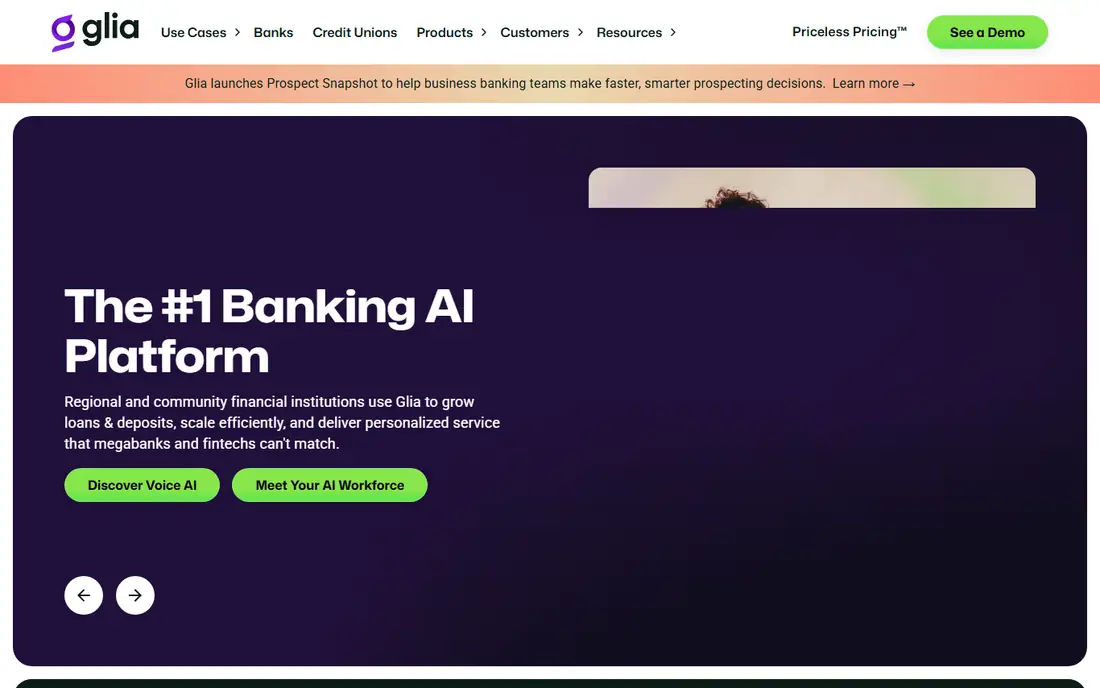
Glia builds its platform for financial institutions only. Its digital and voice assistants work inside the same session, so a customer who starts in chat and moves to a call does not have to repeat account details. The vendor states that more than 700 banks, credit unions and financial institutions use the platform, and its pricing page names customers such as Columbia Bank and Live Oak Bank. The bot is designed around banking journeys from the start, including account opening support and after hours cover.
The pricing page, opened on 11 November 2026, shows no dollar figure at all, so the real cost only appears in a sales quote. A small credit union cannot judge affordability from the website, so ask for the contract length and what support is included before signing.
- Built only for banks and credit unions
- Fixed price with no per seat, per minute or per token charges
- No public price, so budgeting needs a sales quote
- Enterprise focus means a long sales cycle for small firms
Kasisto
Ideal for: Banks that want a virtual assistant fluent in banking language
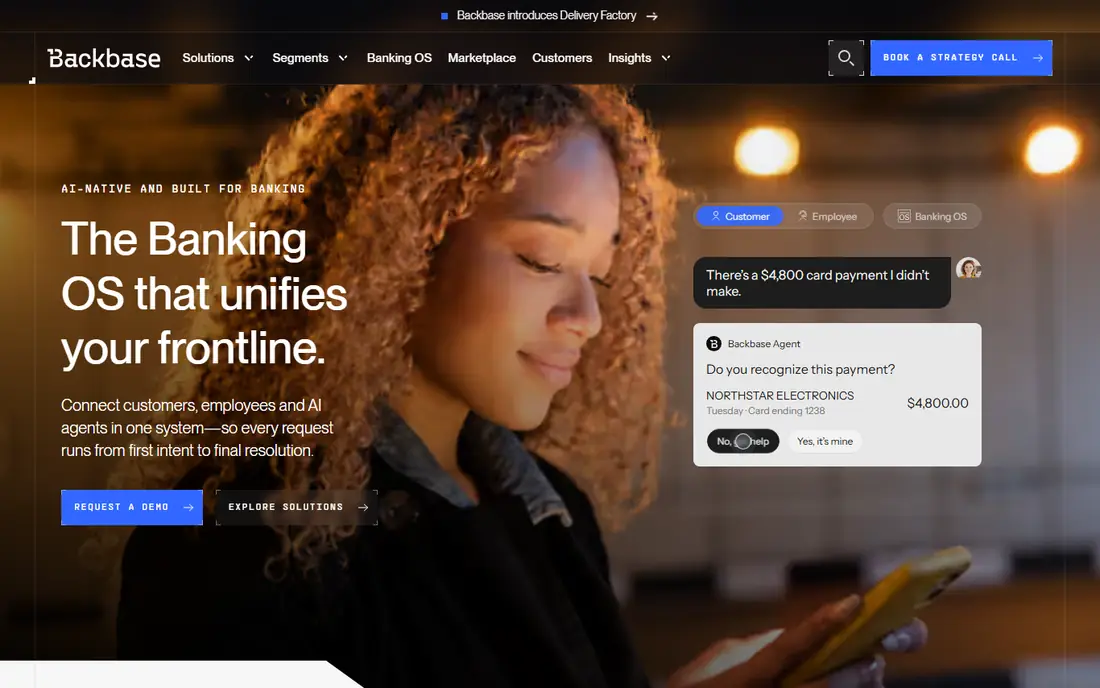
Kasisto sells KAI, a conversational AI platform built only for banking and finance. Its virtual assistants understand banking intents out of the box, from balance questions to card controls, which cuts the training time a general chatbot needs before it can answer safely. The platform covers mobile apps, websites, messaging and voice, and it includes KAI-GPT, a language model tuned for banking use. Named customers include Westpac and Meriwest Credit Union, whose Scout assistant runs on Kasisto technology.
Kasisto publishes no price and offers no self serve trial, so every deal goes through sales. The company was acquired by Backbase in June 2026, which may change how the product is sold and supported, so buyers should ask how the acquisition affects contracts and the product roadmap.
- Deep banking language model trained on financial conversations
- Used by banks such as Westpac and Meriwest Credit Union
- No public pricing or self serve trial
- Acquired by Backbase in June 2026, so the roadmap may change
Intercom
Ideal for: Smaller financial firms that want fast setup and per outcome AI
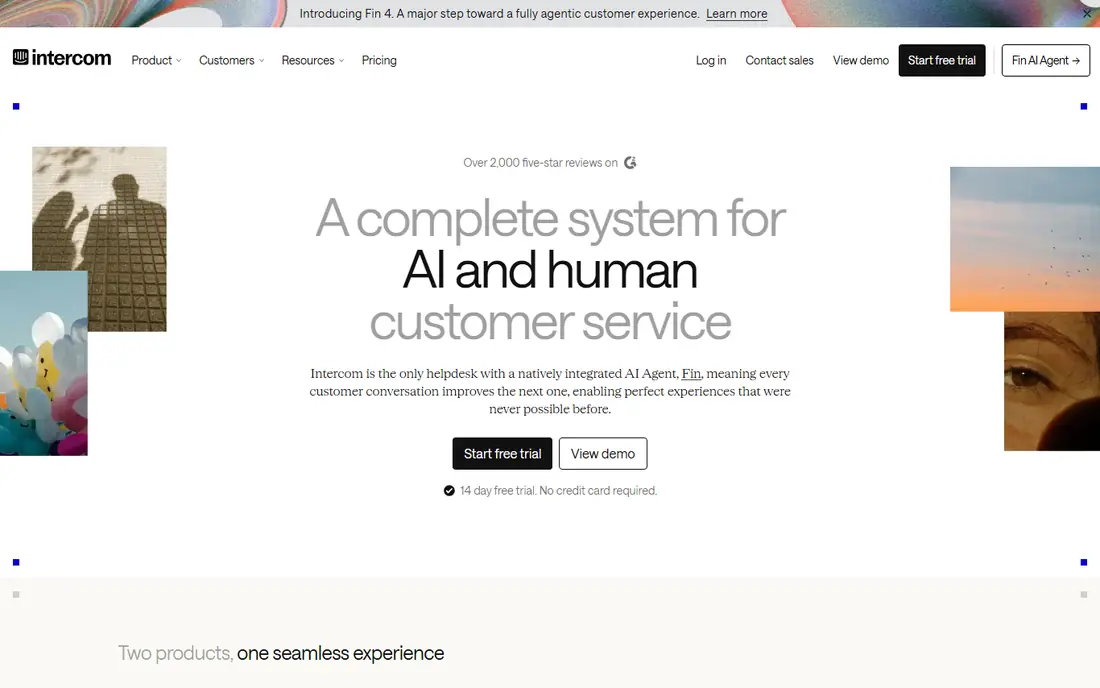
Intercom pairs a shared inbox and live chat with Fin, its AI agent, and the pricing is the clearest in this guide. Essential costs $29 per seat per month on annual billing, Advanced costs $85 and Expert costs $132, and Fin costs $0.99 per outcome on every plan. An outcome counts when Fin resolves a conversation, so a firm pays for results rather than for every chat started. A 14 day free trial needs no card, which lets a small financial firm test the product before committing.
The per outcome model also needs a budget cap, because a surge in chat volume raises the bill in the same month. Intercom lacks the banking specific intents of Glia or Kasisto, so a firm that needs deep core banking integration should weigh that gap.
- Clear published pricing with a 14 day trial
- Fin AI agent charges only $0.99 per resolved outcome
- Per outcome charges add up fast at high volume
- Financial compliance features are weaker than bank specific tools
Zendesk AI
Ideal for: Support teams that already run Zendesk and want AI agents
Zendesk AI is the chatbot and automation layer inside the Zendesk customer service platform. Its AI agents answer across messaging, email and voice, and they can pull answers from the knowledge base, route conversations and hand off to a human agent with full context. The pricing page, checked on 11 November 2026, lists Support Team at $19 per agent per month, Suite Team at $55 and Suite Professional at $115 on annual billing. AI agents are included in the Suite plans, with 5 automated resolutions per agent per month on Suite Team and 10 on Suite Professional, and extra resolutions cost $1.50 on a committed volume or $2.00 on a pay as you go basis.
The catch is the resolution allowance, which is small: a team of 10 agents on Suite Team gets 50 included resolutions a month, and a busy bank will burn through that in days, so the real monthly cost is seats plus resolutions.
- AI agents included in Suite plans with clear per resolution pricing
- Strong reporting and omnichannel routing
- AI agents need the $55 Suite Team plan, not the $19 entry plan
- Extra resolutions cost $1.50 to $2.00 each
boost.ai
Ideal for: Regulated banks and insurers that need tight control of answers
boost.ai is a Norwegian conversational AI platform built for banks, insurers and the public sector, and it is the replacement pick in this guide for Drift, which is being retired. Its virtual agents handle chat and voice, and its design favours tightly scoped intents over free form answers, so a bank can state exactly what the bot will and will not say. Named customers on its homepage include DNB, Nordea, Santander, Metro Bank and Michigan State University Credit Union. Published case material reports that DNB's Aino agent automates 50 to 60 percent of incoming chat.
The vendor publishes no price list, and every deal is a sales led quote with a proof of concept rather than a self serve trial. Rollouts are measured in months and involve the vendor, so a small firm that wants a bot live next week should look elsewhere.
- Built for regulated industries with strict audit and control
- Strong bank customers including DNB, Nordea and Santander
- No public pricing and no self serve trial
- Setup takes months and suits large firms, not small teams
LivePerson
Ideal for: Large brands that need messaging across many channels
LivePerson runs the Conversational Cloud, a platform that brings AI agents and human agents into one messaging workspace across web chat, mobile apps, SMS, WhatsApp, Apple Messages and voice. Its Conversation Builder lets non technical staff build bots, while Intent Manager, KnowledgeAI and Conversation Orchestrator help teams find the intents customers actually use and route them well. The platform also includes hallucination detection, which checks generated replies against business data, and a bring your own language model option.
Pricing is quote only. The pricing page, opened on 11 November 2026, names Bronze, Silver and Gold tiers but shows no figures, and every route leads to a quote request or a request for proposal. Messaging channel costs add a handling fee of 15 percent on top of provider rates for SMS and WhatsApp, and generative AI token entitlements are set per sales agreement.
- Conversational Cloud covers web, app, SMS, WhatsApp and voice in one workspace
- Strong intent and analytics tools
- No public prices, with Bronze, Silver and Gold plans sold by quote
- Acquired by SoundHound AI in September 2026
Cognigy
Ideal for: Large contact centres that need voice and chat AI agents at scale
Cognigy, now NiCE Cognigy after NiCE closed its acquisition in September 2025, is an enterprise conversational and agentic AI platform for customer service. Its AI agents work across voice and digital channels, and the platform is known for voice quality, with low latency that matters when customers speak rather than type. The homepage states more than 1,000 brands use the platform, with 100 plus languages, 25,000 plus concurrent interactions and 110 plus prebuilt integrations. It connects to Amazon Connect, Avaya, Genesys and NiCE CXone.
The platform publishes no price at any tier, and there is no self serve trial or free plan. Third party estimates put typical enterprise packages between $115,000 and $300,000 a year, but those are estimates, not vendor figures, so a buyer must get a quote.
- Strong voice engineering with low latency
- Runs on more than 1,000 brands and supports 100 plus languages
- No public pricing at any tier
- No self serve trial, and every engagement starts with a sales conversation
Kore.ai
Ideal for: Large enterprises that want to build custom AI agents
Kore.ai sells an enterprise AI agent platform, now called the Agent Platform with its Artemis edition, which replaced the older XO Platform branding in May 2026. It lets large firms build, deploy and govern AI agents for customer service, employee support and business processes across chat, messaging and voice. The platform includes a marketplace with more than 200 agent templates, an Agent Blueprint Language for defining agent behaviour and guardrails, and observability tools that trace each decision an agent makes.
Pricing is the weak point for buyers who want a number before a sales call. The main pricing page returns a 404, and the billing docs list plan names without prices, so every real deployment is a custom quote. The vendor docs do publish a self serve Standard plan at $0.20 per conversation with $500 in free credits for developers, but enterprise deployments are negotiated separately.
- Flexible agent platform with a large template library and 300 plus integrations
- Strong in regulated industries
- Main pricing page returns no public figures
- Enterprise focus means a long and sales led buying process
How we chose
We compared vendor pricing pages, product docs and feature lists on 11 November 2026, and we checked that each vendor homepage loads. Prices in this guide come from the vendor pricing page where one exists, and the guide says quote only where the vendor hides the price. We did not claim hands on testing, and we did not use third party price lists as vendor facts. We ranked tools on banking fit, channel cover, audit and control features, handoff quality, and price transparency. Drift was removed because its owner announced a retirement date of 31 January 2027, with no public price and no new purchase path. boost.ai replaced it because it serves banks and insurers and its homepage names bank customers.
What to check before you buy
Ask each vendor for a written answer to the same six questions, and compare the replies side by side. First, where is customer data stored, and does the vendor meet your data residency and retention rules. Second, what audit trail exists for every bot answer, and can compliance export it. Third, how does the bot verify a customer before it shares account details, and what happens when verification fails. Fourth, how does handoff to a human agent work, and does the agent see the full chat history. Fifth, what is the total first year cost, including implementation, training, integrations and per outcome or per resolution charges. Sixth, what are the exit terms if the platform is acquired or retired, as happened with Drift and with Kasisto and LivePerson changing owners in 2026.
| Institution size | Annual budget signal | Best starting point | | Credit union under 50 staff | Under $30,000 a year | Intercom Essential at $29 per seat per month, plus $0.99 per Fin outcome | | Regional bank, 50 to 500 staff | $30,000 to $150,000 a year | Zendesk AI Suite Team at $55 per agent per month, or Glia on a fixed fee quote | | Large bank or insurer, 500 plus staff | $150,000 a year or more | Glia, Kasisto, boost.ai, Cognigy or Kore.ai on a negotiated enterprise quote | | High volume contact centre | Volume driven, priced per conversation | Cognigy or Kore.ai, with per conversation and per session rates agreed in writing |
Use this checklist before signing: confirm the price in writing for 12 months, confirm the data residency clause, confirm the audit export format, test the handoff with 20 real conversations, and test the bot on 50 banking questions with wrong answers counted.
Frequently asked questions
What is the best chatbot software for a small credit union?
Intercom is the best starting point for a small credit union, because Essential costs $29 per seat per month on annual billing and a 14 day trial needs no card. It handles common questions fast, and Fin charges $0.99 only when it resolves a conversation. A credit union should still keep its help centre content accurate, since Fin answers from those documents, and set a monthly cap on outcome charges.
Which chatbot is built only for banks?
Glia and Kasisto are built only for banks and financial institutions. Glia covers voice and chat in one platform for more than 700 financial institutions, while Kasisto's KAI is trained on banking language and used by banks such as Westpac. Both are quote only, so a buyer needs a sales conversation to get a price.
How much does chatbot software for banks cost?
Published prices start at $29 per seat per month for Intercom and $55 per agent per month for Zendesk AI Suite Team, both on annual billing. The six enterprise tools in this guide are quote only, and third party estimates put large deployments in the low six figures a year. Always ask for the total first year cost, including implementation and per outcome or per resolution charges.
Can a bank chatbot share account balances safely?
Yes, but only with proper identity checks and system integration. The bot must verify the customer before it shows balances or transactions, and it must pass a clean audit trail to compliance. Tools such as Glia, Kasisto and boost.ai are built with those controls in mind, while general tools need extra integration work.
What happened to Drift, and what should buyers do instead?
Drift is being retired on 31 January 2027 after its owner announced a gradual sunset in March 2026, and new purchases make little sense. Existing customers should confirm their contract end date and migration path in writing. New buyers who want a bank grade virtual agent should look at boost.ai, which serves banks and insurers with tight control over answers.
Do any of these chatbots offer a free plan?
None of the eight offers a permanent free plan. Intercom and Zendesk AI offer a 14 day free trial, and Kore.ai offers a free trial for evaluation. The other five are sales led, with a demo or a proof of concept instead of a trial. A free trial is useful for testing setup and answer quality, but it does not prove compliance fit.