Best Cheap Phone Service in 2026: 8 Services Compared

- 1
 VisibleSimple unlimited, VerizonVisit
- 2
 US MobileNetwork choiceVisit
- 3
 TelloLight data, T-MobileVisit
- 4
 Mint MobileAnnual prepay valueVisit
- 5
 Cricket WirelessAT&T with storesVisit
- Visible is our pick for simple unlimited service, at 25 dollars per month with taxes and fees included on the Verizon network.
- US Mobile suits buyers who want to choose between networks, with single-line unlimited from 25 dollars per month and annual plans that lower the cost.
- Tello is the best light-data pick, with build-your-own plans from 10 dollars per month for 2GB, while Mint Mobile rewards buyers who pay upfront.
- Always check whether taxes are included and whether the headline price needs an annual prepayment, since those two details change the real monthly cost.
Quick comparison
| Product | Ideal for | Price from | Free version | |
|---|---|---|---|---|
| Visible | Simple unlimited, Verizon | $25 per month | No | Visit |
| US Mobile | Network choice | $25 per month | No | Visit |
| Tello | Light data, T-Mobile | $10 per month | No | Visit |
| Mint Mobile | Annual prepay value | $15 per month | No | Visit |
| Cricket Wireless | AT&T with stores | $35 per month | No | Visit |
 Metro by T-Mobile | In-store T-Mobile help | $30 per month | No | Visit |
 Boost Mobile | Low-cost unlimited with stores | $25 per month | No | Visit |
 Google Fi | Flexible data, T-Mobile | $20 per month | No | Visit |
The best cheap phone service
Cheap phone service in the US now means prepaid and low-cost carriers that run on the big three networks, not a weaker network of their own. The real differences are price structure, data priority, hotspot rules and whether taxes are included. We compared published plan pages and October 2026 price checks for single-line plans.
Visible
Ideal for: Simple unlimited, Verizon
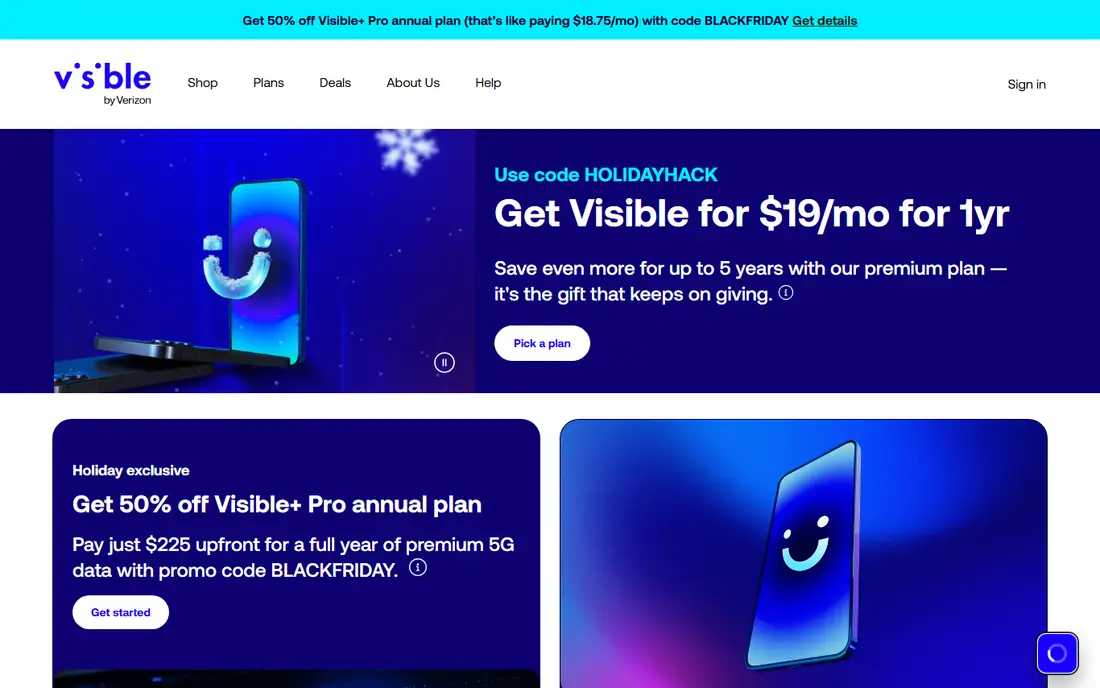
Visible is the simplest cheap unlimited plan. For 25 dollars per month with taxes and fees included, you get unlimited talk, text and data on the Verizon network, with unlimited hotspot use at a capped speed on the base plan. There is no annual prepayment and no multi-line requirement, so the advertised price is close to the bill you actually pay.
The limits are video and hotspot speed. Base plan video streams at standard definition, and hotspot speed is capped, so heavy hotspot users or 4K streamers should look at Visible Plus or US Mobile instead. Support is online only, which suits confident buyers but not everyone.
- Unlimited talk, text and data on Verizon
- Taxes and fees included
- No annual commitment on the base plan
- Video on the base plan is limited to standard definition
- Hotspot speed is capped on the base plan
- Support is chat only
US Mobile
Ideal for: Network choice
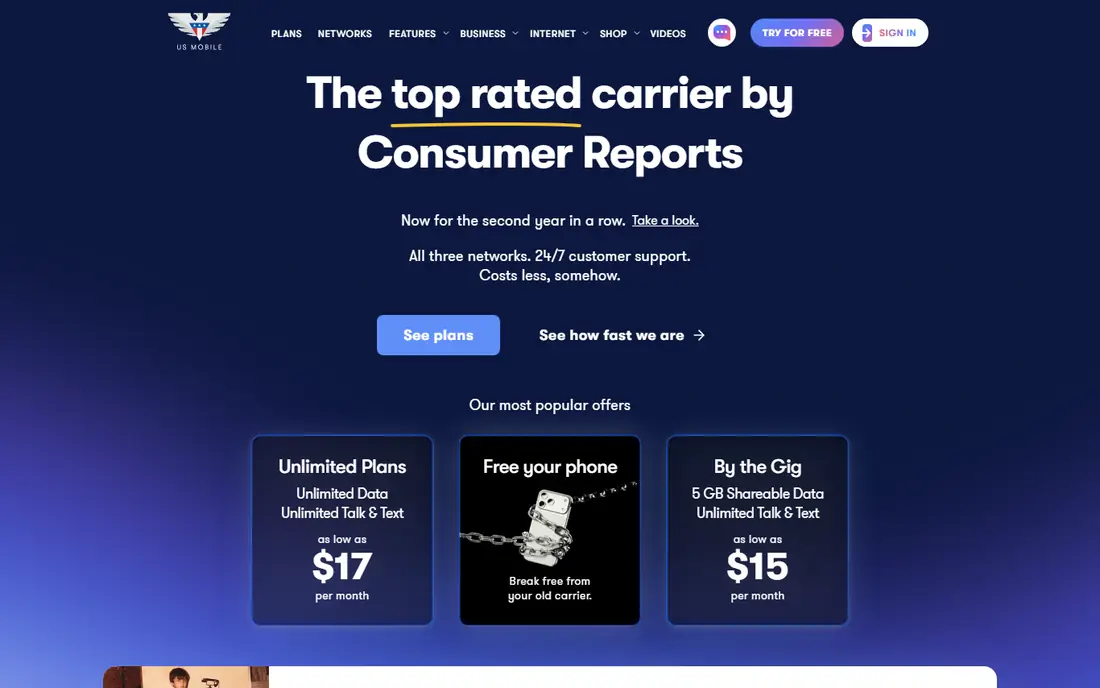
US Mobile is the flexible pick. You choose which major network serves your line, which matters because coverage varies by address, and single-line Unlimited Starter is listed at 25 dollars per month with taxes and fees included. Annual plans lower the effective monthly cost further, with published summaries listing annual unlimited options from about 17.50 dollars per month equivalent.
The catch is the annual commitment. First-year deals are for new lines and may renew at full price, so set a calendar reminder before renewal. Also confirm the high-speed data allowance for your chosen network, since unlimited means continued service at reduced speed after the allowance, not unlimited high-speed data.
- Choose Verizon, T-Mobile or AT&T networks
- Taxes and fees included
- Annual plans lower the monthly cost
- Annual deals auto-renew at full price if you forget
- High-speed data caps vary by plan and network
Tello
Ideal for: Light data, T-Mobile
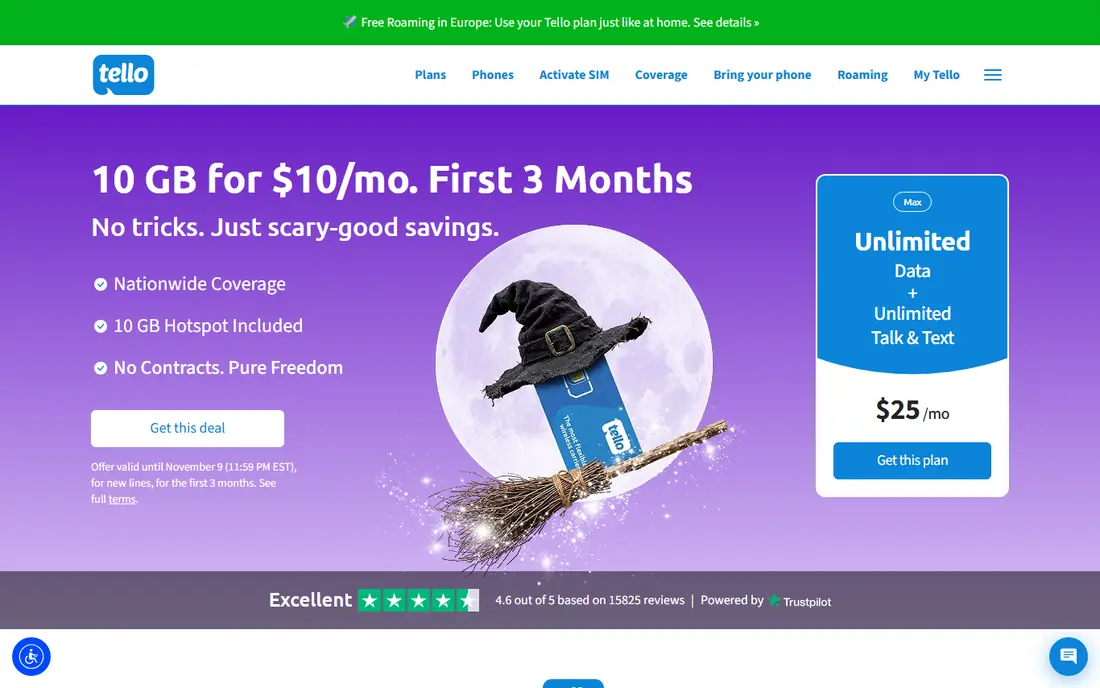
Tello suits light data users who do not want to pay for unlimited they never use. Build-your-own plans start at about 10 dollars per month for 2GB with unlimited talk and text, and the unlimited plan is listed at 25 dollars per month, with taxes added. There is no contract, so you can change the data amount month to month as your use changes.
The weakness is taxes and network. Taxes and fees sit on top of the advertised price, and Tello runs on T-Mobile only, so check coverage at home, work and on your commute before switching. For a light user on T-Mobile coverage, Tello is one of the cheapest honest plans available.
- Build-your-own plans from low prices
- Unlimited talk and text on all plans
- No contract, month to month
- Taxes and fees are added on top
- Unlimited plan is 25 dollars per month plus tax
- T-Mobile coverage only
Mint Mobile
Ideal for: Annual prepay value
Mint Mobile rewards buyers who can pay upfront. Introductory pricing starts at about 15 dollars per month for a three-month term, and the unlimited plan is listed at about 30 dollars per month on a 12-month prepayment, with smaller data plans cheaper. That structure makes Mint one of the cheapest annual options for T-Mobile coverage.
The catch is commitment and taxes. You pay for months before testing the service long term, taxes and fees are added, and renewal pricing depends on plan and term. Mint suits buyers who are sure about T-Mobile coverage and comfortable paying ahead, not buyers who want a month-to-month trial.
- Low intro and annual prices
- Plans from small data to unlimited
- T-Mobile network with 5G access
- Lowest prices need multi-month prepayment
- Taxes and fees are extra
- Price can rise after the intro period
Cricket Wireless
Ideal for: AT&T with stores
Cricket Wireless suits buyers who want AT&T coverage with in-person help. Its unlimited plan is listed at about 35 dollars per month with AutoPay, taxes and fees included, and its store network means you can get a SIM, a phone and help face to face. That retail support matters for buyers who do not want to troubleshoot a port online.
The weakness is price. Cricket unlimited costs more than Visible or US Mobile, and the cheapest unlimited plan lacks hotspot, so hotspot users need a higher tier. Choose Cricket when AT&T coverage and store support outweigh a 10-dollar monthly saving.
- AT&T network coverage
- Thousands of retail stores
- Taxes and fees included on many plans
- Unlimited pricing starts higher than Visible or US Mobile
- Hotspot is limited or absent on the cheapest unlimited plan
Metro by T-Mobile
Ideal for: In-store T-Mobile help
Metro by T-Mobile suits T-Mobile buyers who want store support. Entry plans start at about 30 dollars per month with taxes and fees included on many plans, and stores handle activation, porting and phone setup in person. That help is valuable for first-time switchers and for families setting up several lines at once.
The limit is price against online-only rivals. Metro costs more than Visible, US Mobile or Tello for similar data, so you are paying for retail help and T-Mobile branding. If you are confident switching online, an online-only carrier will usually be cheaper.
- T-Mobile network with 5G
- Retail stores for setup and support
- Taxes and fees included on many plans
- Entry unlimited starts at 30 dollars per month
- Plan names and perks change often, so confirm current terms
Boost Mobile
Ideal for: Low-cost unlimited with stores
Boost Mobile suits buyers who want a low unlimited price with store access. Its unlimited plan is listed from about 25 dollars per month with AutoPay, and its store network covers setup and support that online-only carriers lack. Current plans run on the AT&T network, so check AT&T coverage in your area first.
The catch is detail. Taxes and fees are added on some plans, and hotspot allowances vary by tier, so the cheapest unlimited plan may not include the hotspot you expect. Confirm taxes, hotspot and AutoPay terms on the plan page before switching.
- Unlimited from 25 dollars per month with AutoPay
- Retail stores
- Runs on AT&T network in current plans
- Taxes and fees are added on some plans
- Hotspot allowances vary by tier, so confirm before buying
Google Fi
Ideal for: Flexible data, T-Mobile
Google Fi suits light and variable data users, plus travellers. The Flexible plan starts at about 20 dollars per month for talk and text, with data billed per gigabyte up to a cap, so a 2GB month costs far less than an unlimited plan. Unlimited plans and international roaming options suit frequent travellers who want one plan abroad.
The weakness is price for heavy users. Unlimited plans start above Visible and US Mobile, and taxes are added, so heavy data users should compare total bills, not base prices. Google Fi fits variable users and travellers best, not unlimited-heavy streamers.
- Flexible plan bills for data used
- Unlimited plans available
- Strong international roaming options
- Taxes and fees are added
- Best value needs a Pixel or supported phone for full network switching
- Unlimited starts higher than rivals
How we picked these
We compared published plan pages and October 2026 price checks for single-line plans, focusing on advertised price, taxes, network, hotspot rules and commitment terms. We kept online-only and store-based carriers in the list, since buyers value support differently. We did not test coverage ourselves, since coverage varies by address, and we did not repeat any carrier speed claim as a measured fact.
What to check before you buy
Start with coverage at the addresses that matter: home, work, school and your commute. A cheap plan on a weak network is not cheap if calls drop, so use the carrier coverage map and ask neighbours or colleagues on the same network. Most carriers offer a trial or a short first term, so test before porting a number you cannot afford to lose.
Next, read the price structure fully. Confirm whether taxes and fees are included, whether the price needs an annual prepayment or AutoPay, and what happens after an intro period. Mint and US Mobile annual deals look cheapest per month, but only if you stay the full term, while Visible and Tello month-to-month plans cost a little more for flexibility.
Finally, check data priority, hotspot and video rules. Unlimited plans differ in high-speed allowances, hotspot caps and video quality, and those limits matter more than the word unlimited. Confirm your phone is compatible and not tied to a carrier, back up your contacts, and only port your number once the new SIM is working.
Frequently asked questions
What is the cheapest phone service for one person?
Tello offers the lowest entry price for light users, from about 10 dollars per month for 2GB, while Visible offers the cheapest simple unlimited plan at 25 dollars per month with taxes included. The cheapest plan for you depends on how much data you actually use each month.
Is Mint Mobile really 15 dollars per month?
Mint lists 15 dollars per month as an introductory or annual-equivalent price, with multi-month prepayment and taxes extra. The unlimited plan costs about 30 dollars per month on a 12-month prepayment, so read the term and tax terms before comparing it to a month-to-month plan.
Which cheap carrier has the best coverage?
Coverage depends on the underlying network and your location, not on the carrier brand alone. Visible uses Verizon, Cricket and Boost use AT&T, and Tello, Mint and Metro use T-Mobile, while US Mobile lets you choose. Check coverage at your key addresses for the network behind the plan.
Do cheap carriers slow down my data?
Prepaid and low-cost plans can have lower network priority than premium postpaid plans during congestion, and unlimited plans reduce speed after a high-speed allowance. The effect varies by network, location and time of day, so test the service during your normal use before committing for a year.
Can I keep my phone number when I switch?
Yes, in most cases, as long as your current account is active and you have your account number and port-out PIN. Do not cancel the old line before the port completes, and confirm the new SIM works for calls, texts and data before the old service ends.