Best Church Administration Software in 2026: 8 Options Compared

- 1
 Planning Centerlarger churches wanting ministry-specific toolsVisit
- 2
 ChurchTracsmall to mid-sized churches wanting valueVisit
- 3
 Breezesmall churches wanting simple managementVisit
- 4
 Tithe.lychurches prioritizing giving and engagementVisit
- 5
 Pushpaylarger churches focused on giving and engagementVisit
- Planning Center leads for larger churches that want best-in-class ministry tools.
- Breeze suits small churches that want simple, affordable management.
- ChurchTrac balances price and features for small to mid-sized churches.
- Check giving fees separately, since they sit on top of software pricing.
Quick comparison
| Product | Ideal for | Price from | Free version | |
|---|---|---|---|---|
| Planning Center | larger churches wanting ministry-specific tools | See website | Free trial | Visit |
| ChurchTrac | small to mid-sized churches wanting value | See website | Yes | Visit |
| Breeze | small churches wanting simple management | See website | Free trial | Visit |
| Tithe.ly | churches prioritizing giving and engagement | See website | Yes | Visit |
| Pushpay | larger churches focused on giving and engagement | See website | No | Visit |
 FellowshipOne | large churches needing deep ministry workflows | See website | No | Visit |
 ShelbyNext | churches wanting membership plus financial tools | See website | No | Visit |
 Church Community Builder | churches wanting groups and process tracking | See website | No | Visit |
The best church administration software
Church administration software, often called church management software, handles membership, attendance, giving, groups, volunteers, and communication for congregations. Small churches need simple, affordable tools, while larger churches need multi-campus and ministry workflows. We compared tools used by churches of many sizes and traditions.
Planning Center
Ideal for: larger churches wanting ministry-specific tools
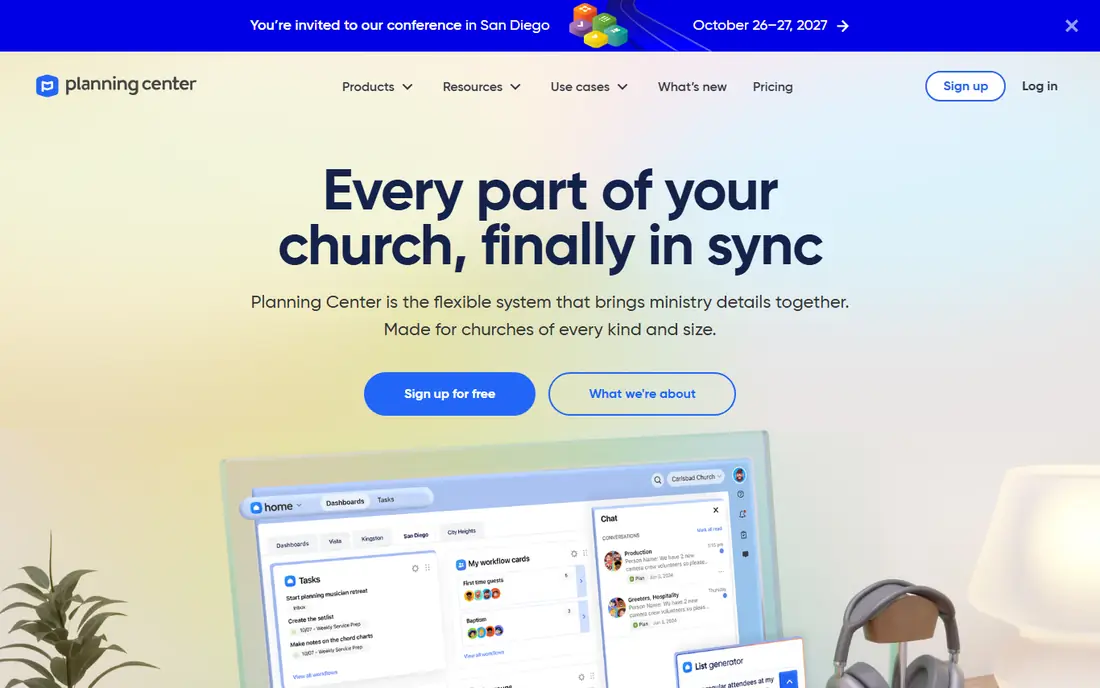
Planning Center offers separate apps for services, people, groups, check-in, giving, and registrations that share one member database. It suits larger churches that want polished, ministry-specific tools. The modular price adds up, so total the apps you actually need. That focus makes it a practical match for larger churches wanting ministry-specific tools. On pricing, the starting point is see website, and the free plan status is free trial. Its strengths include modular apps for services, groups, giving, and check-in; strong design. The trade-off to weigh is costs add up across modules; setup takes time. We suggest checking the current plan limits on the vendor site before you commit, since tiers and trial terms change, and confirming that the plan you pick covers the seats, storage, or usage your team actually needs.
- Modular apps for services, groups, giving, and check-in
- Strong design
- Costs add up across modules
- Setup takes time
ChurchTrac
Ideal for: small to mid-sized churches wanting value
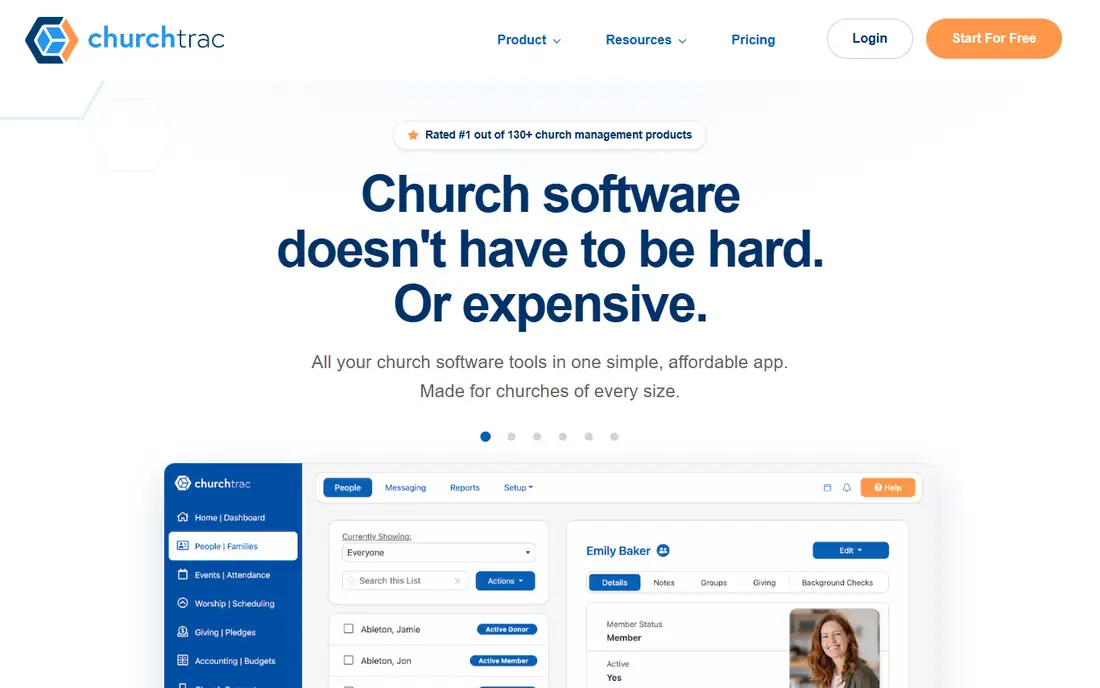
ChurchTrac covers membership, attendance, giving, groups, and communication at a price small churches can afford, with a free tier for very small congregations. It suits churches that want one straightforward system without paying for enterprise features. Larger churches may want deeper ministry tools. That focus makes it a practical match for small to mid-sized churches wanting value. On pricing, the starting point is see website, and the free plan status is yes. Its strengths include affordable plans; membership, giving, and attendance in one tool; free tier. The trade-off to weigh is design is simpler than premium rivals; advanced features are fewer. We suggest checking the current plan limits on the vendor site before you commit, since tiers and trial terms change, and confirming that the plan you pick covers the seats, storage, or usage your team actually needs.
- Affordable plans
- Membership, giving, and attendance in one tool
- Free tier
- Design is simpler than premium rivals
- Advanced features are fewer
Breeze
Ideal for: small churches wanting simple management

Breeze keeps church management simple, with member profiles, giving, events, volunteers, and communication in a clean interface. Flat pricing helps small churches budget, and the learning curve is short. Churches needing advanced workflows may outgrow it. That focus makes it a practical match for small churches wanting simple management. On pricing, the starting point is see website, and the free plan status is free trial. Its strengths include very easy to use; flat pricing; membership, giving, and events. The trade-off to weigh is fewer advanced ministry features than larger platforms. We suggest checking the current plan limits on the vendor site before you commit, since tiers and trial terms change, and confirming that the plan you pick covers the seats, storage, or usage your team actually needs.
- Very easy to use
- Flat pricing
- Membership, giving, and events
- Fewer advanced ministry features than larger platforms
Tithe.ly
Ideal for: churches prioritizing giving and engagement
Tithe.ly started with giving and now covers church apps, websites, and management, with a free core that suits smaller churches. It suits congregations that want giving, engagement, and a church app from one vendor. Processing fees apply to donations. That focus makes it a practical match for churches prioritizing giving and engagement. On pricing, the starting point is see website, and the free plan status is yes. Its strengths include strong giving tools; church app and website options; free core features. The trade-off to weigh is giving fees apply; advanced management features vary by plan. We suggest checking the current plan limits on the vendor site before you commit, since tiers and trial terms change, and confirming that the plan you pick covers the seats, storage, or usage your team actually needs.
- Strong giving tools
- Church app and website options
- Free core features
- Giving fees apply
- Advanced management features vary by plan
Pushpay
Ideal for: larger churches focused on giving and engagement
Pushpay focuses on giving, church apps, and engagement analytics for larger churches, with tools to encourage recurring giving. It suits churches that prioritize digital generosity and mobile engagement. Pricing is quoted and aimed at larger congregations. That focus makes it a practical match for larger churches focused on giving and engagement. On pricing, the starting point is see website, and the free plan status is no. Its strengths include strong giving and engagement tools; church app; analytics. The trade-off to weigh is pricing by quote; best at larger scale. We suggest checking the current plan limits on the vendor site before you commit, since tiers and trial terms change, and confirming that the plan you pick covers the seats, storage, or usage your team actually needs.
- Strong giving and engagement tools
- Church app
- Analytics
- Pricing by quote
- Best at larger scale
FellowshipOne
Ideal for: large churches needing deep ministry workflows
FellowshipOne serves large and multi-campus churches with deep tools for groups, ministry involvement, attendance, and giving. It suits churches with complex ministry structures and staff to run them. Smaller churches will find it heavier than needed. That focus makes it a practical match for large churches needing deep ministry workflows. On pricing, the starting point is see website, and the free plan status is no. Its strengths include deep ministry and group workflows; multi-campus support; giving tools. The trade-off to weigh is enterprise pricing; setup is a project. We suggest checking the current plan limits on the vendor site before you commit, since tiers and trial terms change, and confirming that the plan you pick covers the seats, storage, or usage your team actually needs.
- Deep ministry and group workflows
- Multi-campus support
- Giving tools
- Enterprise pricing
- Setup is a project
ShelbyNext
Ideal for: churches wanting membership plus financial tools
ShelbyNext combines church membership, giving, and attendance with financial tools from a long-established church software vendor. It suits churches that want membership and accounting connected. The interface feels less modern than newer rivals. That focus makes it a practical match for churches wanting membership plus financial tools. On pricing, the starting point is see website, and the free plan status is no. Its strengths include membership plus accounting; giving and attendance; established vendor. The trade-off to weigh is interface feels older; pricing by quote. We suggest checking the current plan limits on the vendor site before you commit, since tiers and trial terms change, and confirming that the plan you pick covers the seats, storage, or usage your team actually needs.
- Membership plus accounting
- Giving and attendance
- Established vendor
- Interface feels older
- Pricing by quote
Church Community Builder
Ideal for: churches wanting groups and process tracking
Church Community Builder focuses on groups, volunteer processes, and assimilation queues that move people from visitors to involved members. It suits churches that track ministry involvement closely. Pricing is quoted, and buyers should confirm current packaging. That focus makes it a practical match for churches wanting groups and process tracking. On pricing, the starting point is see website, and the free plan status is no. Its strengths include strong groups and process queues; volunteer tracking; giving integration. The trade-off to weigh is pricing by quote; part of the pushpay group. We suggest checking the current plan limits on the vendor site before you commit, since tiers and trial terms change, and confirming that the plan you pick covers the seats, storage, or usage your team actually needs.
- Strong groups and process queues
- Volunteer tracking
- Giving integration
- Pricing by quote
- Part of the Pushpay group
How we picked these
We compared official feature pages, pricing pages, app store listings, privacy policies, and public reviews for each option, and we kept only products that exist, work in October 2026, and fit the topic directly. We did not claim hands-on testing we did not do, and we left out products whose fit was weak even when they are well known in a nearby category. Price and plan details change often, so where a vendor does not publish a clear price we write See website rather than guessing. The notes below reflect what each vendor publishes about its own product, not a promise about results for any single team.
How to choose church administration software
List the jobs the software must do every week, such as check-in, attendance, giving records, group communication, and volunteer scheduling. A tool that covers giving well but handles check-in poorly will frustrate families on Sunday, while a tool with strong check-in but weak giving reports will frustrate the finance team. Prioritize the weekly jobs over the occasional ones. Check data migration from your current system or spreadsheets, and ask how member, giving, and attendance history transfers. Confirm giving fees, text messaging costs, and per-person pricing, since those decide the real monthly bill. A trial with your actual volunteer team will reveal more than a sales demo. Roll out one area at a time, starting with check-in or giving, and train volunteers with short, practical sessions. Keep member data clean with consistent naming and duplicate checks, and review who can see sensitive pastoral and giving data, since privacy matters in church work.
Frequently asked questions
What is church administration software?
It manages church membership, attendance, groups, volunteers, giving, events, and communication in one system, replacing spreadsheets and paper records. It is also called church management software or ChMS.
How much does church software cost?
Pricing varies from free or low-cost plans for small churches to per-person or per-module pricing for larger churches. Giving processing fees are usually separate, so check both costs.
Do small churches need church software?
Small churches can start with simple tools for directory, attendance, and giving records, and grow into fuller platforms as ministries expand. Even a small church benefits from one accurate member list.
Can church software handle online giving?
Yes, most platforms include online and text giving, with donor statements and fund tracking. Processing fees apply, and rates vary by provider and plan.
Is my church data private?
Reputable vendors offer role-based access, so only authorized staff see giving and pastoral notes. Review the privacy policy and access controls, and limit sensitive data to those who need it.