Microsoft Azure leads the list, best for Microsoft-centric enterprises and hybrid estates. If your case is different, Red Hat OpenShift suits Kubernetes-based application modernization and Alibaba Cloud suits Asia-Pacific reach and regional hosting. The remaining 3 options are covered below with prices and limits.
This Ainotely guide covers 6 options for cloud application hosting platforms for enterprise. Each profile lists a starting price, free plan details, strengths and drawbacks, so you can drop poor fits quickly.
Key takeaways
Microsoft Azure takes the first slot, best suited to Microsoft-centric enterprises and hybrid estates.
Amazon Web Services is the one to check for broadest service catalog and global regions.
Every tool from Microsoft Azure to Amazon Web Services works by quote, with no list price shown.
Amazon Web Services stands alone as the one tool in this list with a free plan.
Best for: Microsoft-centric enterprises and hybrid estates
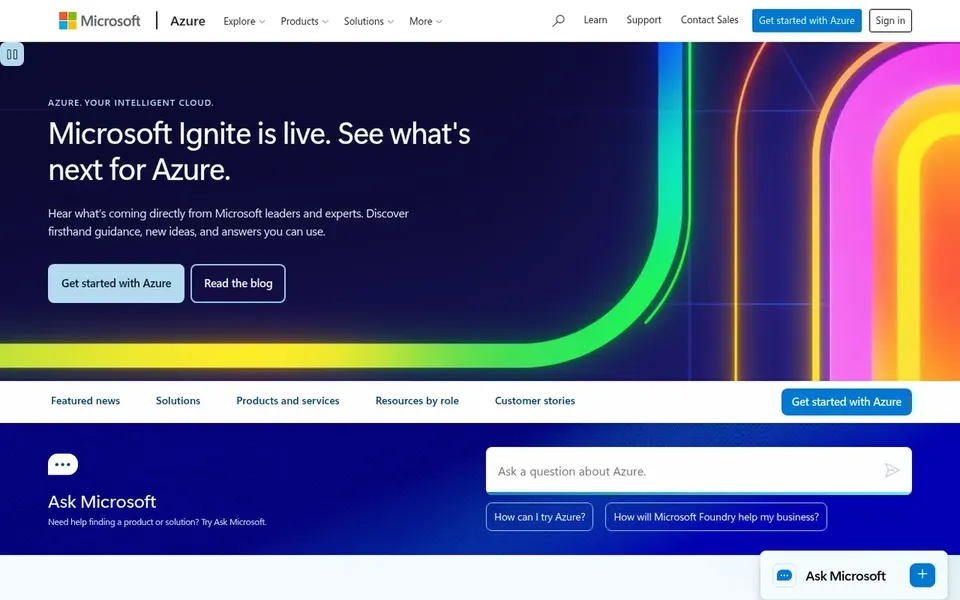
For Microsoft-centric enterprises and hybrid estates, Microsoft Azure is a natural candidate. Azure's rapid service expansion means documentation and naming shift often, so architecture reviews matter.
Enterprises without Microsoft dependencies may see less advantage, and highly portable container strategies may favor a vendor-neutral system instead. Check the vendor site for Microsoft Azure pricing; none is listed in this comparison. Free access: Free trial.
Watch-outs: Service naming and scope change frequently.
Best for: Kubernetes-based application modernization
Red Hat OpenShift is a good fit for Kubernetes-based application modernization. Red Hat OpenShift is an application innovation product with tools that help organizations modernize existing applications, build new ones and adopt AI. OpenShift assumes Kubernetes familiarity, so teams without container experience face a ramp-up time.
Downsides: Operational overhead if self-managed.
It is an application product instead of a full infrastructure provider. So it is usually paired with an underlying cloud, and more straightforward hosting may suffice for small, static workloads. Pricing for Red Hat OpenShift is not stated here, so ask the vendor for current figures. On free options: Not stated.
Alibaba Cloud works best for Asia-Pacific reach and regional hosting. Enterprises headquartered elsewhere may find tooling, documentation and support expectations differ from familiar providers.
Trade-offs to know: Less familiar to numerous Western enterprises.
Check the vendor site for Alibaba Cloud pricing; none is listed in this comparison. Free access: Not stated.
Best for: Regulated industries and hybrid integration
Think of IBM Cloud for regulated industries and hybrid integration. IBM Cloud merges infrastructure choices, a development system and industry-oriented services for business workloads.
Teams that require a mix of infrastructure control and managed product services. Pricing for IBM Cloud is not stated here, so ask the vendor for current figures. Free options: Free trial.
Pick Google Cloud Platform if this describes you: AI, data and multi-cloud workloads. It suits enterprises building analytics and AI-driven applications, and organizations pursuing multi-cloud strategies that require a capable data system alongside general application hosting.
Worth adding: teams wanting a single vendor for every layer should compare service coverage carefully, and cost planning deserves attention given consumption-based billing. No starting price is listed for Google Cloud Platform here; confirm pricing on the vendor site. Trial and free access: Not stated.
Honest limits: Discount and commitment structures need study.
Best for: Broadest service catalog and global regions
Amazon Web Services is a good fit for broadest service catalog and global regions. Organizations deeply standardized on Microsoft or Google tooling may find a competing system a smoother cultural fit, and teams wanting a completely managed application product may prefer a container system layered on top.
Where it falls short: Cost governance needs deliberate planning.
Amazon Web Services does not show a starting price in this comparison, so check the vendor site for current pricing. You can start on Amazon Web Services without paying.
Ask each vendor, from Microsoft Azure to Amazon Web Services, for a written quote; none of them publishes a starting price.
Look at the free plan from Amazon Web Services closely: its caps decide whether it is usable for real work.
Use real work to test the free trial from Microsoft Azure and IBM Cloud, rather than a demo project.
Before choosing Microsoft Azure, weigh its main limit: service naming and scope change frequently.
Confirm the exact Amazon Web Services plan that includes your must-have features.
Verify that exporting from Red Hat OpenShift is possible on your plan and covers all your records.
How we picked
We compared the tools on published pricing, free plan or trial availability, feature coverage for cloud application hosting platforms for enterprise, and the limits each vendor documents. Seat minimums, billing terms and add-ons can move the real cost, so the starting prices here are a guide and not a quote. The sequence is a judgement call: typical use case first, then pricing transparency, then free access. Use the profiles to check fit.
Every price and plan detail on this page comes from the vendors’ own websites. We did not run hands-on tests unless the text says so, and we do not publish star ratings or review scores. See how we score and our disclosure.
Keep your shortlist in one place
Paste prices, trial dates and notes from this guide into Ainotely, our AI note app. It files them into a topic and pulls out tasks like “cancel trial by Friday”. Free 7-day trial, no card needed.
Which options for cloud application hosting platforms for enterprise have a free plan?
Amazon Web Services is the only tool in this list with a free plan. Free plans usually cap users, projects or features, so check the limits on the vendor page. Several others offer a trial instead. Pricing, free plan details and limits for all 6 tools in this cloud application hosting platforms for enterprise roundup sit on the individual cards above.
Can I try these tools before paying?
Often, yes. Amazon Web Services has a free plan and Microsoft Azure and IBM Cloud offer a free trial. Use your own data and a real task during the test, and check what the free tier or trial limits before you rely on it.
Which product is a good match for a first enterprise cloud migration?
For most readers this guide would start with Microsoft Azure, built for Microsoft-centric enterprises and hybrid estates. Red Hat OpenShift is the alternative for Kubernetes-based application modernization, and Alibaba Cloud for Asia-Pacific reach and regional hosting. The right answer depends on budget and workflow.
Do these tools publish their prices?
No. None of the tools, from Microsoft Azure to Amazon Web Services, shows a fixed starting price here, so budget time for quotes.
Is Microsoft Azure the right pick for everyone comparing cloud application hosting platforms for enterprise?
No single tool suits every team. Microsoft Azure comes first because it fits Microsoft-centric enterprises and hybrid estates, while Red Hat OpenShift suits Kubernetes-based application modernization and Alibaba Cloud suits Asia-Pacific reach and regional hosting. Match the tool to your own size, budget and workflow before deciding.