This list puts Zscaler Cloud Security first for zero trust access to cloud resources. For a different need, Microsoft Defender for Cloud covers Microsoft-centered cloud-native environments and Check Point CloudGuard covers threat prevention and risk prioritization. All 5 tools are compared below on price, free plan and limits.
Choosing cloud data security software usually comes down to price, fit and limits. This Ainotely guide sets 5 tools side by side on those three points, with the facts kept short and checkable.
Key takeaways
Top of the list is Zscaler Cloud Security, which targets zero trust access to cloud resources.
Orca Security comes with a trade-off: smaller ecosystem than hyperscaler tools.
For wide code to cloud CNAPP coverage, Palo Alto Networks Prisma Cloud is worth a look.
A permanent free plan is missing from all 5 tools, Zscaler Cloud Security and Palo Alto Networks Prisma Cloud included; plan for a trial or a premium start.
For zero trust access to cloud resources, Zscaler Cloud Security is a natural candidate. Zscaler positions itself as a cloud enterprise security provider helping companies adopt zero trust for secure digital transformation. Its cloud security strengths center on controlling access to applications and data through a cloud-delivered model, which fits distributed workforces and organizations modernizing network security.
From a buyer's view, teams pursuing zero trust initiatives should consider it. More specifically, confirm how it suits your existing network and identity architecture. Check the vendor site for Zscaler Cloud Security pricing; none is listed in this comparison. Free plan details: Not stated.
Best for: Microsoft-centered cloud-native environments
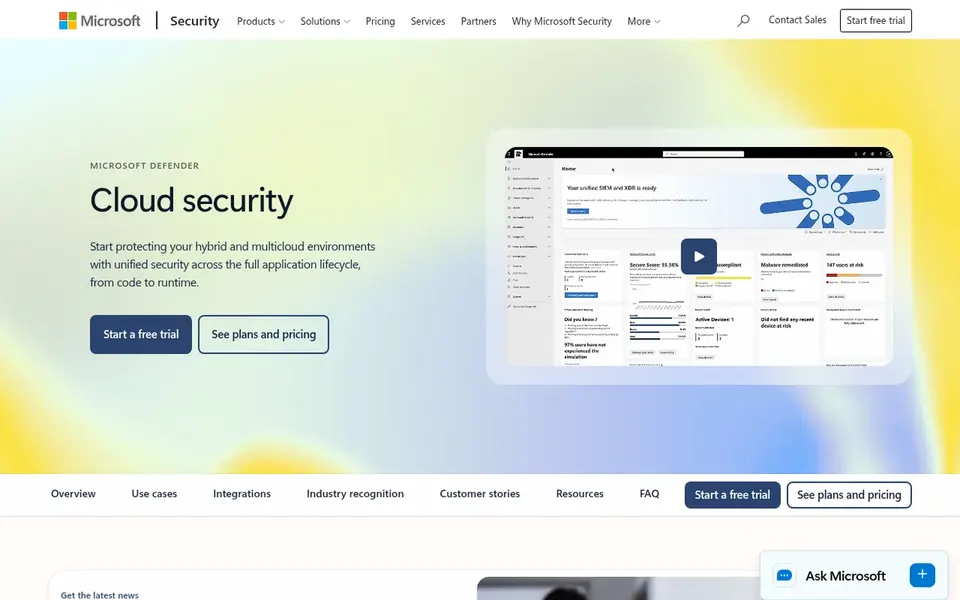
Microsoft Defender for Cloud is built with Microsoft-centered cloud-native environments in mind. Microsoft Defender for Cloud is presented as a security option and CNAPP that guards cloud-native application development across multicloud and hybrid environments. It is a sensible starting point for organizations already standardized on Microsoft security tooling, since it fits into familiar workflows and administration.
Downsides: Cross-cloud depth may trail specialists.
In practice, Check how it handles each cloud you run before relying on it alone. Teams running cloud-native development with Microsoft services get the most natural alignment. More specifically, organizations with minimal Microsoft footprint may find integration less compelling, and very deep cross-cloud requirements may call for a dedicated specialist product. No starting price is listed for Microsoft Defender for Cloud here; confirm pricing on the vendor site. As for free access: Not stated.
Best for: Threat prevention and risk prioritization
Check Point CloudGuard is designed for threat prevention and risk prioritization. Coverage depth can vary by cloud provider, so validate against your estate.
What to check first: Naming changes can confuse buyers.
Organizations wanting a pure-play CNAPP may prefer a specialist alternative. No starting price is listed for Check Point CloudGuard here; confirm pricing on the vendor site. Free access: Not stated.
Orca Security is aimed squarely at AI security and workload defense. Orca Security presents itself as an AI-powered cloud security product and CNAPP that secures multicloud environments from build to runtime, with thorough AI security and workload defense.
Points against: Smaller ecosystem than hyperscaler tools.
For everyday use, AI security capabilities are still evolving across the market, so verify current coverage. More specifically, organizations seeking focused cloud security without hyperscaler lock-in may find it relevant. This comparison lists no price for Orca Security; ask the vendor. On free options: Not stated.
Palo Alto Networks Prisma Cloud makes the most sense for broad code to cloud CNAPP coverage. Prisma Cloud is described by its vendor as a complete Cloud Native Application Protection Platform for code to cloud security in any cloud, multicloud and hybrid environment.
Confirm which capabilities apply to your specific cloud mix before committing. The breadth that makes it attractive can also make rollout and tuning heavier for lean teams without cloud security specialists. Pricing for Palo Alto Networks Prisma Cloud is not stated here, so ask the vendor for current figures. Free options: Not stated.
Trade-offs to know: Wide scope may overwhelm small teams.
Ask each vendor, from Zscaler Cloud Security to Palo Alto Networks Prisma Cloud, for a written quote; none of them publishes a starting price.
Read the limits listed for Zscaler Cloud Security first: not a full CNAPP replacement.
Pick one real project and run it in Microsoft Defender for Cloud first; a small pilot shows fit faster than a checklist.
Ask Zscaler Cloud Security which support channels and response times come with the plan you would buy.
Price Palo Alto Networks Prisma Cloud for your actual team size; headline prices rarely include add-ons or overage.
How we picked
We compared the tools on published pricing, free plan or trial availability, feature coverage for cloud data security software, and the limits each vendor documents. Seat minimums, billing terms and add-ons can move the real cost, so the starting prices here are a guide and not a quote. Position on the page reflects fit for a typical buyer first, with price clarity and free access breaking ties. Treat it as a guide, not a ruling.
Every price and plan detail on this page comes from the vendors’ own websites. We did not run hands-on tests unless the text says so, and we do not publish star ratings or review scores. See how we score and our disclosure.
Keep your shortlist in one place
Paste prices, trial dates and notes from this guide into Ainotely, our AI note app. It files them into a topic and pulls out tasks like “cancel trial by Friday”. Free 7-day trial, no card needed.
Is Zscaler Cloud Security the right pick for everyone comparing cloud data security software?
No single tool suits every team. Zscaler Cloud Security comes first because it fits zero trust access to cloud resources, while Microsoft Defender for Cloud suits Microsoft-centered cloud-native environments and Check Point CloudGuard suits threat prevention and risk prioritization. Match the tool to your own size, budget and workflow before deciding.
Does any tool for cloud data security software here have a free plan?
A permanent free plan is not offered by Zscaler Cloud Security, Palo Alto Networks Prisma Cloud or the other tools here. Plan a short evaluation period instead.
How are the tools for cloud data security software ordered?
The order follows typical fit for cloud data security software, with Zscaler Cloud Security first and Palo Alto Networks Prisma Cloud last, then price clarity and free access. It is editorial judgement, not a score, so another team could rank the tools differently.
Which tool is a good match for a Microsoft-heavy environment?
The first pick on this list is Zscaler Cloud Security, because it suits zero trust access to cloud resources. Microsoft Defender for Cloud is better for Microsoft-centered cloud-native environments, and Check Point CloudGuard for threat prevention and risk prioritization. Check price and limits against your own needs before choosing.
Do these tools publish their prices?
No. None of the tools, from Zscaler Cloud Security to Palo Alto Networks Prisma Cloud, shows a fixed starting price here, so budget time for quotes.