Redis Cloud is the first pick on this list for live, low-latency agent experiences. Listed starting prices: Pinecone from $20 per month. If your case is different, Pinecone suits vector search and AI knowledge retrieval and Azure Cosmos DB suits low-latency NoSQL and vector workloads. Details, prices and limits for the rest of the 6 tools are below.
Choosing cloud database platform for AI agents usually comes down to price, fit and limits. This Ainotely guide sets 6 tools side by side on those three points, with the facts kept short and checkable.
Key takeaways
The list opens with Redis Cloud, aimed at live, low-latency agent experiences.
One limit worth knowing about Azure Cosmos DB: NoSQL model may not suit complicated relational queries.
Pinecone has the lowest monthly starting price in this list: $20 per month.
None of the 6 tools, from Redis Cloud to MongoDB Atlas, has a free plan, so budget for a subscription or use a trial.
For live, low-latency agent experiences, Redis Cloud is a natural candidate. Evaluate other systems if your agent needs solid consistency and complicated transactions. Redis Cloud is primarily an in-memory data store, so it may not be the best fit for agents that need durable, large-scale persistent storage or complicated relational queries.
It is frequently used as a complement to other databases instead of a standalone system of record. More specifically, Redis Cloud is the official Redis-as-a-service offering, meant to help build quick applications and deliver rich live experiences. It excels at low-latency data access, caching, and session management, which are valuable for AI agents that require fast responses and real-time state handling. No starting price is listed for Redis Cloud here; confirm pricing on the vendor site. Free access: Not stated.
Limits to weigh: In-memory focus may not suit large persistent datasets.
Best for: Vector search and AI knowledge retrieval
Choose Pinecone for vector search and AI knowledge retrieval. Its offerings bundle the Pinecone Database, Nexus, and Marketplace, which together aim to power accurate, quick, and economical AI.
Trade-offs to know: Primarily vector-focused.
From a buyer's view, consider it as a complement to, rather than a replacement for, a primary database. What you pay to start with Pinecone: $20 per month. Free options: Free trial.
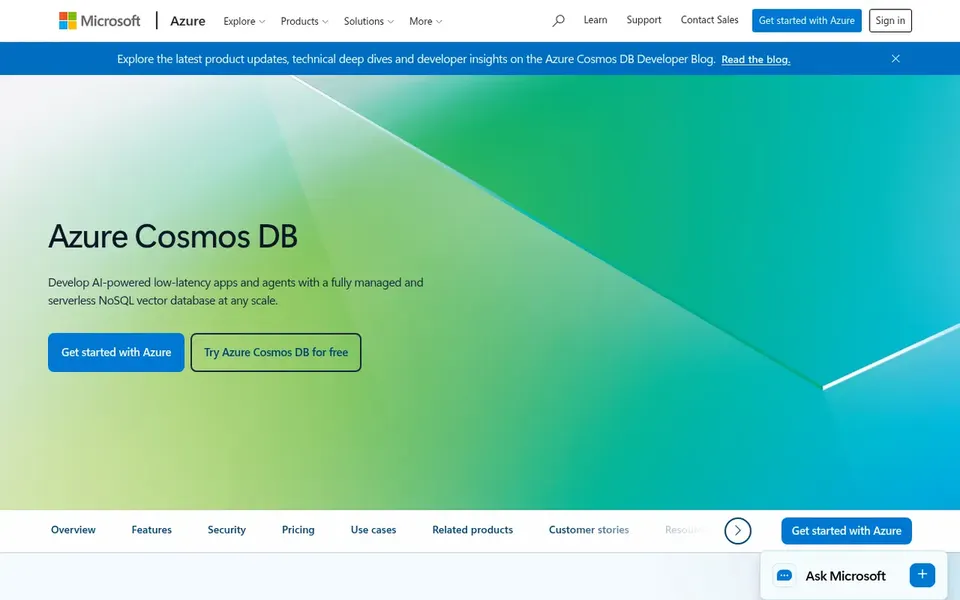
Azure Cosmos DB works best for low-latency NoSQL and vector workloads. It is made for modern applications that require high availability, scalability, and low latency across distributed environments.
The main drawbacks: NoSQL model may not suit complicated relational queries.
Its vector search, whereas handy, may lack the depth of dedicated vector databases for large-scale similarity workloads. Azure Cosmos DB shows no starting price here, so confirm the cost on the vendor site. Free options: Not stated.
Best for: Connected data and graph-based agent reasoning
Think of Neo4j AuraDB for connected data and graph-based agent reasoning. AuraDB takes care of the operational aspects of running Neo4j so teams can focus on building agent logic.
Where it falls short: May need specialized query skills.
AuraDB may not be the best fit for agents that primarily need straightforward document storage or high-volume key-value access. Neo4j AuraDB shows no starting price here, so confirm the cost on the vendor site. Free access: Not stated.
Best for: Globally consistent relational AI agent backends
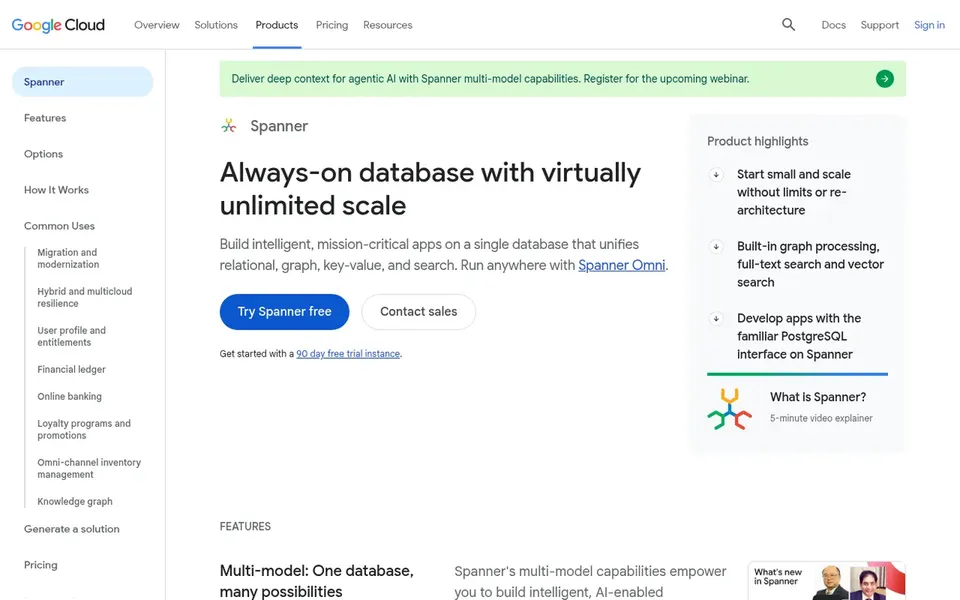
Pick Google Cloud Spanner if this describes you: globally consistent relational AI agent backends. It is aimed at intelligent applications that need solid consistency and virtually unlimited scale without maintenance windows.
From a buyer's view, consider other choices if your agent workload is purely vector-based or demands a more straightforward document model. Pricing for Google Cloud Spanner is not stated here, so ask the vendor for current figures. Free options: Not stated.
Points against: May be complicated to set up for straightforward agent needs.
Best for: Document-model AI agents with operational simplicity
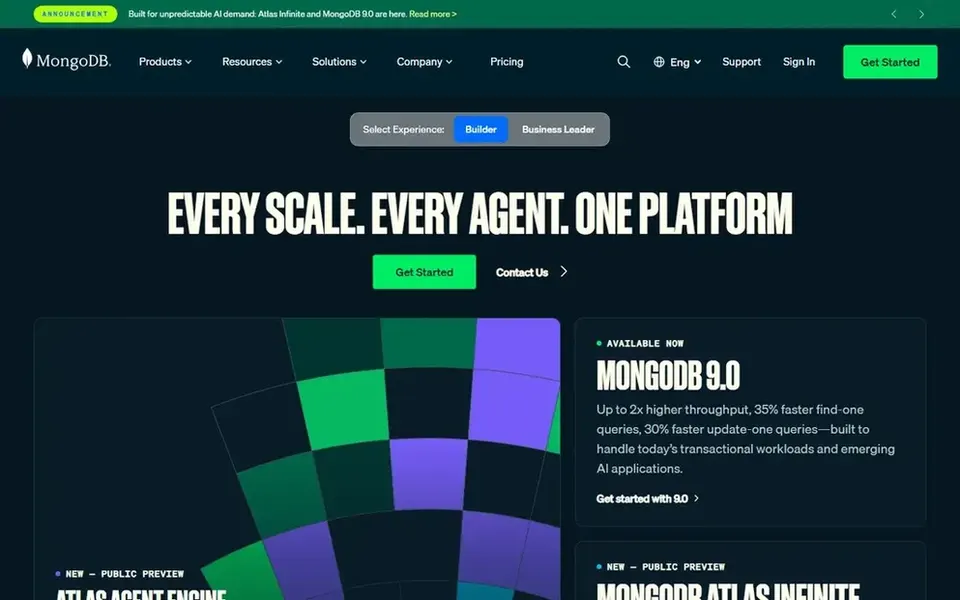
Where MongoDB Atlas fits: document-model AI agents with operational simplicity. MongoDB Atlas is a fully managed cloud database that uses a document model to eliminate operational complexity whereas ensuring resilience, scalability, and enterprise-grade security. Atlas can serve as a general-purpose operational store for agent state and context.
Its vector search features, whereas available, may not match the specialization of dedicated vector databases for large-scale similarity search. Consider other systems if those are core requirements. Check the vendor site for MongoDB Atlas pricing; none is listed in this comparison. As for free access: Not stated.
Downsides: Vector search capabilities may be less specialized than dedicated vector databases.
Get a written quote from Redis Cloud, Azure Cosmos DB, Neo4j AuraDB and others; the list shows no starting price for them.
Take the trial from Pinecone and push a live task through it before you pay.
Before choosing Redis Cloud, weigh its main limit: in-memory focus may not suit large persistent datasets.
Ask Redis Cloud whether prices are locked for the first term and what happens at renewal.
Check the integration list for Azure Cosmos DB against the tools you run today, and note which ones need a higher plan.
How we picked
The comparison looks at four things: starting price, free access, how well the feature set matches cloud database platform for AI agents, and the main limit of each tool. Treat prices as a snapshot: vendors change plans often, so check the vendor site for the figure that applies today. Order on the page follows fit for the typical buyer first, then price transparency and free access. Your own requirements should decide the final pick.
Every price and plan detail on this page comes from the vendors’ own websites. We did not run hands-on tests unless the text says so, and we do not publish star ratings or review scores. See how we score and our disclosure.
Keep your shortlist in one place
Paste prices, trial dates and notes from this guide into Ainotely, our AI note app. It files them into a topic and pulls out tasks like “cancel trial by Friday”. Free 7-day trial, no card needed.
What should I consider for live AI agent performance?
Low-latency data access is critical for live agents. In-memory databases like Redis Cloud can offer quick responses for caching and session data.
What type of database is a good match for AI agents?
The first pick on this list is Redis Cloud, because it suits real-time, low-latency agent experiences. Pinecone is better for vector search and AI knowledge retrieval, and Azure Cosmos DB for low-latency NoSQL and vector workloads. Check price and limits against your own needs before choosing.
What is the cheapest option for cloud database platform for AI agents in this list?
On published monthly entry prices, Pinecone is the lowest here at $20 per month. Entry price is only part of the cost, because seats, add-ons and billing terms can change the total.
Does any tool for cloud database platform for AI agents here have a free plan?
No tool in this list, Redis Cloud and MongoDB Atlas included, has a permanent free plan. Pinecone offer a trial. Trials and quotes are the usual route, so plan a short evaluation period.
Is Redis Cloud the right pick for everyone comparing cloud database platform for AI agents?
No single tool suits every team. Redis Cloud comes first because it fits real-time, low-latency agent experiences, while Pinecone suits vector search and AI knowledge retrieval and Azure Cosmos DB suits low-latency NoSQL and vector workloads. Match the tool to your own size, budget and workflow before deciding.
Do these tools publish their prices?
Not all of them. Redis Cloud, Azure Cosmos DB, Neo4j AuraDB and others publish no starting price, so expect a quote request for those. The rest, Pinecone included, show a starting price, though seats and billing terms still change the final cost.