Sumo Logic Cloud SIEM is the first pick on this list for lean SOC teams wanting speed. If your case is different, Elastic Security suits open, adaptable SIEM and endpoint and Splunk Enterprise Security suits unified TDIR in one system. All 6 tools are compared below on price, free plan and limits.
Ainotely compared 6 Cloud-Native SIEM platforms. The goal is a practical shortlist: published prices, free plan facts, best-fit use cases and honest limits for every entry.
Key takeaways
Sumo Logic Cloud SIEM takes the first slot, best suited to lean SOC teams wanting speed.
None of the 6 tools, from Sumo Logic Cloud SIEM to Microsoft Sentinel, has a free plan, so budget for a subscription or use a trial.
Microsoft Sentinel suits Microsoft-centric SOC teams.
Pricing across the list, from Sumo Logic Cloud SIEM to Microsoft Sentinel, is by quote only.
Pick Sumo Logic Cloud SIEM if this describes you: lean SOC teams wanting speed. Beyond that, as with most cloud SIEMs, detection content and log routing need tuning to avoid noise and excess data costs.
Choose Sumo Logic when cloud-native speed and automatic investigation outweigh deep customization. Organizations with large legacy on-premises estates may need additional integration work. Sumo Logic Cloud SIEM shows no starting price here, so confirm the cost on the vendor site. Free access: Not stated.
Where it falls short: Best value with cloud log sources.
Elastic Security is designed for open, flexible SIEM and endpoint. Openness includes configuration responsibility, so teams need product skills to run it well.
The main drawbacks: Configuration choices are extensive.
On top of that, organizations seeking a completely managed experience may prefer a vendor-operated service. This comparison lists no price for Elastic Security; ask the vendor. Trial and free access: Not stated.
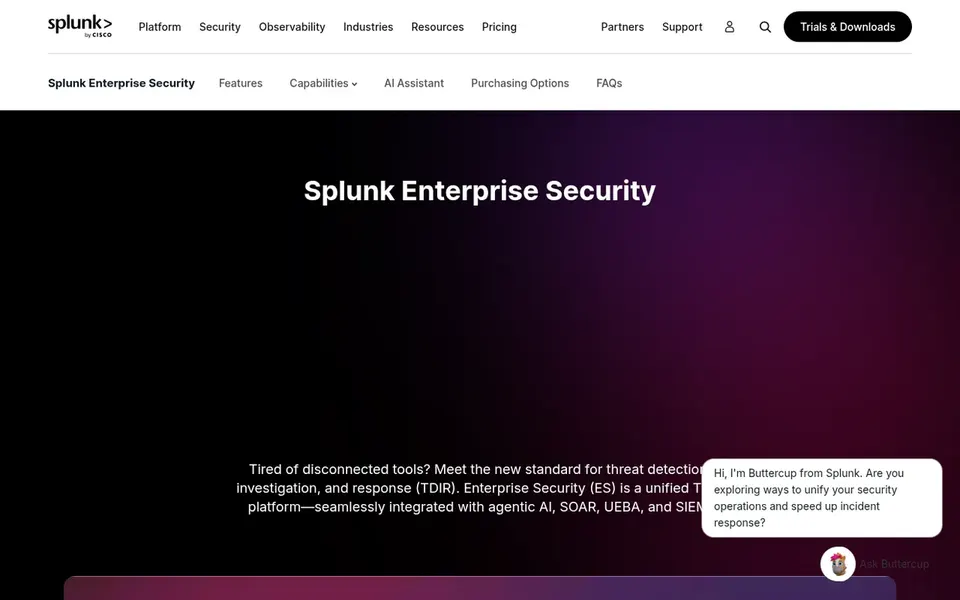
Where Splunk Enterprise Security fits: unified TDIR in one product. Breadth brings administrative overhead, and teams should plan data volumes and content tuning carefully.
Organizations with established Splunk data pipelines commonly find it a natural extension of existing search and analytics work. On top of that, smaller SOCs without dedicated system staff may prefer a more straightforward managed choice. Check the vendor site for Splunk Enterprise Security pricing; none is listed in this comparison. As for free access: Not stated.
Downsides: Product breadth can mean complicated administration.
Exabeam Security Operations Platform targets Cloud-native TDIR with AI. Exabeam provides a cloud-native security operations system powered by AI for threat detection, investigation and response, alongside security log management and compliance support. Worth adding: capabilities rely on which modules you adopt, so scoping matters before rollout.
In daily use, teams needing very deep custom correlation may find other systems more adaptable. More specifically, pick Exabeam when cloud-native log management and AI-assisted investigation are the central requirements. Check the vendor site for Exabeam Security Operations Platform pricing; none is listed in this comparison. On free options: Not stated.
Upsides: AI-powered threat detection and investigation.
Palo Alto Networks Cortex XSIAM makes the most sense for AI-driven SOC automation. The system is oriented toward organizations ready to rethink SOC workflows around automation, which can be a substantial change.
Cortex XSIAM from Palo Alto Networks is a security analytics product that uses AI to centralize data, boost threat detection and accelerate incident response across the SOC. Check the vendor site for Palo Alto Networks Cortex XSIAM pricing; none is listed in this comparison. Free access: Not stated.
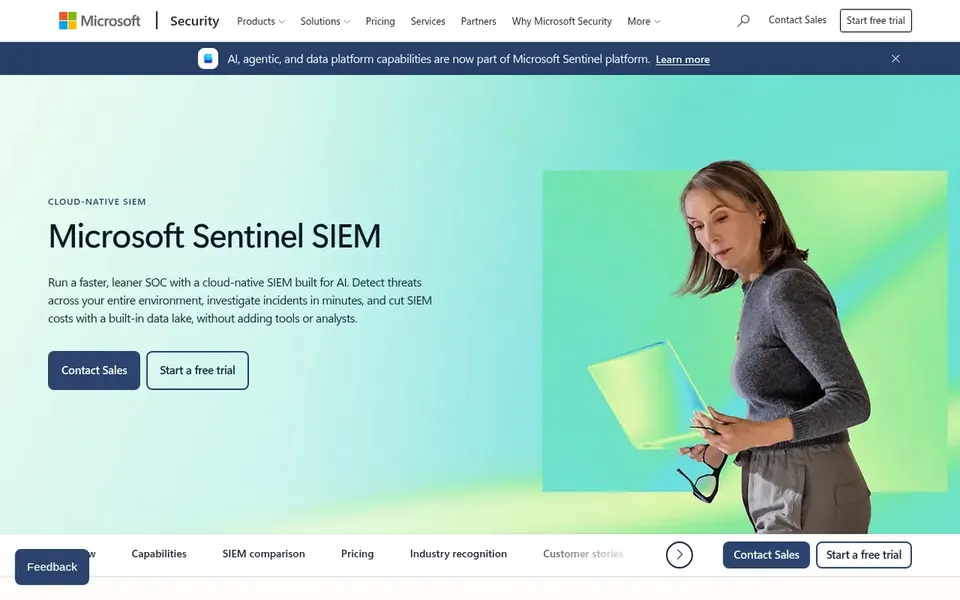
Microsoft Sentinel is designed for Microsoft-centric SOC teams. Cost control also needs deliberate data onboarding decisions. In practice, the primary limitation is ecosystem gravity: teams running largely non-Microsoft infrastructure may find integration and tuning work heavier.
Its homepage flags a data lake intended to lower SIEM costs and a leaner SOC workflow. It tends to fit organizations already using Microsoft cloud and security products, where identity, endpoint and cloud signals can be correlated in one place. Microsoft Sentinel shows no starting price here, so confirm the cost on the vendor site. As for free access: Not stated.
Where it is weaker: Cost management needs active attention.
Request quotes from Sumo Logic Cloud SIEM, Microsoft Sentinel and the others; the list shows no fixed prices.
Read the limits listed for Sumo Logic Cloud SIEM first: best value with cloud log sources.
Run a one or two week pilot of Elastic Security with the people who will use it every day.
Ask Sumo Logic Cloud SIEM about contract length, onboarding fees and user minimums before you sign.
Make sure Microsoft Sentinel lets you export your data in a format another tool can read.
How we picked
Selection started from tools commonly considered for Cloud-Native SIEM platforms, then narrowed to 6 that have clear pricing information or a clear quote process. Seat minimums, billing terms and add-ons can move the real cost, so the starting prices here are a guide and not a quote. Position on the page reflects fit for a typical buyer first, with price clarity and free access breaking ties. Treat it as a guide, not a ruling.
Every price and plan detail on this page comes from the vendors’ own websites. We did not run hands-on tests unless the text says so, and we do not publish star ratings or review scores. See how we score and our disclosure.
Keep your shortlist in one place
Paste prices, trial dates and notes from this guide into Ainotely, our AI note app. It files them into a topic and pulls out tasks like “cancel trial by Friday”. Free 7-day trial, no card needed.
Consolidation can cut tool sprawl and boost context sharing, which is why Cortex XSIAM and Elastic Security combine analytics with broader security functions. Evaluate integration depth before committing.
How do these products differ in automation?
Multiple systems, including Splunk Enterprise Security, Cortex XSIAM and Elastic Security, emphasize AI-assisted detection and automatic response. More specifically, match the automation model to how much change your SOC can absorb.
Do these tools publish their prices?
No. None of the tools, from Sumo Logic Cloud SIEM to Microsoft Sentinel, shows a fixed starting price here, so budget time for quotes.
Is Sumo Logic Cloud SIEM the right pick for everyone comparing Cloud-Native SIEM platforms?
No single tool suits every team. Sumo Logic Cloud SIEM comes first because it fits lean SOC teams wanting speed, while Elastic Security suits open, flexible SIEM and endpoint and Splunk Enterprise Security suits unified TDIR in one platform. Match the tool to your own size, budget and workflow before deciding.
What should a smaller SOC prioritize?
Lean teams frequently benefit from quick onboarding, managed detection content and automatic investigation, which systems like Sumo Logic Cloud SIEM highlight. Confirm support and onboarding help on the vendor site.
Does any tool for Cloud-Native SIEM platforms here have a free plan?
A permanent free plan is not offered by Sumo Logic Cloud SIEM, Microsoft Sentinel or the other tools here. Plan a short evaluation period instead.