Best Cloud Vulnerability Management Services in 2026: 8 Services Compared

- 1
 TenableVulnerability management across cloud and ITVisit
- 2
 QualysCloud vulnerability and compliance scanningVisit
- 3
 Rapid7 InsightVMVulnerability management with remediation trackingVisit
- 4
 WizCloud security with vulnerability contextVisit
- 5
 Orca SecurityAgentless cloud vulnerability managementVisit
- Our pick for most people is Tenable, because it balances price, features and ease of use for the widest group of readers.
- Free plans and trials are real here, but the limits matter: check what Qualys and Rapid7 InsightVM actually include before you commit.
- Prices in this guide come from vendor pricing pages and current comparisons checked in October 2026, and they can change, so confirm the plan on the vendor site before you buy.
- The best choice depends on your budget, your experience level and how much support you want, not on which brand is most famous.
Quick comparison
| Product | Ideal for | Price from | Free version | |
|---|---|---|---|---|
| Tenable | Vulnerability management across cloud and IT | See website | Free trial | Visit |
| Qualys | Cloud vulnerability and compliance scanning | See website | Free trial | Visit |
| Rapid7 InsightVM | Vulnerability management with remediation tracking | See website | Free trial | Visit |
| Wiz | Cloud security with vulnerability context | See website | Free trial | Visit |
| Orca Security | Agentless cloud vulnerability management | See website | Free trial | Visit |
 Palo Alto Networks Prisma Cloud | Cloud security platform with vulnerability management | See website | Free trial | Visit |
 Aqua Security | Cloud native vulnerability and workload security | See website | Free trial | Visit |
 CrowdStrike Falcon Cloud Security | Cloud vulnerability management inside Falcon | See website | Free trial | Visit |
The best Cloud Vulnerability Management Services in 2026
We compared official feature pages, pricing pages, app store listings, privacy policies and public reviews to build this list for best cloud vulnerability management services. Every option below exists and works today, and each one earns its place for a different kind of reader.
Tenable
Ideal for: Vulnerability management across cloud and IT

Here is the short version. Tenable covers cloud, IT and operational assets with vulnerability scanning and risk-based prioritisation. Security teams get a ranked view of what to fix first, rather than a long unranked list of findings. It fits readers who want vulnerability management across cloud and it, and its published feature set matches that promise rather than trying to cover every possible use case at once. The price picture is see website, with a free plan status of free trial. Quoted pricing and the breadth of the platform mean a trial with your real cloud accounts is worth the time before you commit. Before you sign up, check the current plan limits on the official site, because caps on users, usage or features are where most buyers get surprised after the first month. Before you commit, read the current plan page in full and check the limits that apply to your size, your volume and your location. Caps on users, usage, storage or support hours are the details that cause most surprises after the first month, and they vary a lot from one provider to the next.
- Broad asset coverage
- Prioritised risk scores
- Cloud and on-premises support
- Pricing is quoted
- Setup needs planning for large estates
Qualys
Ideal for: Cloud vulnerability and compliance scanning
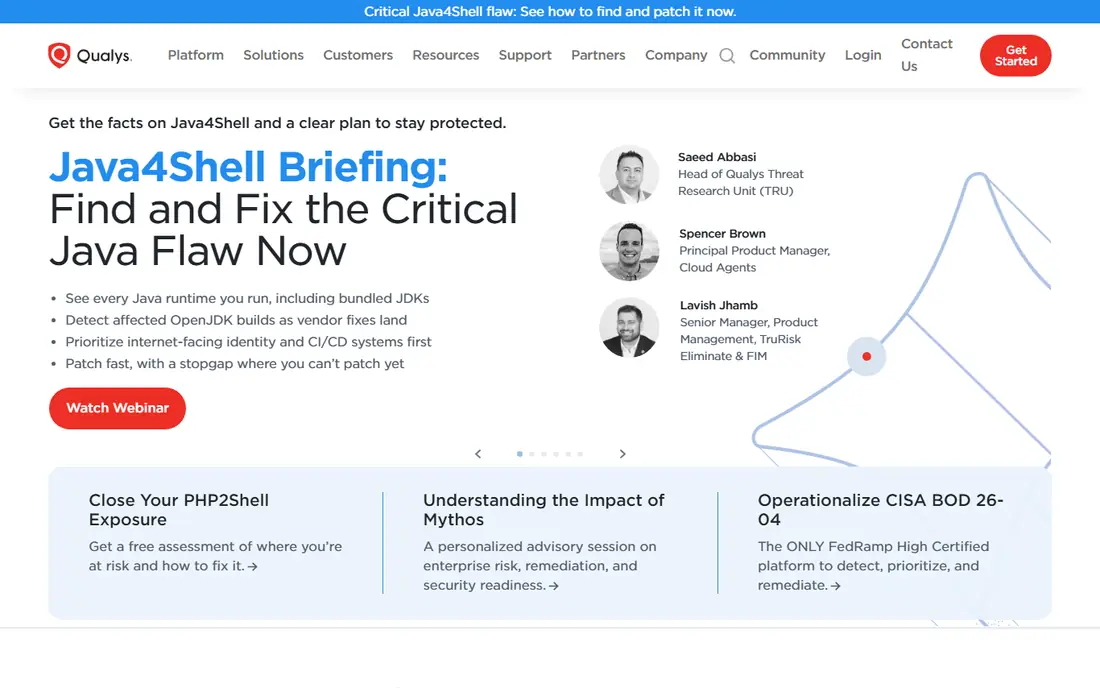
Start here if you want a safe default. Qualys offers vulnerability management plus compliance and asset tools in one cloud platform. Teams that need both security findings and compliance evidence in one place will get more value than from a scanning-only tool. It fits readers who want cloud vulnerability and compliance scanning, and its published feature set matches that promise rather than trying to cover every possible use case at once. The price picture is see website, with a free plan status of free trial. Module pricing means the full platform costs more than the base, so price the modules you actually need. Before you sign up, check the current plan limits on the official site, because caps on users, usage or features are where most buyers get surprised after the first month. A short trial or a demo call will tell you more than a feature page can. Use it with a real task from your own work, note where you get stuck, and compare how quickly support answers when you ask a plain question about pricing or limits.
- Cloud agent and agentless scanning
- Compliance modules
- Large vulnerability database
- Module pricing adds up
- Interface can feel dense
Rapid7 InsightVM
Ideal for: Vulnerability management with remediation tracking
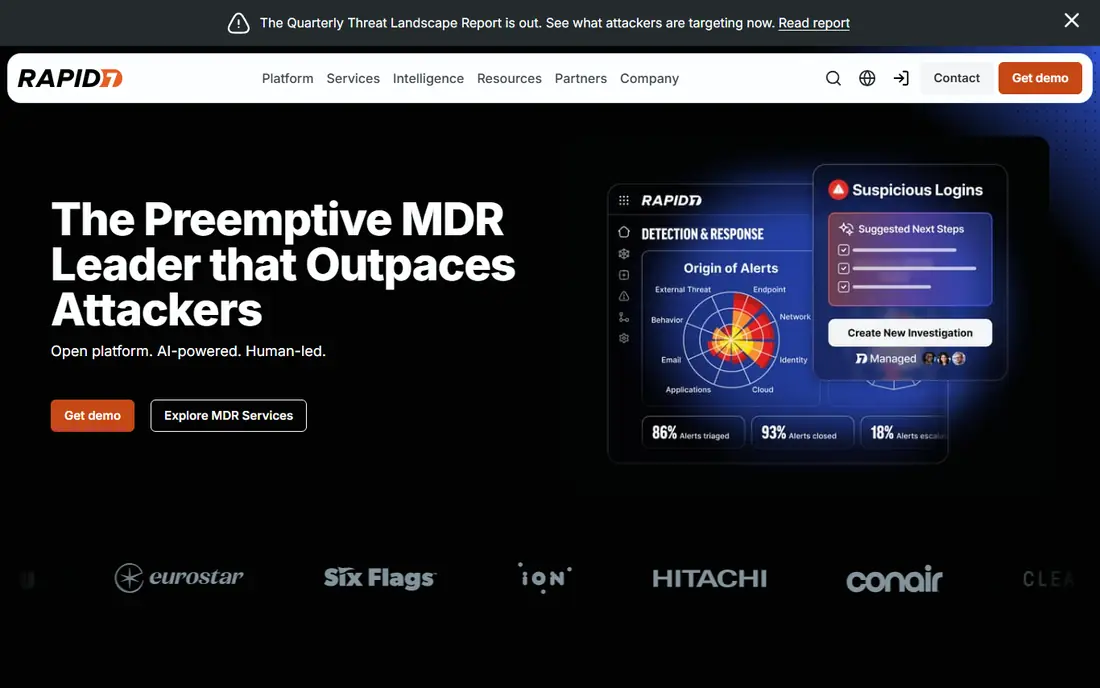
This one suits a specific kind of reader. Rapid7 InsightVM helps teams find, prioritise and track remediation of vulnerabilities across cloud and traditional infrastructure. Remediation projects and ticketing integrations keep fixes moving after the scan ends. It fits readers who want vulnerability management with remediation tracking, and its published feature set matches that promise rather than trying to cover every possible use case at once. The price picture is see website, with a free plan status of free trial. Agent deployment across a large estate takes planning, so allow time for rollout and tuning. Before you sign up, check the current plan limits on the official site, because caps on users, usage or features are where most buyers get surprised after the first month. Ask about contract length, renewal terms and what happens if you need to leave. A low starting price can hide a long term, a setup fee or a charge for extra users, so get the full first year cost in writing before you sign anything.
- Risk prioritisation
- Remediation projects
- Integrations with ticketing tools
- Pricing is quoted
- Agent deployment takes effort
Wiz
Ideal for: Cloud security with vulnerability context
Consider this if the top picks do not fit your needs. Wiz scans cloud environments without agents and shows vulnerabilities in context, including which issues are actually reachable by an attacker. That context helps teams ignore low-risk findings and fix the ones that matter. It fits readers who want cloud security with vulnerability context, and its published feature set matches that promise rather than trying to cover every possible use case at once. The price picture is see website, with a free plan status of free trial. Enterprise pricing puts it beyond small teams, but cloud-native companies with large cloud estates get strong value from the context it adds. Before you sign up, check the current plan limits on the official site, because caps on users, usage or features are where most buyers get surprised after the first month. Check who actually provides support and how fast they reply on the plan you would buy. Support that is excellent on an enterprise plan can be slow on a starter plan, and that difference matters more than a small price gap when something breaks.
- Agentless cloud scanning
- Attack path context
- Fast deployment
- Enterprise pricing
- Best for cloud-native teams
Orca Security
Ideal for: Agentless cloud vulnerability management
A strong option for a narrower need. Orca Security scans cloud workloads, storage and configurations without agents, building a full inventory of assets and risks. Security teams get prioritised alerts with context about exposure and blast radius. It fits readers who want agentless cloud vulnerability management, and its published feature set matches that promise rather than trying to cover every possible use case at once. The price picture is see website, with a free plan status of free trial. As an enterprise tool, it is priced for larger teams, so smaller cloud users should compare the cost against a simpler scanner. Before you sign up, check the current plan limits on the official site, because caps on users, usage or features are where most buyers get surprised after the first month. Look for recent public reviews that mention your exact use case, not just the overall score. A product can be excellent for one kind of buyer and a poor fit for another, and the complaints usually point to the same limit again and again.
- Agentless scanning
- Full cloud inventory
- Prioritised alerts
- Enterprise pricing
- Smaller teams may find it costly
Palo Alto Networks Prisma Cloud
Ideal for: Cloud security platform with vulnerability management
Worth a close look before you decide. Prisma Cloud combines vulnerability management with compliance, configuration and runtime protection in one platform. Large teams that already use Palo Alto Networks tools get a unified view of cloud risk. It fits readers who want cloud security platform with vulnerability management, and its published feature set matches that promise rather than trying to cover every possible use case at once. The price picture is see website, with a free plan status of free trial. The breadth brings complexity, so a dedicated owner and a phased rollout help teams get value without drowning in alerts. Before you sign up, check the current plan limits on the official site, because caps on users, usage or features are where most buyers get surprised after the first month. Confirm that the product still covers your region, your language or your compliance needs before you pay. Coverage pages change, and a service that works well in one country or state may offer a thinner version somewhere else.
- Broad cloud security coverage
- Compliance
- Runtime protection
- Complex platform
- Pricing is quoted
Aqua Security
Ideal for: Cloud native vulnerability and workload security
This belongs on the shortlist for a reason. Aqua Security focuses on cloud native workloads, scanning containers, serverless functions and cloud infrastructure for vulnerabilities. Teams running Kubernetes and containers get depth that general scanners often lack. It fits readers who want cloud native vulnerability and workload security, and its published feature set matches that promise rather than trying to cover every possible use case at once. The price picture is see website, with a free plan status of free trial. Traditional IT estates get less coverage, so hybrid teams should check the full asset list before choosing. Before you sign up, check the current plan limits on the official site, because caps on users, usage or features are where most buyers get surprised after the first month. Compare the total cost for a full year, including add-ons you will actually use. The cheapest headline price is rarely the cheapest year, once you add seats, storage, support or the tier that removes the limit you hit first.
- Container and cloud scanning
- Runtime controls
- Supply chain checks
- Focus on cloud native workloads
- Less coverage for traditional IT
CrowdStrike Falcon Cloud Security
Ideal for: Cloud vulnerability management inside Falcon
Do not overlook this one. CrowdStrike Falcon Cloud Security adds cloud vulnerability findings to the Falcon platform, which many security teams already use for endpoints. That integration means one console for endpoint and cloud findings. It fits readers who want cloud vulnerability management inside falcon, and its published feature set matches that promise rather than trying to cover every possible use case at once. The price picture is see website, with a free plan status of free trial. Teams not already on Falcon get less of the integration benefit, so compare it on standalone cloud value as well. Before you sign up, check the current plan limits on the official site, because caps on users, usage or features are where most buyers get surprised after the first month. Talk to the vendor about onboarding and migration if you are switching from another tool. A clear migration path, a named contact and a realistic timeline will save more time than any single feature on the comparison page.
- Cloud workload protection
- Vulnerability findings
- Falcon platform integration
- Best for existing Falcon customers
- Pricing is quoted
How we picked these
We started from official feature pages and pricing pages, then checked app store listings, privacy policies and public reviews to confirm each product still works and still fits the topic. Products that could not be verified, or that only partly matched the topic, were left out, even when they were well known. We favoured a mix of established leaders and strong smaller options, and we weighted price transparency, a usable free tier or trial, and honest limits more heavily than marketing claims. No product on this list paid for its place, and our pick for most people is the one we would suggest to a friend with ordinary needs and an ordinary budget.
How to pick cloud vulnerability management that fits your cloud footprint
Start with the outcome you need from best cloud vulnerability management services, not with the longest feature list. Write down the one result that would make the purchase worth it, the budget you can defend for a full year, and the level of support you expect when something goes wrong. That short list will remove half of this comparison at once, because many strong products are built for a buyer with different needs from yours. Then trial the top two with a real task, not a demo task. Watch how long setup takes, how clear the pricing page is, and how support responds to an awkward question. If a vendor cannot answer a plain question about limits, renewal or cancellation, treat that as a finding, not as a detail to sort out later. The right choice for best cloud vulnerability management services is the one that still looks good after that test, at the price you will actually pay.
Frequently asked questions
What is the best option for best cloud vulnerability management services?
There is no single best option, because the right choice depends on your budget, your experience and the size of the job. Tenable is our pick for most people, while Qualys and Rapid7 InsightVM suit readers with different priorities. Compare the free plan or trial terms before you decide.
How much do best cloud vulnerability management services cost?
Costs vary widely across this list, from free tiers to enterprise pricing that is quoted on request. The table above shows the starting price for each option, but the full year cost depends on seats, usage and add-ons. Always confirm the current price on the vendor site before you buy.
Is there a free option for best cloud vulnerability management services?
Some options in this list offer a free plan or a free trial, while others are paid from the start. Tenable and several others are worth checking first if budget is tight, but read the limits on the free tier, because caps on users or usage are common.
How do I choose between these options for best cloud vulnerability management services?
Start from your must-have features, then filter by price, support and the limits that matter to you. Trial the top two with a real task, check contract and renewal terms, and pick the option that still fits after a week of real use.