Best Cloud Workload Protection Platforms in 2026: 7 Platforms Compared

- 1
 WizCloud visibility and risk rankingVisit
- 2
 Palo Alto Networks Prisma CloudEnterprise multi cloud securityVisit
- 3
 CrowdStrike Falcon Cloud SecurityRuntime protection and threat intelVisit
- 4
 SentinelOneAutonomous workload defenseVisit
- 5
 Aqua SecurityContainer and cloud native securityVisit
- Workload protection should cover virtual machines, containers, and serverless workloads, not just one of the three.
- Agentless scanning is faster to deploy, while agents give deeper runtime protection, and many teams use both.
- Alert quality matters more than alert count, since noisy alerts get ignored.
- Pricing by workload or by cloud account can differ a lot, so model your real footprint before signing.
Quick comparison
| Product | Ideal for | Price from | Free version | |
|---|---|---|---|---|
| Wiz | Cloud visibility and risk ranking | See website | No | Visit |
| Palo Alto Networks Prisma Cloud | Enterprise multi cloud security | See website | No | Visit |
| CrowdStrike Falcon Cloud Security | Runtime protection and threat intel | See website | No | Visit |
| SentinelOne | Autonomous workload defense | See website | No | Visit |
| Aqua Security | Container and cloud native security | See website | No | Visit |
 Orca Security | Agentless cloud security | See website | No | Visit |
 Sysdig | Container runtime security | See website | No | Visit |
The best cloud workload protection platforms
Cloud workload protection covers virtual machines, containers, and serverless workloads across clouds, and the best platforms combine visibility, vulnerability management, and runtime defense in one view.
We compared coverage, cloud support, detection quality, and pricing transparency across leading platforms, and our pick for most teams is a platform with broad cloud coverage and clear alerting that does not flood small teams.
In this guide, we walk through each option in turn, starting with who it suits best, then looking at what it does well and where it falls short, so you can compare like with like. We also cover pricing in plain terms, including where a price is quote based or where a free plan covers only part of the service, because the headline price rarely tells the full story. By the end, you should have a short list of two or three options worth a closer look, rather than a long list of names with no clear differences.
Wiz
Ideal for: Cloud visibility and risk ranking
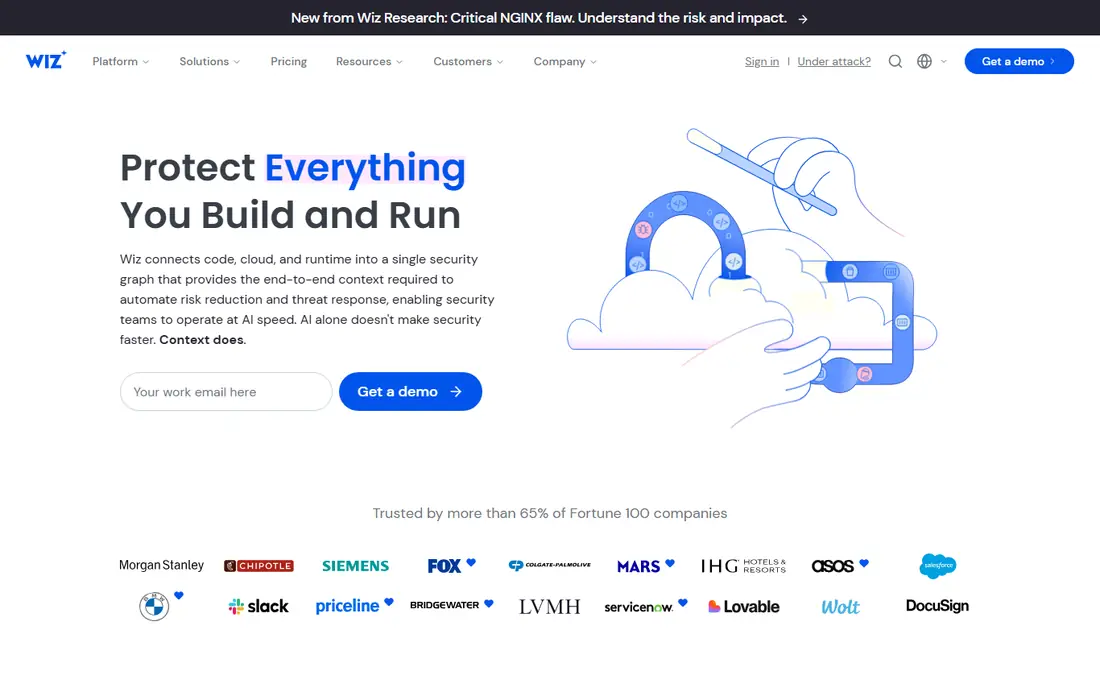
Wiz is known for agentless cloud scanning that maps risks across clouds without installing software on every workload. Its risk ranking connects vulnerabilities, misconfigurations, and exposed resources, so teams fix the issues that matter first.
Coverage spans major clouds, containers, and serverless workloads, which suits companies with mixed environments. The interface is built for security and engineering teams to work from the same view.
Pricing is enterprise oriented and quote based, so smaller teams should confirm total cost for their workload count.
On balance, Wiz stands out for Cloud visibility and risk ranking, with strengths that include Agentless scanning; clear risk ranking; multi cloud. The main drawbacks to weigh are Enterprise pricing; smaller teams may need help deploying. If those trade offs fit your situation and your budget, it is worth putting on your short list, and if they do not, compare it with the next options in this guide before you decide, since a small difference in price, coverage, or support can matter a lot over a year of use.
- Agentless scanning
- Clear risk ranking
- Multi cloud
- Enterprise pricing
- Smaller teams may need help deploying
Palo Alto Networks Prisma Cloud
Ideal for: Enterprise multi cloud security
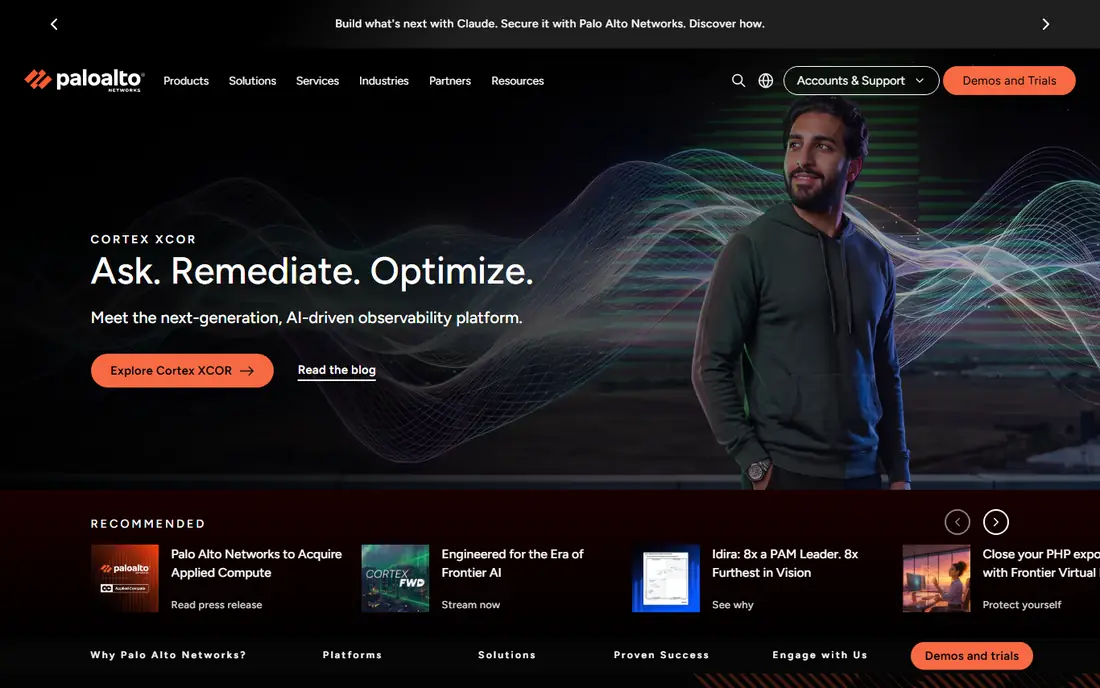
Prisma Cloud from Palo Alto Networks is a broad platform that combines workload protection with posture management and compliance reporting. Its coverage spans major clouds and workload types, which suits large companies with strict compliance needs.
The platform integrates with development pipelines, so issues can be caught before deployment as well as at runtime. Compliance frameworks and reporting are strong, which helps regulated industries.
Setup can be complex, and pricing is quote based, so plan for deployment time and confirm scope before signing.
On balance, Palo Alto Networks Prisma Cloud stands out for Enterprise multi cloud security, with strengths that include Broad cloud coverage; strong compliance; integrated platform. The main drawbacks to weigh are Complex setup; pricing is quote based. If those trade offs fit your situation and your budget, it is worth putting on your short list, and if they do not, compare it with the next options in this guide before you decide, since a small difference in price, coverage, or support can matter a lot over a year of use.
- Broad cloud coverage
- Strong compliance
- Integrated platform
- Complex setup
- Pricing is quote based
CrowdStrike Falcon Cloud Security
Ideal for: Runtime protection and threat intel
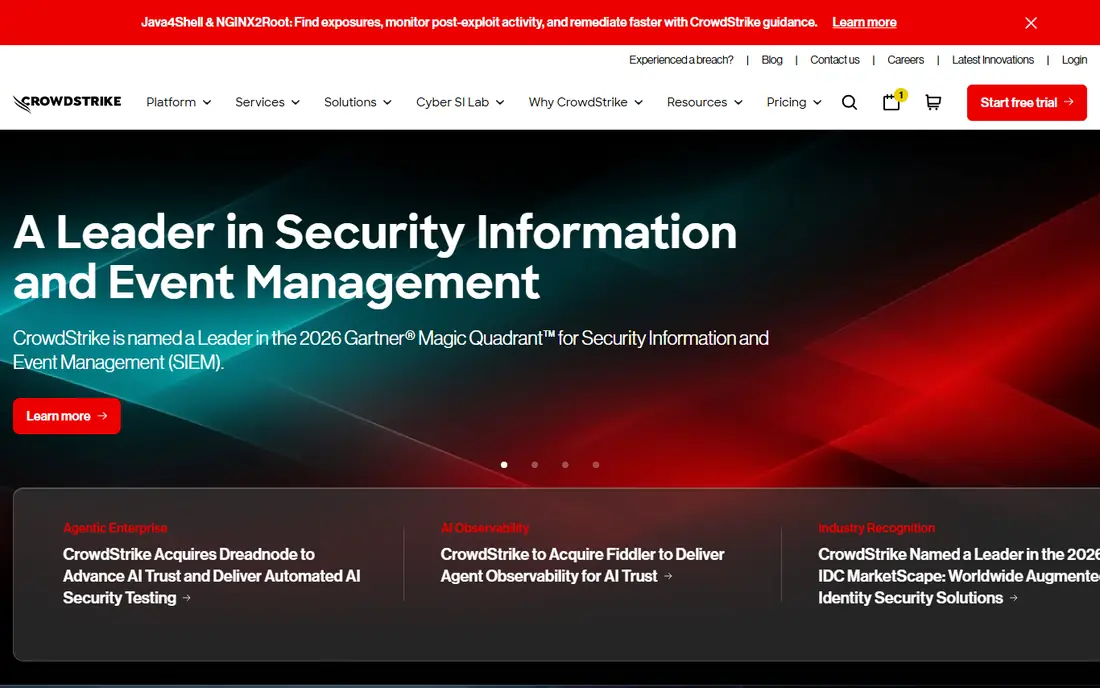
CrowdStrike Falcon Cloud Security builds on the company's endpoint protection heritage to defend cloud workloads at runtime. Its threat intelligence helps teams understand active attacks, not just static vulnerabilities.
Runtime defense suits workloads that face internet exposure or handle sensitive data. The platform covers containers and cloud hosts, with alerting tied to real attack activity.
Pricing is premium and quote based, and value is highest for teams already using CrowdStrike products.
On balance, CrowdStrike Falcon Cloud Security stands out for Runtime protection and threat intel, with strengths that include Strong endpoint heritage; threat intelligence; runtime defense. The main drawbacks to weigh are Pricing is premium; best with CrowdStrike stack. If those trade offs fit your situation and your budget, it is worth putting on your short list, and if they do not, compare it with the next options in this guide before you decide, since a small difference in price, coverage, or support can matter a lot over a year of use.
- Strong endpoint heritage
- Threat intelligence
- Runtime defense
- Pricing is premium
- Best with CrowdStrike stack
SentinelOne
Ideal for: Autonomous workload defense
SentinelOne is known for autonomous detection and response, which can contain threats without waiting for a human analyst. Its cloud workload protection covers virtual machines and containers, with behavior based detection.
Automation suits teams with limited security staff, since the platform can isolate a compromised workload quickly. The product integrates with cloud environments and security tools used by larger teams.
Pricing is quote based and enterprise focused, so smaller teams should confirm what is included for their footprint.
On balance, SentinelOne stands out for Autonomous workload defense, with strengths that include Automated response; strong detection; cloud coverage. The main drawbacks to weigh are Enterprise focus; pricing varies by scope. If those trade offs fit your situation and your budget, it is worth putting on your short list, and if they do not, compare it with the next options in this guide before you decide, since a small difference in price, coverage, or support can matter a lot over a year of use.
- Automated response
- Strong detection
- Cloud coverage
- Enterprise focus
- Pricing varies by scope
Aqua Security
Ideal for: Container and cloud native security
Aqua Security specializes in cloud native security, with deep coverage for containers, Kubernetes, and serverless workloads. Its pipeline scanning catches vulnerable images before deployment, while runtime controls protect running containers.
Teams that run heavily on containers often prefer Aqua for its depth in that area. The platform also covers virtual machines and cloud posture, giving a fuller picture for mixed estates.
Its container focus is a strength for cloud native teams but may be narrower for companies with mostly traditional servers.
On balance, Aqua Security stands out for Container and cloud native security, with strengths that include Container expertise; pipeline scanning; runtime controls. The main drawbacks to weigh are Container focus may limit broader needs; setup takes care. If those trade offs fit your situation and your budget, it is worth putting on your short list, and if they do not, compare it with the next options in this guide before you decide, since a small difference in price, coverage, or support can matter a lot over a year of use.
- Container expertise
- Pipeline scanning
- Runtime controls
- Container focus may limit broader needs
- Setup takes care
Orca Security
Ideal for: Agentless cloud security
Orca Security uses an agentless approach that scans cloud workloads from outside, giving fast deployment across accounts. Its context engine links vulnerabilities to exposure and data sensitivity, so teams prioritize real risk.
Coverage includes virtual machines, containers, and serverless workloads across major clouds. Deployment speed is a major advantage for companies with many cloud accounts.
Agentless scanning gives less runtime depth than agent based tools, and pricing is enterprise oriented.
On balance, Orca Security stands out for Agentless cloud security, with strengths that include Agentless deployment; full cloud context; risk prioritization. The main drawbacks to weigh are Enterprise pricing; agentless limits runtime depth. If those trade offs fit your situation and your budget, it is worth putting on your short list, and if they do not, compare it with the next options in this guide before you decide, since a small difference in price, coverage, or support can matter a lot over a year of use.
- Agentless deployment
- Full cloud context
- Risk prioritization
- Enterprise pricing
- Agentless limits runtime depth
Sysdig
Ideal for: Container runtime security
Sysdig is built around runtime visibility for containers and Kubernetes, which helps teams see what is actually happening inside workloads. Its open source roots appeal to engineering led teams, and its detection focuses on behavior at runtime.
For container heavy environments, that runtime depth is a clear advantage over posture only tools. The platform also covers cloud posture and vulnerability management.
Setup can feel complex for beginners, and pricing is quote based, so run a trial on real workloads first.
On balance, Sysdig stands out for Container runtime security, with strengths that include Runtime visibility; container focus; open source roots. The main drawbacks to weigh are Complex for beginners; pricing is quote based. If those trade offs fit your situation and your budget, it is worth putting on your short list, and if they do not, compare it with the next options in this guide before you decide, since a small difference in price, coverage, or support can matter a lot over a year of use.
- Runtime visibility
- Container focus
- Open source roots
- Complex for beginners
- Pricing is quote based
How we picked these
We compared official feature pages, pricing pages, app store listings, privacy policies, and public customer reviews for each option in this list, and we kept only options that are available in the United States and that clearly fit the topic of the article.
We gave weight to clear pricing, a usable free option or trial where one is offered, honest limits, and support that a real customer can reach, and we left out options whose pricing was hidden, whose main offer did not match the topic, or whose website did not clearly belong to the product.
We also checked that each product is still offered and working in October 2026, and we noted where a feature, a plan, or a price could not be verified from the vendor, in which case we wrote See website rather than guessing. That approach means some prices in this guide are deliberately general, and we recommend confirming the current price on the vendor website before you buy, since plans and promotions change.
How to choose a cloud workload protection platform
Map your workloads first, including which clouds you use, how many containers you run, and whether you use serverless functions, because coverage gaps are the most common failure. A platform that only covers virtual machines will miss container risks.
Next, run a trial on a real workload and judge the alerts, since a platform that flags everything is as unhelpful as one that flags nothing. Check how it ranks risk, whether it shows the fix path, and whether it integrates with your ticketing system.
Finally, model pricing on your actual workload count and growth, and check whether the platform needs agents on every host. Agentless options deploy faster, while agent based options offer stronger runtime defense, so many teams combine both.
Frequently asked questions
What is cloud workload protection?
Cloud workload protection secures the compute resources that run your applications, including virtual machines, containers, and serverless functions, across public clouds. It looks for vulnerabilities, misconfigurations, and active threats in those workloads.
Do I need agents on every workload?
Not always, since some platforms scan from outside the workload without an agent, while others install an agent for deeper runtime visibility. Agentless scanning deploys faster, while agents usually give stronger runtime protection.
How is this different from cloud security posture management?
Posture management focuses on cloud configuration and compliance, while workload protection focuses on the workloads themselves, such as containers and virtual machines. Many platforms now combine both in one product.
Can one platform cover multiple clouds?
Yes, most leading platforms cover the major public clouds, but depth of coverage varies by cloud and by workload type. Check support for your specific clouds, container tools, and serverless services before buying.
What should a small team prioritize?
Small teams should prioritize clear risk ranking, easy deployment, and integrations with tools they already use, since they cannot staff a large security operations team. A platform with fewer, better alerts beats a noisy one.