Start with TrustArc if you need bridging privacy and data programs. Listed starting prices: Didomi from €10 per additional domain. Didomi is better for cross-channel consent and preferences, and OneTrust is better for centralized governance across plenty of sites. All 6 tools are compared below on price, free plan and limits.
Choosing CMP software for Multi-Site deployments usually comes down to price, fit and limits. This Ainotely guide sets 6 tools side by side on those three points, with the facts kept short and checkable.
Key takeaways
TrustArc sits first on this list: bridging privacy and data programs.
OneTrust comes with a trade-off: wide scope can feel heavy for small teams.
Didomi is the only tool of the 6 with a free plan.
Cookiebot is the one to check for straightforward consent for smaller teams.
Expect to ask for a quote from TrustArc, OneTrust, Quantcast Choice and others; the other tools show a starting price.
Choose TrustArc for bridging privacy and data programs. For multi-site organizations, that framing fits teams that want privacy operations treated as a continuing program instead of a one-time banner setup.
Where it falls short: Needs vendor consultation.
It suits firms with formal compliance functions overseeing multiple web properties. Check the vendor site for TrustArc pricing; none is listed in this comparison. Free plan details: Not stated.
Pick Didomi if this describes you: cross-channel consent and preferences. Didomi gives you a consent and preference management system spanning web, mobile, CTV and server-side environments.
The main drawbacks: Wide channel coverage layers on complexity.
Organizations with a single straightforward website may not need that breadth. More specifically, supporting plenty of channels means more integration work and coordination across teams. Didomi starts at: €10 per additional domain. Didomi has a free plan.
Best for: Centralized governance across plenty of sites
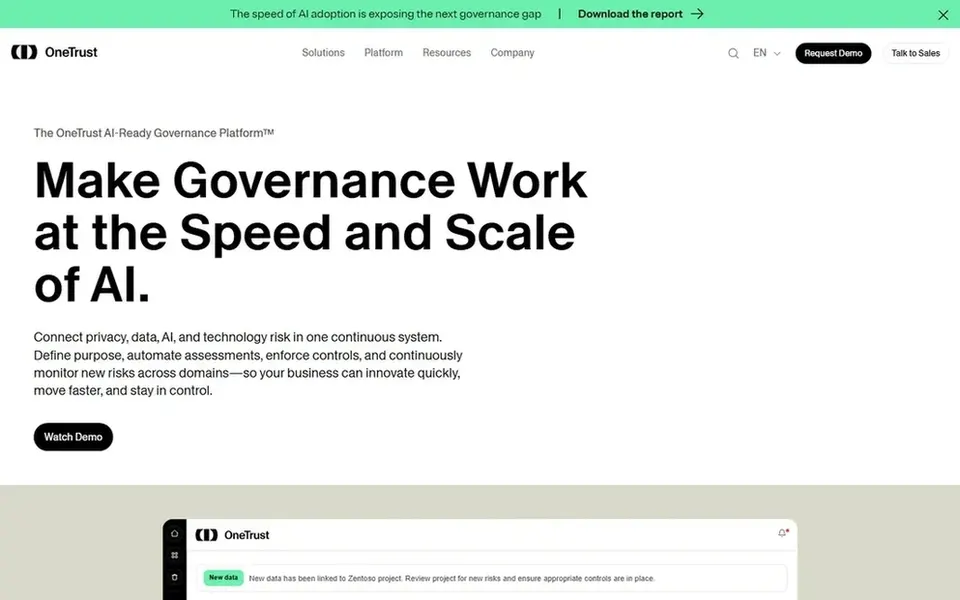
OneTrust makes the most sense for centralized governance across numerous sites. Choose OneTrust when governance depth across sites is the priority. As for the details, the system's broad scope means more configuration and coordination than a narrow consent tool, which can slow smaller teams.
Main advantages: Automates compliance workflows.
Worth adding: if you primarily need straightforward cookie consent on a handful of domains, a lighter choice may be easier to run. For multi-site deployments, that breadth matters: teams can run consent and privacy obligations through one governance layer instead of separate tools per property. Check the vendor site for OneTrust pricing; none is listed in this comparison. Free options: Not stated.
Limits to weigh: Wide scope can feel heavy for small teams.
Quantcast Choice is designed for consent within an ad product context. Quantcast Choice comes from Quantcast, whose product concentrates on programmatic advertising and connecting brands to audiences using live data. Teams needing wide compliance program management should look elsewhere.
Drawbacks to consider: Primarily an advertising product.
Also, the consent offering is therefore most relevant to organizations whose multi-site operations are tied closely to advertising and audience data. Choose Quantcast Choice when consent needs sit chiefly within an advertising context. Check the vendor site for Quantcast Choice pricing; none is listed in this comparison. Trial and free access: Not stated.
Osano is aimed squarely at scaling a privacy program just. Building out the program still needs internal effort. For multi-site deployments, the emphasis on scaling a program is relevant: one approach can extend across properties as the footprint grows.
Its strength is privacy program management instead of advertising-specific consent workflows, so ad-centric teams may want a complementary tool. Osano presents itself as easy-to-learn data privacy management software that helps organizations build, manage and scale privacy programs across regulations for example GDPR and CPRA. No starting price is listed for Osano here; confirm pricing on the vendor site. On free options: Not stated.
Best for: Straightforward consent for smaller teams
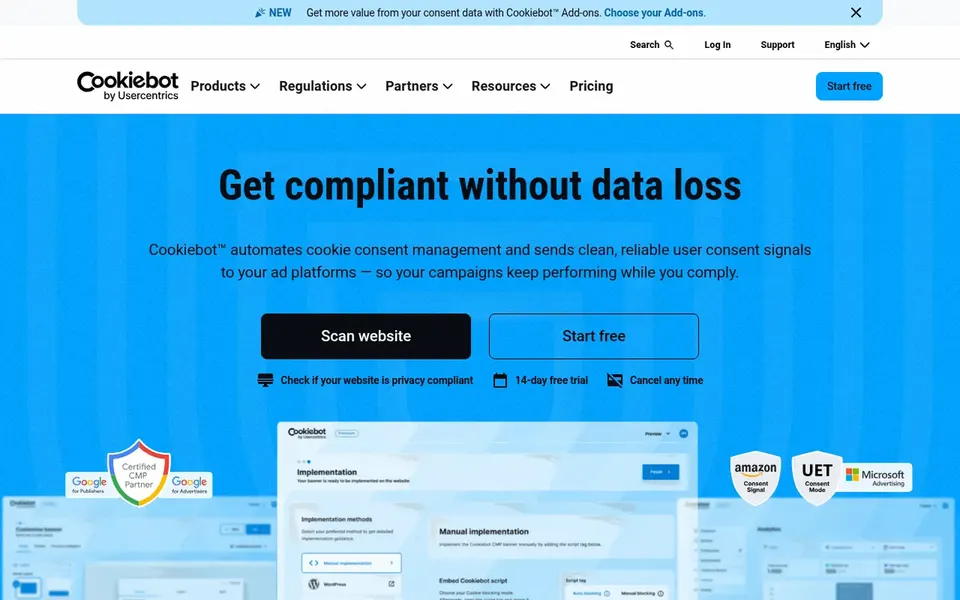
Cookiebot was built for straightforward consent for smaller teams. Its focus on cookie consent means it does not attempt the broader governance that suites like OneTrust or TrustArc handle.
In daily use, organizations with complicated, multi-jurisdiction privacy obligations may need more. Choose Cookiebot when consent management is the primary job and simplicity matters. This comparison lists no price for Cookiebot; ask the vendor. Free plan details: Free trial.
Points against: Less suited to complicated governance.
Main advantages: Focused cookie consent management.
Confirm the entry price on the vendor page. For TrustArc, OneTrust, Quantcast Choice and others that means a quote rather than a fixed price.
Test the free plan from Didomi against your real workload before relying on it.
Take the trial from Cookiebot and push a live task through it before you pay.
Before choosing TrustArc, weigh its main limit: enterprise-oriented approach.
Ask Didomi how an export works before you move any records in; an easy exit lowers the risk.
See whether Quantcast Choice offers onboarding or training, and whether it is included in the price.
How we picked
The comparison looks at four things: starting price, free access, how well the feature set matches CMP software for Multi-Site deployments, and the main limit of each tool. Where a vendor does not publish a price, the entry says quote. Where a price depends on seats or billing term, the entry says so. Tools are placed by general fit for CMP software for Multi-Site deployments, with price clarity and free access as tie-breakers. A different team can reasonably rank them differently.
Every price and plan detail on this page comes from the vendors’ own websites. We did not run hands-on tests unless the text says so, and we do not publish star ratings or review scores. See how we score and our disclosure.
Keep your shortlist in one place
Paste prices, trial dates and notes from this guide into Ainotely, our AI note app. It files them into a topic and pulls out tasks like “cancel trial by Friday”. Free 7-day trial, no card needed.
Not all of them. TrustArc, OneTrust, Quantcast Choice and others publish no starting price, so expect a quote request for those. The rest, Didomi included, show a starting price, though seats and billing terms still change the final cost.
Is a wide privacy suite always better than a focused consent tool?
Not necessarily. Suites like OneTrust and TrustArc include governance beyond consent, which helps organizations with formal privacy programs. Smaller teams may move quicker with a focused tool like Cookiebot when cookie consent is the central requirement.
Is TrustArc the right pick for everyone comparing CMP software for Multi-Site deployments?
No single tool suits every team. TrustArc comes first because it fits bridging privacy and data programs, while Didomi suits cross-channel consent and preferences and OneTrust suits centralized governance across many sites. Match the tool to your own size, budget and workflow before deciding.
What should multi-site teams look for in a CMP?
Look for centralized management of consent across domains, consistent policy enforcement and reporting that separates each property. Also confirm support for the regions and regulations your sites serve, and check how configuration changes propagate across sites.
Can I try these tools before paying?
Often, yes. Didomi has a free plan and Cookiebot offers a free trial. Use your own data and a real task during the test, and check what the free tier or trial limits before you rely on it. All 6 picks in this CMP software for Multi-Site deployments comparison show their pricing, free plan details and main limits on the cards above.
How are the tools for CMP software for Multi-Site deployments ordered?
The order follows typical fit for CMP software for Multi-Site deployments, with TrustArc first and Cookiebot last, then price clarity and free access. It is editorial judgement, not a score, so another team could rank the tools differently.