Best Coaching Platform for Corporate Training in 2026: 8 Platforms Compared

- CoachHub and BetterUp lead on scale, with large coach networks and programs built for enterprises that need coaching across many employees.
- Torch and Sounding Board suit leadership development, with structured programs for managers and executives.
- Chronus and Pluma cover mentoring and coaching together, which suits companies that want broader development programs.
- Bravely and EZRA fit teams that want coaching on demand or at a lower price point than full enterprise platforms.
- Coaching works best with clear goals and manager support. Pick a platform that tracks outcomes, not just session counts, and pilot with one group first.
Quick comparison
| Product | Ideal for | Price from | Free version | |
|---|---|---|---|---|
 CoachHub | Enterprise coaching at scale | See website | Free trial | Visit |
 BetterUp | Whole-person workforce coaching | See website | Free trial | Visit |
 Torch | Leadership development programs | See website | Free trial | Visit |
 Sounding Board | Leadership coaching for managers | See website | Free trial | Visit |
 Chronus | Mentoring plus coaching programs | See website | Free trial | Visit |
 Pluma | Executive and leadership coaching | See website | Free trial | Visit |
 Bravely | On-demand employee coaching | See website | Free trial | Visit |
 EZRA | Flexible coaching for teams | See website | Free trial | Visit |
The best coaching platforms for corporate training
We compared official feature pages, pricing pages, customer stories, and public reviews for the platforms below. Our pick for most companies is CoachHub, because it combines a large global coach network, AI matching, and enterprise reporting in a platform built for scale.
CoachHub
Ideal for: Enterprise coaching at scale
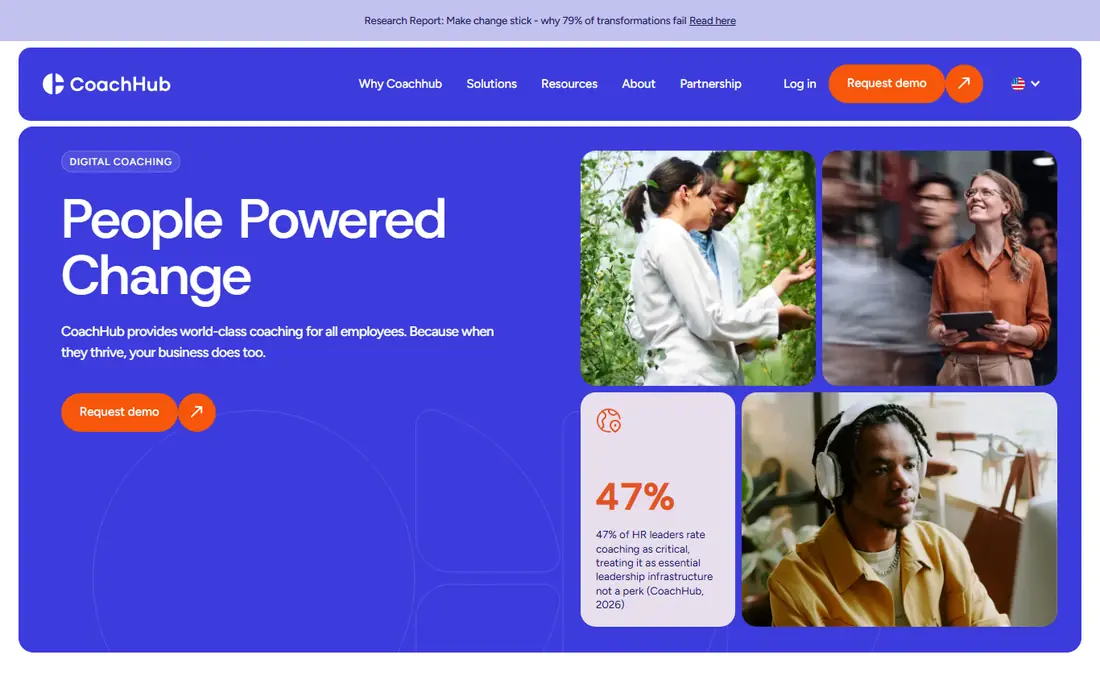
CoachHub delivers digital coaching to employees worldwide, matching each person with a certified coach based on goals, language, and background. Programs cover leadership development, career growth, and wellbeing, and the platform tracks progress and outcomes for HR leaders.
The platform is built for enterprises, so smaller companies may find pricing and setup heavy. For organizations rolling coaching out to hundreds or thousands of employees, CoachHub is our pick for its scale, matching, and reporting.
- Large global coach network with AI matching
- Programs for leadership, career, and wellbeing
- Enterprise analytics and reporting
- Enterprise pricing
- Best value at scale rather than for small teams
- Implementation needs planning
BetterUp
Ideal for: Whole-person workforce coaching
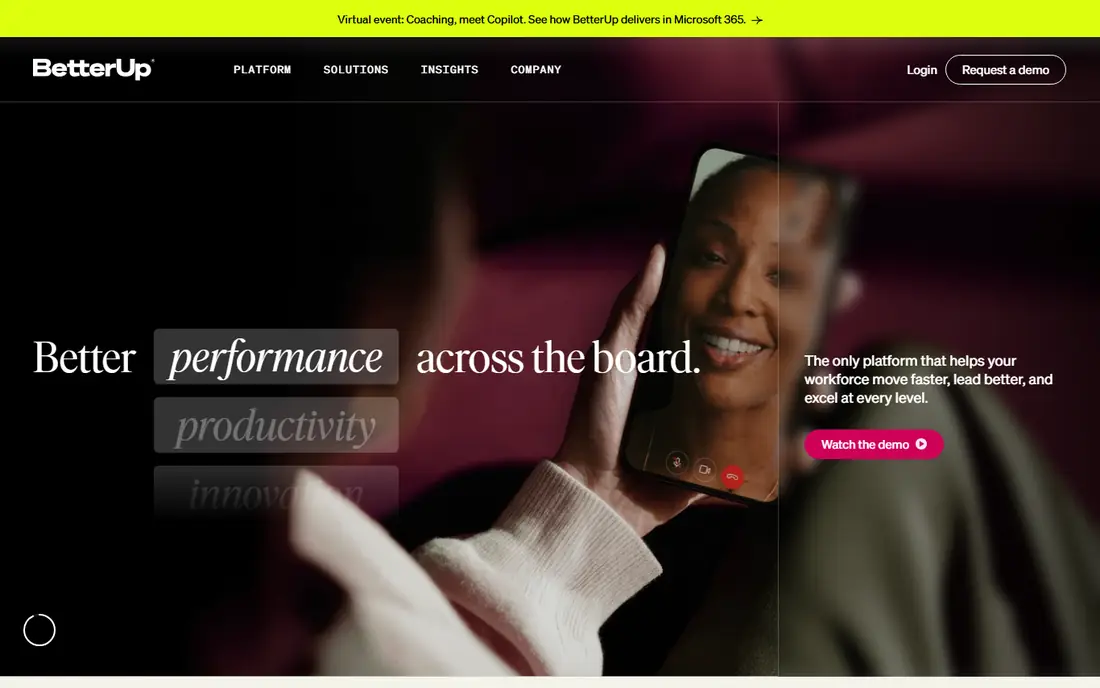
BetterUp pairs one-on-one coaching with tools for mindset, resilience, and performance, aiming at whole-person growth rather than single-skill training. Its coach network is large, and the platform measures changes in behavior and performance so HR teams can see impact beyond session counts.
Pricing is enterprise-oriented, and outcomes depend on employees actually using the coaching. For companies that want coaching tied to wellbeing and performance data, BetterUp is a leading choice.
- Coaching plus mental fitness and growth tools
- Large coach network
- Strong focus on measurable outcomes
- Pricing is enterprise-oriented
- Platform breadth can feel large
- Results depend on employee engagement
Torch
Ideal for: Leadership development programs

Torch combines leadership coaching with mentoring in structured programs for managers and executives. Development plans, progress tracking, and analytics help HR teams see how leadership capability is growing, and mentors add perspective alongside coaches.
The focus is leadership, so it is less suited to company-wide coaching for every employee. For organizations investing in manager and executive development, Torch offers a focused, well-structured platform.
- Leadership coaching with mentoring built in
- Structured development plans
- Analytics for HR and managers
- Focused on leadership rather than all employees
- Pricing is quote-based
- Smaller teams may find it heavy
Sounding Board
Ideal for: Leadership coaching for managers
Sounding Board provides leadership coaching through a curated network of coaches, with programs that adapt to manager and executive needs. Goal tracking and progress tools keep coaching tied to business outcomes, and flexible program lengths suit both short engagements and longer development arcs.
It is a leadership platform first, so company-wide coaching for all staff is not its strength. For targeted leadership development with experienced coaches, Sounding Board is a strong, focused option.
- Leadership coaching with a curated coach network
- Flexible program lengths
- Tools for tracking goals and progress
- Leadership focus limits broad rollout
- Pricing is quote-based
- Platform is simpler than larger rivals
Chronus
Ideal for: Mentoring plus coaching programs
Chronus runs mentoring and coaching programs together, with matching, scheduling, goal tracking, and reporting in one system. Companies use it for career development, onboarding, diversity programs, and employee resource groups, as well as formal coaching.
Pure coaching features are lighter than CoachHub or BetterUp, since mentoring is the core strength. For organizations that want one platform for mentoring, coaching, and development programs, Chronus is the most flexible choice here.
- Mentoring and coaching in one platform
- Matching, scheduling, and reporting built in
- Supports employee resource groups
- Mentoring depth is greater than pure coaching depth
- Setup needs program design
- Pricing is quote-based
Pluma
Ideal for: Executive and leadership coaching
Pluma focuses on executive and leadership coaching with a straightforward platform for matching, scheduling, and tracking progress. Its coaches are experienced with senior leaders, and the simpler setup suits mid-sized companies that do not need enterprise complexity.
The coach network is smaller than CoachHub or BetterUp, and analytics are lighter. For leadership coaching without enterprise overhead, Pluma is an accessible and effective option.
- Executive coaching with experienced coaches
- Simple platform for scheduling and progress
- Suits mid-sized companies
- Smaller coach network than enterprise rivals
- Fewer analytics features
- Best for leadership rather than all staff
Bravely
Ideal for: On-demand employee coaching
Bravely gives employees on-demand access to professional coaches for work and life challenges, from difficult conversations to career decisions. Sessions are available when employees need them, rather than only inside a formal program, which lowers the barrier to asking for help.
That flexibility means sessions are shorter and less structured than leadership programs, and outcome tracking is lighter. For companies that want coaching as an everyday benefit alongside formal programs, Bravely fills a real gap.
- On-demand coaching for employees in the moment
- Covers work and life topics
- Easy access without long programs
- Sessions are shorter and less structured than program coaching
- Outcome tracking is lighter
- Best as a complement, not a replacement
EZRA
Ideal for: Flexible coaching for teams
EZRA, part of the Adecco Group, offers coaching for individuals, teams, and whole organizations, with virtual and in-person formats and app-based access. That flexibility suits companies that want coaching for different groups without running separate vendors.
Pricing is handled by quote, and program design still needs HR involvement to set goals and measure results. For flexible, team-level coaching with a global provider, EZRA is a solid choice.
- Coaching for individuals, teams, and organizations
- Flexible formats including virtual and in-person
- App-based access
- Pricing is quote-based
- Brand recognition is lower than CoachHub or BetterUp
- Program design needs HR input
How we picked these
We compared official feature pages, pricing pages, customer stories, and public reviews for each platform, and we favored products still operating in October 2026 that deliver coaching to workforces, not just individual consumers. We left out consumer coaching apps with no corporate programs and consulting firms with no platform. Note that homepage checks for this article were limited by a browser rate-limit error during our work, so readers should confirm current pricing and features on each vendor site.
Making corporate coaching actually work
Start with a pilot, not a company-wide launch. Pick one group with a clear goal, such as new managers or high-potential employees, run coaching for a few months, and measure changes in behavior, retention, and performance before expanding. A pilot also reveals whether employees trust the platform and use it.
Involve managers early. Coaching works better when managers support goals, protect time for sessions, and follow up on progress, rather than treating coaching as an HR-only benefit. Finally, measure outcomes, not just sessions. Session counts tell you usage, but behavior change, promotion rates, and retention tell you whether coaching is worth the budget.
Learner engagement is the hardest part of corporate training, and platform features only help if they match how employees actually learn. Short modules with clear outcomes beat long courses that people start and never finish, and practice exercises beat passive video for skills that need doing, not just knowing. Look for tools that let managers see progress without micromanaging, and that let learners pick up where they left off across devices. Mobile access matters for field and frontline staff who rarely sit at a desk.
Reporting should answer business questions, not just count completions. Ask whether the platform shows skill gaps by team, tracks assessment results over time, and connects training to performance reviews. Scaling also needs thought: a platform that works for fifty learners may strain at five thousand, so check admin roles, bulk enrollment, and content versioning. Pilot with one team first, gather honest feedback, and fix onboarding problems before a company-wide rollout, since early frustration is hard to undo. Measuring training results needs more than completion rates. A course everyone finishes but nobody applies has failed, while a shorter course that changes behavior has succeeded, so measure outcomes where possible, such as fewer errors, faster task times, or better assessment scores after training. Surveys right after a course capture satisfaction, but follow-up checks weeks later show whether learning stuck, and manager observations add a view that self-reports miss. Tie training metrics to team goals when you report upward, since leaders fund programs that move numbers they already track.
Content upkeep is the ongoing cost people forget. Courses go stale as products, policies, and tools change, so assign an owner to each course, schedule regular reviews, and retire content that no longer matches how work is done. Learner feedback helps here: a short comment box on each module surfaces outdated examples faster than any audit. When you update a course, tell learners what changed and why, so returning learners do not repeat material they already know. A platform that makes updates easy will stay current, while one that makes editing painful slowly fills with outdated courses.
Frequently asked questions
What is the best coaching platform for corporate training?
CoachHub is our pick for most companies, with a large coach network, AI matching, and enterprise reporting. BetterUp is a strong alternative for whole-person coaching tied to performance data.
How much does corporate coaching cost?
Corporate coaching pricing is usually quote-based and depends on employee count, program length, and coach seniority. Expect enterprise platforms to cost more per employee than on-demand options like Bravely.
Is coaching better than training for leadership development?
Coaching suits personal leadership growth, behavior change, and complex challenges, while training suits teaching specific skills to groups. Most leadership programs work best with both: training for skills and coaching for application.
How do companies measure coaching results?
Companies track goal progress, behavior change surveys, retention, promotion rates, and performance data. Platforms like CoachHub and BetterUp build these measurements into their reporting.
Can small companies use corporate coaching platforms?
Yes, though enterprise platforms are priced for scale. Pluma and Bravely suit smaller teams better, and Chronus works well for mentoring-led programs that do not need a large coach network.