Best coin value app in 2026: 8 Options Compared

- 1
 Coinoscopefree coin identification from a photoVisit
- 2
 PCGS CoinFactsserious collectors of US coinsVisit
- 3
 NGC Coin Appowners of NGC-certified coinsVisit
- 4
 Coinflationmetal value of common coinsVisit
- 5
 Heritage Auctionsbuyers and sellers checking real sale pricesVisit
- Photo ID apps give fast estimates, but they are not a professional appraisal, especially for rare or high-value coins.
- PCGS CoinFacts and NGC are the authoritative references for certified US coins.
- Coinoscope is the best free starting point for identifying coins from a photo.
- Always confirm a valuable coin with a dealer or grading service before selling.
Quick comparison
| Product | Ideal for | Price from | Free version | |
|---|---|---|---|---|
| Coinoscope | free coin identification from a photo | Free | Yes | Visit |
| PCGS CoinFacts | serious collectors of US coins | Free | Yes | Visit |
| NGC Coin App | owners of NGC-certified coins | Free | Yes | Visit |
| Coinflation | metal value of common coins | Free | Yes | Visit |
| Heritage Auctions | buyers and sellers checking real sale prices | Free | Yes | Visit |
 Greysheet | dealers and advanced collectors | See website | No | Visit |
 Numista | world coin collectors and cataloguing | Free | Yes | Visit |
 USA Coin Book | US collectors wanting values and a marketplace | Free | Yes | Visit |
The best coin value apps
Here is our shortlist for best coin value app, ordered from the most broadly useful picks to the more specialised ones. Every entry below is a real product you can sign up for or buy today, with pricing taken from the vendor site or app store listing where we could verify it.
Coinoscope
Ideal for: free coin identification from a photo

This one is aimed at free coin identification from a photo. Coinoscope identifies a coin from a photo and returns its origin, history and an estimated value, free and without a subscription. It is the simplest way to sort through a jar of coins or an inherited collection and spot anything worth a closer look.
The estimates are rough, since value depends heavily on grade and condition that a photo cannot fully capture. Use it to identify and shortlist, not to price a sale.
- Free photo identification
- Covers many countries
- Fast results with history and estimated value
- Value estimates are rough
- Grading detail is limited
PCGS CoinFacts
Ideal for: serious collectors of US coins
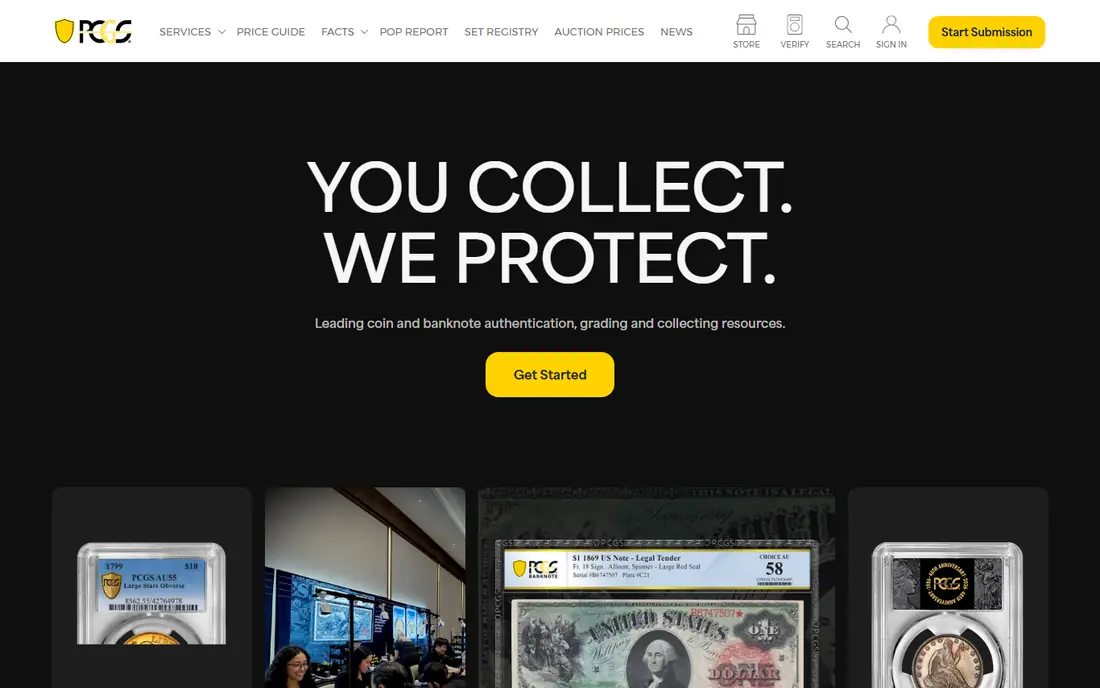
Think of PCGS CoinFacts as the pick for serious collectors of US coins. PCGS CoinFacts is the reference app from Professional Coin Grading Service, with in-depth data, history and price trends for thousands of US coins. It is free, with no ads, and its Photograde reference helps you judge condition against graded examples.
It does not identify coins from a photo, so you need to know what you hold before looking it up. For collectors who want reliable data rather than a guess, it is the standard.
- Authoritative US coin data and price trends
- Photograde reference
- Free with no ads
- No photo identification
- US coins only
NGC Coin App
Ideal for: owners of NGC-certified coins

For owners of NGC-certified coins, NGC Coin App deserves a close look. The NGC Coin App verifies NGC-certified coins by certification number and gives access to price guide and census data for those coins. Collectors with slabbed coins can check authenticity and track a collection in one place.
It is not a general identifier: uncertified or raw coins get little from it. If your collection is NGC-certified, though, it is the natural companion app.
- Verifies NGC-certified coins
- Price guide and census data
- Collection tracking
- No general photo identification
- Centred on NGC-certified coins
Coinflation
Ideal for: metal value of common coins
This is the option we would point metal value of common coins toward first. Coinflation answers a different question from the other apps here: what is this coin worth as metal? It tracks live metal prices and gives melt values for US and world coins, which matters for silver and gold coins whose metal content exceeds face value.
It does not estimate collector or numismatic value, which for rare coins can be far higher than melt. Use it alongside a collector reference, not instead of one.
- Live melt values for US and world coins
- Simple metal content breakdown
- No account needed
- Melt value only, not collector value
- No photo identification
Heritage Auctions
Ideal for: buyers and sellers checking real sale prices
Heritage Auctions earns its place here for buyers and sellers checking real sale prices. Heritage Auctions is the largest auction house for rare coins, and its app gives access to realised prices from past sales, which is the closest thing to a market price for high-value pieces. You can also bid and consign through the same account.
Auction results skew toward premium coins, so common coins are thinly covered. For a coin that might be genuinely valuable, past Heritage results are the evidence a buyer will actually respect.
- Realised auction prices for rare coins
- Large archive of past sales
- Bidding and consignment
- Auction prices reflect premium coins
- Not an ID tool for common coins
Greysheet
Ideal for: dealers and advanced collectors
If your shortlist is built around dealers and advanced collectors, start with Greysheet. Greysheet, the Coin Dealer Newsletter, publishes wholesale pricing that dealers themselves use, which makes it the pricing reference for advanced collectors and small dealers. Its mobile access puts that data in your pocket at a show.
The pricing is trade-oriented, so retail buyers should expect to pay more than Greysheet levels, and full access is paid. Beginners should start with a free ID app and graduate to Greysheet when they trade seriously.
- Wholesale dealer pricing
- Trusted by the trade
- Covers US coins in depth
- Dealer-oriented pricing can confuse beginners
- Paid access for full data
Numista
Ideal for: world coin collectors and cataloguing
Among the options here, Numista speaks most directly to world coin collectors and cataloguing. Numista is a community-built catalogue covering world coins in depth, with collection management that lets you track what you own and what you still need. It is especially strong for non-US coins that US-focused apps cover thinly.
Its values are community estimates rather than dealer prices, so treat them as a guide. For cataloguing a world collection, though, no free tool here matches its breadth.
- Huge world coin catalogue
- Collection management
- Community-driven data
- Values are community estimates
- No photo identification
USA Coin Book
Ideal for: US collectors wanting values and a marketplace
For readers focused on US collectors wanting values and a marketplace, USA Coin Book is a strong match. USA Coin Book combines US coin values and price guides with a marketplace where collectors buy and sell, plus tools for tracking a collection. It suits US collectors who want values and a place to trade in one account.
As with any marketplace, seller quality varies, so check feedback and prefer graded coins for higher values. For everyday US collecting, it is a useful all-round free resource.
- US coin values and price guides
- Marketplace for buying and selling
- Collection tools
- Values are estimates
- Marketplace quality varies by seller
How we picked these
We compared official feature pages, pricing pages, app store listings, privacy policies and public reviews for each product on this list, and we kept only products that exist and work today and that truly fit the topic. Where a price had changed between sources or we could not verify it on the vendor site, we wrote See website rather than print a number we could not stand behind. We also weighed who each product is really for, not just how long its feature list runs. A product with a smaller set of features can be the better buy when it matches your workflow, your budget and the size of your team, and we say so plainly in each write-up. We also checked what each product costs over a full year, not just the headline monthly price, since annual billing, seat minimums and add-on fees can change the real total by a wide margin. Free plans were judged against their limits too: a free tier that caps the exact feature you need most is not really free for your use case, and we say so in the write-up when that is the case. Where prices differed between the vendor site and review listings, we trusted the vendor site, and where we could not confirm a figure on the vendor site at all, we wrote See website rather than repeat a number from a third party. That caution is deliberate, because a wrong price is worse than no price when you are building a budget.
How to value a coin without getting fooled
Start with identification, then condition, then market. A photo app can name the coin, but grade and condition drive most of the value: a common coin in mint state can be worth many times a worn example of the same date. Compare your coin against Photograde-style references before trusting any single estimate.
For anything that looks rare, error-struck or high value, get a professional opinion before selling. A grading service or a reputable dealer can confirm authenticity and grade, and their assessment is what serious buyers pay for. Never clean a coin to make it look better, since cleaning usually lowers its value.
Finally, before you commit to one of the options above, run it on a real task from your own work rather than a polished demo project. Use the free tier or trial for a full week, invite the people who will actually use it every day, and test the one workflow you cannot live without, whether that is exporting your data, inviting a teammate, sharing a result with a client or getting help when something breaks. Note how long each step takes and where you get stuck, since those friction points are what you will live with for months. The product that handles your real task with the least friction is the right one, even if another option looks stronger on a feature comparison page.
Frequently asked questions
What is the best coin value app?
Coinoscope is the best free starting point for photo identification, PCGS CoinFacts is the best authoritative US reference, and Heritage Auctions gives the best real sale prices for rare coins.
Can an app tell me what my coin is worth?
Apps give estimates based on type, date and approximate condition, but they cannot replace a professional appraisal for rare or valuable coins. Grade, authenticity and market demand all affect the final price.
What is the best app to sell coins?
Heritage Auctions suits high-value rare coins, USA Coin Book suits everyday US collecting, and local dealers suit quick sales of common coins. Compare realised prices before accepting any offer.
Are coin identifier apps accurate?
Photo identification is good for common coins but weaker for worn, rare or ancient pieces where surface detail is hard to read. Confirm unusual results with a reference catalogue or a dealer.