Best Color Grading Software in 2026: 7 Options Compared

- 1
 DaVinci ResolveEditors and colorists who want professional grading free to startVisit
- 2
 Adobe Premiere ProEditors who grade inside a full editing suiteVisit
- 3
 Final Cut ProMac editors who want fast grading in an editorVisit
- 4
 FilmConvertFilmmakers who want film stock looks quicklyVisit
- 5
 BaselightHigh-end colorists working on film and broadcastVisit
- DaVinci Resolve is our pick for most buyers, thanks to its broad coverage and clear workflow for best color grading software.
- Adobe Premiere Pro is the strongest alternative if you want a different balance of price and features.
- Free plans exist from FilmConvert and others, but paid tiers add reporting, controls and support that matter at scale.
- Pricing is mostly quote-based in this category, so shortlist two or three tools and ask each vendor for a written quote.
- Check integrations, data export and support hours before you commit, because switching later costs more time than a careful trial now.
Quick comparison
| Product | Ideal for | Price from | Free version | |
|---|---|---|---|---|
| DaVinci Resolve | Editors and colorists who want professional grading free to start | Free | Yes | Visit |
| Adobe Premiere Pro | Editors who grade inside a full editing suite | See website | Free trial | Visit |
| Final Cut Pro | Mac editors who want fast grading in an editor | See website | Free trial | Visit |
| FilmConvert | Filmmakers who want film stock looks quickly | See website | Free trial | Visit |
| Baselight | High-end colorists working on film and broadcast | See website | No | Visit |
 Colourlab AI | Colorists who want AI-assisted look creation | See website | Free trial | Visit |
 Magic Bullet Suite | Editors who want grading and finishing plugins | See website | Free trial | Visit |
The best color grading software
We looked at official feature pages, pricing pages, app store listings, privacy policies and public reviews to compare best color grading software. The tools below stood out for different reasons, so the right pick depends on your budget, team size and how much setup you want to handle. Our overall pick for most buyers is DaVinci Resolve, because it covers the core job well and is easy to explain to a team, but the other six options each win in a specific situation. Read the short profiles, check the comparison table, and use the buying guide at the end to narrow the list to two or three finalists before you start a trial.
DaVinci Resolve
Ideal for: Editors and colorists who want professional grading free to start
DaVinci Resolve is a strong choice for editors and colorists who want professional grading free to start. Professional color tools, scopes and node grading. That matters in daily use, because a tool that fits the job from the start needs less workaround and less training. Beyond that first strength, DaVinci Resolve also offers free version is full-featured and editing and audio included. Pricing is listed as free, with a free plan status of yes, so check the current pricing page before you budget, since tiers change and some features sit behind higher plans. The honest catch is that learning curve is steep, and studio version is paid for advanced features. That does not rule it out, but it does mean you should test those weak spots during a trial with your own data and your own workflow. If those limits do not affect your team, DaVinci Resolve is an easy shortlist pick. If they do, one of the other options below will probably fit better.
- Professional color tools, scopes and node grading
- Free version is full-featured
- Editing and audio included
- Learning curve is steep
- Studio version is paid for advanced features
Adobe Premiere Pro
Ideal for: Editors who grade inside a full editing suite
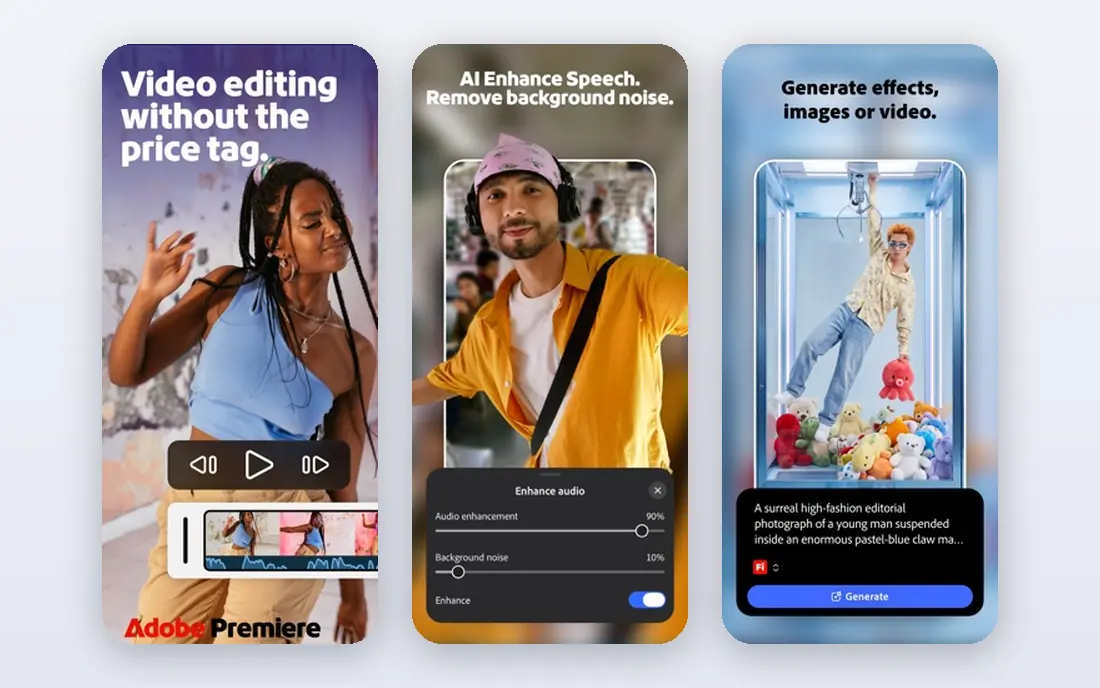
Adobe Premiere Pro is a strong choice for editors who grade inside a full editing suite. Lumetri grading inside Premiere. That matters in daily use, because a tool that fits the job from the start needs less workaround and less training. Beyond that first strength, Adobe Premiere Pro also offers creative cloud integration and broad format support. Pricing is listed as see website, with a free plan status of free trial, so check the current pricing page before you budget, since tiers change and some features sit behind higher plans. The honest catch is that subscription based, and grading depth is lighter than resolve for dedicated colorists. That does not rule it out, but it does mean you should test those weak spots during a trial with your own data and your own workflow. If those limits do not affect your team, Adobe Premiere Pro is an easy shortlist pick. If they do, one of the other options below will probably fit better.
- Lumetri grading inside Premiere
- Creative Cloud integration
- Broad format support
- Subscription based
- Grading depth is lighter than Resolve for dedicated colorists
Final Cut Pro
Ideal for: Mac editors who want fast grading in an editor
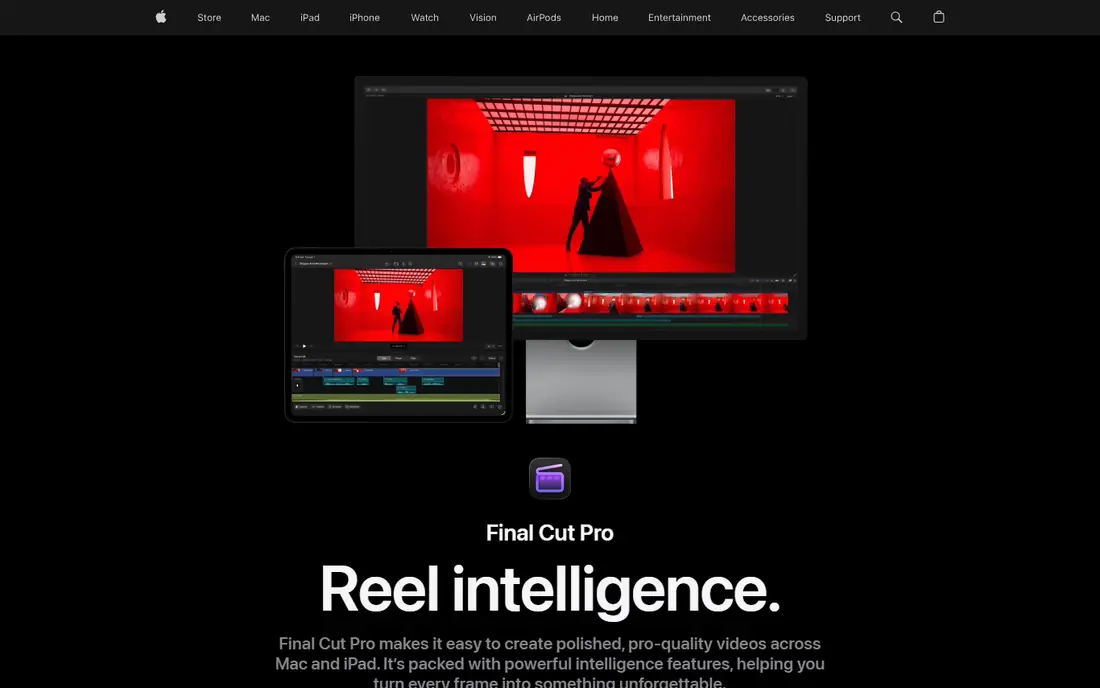
Final Cut Pro is a strong choice for mac editors who want fast grading in an editor. Color wheels, curves and LUT support. That matters in daily use, because a tool that fits the job from the start needs less workaround and less training. Beyond that first strength, Final Cut Pro also offers fast mac performance and one-time purchase. Pricing is listed as see website, with a free plan status of free trial, so check the current pricing page before you budget, since tiers change and some features sit behind higher plans. The honest catch is that mac only, and dedicated grading tools are lighter than resolve. That does not rule it out, but it does mean you should test those weak spots during a trial with your own data and your own workflow. If those limits do not affect your team, Final Cut Pro is an easy shortlist pick. If they do, one of the other options below will probably fit better.
- Color wheels, curves and LUT support
- Fast Mac performance
- One-time purchase
- Mac only
- Dedicated grading tools are lighter than Resolve
FilmConvert
Ideal for: Filmmakers who want film stock looks quickly
FilmConvert is a strong choice for filmmakers who want film stock looks quickly. Film emulation profiles for many cameras. That matters in daily use, because a tool that fits the job from the start needs less workaround and less training. Beyond that first strength, FilmConvert also offers grain and color controls and plugin for editors. Pricing is listed as see website, with a free plan status of free trial, so check the current pricing page before you budget, since tiers change and some features sit behind higher plans. The honest catch is that look-based tool rather than a full grading suite, and camera profiles vary. That does not rule it out, but it does mean you should test those weak spots during a trial with your own data and your own workflow. If those limits do not affect your team, FilmConvert is an easy shortlist pick. If they do, one of the other options below will probably fit better.
- Film emulation profiles for many cameras
- Grain and color controls
- Plugin for editors
- Look-based tool rather than a full grading suite
- Camera profiles vary
Baselight
Ideal for: High-end colorists working on film and broadcast
Baselight is a strong choice for high-end colorists working on film and broadcast. High-end grading with advanced color science. That matters in daily use, because a tool that fits the job from the start needs less workaround and less training. Beyond that first strength, Baselight also offers baselight editions for editors and broadcast pedigree. Pricing is listed as see website, with a free plan status of no, so check the current pricing page before you budget, since tiers change and some features sit behind higher plans. The honest catch is that high-end pricing, and learning curve for newcomers. That does not rule it out, but it does mean you should test those weak spots during a trial with your own data and your own workflow. If those limits do not affect your team, Baselight is an easy shortlist pick. If they do, one of the other options below will probably fit better.
- High-end grading with advanced color science
- Baselight Editions for editors
- Broadcast pedigree
- High-end pricing
- Learning curve for newcomers
Colourlab AI
Ideal for: Colorists who want AI-assisted look creation
Colourlab AI is a strong choice for colorists who want ai-assisted look creation. AI-assisted look matching and grading. That matters in daily use, because a tool that fits the job from the start needs less workaround and less training. Beyond that first strength, Colourlab AI also offers look designer tools and plugin workflow. Pricing is listed as see website, with a free plan status of free trial, so check the current pricing page before you budget, since tiers change and some features sit behind higher plans. The honest catch is that newer platform, and feature set is narrower than resolve. That does not rule it out, but it does mean you should test those weak spots during a trial with your own data and your own workflow. If those limits do not affect your team, Colourlab AI is an easy shortlist pick. If they do, one of the other options below will probably fit better.
- AI-assisted look matching and grading
- Look Designer tools
- Plugin workflow
- Newer platform
- Feature set is narrower than Resolve
Magic Bullet Suite
Ideal for: Editors who want grading and finishing plugins
Magic Bullet Suite is a strong choice for editors who want grading and finishing plugins. Color, denoising and finishing plugins for major editors. That matters in daily use, because a tool that fits the job from the start needs less workaround and less training. Beyond that first strength, Magic Bullet Suite also offers preset looks and maxon ecosystem. Pricing is listed as see website, with a free plan status of free trial, so check the current pricing page before you budget, since tiers change and some features sit behind higher plans. The honest catch is that plugin suite rather than a standalone grader, and subscription based. That does not rule it out, but it does mean you should test those weak spots during a trial with your own data and your own workflow. If those limits do not affect your team, Magic Bullet Suite is an easy shortlist pick. If they do, one of the other options below will probably fit better.
- Color, denoising and finishing plugins for major editors
- Preset looks
- Maxon ecosystem
- Plugin suite rather than a standalone grader
- Subscription based
How we picked these
We compared official feature pages, pricing pages, app store listings, privacy policies and public reviews for best color grading software. We favoured products that are available and supported in October 2026, that clearly fit the topic, and that publish enough pricing or plan detail for a buyer to judge value. We did not claim hands-on testing, and we did not invent ratings, user counts or awards. Where a price could not be verified on the vendor site, we wrote See website rather than guessing. We also weighed who each product is really for, not just how long its feature list is. A tool built for a large enterprise can be a poor pick for a small team, and a simple tool can be a poor pick for a regulated workflow. That is why the list mixes well-known leaders with smaller specialists, and why each profile names an honest weakness alongside its strengths.
How to choose the right option for your team
Start by writing down the one job you need best color grading software to do in the next three months. If a tool cannot do that job well, its extra features do not matter. Then list the systems it must connect to, such as your accounting, CRM, calendar or data warehouse, and confirm each integration on the vendor site rather than assuming it works. A short integration check now prevents a painful migration later. Next, run a trial with real work, not demo data. Invite the people who will use the tool every day, give them a realistic task, and watch where they get stuck. Ask about data export, user permissions, support hours and contract terms during the trial, because those details decide whether a tool stays useful after the first month. Price the full setup, including seats, add-ons and training, before you compare quotes. Finally, pick the tool your team will actually use. The best choice is rarely the one with the longest feature list. It is the one that fits your workflow, your budget and your support needs, and that your team can adopt without a long project. Shortlist two finalists, compare them side by side on your own tasks, and then commit.
Frequently asked questions
What is best color grading software?
Best Color Grading Software covers tools that help with the job described by that keyword, from planning and tracking to reporting and collaboration. The products above differ in scope, price and target buyer, so compare them on the specific tasks you need rather than on marketing claims.
How much does best color grading software cost?
Pricing varies widely, and many vendors in this list use quote-based pricing, so we list See website where a public price could not be verified. Free plans and trials are available from several options, including FilmConvert, but paid tiers usually add reporting, controls and support. Ask each vendor for a written quote for your team size.
Is there a free option for best color grading software?
Yes, several products offer a free plan or a free trial, including FilmConvert and DaVinci Resolve where noted in the table. Free plans usually limit users, volume or features, so they work best for testing or for very small teams. Check the limits on the vendor pricing page before you rely on a free tier.
Which option is best for a small team?
For most small teams, DaVinci Resolve is a sensible starting point because it covers the core job without a heavy setup. If budget is tight, start with a free plan from FilmConvert and upgrade only when you hit a limit. Larger or regulated teams should look at the enterprise-leaning options in the list.
How do I switch to a new tool?
Export your existing data first, map your current workflow to the new tool, and run both systems in parallel for a short period. Check import tools and support help on the vendor site, train the team on the new workflow, and confirm that reports and integrations still work before you cancel the old tool.