Best Commission Software in 2026: 7 Tools Compared

- CaptivateIQ is our pick for flexible commission calculations with clear rep statements.
- Spiff suits teams that want reps to see earnings in real time inside Salesforce.
- QuotaPath and Everstage suit growing teams that want simpler setup and clear tracking.
- Xactly, Performio, and Commissionly cover enterprise, mid-market, and small-team needs.
Quick comparison
| Product | Ideal for | Price from | Free version | |
|---|---|---|---|---|
 CaptivateIQ | Flexible commission calculations | See website | No | Visit |
 Spiff | Real-time rep earnings in Salesforce | See website | No | Visit |
 QuotaPath | Simple commission tracking | See website | Free trial | Visit |
 Everstage | Commission with forecasting | See website | No | Visit |
 Xactly | Enterprise commission management | See website | No | Visit |
 Performio | Mid-market commission plans | See website | No | Visit |
 Commissionly | Small-team commission tracking | See website | Free trial | Visit |
The best commission software
Commission software replaces spreadsheets for sales pay, handling plan rules, calculations, statements, and disputes in one system. Accurate, transparent commission data builds trust with sales teams.
We compared official product pages, help pages, and pricing pages for each tool below. Our pick for most growing sales teams is CaptivateIQ, because its calculation flexibility, rep statements, and audit tools suit complex plans without heavy admin.
Pricing is usually custom, so treat the notes below as a guide to strengths and fit, and request demos with your actual plan rules before choosing.
CaptivateIQ
Ideal for: Flexible commission calculations
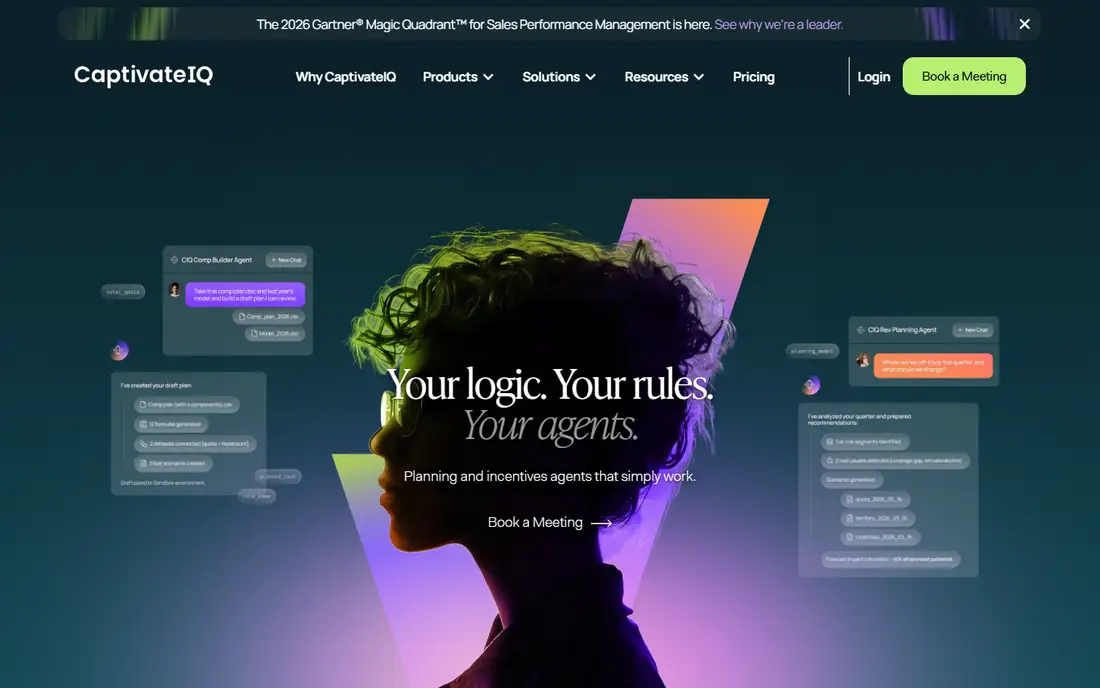
CaptivateIQ handles complex commission plans with flexible rules, calculations, and audit trails, plus clear statements that reps can understand and query. It suits teams whose plans change often.
Pricing is custom and enterprise level, and setup needs careful plan design. For growing teams with complex plans, its flexibility and transparency are strong advantages.
Our view: the best commission platform for complex, changing plans.
Bottom line: CaptivateIQ is a strong fit for flexible commission calculations, and its main draw is flexible plan calculations. Weigh that against the limits above before you commit, and test it with your own real work during any trial or free period.
- Flexible plan calculations
- Clear rep statements
- Audit trails
- Enterprise pricing
- Setup needs plan design work
Spiff
Ideal for: Real-time rep earnings in Salesforce
Spiff, now part of Salesforce, gives reps real-time visibility into commissions, with statements, estimators, and dispute tools inside Salesforce. Managers can adjust plans and track performance without leaving the CRM.
Its best experience is inside Salesforce, so teams on other CRMs get less value. Pricing is custom, with a published per-user figure for its Salesforce edition in some listings.
Our view: the best commission tool for Salesforce-based sales teams.
Bottom line: Spiff is a strong fit for real-time rep earnings in Salesforce, and its main draw is real-time commission visibility. Weigh that against the limits above before you commit, and test it with your own real work during any trial or free period.
- Real-time commission visibility
- Salesforce native
- Dispute tools
- Best inside Salesforce
- Pricing is custom
QuotaPath
Ideal for: Simple commission tracking
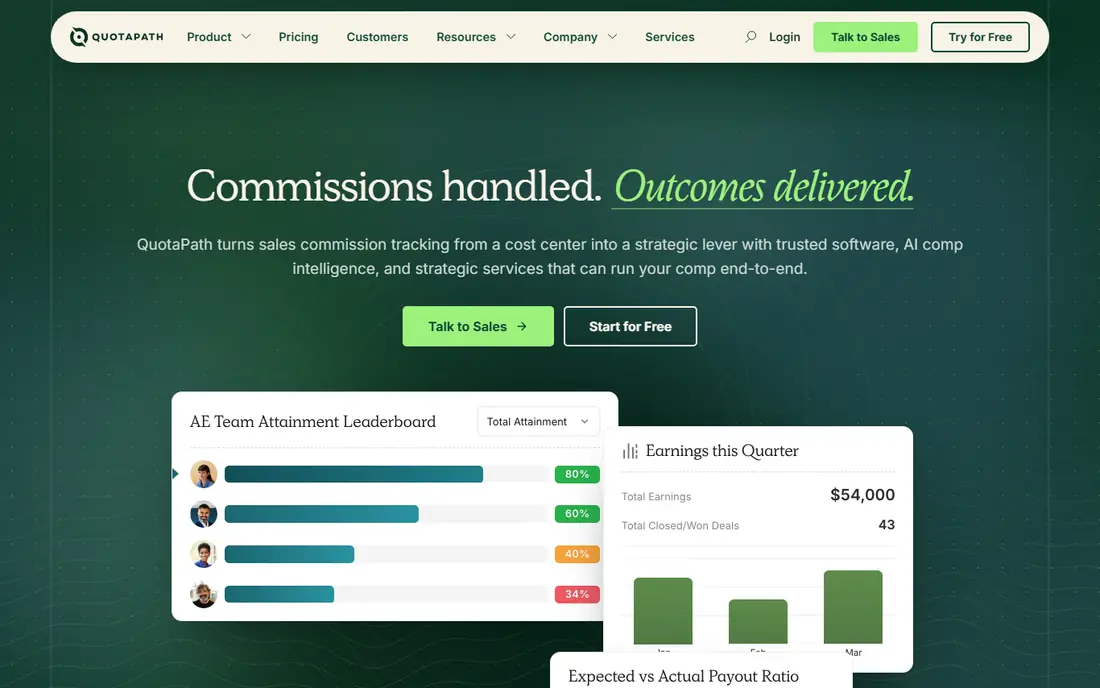
QuotaPath offers commission tracking with simple plan setup, attainment dashboards, and earnings views for reps and managers. It suits growing teams that want clarity without enterprise complexity.
Very complex plans with many tiers and exceptions may need a deeper tool such as CaptivateIQ or Xactly. For straightforward plans, its simplicity is a plus.
Our view: a clear, simple commission tracker for growing teams.
Bottom line: QuotaPath is a strong fit for simple commission tracking, and its main draw is simple plan setup. Weigh that against the limits above before you commit, and test it with your own real work during any trial or free period.
- Simple plan setup
- Attainment tracking
- Rep dashboards
- Depth is thinner than enterprise tools for very complex plans
Everstage
Ideal for: Commission with forecasting
Everstage combines commission calculations with forecasting, approvals, and rep statements, helping teams plan pay and performance together. Its interface is modern and easy to follow.
As a newer vendor, its enterprise depth is still growing compared with Xactly, though its feature pace is fast. For mid-market teams, it is a strong modern choice.
Our view: a modern commission platform with useful forecasting.
Bottom line: Everstage is a strong fit for commission with forecasting, and its main draw is commission calculations. Weigh that against the limits above before you commit, and test it with your own real work during any trial or free period.
- Commission calculations
- Forecasting
- Rep statements and approvals
- Newer vendor, so enterprise depth is still growing
Xactly
Ideal for: Enterprise commission management
Xactly is a long-running enterprise commission platform with deep plan support, analytics, and large-scale calculation capacity. It suits large sales organisations with complex, global plans.
Pricing and implementation reflect its enterprise focus, so small teams will find it heavy. For large firms, its depth and track record matter most.
Our view: the best enterprise commission platform for large sales teams.
Bottom line: Xactly is a strong fit for enterprise commission management, and its main draw is deep enterprise plan support. Weigh that against the limits above before you commit, and test it with your own real work during any trial or free period.
- Deep enterprise plan support
- Analytics
- Large-scale calculations
- Enterprise pricing and implementation
- More than small teams need
Performio
Ideal for: Mid-market commission plans
Performio offers commission management for mid-market teams, with flexible plans, calculations, statements, and CRM integrations. It suits teams outgrowing spreadsheets but not ready for enterprise pricing.
Its brand is smaller than Xactly, and enterprise depth varies by use case. For mid-market teams, its balance of flexibility and price is appealing.
Our view: a solid mid-market commission platform.
Bottom line: Performio is a strong fit for mid-market commission plans, and its main draw is flexible mid-market plans. Weigh that against the limits above before you commit, and test it with your own real work during any trial or free period.
- Flexible mid-market plans
- Calculations and statements
- Integrations
- Smaller brand than Xactly
- Enterprise depth varies
Commissionly
Ideal for: Small-team commission tracking
Commissionly offers simple commission tracking with tiers, targets, and statements for small teams. It suits businesses that need to replace spreadsheets without enterprise complexity or cost.
Depth is modest, so complex enterprise plans will outgrow it. For small teams with clear, simple plans, it is an affordable, practical tool.
Our view: a budget-friendly commission tracker for small teams.
Bottom line: Commissionly is a strong fit for small-team commission tracking, and its main draw is simple commission tracking. Weigh that against the limits above before you commit, and test it with your own real work during any trial or free period.
- Simple commission tracking
- Tier and target tools
- Affordable tiers
- Depth is modest
- Best for small teams and simple plans
How we picked these
We compared official product pages, help pages, and pricing pages, and we looked at plan flexibility, calculation accuracy, rep statements, dispute handling, and integrations. We favoured tools with clear audit trails.
We did not claim hands-on payroll runs. Where pricing was custom, we wrote See website rather than inventing a figure.
How to choose commission software
Map your plan rules before shopping. List tiers, accelerators, splits, clawbacks, and approval steps, then test each shortlisted tool against those exact rules. A tool that cannot model your plan will fail no matter how pretty it looks.
Test rep statements with real reps. Statements must be clear enough that a rep can check their pay without finance help, since opaque statements create disputes and distrust.
Also publish plan rules where reps can read them at any time. A plan document that lives only in finance inboxes will be misunderstood, while a shared, current version prevents most pay arguments before they start. Update that document whenever a plan changes, so reps never work from an outdated version. That habit prevents most disputes.
Check integrations with your CRM and payroll. Commission data should flow from deals to calculations to payroll without manual spreadsheets, so confirm your CRM and payroll links.
Plan for disputes and audits. A good tool logs calculation changes, handles disputes in one place, and produces audit trails for finance. Test those features during a trial.
Model total cost for your team size. Custom pricing, per-user fees, and implementation costs add up, so price your real rep count and plan complexity, not a demo team.
Finally, pilot with one team first. Run a quarter in parallel with spreadsheets, compare results, and fix plan rules before rolling out company-wide.
Also train managers to explain statements to their teams. A manager who understands the plan can resolve most rep questions without finance involvement.
If you are still unsure, start with a free plan and move to a paid plan only when you hit its limits.
Frequently asked questions
What is commission software?
It is software that calculates sales commissions from plan rules, produces rep statements, handles disputes, and feeds payroll, replacing manual spreadsheets.
Which commission software is best for small teams?
Commissionly suits small teams with simple plans, while QuotaPath suits growing teams. CaptivateIQ and Xactly suit larger, more complex plans.
Can commission software handle complex plans?
Yes, though depth varies. CaptivateIQ and Xactly handle complex tiers, splits, and accelerators best, while simpler tools suit straightforward plans.
Do reps see their commissions in real time?
Spiff offers real-time visibility inside Salesforce, and most tools here offer dashboards and statements that update as deals close. Check update frequency for your chosen tool.
How much does commission software cost?
Pricing is usually custom, based on rep count and plan complexity, with trials or quotes from vendors. Request a quote modelled on your real team and plans.
Can commission software handle team splits?
Yes. Most tools here support split commissions between reps, though rule complexity varies. Test your exact split rules during a trial before committing.