7 Strong Compensation Planning Software Options in 2026

- 1
 SimplyMeritHR teams wanting straightforward merit cycle executionVisit
- 2
 FormaFirms delivering adaptable benefits and total rewardsVisit
- 3
 LatticeFirms that want compensation connected to performance and engagementVisit
- 4
 beqomGlobal enterprises with complicated pay structures and pay transparency obligationsVisit
- 5
 Salary.com (CompAnalyst)HR teams wanting trusted salary survey data and range toolsVisit
- Number one here is SimplyMerit, a fit for HR teams wanting straightforward merit cycle execution.
- One limit worth knowing about SimplyMerit: narrower than suite players, quote-only pricing, restricted advanced analytics.
- SimplyMerit, Payscale and the 5 others all sell by quote; expect sales conversations before you see a price.
- Payscale suits teams whose core work is market pricing and building defensible pay ranges.
- A permanent free plan is missing from all 7 tools, SimplyMerit and Payscale included; plan for a trial or a premium start.
Direct answer
SimplyMerit comes first here, mainly for HR teams wanting straightforward merit cycle execution. For a different need, Forma covers businesses delivering flexible benefits and total rewards and Lattice covers firms that want compensation connected to performance and engagement. The remaining 4 options are covered below with prices and limits.
Quick comparison
| Product | Ideal for | Price from | Free version | |
|---|---|---|---|---|
| SimplyMerit | HR teams wanting straightforward merit cycle execution | See website (quote-based) | Demo available | Visit |
| Forma | Firms delivering adaptable benefits and total rewards | See website (quote-based) | Demo available | Visit |
| Lattice | Firms that want compensation connected to performance and engagement | See website (quote-based) | Demo available | Visit |
| beqom | Global enterprises with complicated pay structures and pay transparency obligations | See website (quote-based) | Demo available | Visit |
| Salary.com (CompAnalyst) | HR teams wanting trusted salary survey data and range tools | See website (quote-based) | Free trial | Visit |
 OpenComp | High-growth businesses needing modern benchmarking and planning | See website (quote-based) | Demo available | Visit |
 Payscale | Teams whose core work is market pricing and building defensible pay ranges | See website (quote-based) | Demo available | Visit |
The 7 tools in detail
Short on time? The summary and table above give the quick view of 7 tools for compensation planning software, and the profiles that follow give the detail behind each entry.
SimplyMerit
Ideal for: HR teams wanting straightforward merit cycle execution
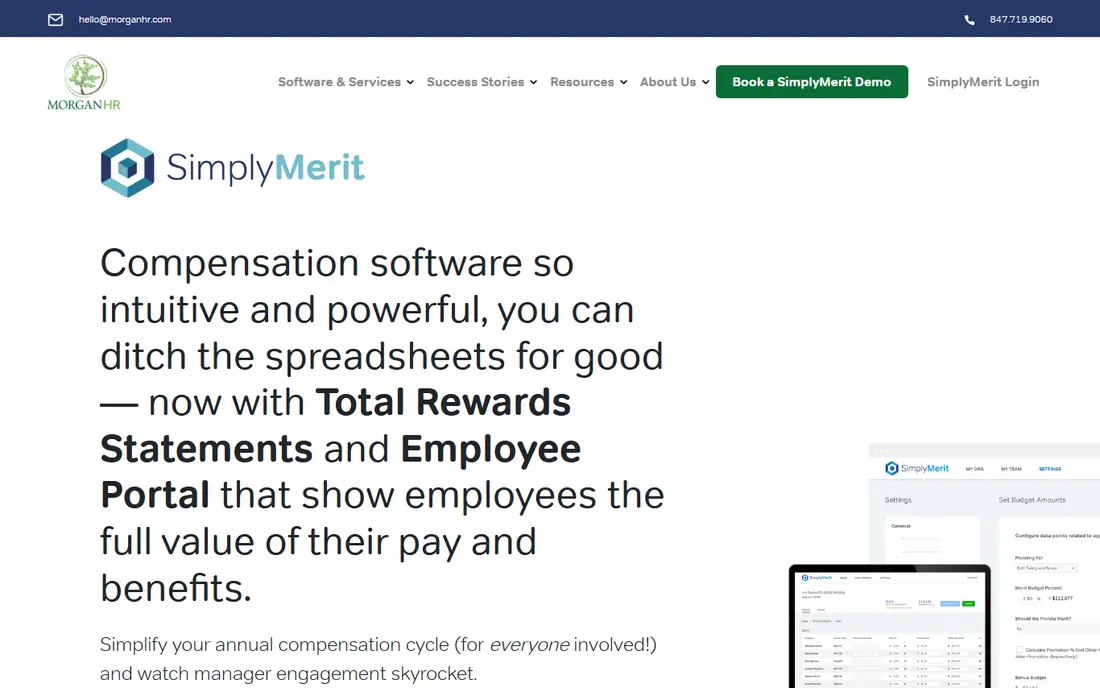
Pick SimplyMerit if this describes you: HR teams wanting straightforward merit cycle execution. Deployment is quick and managers need minimal training.
Strengths: simple manager experience.
Broader talent or rewards ambitions need other tools. Pricing for SimplyMerit is not stated here, so ask the vendor for current figures. Free plan details: Demo available.
- Fast to deploy
- Sensible pricing for its scope
- Narrower than suite players, quote-only pricing, restricted advanced analytics
Forma
Ideal for: Firms delivering adaptable benefits and total rewards

Where Forma fits: firms delivering adaptable benefits and total rewards. In a tight talent market, the benefits experience is part of compensation, and Forma makes it tangible for employees.
Points against: needs pairing with planning tools.
On top of that, pair it with a benchmarking and cycle tool for the complete picture. This comparison lists no price for Forma; ask the vendor. Free access: Demo available.
- Adaptable lifestyle benefits administration
- Solid employee experience
- Benefits focus instead of core comp planning, quote-only pricing
Lattice
Ideal for: Firms that want compensation connected to performance and engagement

Pick Lattice if this describes you: firms that want compensation connected to performance and engagement. Lattice brings compensation into the performance conversation where it belongs.
In daily use, managers get an interface they actually use. No starting price is listed for Lattice here; confirm pricing on the vendor site. Free plan details: Demo available.
Drawbacks to consider: Compensation depth less than specialists, quote-only pricing.
- Performance
- Capable mid-market fit
- HRIS integration quality varies
beqom
Ideal for: Global enterprises with complicated pay structures and pay transparency obligations
In short, beqom is for global enterprises with complicated pay structures and pay transparency obligations. beqom is the heavyweight for organizations where compensation is genuinely complicated: dozens of countries, intricate bonus plans, long-term incentives and tightening pay transparency regulation. In daily use, the system brings together every pay component in one model with the governance to defend every decision.
Where it falls short: Quote-only enterprise pricing, implementation effort significant.
What users get: Unified system for salary, bonus.
Worth adding: pay equity analysis is built in, not bolted on. Implementation is a project and pricing is enterprise. beqom shows no starting price here, so confirm the cost on the vendor site. Free access: Demo available.
- Manages multi-country complexity
- Solid pay equity and transparency tooling
- More than smaller teams need
Salary.com (CompAnalyst)
Ideal for: HR teams wanting trusted salary survey data and range tools
Salary.com (CompAnalyst) is built with HR teams wanting trusted salary survey data and range tools in mind. Salary.com's CompAnalyst is the veteran alternative to Payscale for market pricing. Worth adding: decades of survey data and a full toolkit for job pricing, range building and structure modeling serve HR teams that want established methodology.
The experience feels traditional next to modern challengers. But for teams that value data pedigree over interface polish, CompAnalyst remains a defensible choice. Check the vendor site for Salary.com (CompAnalyst) pricing; none is listed in this comparison. Free options: Free trial.
Watch-outs: Interface reflects its heritage, quote-only pricing. Where Salary.com (CompAnalyst) stands out: Long-standing trusted data brand.
- Solid reporting
- Well suited to US-centric benchmarking
- Global data thinner than Payscale
OpenComp
Ideal for: High-growth businesses needing modern benchmarking and planning
OpenComp is a good fit for high-growth companies needing modern benchmarking and planning. OpenComp serves the high-growth company that outgrew spreadsheet comp but is not ready for enterprise suites.
Downsides: smaller data set than Payscale.
Implementation is quick and the interface respects everyone's time. Pricing for OpenComp is not stated here, so ask the vendor for current figures. Free plan details: Demo available.
- Quick implementation
- Modern UX made for startups
- Quote-only pricing
Payscale
Ideal for: Teams whose core work is market pricing and building defensible pay ranges
Payscale is aimed squarely at teams whose core work is market pricing and building defensible pay ranges. Payscale is the market data standard. As for the details, if your problem is knowing the right number, start here.
Watch-outs: Data focus means lighter cycle execution, quote-only pricing.
Upsides: Largest trusted compensation data set. Range building, offer pricing and competitive analysis are the core strengths. More specifically, numerous companies pair Payscale's data with a planning tool. Check the vendor site for Payscale pricing; none is listed in this comparison. Free access: Demo available.
- Capable job matching and range building
- Established brand
- Self-reported data has gaps in niche roles
Worth knowing about compensation planning software
Compensation planning has two halves that require different tools. On top of that, the second is cycle execution: merit raises, bonuses, equity grants and approvals, run fairly and on time.
How we chose
Ainotely used vendor pricing pages and product documentation as the base, then compared plans, free access and documented limits for 7 tools. Seat minimums, billing terms and add-ons can move the real cost, so the starting prices here are a guide and not a quote. We ordered the tools by general fit, then by how clearly pricing is shown, then by free access. A buyer with unusual needs may reorder them.
Things to verify first
- Ask each vendor, from SimplyMerit to Payscale, for a written quote; none of them publishes a starting price.
- Take the trial from Salary.com (CompAnalyst) and push a live task through it before you pay.
- Read the limits listed for SimplyMerit first: narrower than suite players, quote-only pricing, restricted advanced analytics.
- Ask whether OpenComp integrates with your current software, and whether that comes standard or as an add-on.
- Run a one or two week pilot of Forma with the people who will use it every day.
Frequently asked questions
Is SimplyMerit the right pick for everyone comparing compensation planning software?
No single tool suits every team. SimplyMerit comes first because it fits HR teams wanting straightforward merit cycle execution, while Forma suits companies delivering flexible benefits and total rewards and Lattice suits companies that want compensation connected to performance and engagement. Match the tool to your own size, budget and workflow before deciding.
Can I try these options before paying?
Often, yes. Salary.com (CompAnalyst) offers a free trial. Use your own data and a real task during the test, and check what the free tier or trial limits before you rely on it.
How are the tools for compensation planning software ordered?
The order follows typical fit for compensation planning software, with SimplyMerit first and Payscale last, then price clarity and free access. It is editorial judgement, not a score, so another team could rank the tools differently.
Does any tool for compensation planning software here have a free plan?
No tool in this list, SimplyMerit and Payscale included, has a permanent free plan. Salary.com (CompAnalyst) offer a trial. Trials and quotes are the usual route, so plan a short evaluation period.