Best Concept Testing Platforms for CPG Companies in 2026: 8 Platforms Compared

- 1
 QualtricsEnterprise concept testing at scaleVisit
- 2
 UserTestingVideo feedback on concepts and packagingVisit
- 3
 SurveyMonkeyQuick concept screens and surveysVisit
- 4
 TypeformEngaging concept surveys with high completionVisit
- 5
 MazeFast unmoderated tests for digital conceptsVisit
- Qualtrics and UserTesting suit large CPG teams that need scale, panels and enterprise reporting.
- Maze and UserZoom-style research tools suit fast, unmoderated concept tests on packaging and claims.
- Survey platforms such as SurveyMonkey and Typeform suit quick concept screens, but lack CPG-specific panels and analysis.
- Define the decision before testing: a concept test should answer whether to launch, revise or kill, not just whether people liked it.
Quick comparison
| Product | Ideal for | Price from | Free version | |
|---|---|---|---|---|
| Qualtrics | Enterprise concept testing at scale | See website | No | Visit |
| UserTesting | Video feedback on concepts and packaging | See website | No | Visit |
| SurveyMonkey | Quick concept screens and surveys | See website | Yes | Visit |
| Typeform | Engaging concept surveys with high completion | See website | Free trial | Visit |
| Maze | Fast unmoderated tests for digital concepts | See website | Free trial | Visit |
 UserZoom | Mixed-method research for concepts and UX | See website | No | Visit |
 Attest | Consumer surveys for CPG brands | See website | No | Visit |
 Pollfish | Mobile surveys for quick concept reads | See website | No | Visit |
The best concept testing platforms for cpg companies
We compared official feature pages, pricing pages, app store listings, privacy policies and public reviews to build this list of 8 options for best concept testing platforms for cpg companies. Prices were checked in October 2026 and can change, so confirm the current price on the vendor site before you buy. Our pick for most people is the first option that fits your budget and workflow, not necessarily the most expensive tool on the list. Read the quick comparison first to narrow the field, then read the full write-ups for the two or three options that fit your needs best.
Qualtrics
Ideal for: Enterprise concept testing at scale
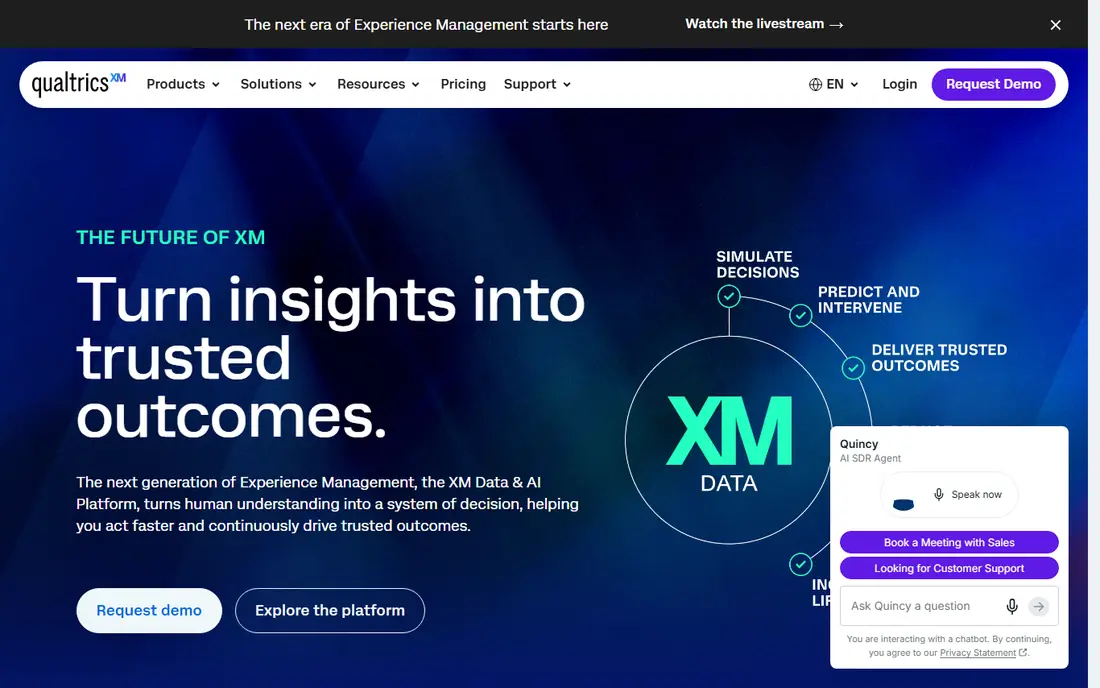
Qualtrics suits large CPG teams that need concept testing at scale, with panels, conjoint, MaxDiff and enterprise reporting. It handles complex designs, quotas and segments, and integrates with brand tracking. For rigorous, repeatable concept programs, it is a leader.
Pricing is custom only, and setup needs research expertise, so small teams may find it heavy. Quick screens are faster on simpler tools. For enterprise CPG research, Qualtrics is a strong platform.
- Large panels and sampling
- Conjoint and MaxDiff tools
- Enterprise reporting
- Custom pricing only
- Setup needs research expertise
- Overkill for quick screens
UserTesting
Ideal for: Video feedback on concepts and packaging

UserTesting gives CPG teams video feedback from real users reacting to concepts, packs and claims. Highlight reels help stakeholders see reactions directly, which is persuasive in go-or-no-go meetings. Panel access covers many demographics.
Pricing is not public, and annual contracts are costly for small teams. Analysis is also largely manual, so researchers must synthesize themes. For qualitative concept reactions at scale, UserTesting is valuable.
- Video sessions with real users
- Panel access
- Highlight reels for stakeholders
- No public pricing
- Annual contracts are costly
- Analysis is largely manual
SurveyMonkey
Ideal for: Quick concept screens and surveys
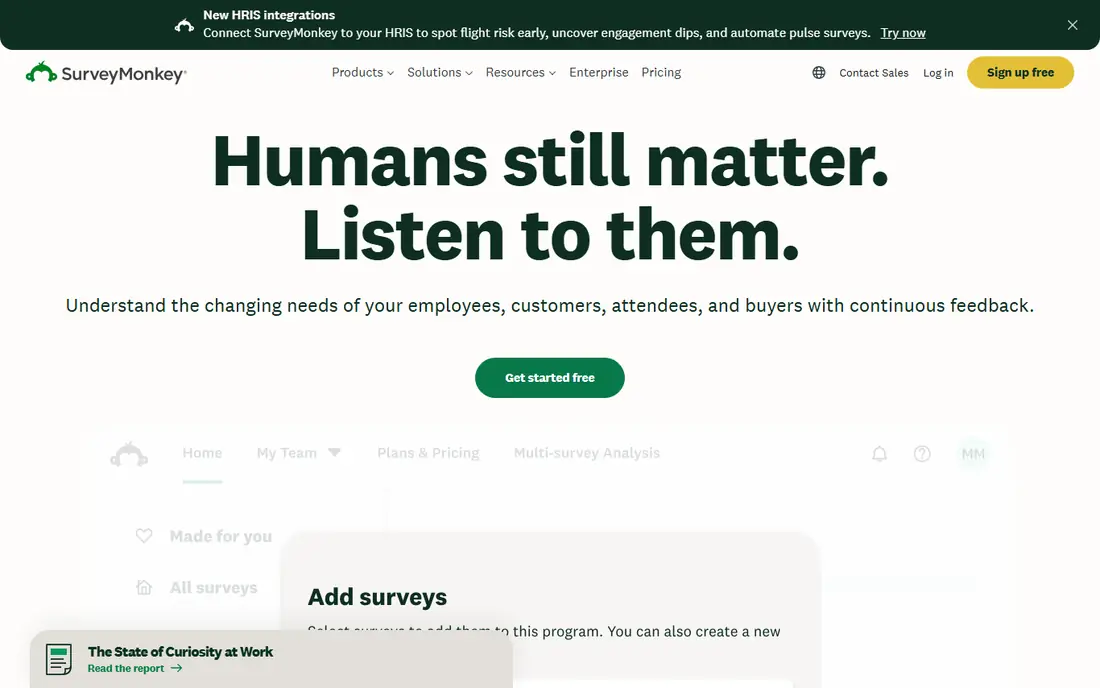
SurveyMonkey suits quick concept screens, with easy survey building, templates and panel options for fast fielding. Small CPG teams can test a claim or name in days, not weeks. For speed and simplicity, it is accessible.
Panel quality varies, and advanced analysis such as conjoint needs higher tiers or other tools. It is also not CPG specific. For quick screens, SurveyMonkey is practical; for rigorous CPG programs, pair it with a specialist.
- Easy survey building
- Panel options
- Fast fielding
- Panel quality varies
- Advanced analysis needs higher tiers
- Not CPG specific
Typeform
Ideal for: Engaging concept surveys with high completion
Typeform offers conversational, mobile-friendly surveys that improve completion rates for concept tests. That suits CPG teams testing with their own customer lists or social audiences. Design quality also helps concepts feel polished to respondents.
Panels must be sourced separately, and analysis is basic compared with Qualtrics. Pricing also rises with responses. For engaging concept surveys to a known audience, Typeform is a good pick.
- Conversational survey design
- High completion rates
- Good for mobile respondents
- Panel must be sourced separately
- Analysis is basic
- Pricing rises with responses
Maze
Ideal for: Fast unmoderated tests for digital concepts
Maze suits fast, unmoderated concept tests for digital assets, landing pages and pack images. Tests can field in hours, and reports are quick to share. For agile CPG teams iterating on claims and visuals, speed is the value.
Panels must be sourced or bought separately, and physical pack handling is limited. Analysis is also lighter than enterprise research platforms. For fast digital concept iteration, Maze is useful.
- Fast unmoderated testing
- Prototype and image tests
- Quick reports
- Panel must be sourced or bought
- CPG physical pack testing is limited
- Analysis is lighter than Qualtrics
UserZoom
Ideal for: Mixed-method research for concepts and UX
UserZoom, now part of a larger research group, offers moderated and unmoderated research with panel access and enterprise reporting. That suits CPG teams that also test digital shelves, e-commerce pages and packaging online. Mixed methods cover both numbers and video reactions.
Pricing is custom, and setup needs research skill. Its CPG-specific focus is also smaller than Qualtrics. For mixed-method concept and UX research, UserZoom is a credible platform.
- Moderated and unmoderated research
- Panel access
- Enterprise reporting
- Custom pricing
- Setup needs research skill
- Smaller CPG-specific focus than Qualtrics
Attest
Ideal for: Consumer surveys for CPG brands
Attest offers consumer surveys with panels and fast turnaround for CPG brands, covering concept, brand and product questions. That suits mid-size CPG teams that need regular consumer reads without building a research department. Speed and panel access are the strengths.
Pricing is custom, and panel coverage varies by market, so check target demographics before committing. Analysis also benefits from research input. For regular CPG consumer surveys, Attest is worth a demo.
- Consumer panels
- Fast turnaround
- Brand and concept tracking
- Pricing is custom
- Panel coverage varies by market
- Analysis needs research input
Pollfish
Ideal for: Mobile surveys for quick concept reads
Pollfish offers mobile-first surveys with fast fielding and real-time results, which suits quick concept reads from broad consumer audiences. Mobile reach helps CPG teams test with shoppers on phones, where many consumers now answer surveys. For speed, it is efficient.
Sample quality needs careful screening, and advanced methods such as conjoint are limited. Pricing is also custom. For quick mobile concept reads, Pollfish is a practical option, with screening done well.
- Mobile-first panels
- Fast fielding
- Real-time results
- Sample quality needs screening care
- Advanced methods are limited
- Pricing is custom
How we picked these
We started from the topic and shortlisted products that exist and work today, then checked each vendor homepage, pricing page and free tier. We compared feature pages, app store listings, privacy policies and public reviews, and we dropped any product whose homepage could not be verified or whose price could not be checked. Where a price was unclear or varied by region, we wrote See website rather than guessing a number. That rule kept the list honest, even where a neat price would have made the comparison table look tidier.
We also weighed fit over fame. A well-known product stayed on the list only if it truly fits the topic, and smaller tools earned a place when they served a clear use case better. No product here was tested hands-on for this article, and no vendor paid for placement.
Price and free-tier details matter most when plans change often, so we favoured products with clear published pricing and a trial or free tier where one exists. If a vendor changed a plan after our check, the vendor site is the correct source, and the ranking here still reflects fit, not just price. That check takes extra time, but it prevents a shortlist built on outdated pricing or a product that no longer exists.
Choosing a concept testing platform for CPG by speed and panel quality
Start with the decision and the audience: a packaging test needs real shoppers in the target market, not a general panel. Check panel quality, sample size and screening, because a fast test on the wrong audience misleads. Then check analysis: conjoint, MaxDiff and claim ranking tools matter more for CPG than generic survey charts.
Before you pay, run a trial on a real task from your own work, not a demo file. Check export formats, mobile access and support hours, because those details decide whether a tool survives daily use. Also check renewal terms and cancellation steps, since a cheap first year can become an expensive second year if renewal jumps. Finally, ask who will own setup and training, because a tool nobody is responsible for tends to fall out of use within a few months. Keep a short note on why you picked the winner, so a future review can judge it against the same criteria instead of starting from scratch.
A useful final test is to imagine the tool in six months, when the first excitement has faded and the work is routine. If the daily steps are still quick, the cost is still clear, and the support route is still obvious, the choice is likely sound. If any of those three answers is unclear, use the trial period to get a clear answer before committing to an annual plan.
Frequently asked questions
What is concept testing for CPG?
Concept testing shows shoppers a product idea, pack, claim or price and measures appeal, uniqueness, purchase intent and reasons. It helps CPG teams decide whether to launch, revise or stop a concept before production.
How many respondents do I need for a concept test?
Sample size depends on the decision and segments, but many CPG screens use several hundred respondents per concept for stable reads. Ask the platform for margin guidance for your segments before fielding.
Can I test packaging concepts online?
Yes. Many platforms support image, video and shelf simulations for packaging tests, though physical pack handling and shelf standout still benefit from in-person or home-use tests.
What is the difference between concept testing and product testing?
Concept testing evaluates an idea before production, using descriptions, images or prototypes. Product testing evaluates a finished or near-finished product through use, taste or home trials.