Best Concept Testing Platforms in 2026: 7 Platforms Compared

- 1
 QualtricsEnterprise concept researchVisit
- 2
 SurveyMonkeyAccessible survey-based testingVisit
- 3
 UserTestingVideo feedback on conceptsVisit
- 4
 MazeFast prototype and concept testsVisit
- 5
 UserZoomMixed-method concept researchVisit
- Qualtrics and SurveyMonkey suit teams that already run surveys, while UserTesting and Maze suit teams that need fast feedback on prototypes.
- Concept testing works best with a clear decision rule set before fieldwork, such as a minimum purchase intent score.
- Panel quality matters more than sample size alone, so check targeting, fraud controls and respondent quality.
- Most platforms in this list use custom or per-response pricing, so get a quote for your sample size.
- Our pick for fast product feedback is Maze, and our pick for research depth is Qualtrics.
Quick comparison
| Product | Ideal for | Price from | Free version | |
|---|---|---|---|---|
| Qualtrics | Enterprise concept research | See website | Free trial | Visit |
| SurveyMonkey | Accessible survey-based testing | $25 per month | Yes | Visit |
| UserTesting | Video feedback on concepts | See website | Free trial | Visit |
| Maze | Fast prototype and concept tests | $99 per month | Yes | Visit |
| UserZoom | Mixed-method concept research | See website | No | Visit |
 Pollfish | Fast panel surveys | See website | No | Visit |
 Attest | Consumer concept surveys | See website | No | Visit |
The best concept testing platforms
Concept testing answers a simple question before you spend on a launch: do customers understand, like and want this idea enough to buy it. The platforms below cover survey-based testing, prototype feedback and panel access. We compared official pricing pages, feature lists and public reviews.
Qualtrics
Ideal for: Enterprise concept research

Qualtrics is the research-depth pick for teams that run concept tests as part of a larger insights program. It offers survey logic, conjoint and MaxDiff options, text analysis and dashboards, plus templates for concept screening and product testing. Large teams can standardize tests across brands and track results over time.
The platform is heavier than a founder needs for a single idea test. Pricing is custom, setup takes longer than a simple survey tool, and the best value comes when a research team runs tests regularly. For a one-off test on a budget, SurveyMonkey or Pollfish will be faster and cheaper.
- Deep survey logic and analysis
- Concept testing templates
- Strong enterprise controls
- Custom pricing
- Complexity suits research teams more than solo founders
SurveyMonkey
Ideal for: Accessible survey-based testing

SurveyMonkey is the accessible choice for a small team that wants to test a name, pack design or product idea with a survey. The builder is easy, templates cover concept testing basics, and an audience panel can recruit respondents when you do not have your own list. The entry paid plan starts around $25 per month.
Analysis is simpler than Qualtrics, and advanced methods such as conjoint need higher plans or another tool. Panel responses are billed separately, so price the full test, not just the plan. For a straightforward concept screen, SurveyMonkey is enough.
- Easy survey builder
- Audience panel available
- Low entry price
- Analysis depth below Qualtrics
- Panel costs add to the plan price
UserTesting
Ideal for: Video feedback on concepts
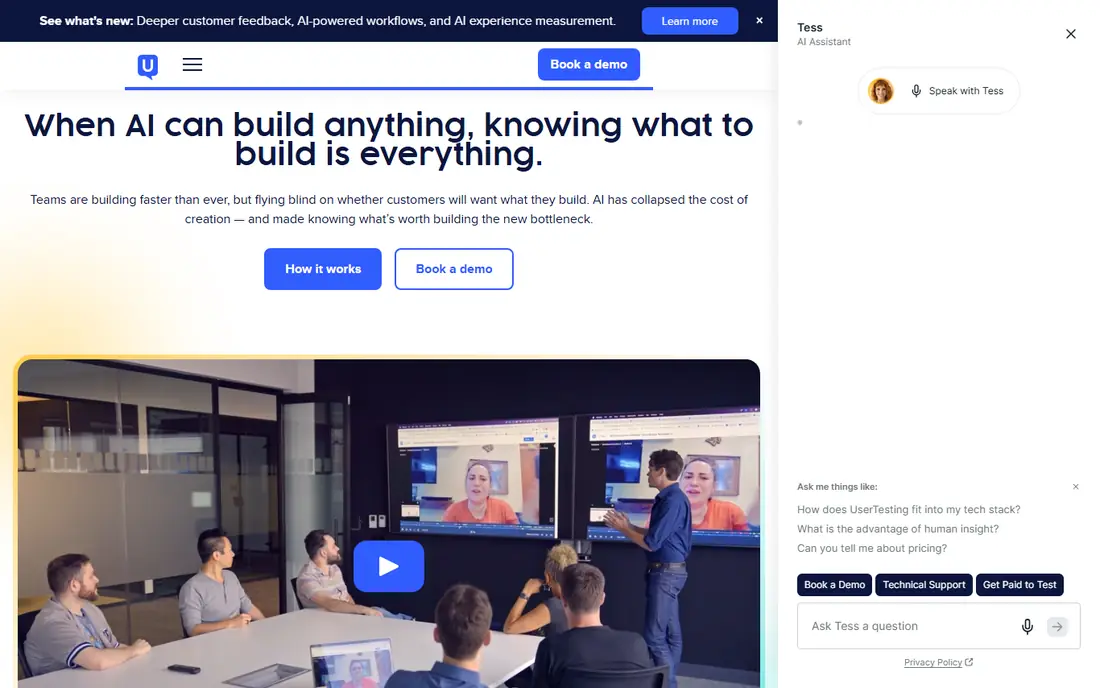
UserTesting suits teams that need to hear customers react to a concept, not just score it. Participants record video while they view a concept, ad or prototype and talk through what they understand, like and doubt. That qualitative detail often reveals a misunderstood message that a survey score would hide.
Pricing is custom and aimed at teams, so solo founders may find it expensive. Video feedback also complements rather than replaces a large-sample survey: use UserTesting to learn why a concept works, and a survey platform to measure how many people agree.
- Real video and think-aloud feedback
- Fast turnaround
- Panel included
- Custom pricing
- Video feedback suits qualitative insight, not large-sample scores
Maze
Ideal for: Fast prototype and concept tests
Maze is our pick for fast product feedback on digital concepts. It imports prototypes from design tools, runs unmoderated tests with tasks and questions, and reports success rates, time on task and survey answers in a clear dashboard. Product teams can test a concept on Monday and revise it by Friday.
It is built for digital products, so a physical pack design or a food concept needs a survey or in-person approach instead. The paid plan starts at $99 per month, which is more than SurveyMonkey, but the speed and prototype support justify it for product teams testing often.
- Fast unmoderated tests
- Prototype imports
- Clear quantitative reports
- Entry paid plan starts at $99 per month
- Best for digital concepts
UserZoom
Ideal for: Mixed-method concept research
UserZoom, now part of a larger experience research group, covers surveys, unmoderated tests and moderated interviews in one platform. That breadth suits an enterprise research team that wants one vendor for concept tests, usability studies and ongoing experience measurement, with governance and panel controls included.
Breadth brings complexity and custom pricing, so a small team will find it heavy. Buy UserZoom when you run several research methods each month and want them in one system, not for a single concept survey.
- Combines surveys, usability tests and interviews
- Enterprise panel and governance
- Custom pricing
- Platform breadth needs a research owner
Pollfish
Ideal for: Fast panel surveys
Pollfish suits a team that needs answers from a defined audience quickly and does not have its own list. Surveys run on mobile apps, targeting covers demographics and interests, and pricing is per completed response, which makes budgeting a single test simple. A concept screen can field in days rather than weeks.
Survey logic and analysis are simpler than Qualtrics, so complex methods need another tool. Write tight screening questions, check response quality, and keep surveys short, since mobile respondents drop off on long questionnaires.
- Fast panel access
- Mobile-first surveys
- Pay per completed response
- Survey depth below Qualtrics
- Quality depends on targeting and screening
Attest
Ideal for: Consumer concept surveys
Attest is built for consumer brands testing names, claims, packaging and product ideas with real shoppers. Guided survey design helps non-researchers ask better questions, panels cover many markets, and dashboards present results in plain language for brand and marketing teams.
B2B concept testing is thinner, since panels lean consumer, and pricing is custom. For a consumer brand that tests concepts regularly and wants clear, decision-ready results without a research team, Attest is a strong fit.
- Consumer panels in many markets
- Guided survey design
- Clear dashboards
- Custom pricing
- Focused on consumer audiences rather than B2B panels
How we picked these
We compared official pricing pages, feature lists and public reviews for concept testing platforms available in October 2026. We favored platforms with real panels or prototype support, clear reporting, and a working official homepage. We left out tools we could not verify as live products.
What to check before you test
Set the decision rule before fieldwork. Decide what score, preference share or purchase intent level means go, revise or kill, and who makes that call. A test without a decision rule produces interesting data and no decision, which wastes the budget.
Test the concept, not the presentation
Show concepts in a consistent format with the same level of polish, so a pretty mockup does not beat a better idea. Include a monadic or sequential design that fits your question, randomize order where it matters, and add an open question so respondents can say what confused them in their own words.
Check panel quality
Ask how the panel is recruited, how fraud and speeders are handled, and what incidence and completion rates look like for your audience. A cheap sample with poor targeting costs more in bad decisions than a smaller, well-targeted sample.
Try before you commit to a full rollout
Most tools in this list offer a free tier or a trial, and the smartest use of that trial is a small, realistic test rather than a tour of every feature. Pick one real job, such as a single project, a single campaign, or a single workflow your team runs every week, and run it end to end in the trial. Invite the people who will actually use the tool daily, not just the person choosing it, and ask them to complete that job without help. Note where they get stuck, how long the job takes compared with your current method, and whether the result is good enough to share with a client or a manager. Check support response times during the trial too, since a fast answer during a trial often predicts the help you will get later. At the end of the trial, compare the real time saved and the real cost per user against the plan you would buy, and only then decide whether the upgrade is worth it for your team.
Frequently asked questions
What is concept testing?
Concept testing shows customers an idea, name, design or product description before launch and measures understanding, appeal and purchase intent. It helps teams revise or drop weak ideas before spending on production and marketing.
How many people do I need for a concept test?
A survey-based concept screen often uses 100 to 300 respondents per concept for directional results, with larger samples for close calls. Qualitative video feedback needs far fewer people, often 5 to 15, because the goal is insight rather than measurement.
Should I test concepts with a survey or video feedback?
Use a survey to measure how many people like a concept and would buy it. Use video feedback to learn why they react that way and what confuses them. Many teams use both: video first to fix problems, then a survey to measure the revised concept.
What makes a good concept test question?
Ask about understanding, appeal, uniqueness, believability and purchase intent, plus an open question for confusion or objections. Avoid leading wording, and keep the concept description short enough that respondents actually read it.
How much does concept testing cost?
Costs vary by method and sample. Survey tools start around $25 per month plus panel costs, while enterprise platforms use custom pricing. Price the full test, including panel responses and analysis time, before choosing.