Best Construction Company Websites in 2026: 8 Platforms Compared

- Duda is our pick for construction firms that want fast, professional sites with client management tools.
- Wix suits small builders who want an easy builder with construction templates and booking tools.
- Webflow suits firms that want a custom, high-end design without heavy coding.
-
Portfolio photos, service pages, quote forms, and local search visibility matter more than fancy effects.
-
A quote form that reaches your inbox reliably matters more than any animation or homepage video for winning construction work.
Quick comparison
| Product | Ideal for | Price from | Free version | |
|---|---|---|---|---|
 Duda | Professional builder sites | See website | Free trial | Visit |
 Wix | Easy templates for small builders | See website | Yes | Visit |
 Webflow | Custom high-end design | See website | Yes | Visit |
 WordPress | Flexible sites with plugins | See website | Yes | Visit |
 Squarespace | Clean portfolio design | See website | Free trial | Visit |
 GoDaddy | Fast setup for small firms | See website | Free trial | Visit |
 Hibu | Done-for-you websites | See website | No | Visit |
 Blue Corona | Marketing-led construction sites | See website | No | Visit |
The best construction company websites
A construction company website must do practical work: show past projects, explain services, collect quote requests, and rank for local searches. We compared official feature pages, pricing pages, and public reviews for the platforms below, judging them as tools construction firms use to build and run their sites.
Duda
Ideal for: Professional builder sites

Duda is a website builder aimed at agencies and businesses that need professional sites fast. Construction firms get responsive templates, portfolio widgets, contact and quote forms, and client management tools that suit firms with several sites or locations. Page speed is a strength, which helps local search and mobile visitors.
The template range is smaller than Wix, and advanced design takes some learning. For a construction firm that wants a polished, fast site with professional management tools, Duda is our top pick.
- Professional templates and widgets
- Client management tools
- Fast, responsive sites
- Smaller template range than Wix
- Learning curve for advanced design
Wix
Ideal for: Easy templates for small builders
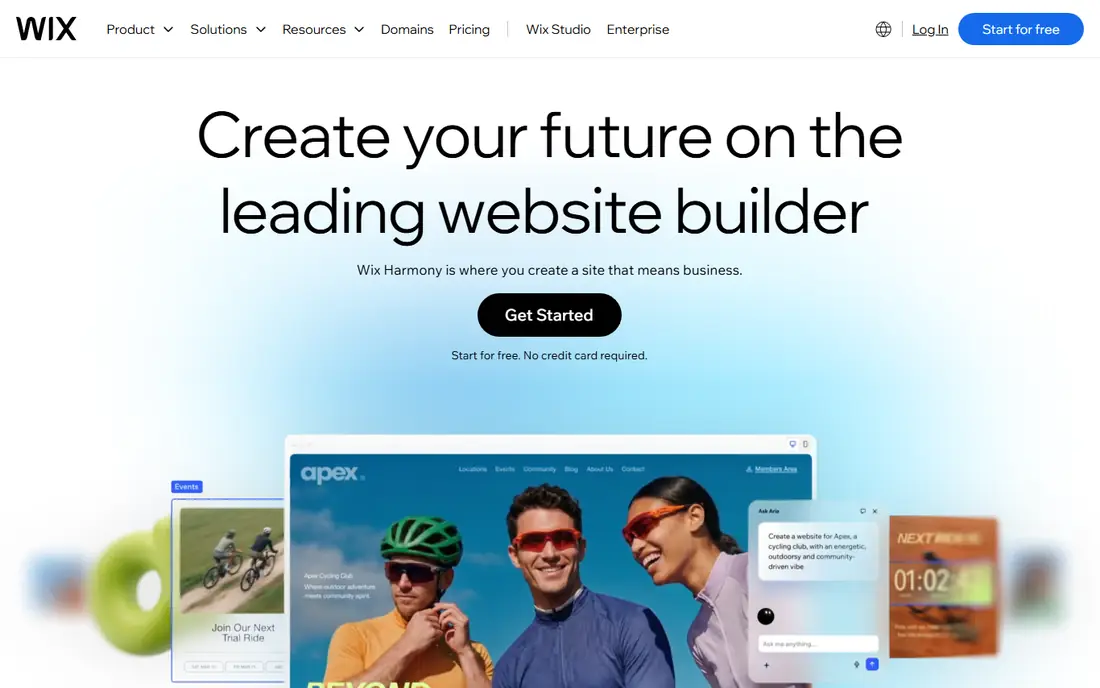
Wix offers many templates, including construction and contractor designs, with drag-and-drop editing that small builders can handle without a developer. Booking tools, contact forms, and quote requests cover lead capture, and the app market adds reviews, galleries, and chat. That ease makes Wix popular with small firms.
Switching templates after launch is limited, and advanced SEO needs attention. For a small builder who wants a good-looking site quickly, Wix is a friendly, capable choice.
- Many templates including construction designs
- Drag-and-drop editing
- Booking and quote tools
- Template switching limits
- Advanced SEO needs care
Webflow
Ideal for: Custom high-end design
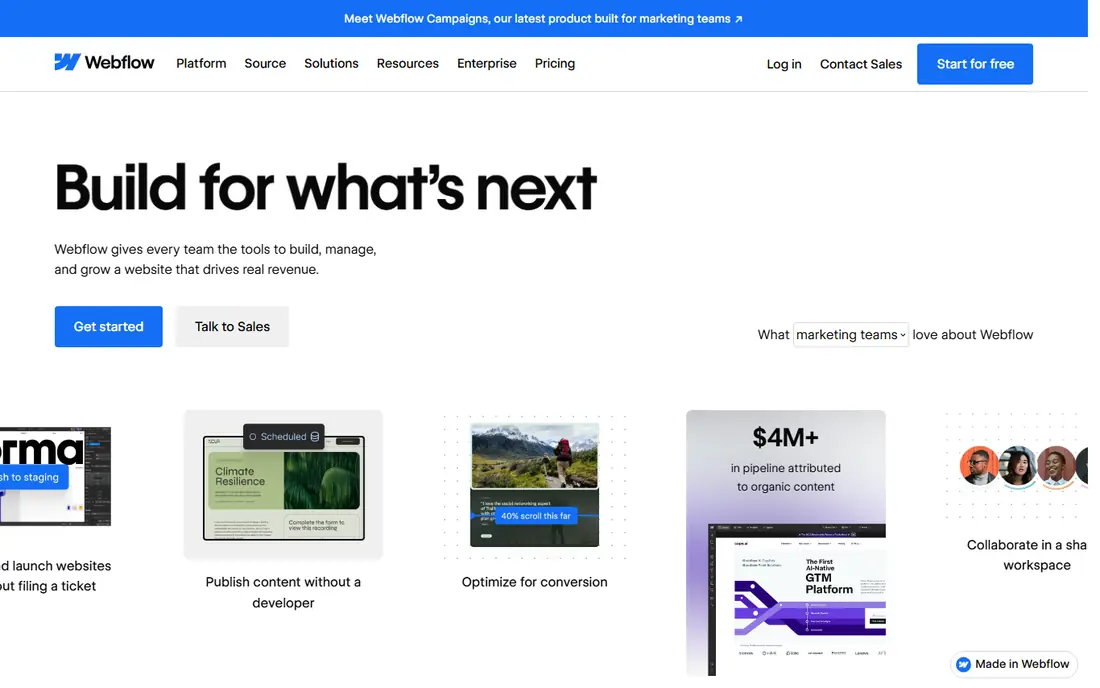
Webflow gives designers deep control over layout, typography, and interactions without heavy coding. Construction firms that want a custom, high-end portfolio site can build distinctive project galleries and service pages that stand out from template sites. Hosting is fast, which helps search and mobile performance.
The learning curve is steeper than Wix or Squarespace, and advanced plans cost more. For a firm that values custom design and can invest in it, Webflow produces some of the best-looking construction sites here.
- Deep design control
- Fast hosting
- Strong portfolio and animation options
- Steeper learning curve
- Higher cost for advanced plans
WordPress
Ideal for: Flexible sites with plugins
WordPress powers a large share of business websites, and its theme and plugin range suits construction firms with varied needs. Portfolio plugins, quote forms, review widgets, and SEO tools cover most requirements, and firms own their content fully. Local SEO plugins help service-area pages rank.
Maintenance, updates, and security need attention, and theme quality varies. For a firm that wants maximum flexibility and long-term control, WordPress remains a powerful, proven choice.
- Huge theme and plugin range
- Strong SEO tools
- Full ownership of content
- Maintenance and security need attention
- Quality varies by theme
Squarespace
Ideal for: Clean portfolio design
Squarespace is known for clean, photo-led templates that suit construction portfolios well. Project galleries look sharp, service pages are easy to build, and built-in SEO basics cover titles, descriptions, and mobile design. For firms whose photos sell the work, Squarespace presents them beautifully.
Construction-specific tools such as quote calculators are fewer than Wix or Duda offer, and flexibility trails WordPress. For a design-led firm that wants a clean portfolio site with minimal fuss, Squarespace is a strong pick.
- Clean, photo-led templates
- Easy portfolio galleries
- Built-in SEO basics
- Fewer construction-specific tools
- Less flexible than WordPress
GoDaddy
Ideal for: Fast setup for small firms
GoDaddy offers fast website setup with AI-assisted design, plus domain registration and hosting in one account. Small construction firms can launch a basic site quickly, with contact forms and service pages included. That speed suits firms that need an online presence this week.
Design flexibility is limited compared with Webflow or WordPress, and advanced features trail rivals. For a small firm that wants a fast, simple site with domain and hosting together, GoDaddy is a practical choice.
- Fast AI-assisted setup
- Domain and hosting in one place
- Simple editing
- Design flexibility is limited
- Advanced features trail rivals
Hibu
Ideal for: Done-for-you websites
Hibu is a done-for-you service: its team builds and manages your website, handles local listings, and supports review management. Construction firms that do not want to build or maintain a site themselves can hand the work to Hibu and focus on jobs. Ongoing support covers updates and changes.
Monthly service costs add up, and direct design control is less than a self-built site offers. For a busy contractor who wants a professional site without doing the work, Hibu is a convenient option.
- Agency builds and manages the site
- Local listings and review tools
- Ongoing support
- Monthly service cost
- Less direct control over design
Blue Corona
Ideal for: Marketing-led construction sites
Blue Corona is a marketing agency with contractor experience, building websites designed to generate and track leads. Call tracking, analytics, and local search work are central, so firms can see which pages and ads produce quote requests. That marketing focus suits firms investing in growth.
Agency pricing exceeds DIY builder costs, and firms that only need a simple brochure site will find it more than they need. For a construction firm that wants a website as a lead engine with tracking to prove it, Blue Corona is a strong agency choice.
- Marketing and lead tracking focus
- Contractor experience
- Analytics and call tracking
- Agency pricing
- Less suited to firms that only need a simple site
How we picked these
We compared official feature pages, pricing pages, and public reviews, and we kept only platforms and services that construction firms use to build websites in October 2026. We favored tools with portfolio galleries, quote forms, mobile design, and local SEO support. We left out generic social pages and builders with no business site features.
We also checked lead tracking features, since construction firms need to know which pages and ads produce quote requests. Platforms with call tracking and form attribution scored higher than builders that only publish pages.
What to check before you build a construction website
Start with photos and proof. Before-and-after project photos, service-area pages, licenses, and reviews persuade visitors more than slogans. Make sure your builder handles large photo galleries well and loads fast on phones, since most visitors arrive on mobile.
Next, check lead capture. Quote forms, click-to-call buttons, and clear service pages turn visits into inquiries. Confirm that form submissions reach your email or CRM reliably. Finally, plan for local search: service pages for each town you serve, a Google Business Profile, and consistent name, address, and phone details across listings. A beautiful site that no local customer finds helps no one.
Photo quality is the single biggest trust signal on a construction site. Blurry, dark, or stock-looking photos undermine credibility, while sharp before-and-after shots with brief project notes sell the work. Invest in decent phone photography, clean job sites before shooting, and captions that name the project type and location, since those details help both visitors and search engines.
Questions to ask before you commit
Ask builders how they handle photo optimization, since large uncompressed project photos slow mobile pages and hurt rankings. Confirm automatic compression, responsive image sizing, and lazy loading, and test page speed on a real phone connection. Fast photo pages win both visitors and search visibility.
Ask about review collection tools, since fresh local reviews strongly influence construction hiring decisions. Confirm automated review requests after job completion, display options on the site, and handling of negative reviews. A steady review stream beats a beautiful portfolio with no social proof.
Ask who owns the website content and domain if you leave an agency-built service. Confirm content export, domain transfer, and ongoing access terms in writing before signing, since some agency models retain control of your site. Ownership clarity protects your marketing investment long-term.
Frequently asked questions
What is the best platform for a construction company website?
Duda is our pick for professional construction sites, thanks to fast templates and client tools. Wix suits small builders who want ease, while Webflow suits firms that want custom design. WordPress suits firms that want maximum flexibility.
How much does a construction company website cost?
DIY builders range from free tiers to monthly plans, while agency-built sites cost far more upfront plus monthly management. Compare total cost over two years, including hosting, domain, updates, and marketing, before choosing.
What pages should a construction website include?
Include a home page with clear services, a portfolio of past projects with photos, service pages for each offering, an about page with licenses and team details, reviews, and a quote or contact page. Service-area pages help local search visibility.
Do construction websites need local SEO?
Yes. Most construction customers search locally, so service-area pages, a Google Business Profile, local reviews, and consistent business details matter greatly. A builder with solid SEO basics plus local listings support gives you a head start.
Should I hire an agency or build my own construction website?
Build your own if you have time and want control at low cost, using Wix, Duda, or Squarespace. Hire an agency such as Hibu or Blue Corona if you want a managed site with marketing and lead tracking and can afford monthly service fees.
How do construction companies get leads from their website?
Leads come from clear service pages, local search visibility, project photos, and simple quote forms, not from generic slogans. Each service and town you serve deserves its own page with photos and a call to action. Pair the site with a Google Business Profile and review collection, since most local customers check reviews before calling.