Construction CRM Software Buyer's Guide: 6 Tools for 2026

- 1
 JobberSmall service contractors that require quoting, scheduling and invoicing in oneVisit
- 2
 AccuLynxRoofing businesses managing insurance restoration jobsVisit
- 3
 BuildertrendResidential builders and remodelers managing homeownersVisit
- 4
 HubSpotContractors that create leads through marketingVisit
- 5
 FollowUp CRMCommercial contractors and subs managing bid pipelinesVisit
- The list opens with Jobber, aimed at small service contractors that require quoting, scheduling and invoicing in one.
- Only HubSpot offers a free plan among these 6 tools.
- The cheapest monthly starting price in the list is $49/month, offered by Jobber.
- Projul suits full-service contractors that want one product from result in invoice.
Direct answer
Our first pick is Jobber, best for small service contractors that require quoting, scheduling and invoicing in one. Look at AccuLynx for roofing businesses managing insurance restoration jobs, and at Buildertrend for residential builders and remodelers managing homeowners. The other 3 tools in the list cover narrower or pricier cases.
Quick comparison
| Product | Ideal for | Price from | Free version | |
|---|---|---|---|---|
| Jobber | Small service contractors that require quoting, scheduling and invoicing in one | $49/month (Core, month-to-month) | Free trial (14 days) | Visit |
| AccuLynx | Roofing businesses managing insurance restoration jobs | See website | No | Visit |
| Buildertrend | Residential builders and remodelers managing homeowners | From $339/month (billed annually) | No | Visit |
| HubSpot | Contractors that create leads through marketing | Free (Starter from $7/seat/month) | Yes | Visit |
| FollowUp CRM | Commercial contractors and subs managing bid pipelines | See website | No | Visit |
 Projul | Full-service contractors that want one product from result in invoice | $4,788/year (Core) | No | Visit |
Construction CRM Software profiles
Short on time? The summary and table above give the quick view of 6 tools for construction CRM software, and the profiles that follow give the detail behind each entry.
Jobber
Ideal for: Small service contractors that require quoting, scheduling and invoicing in one
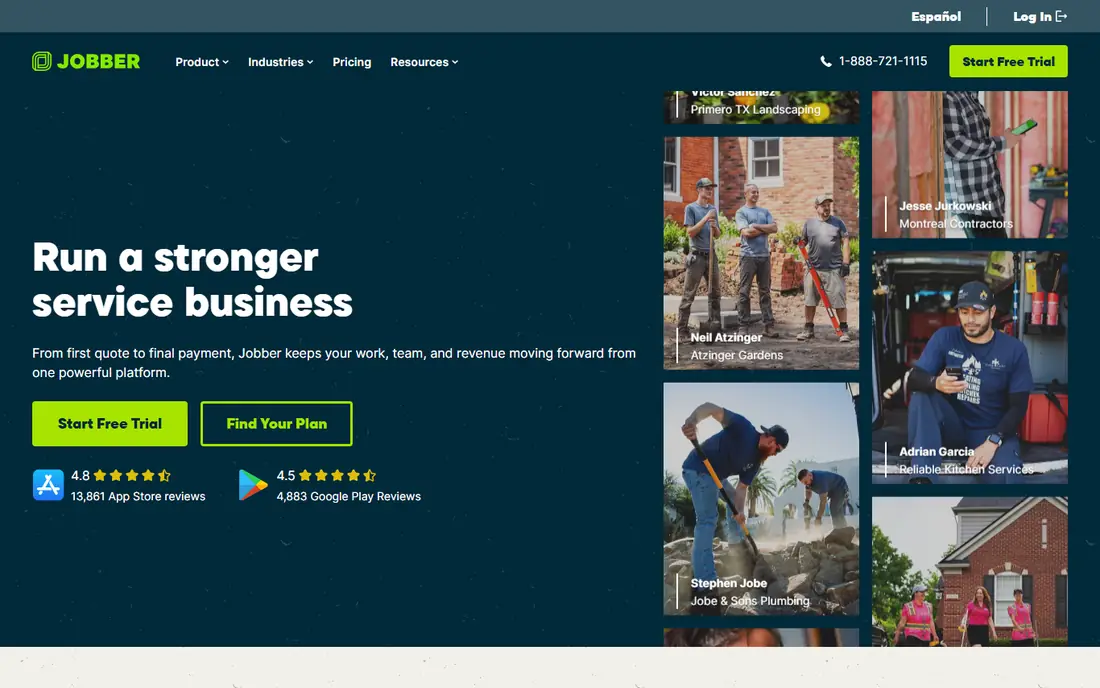
Jobber serves small service contractors that require quoting, scheduling and invoicing in one. Jobber is the friendly entry point. A commercial GC juggling forty bids will outgrow it.
The 14-day free trial of Grow needs no credit card. In daily use, a handyman, HVAC or landscaping contractor will love it. Starting cost for Jobber: $49/month. Free plan details: Free trial (14 days).
Honest limits: Better for same-day service than multi-week projects. What works well: Transparent published pricing.
- Quick to learn
- No annual contract required
- CRM features are entry-level
AccuLynx
Ideal for: Roofing businesses managing insurance restoration jobs
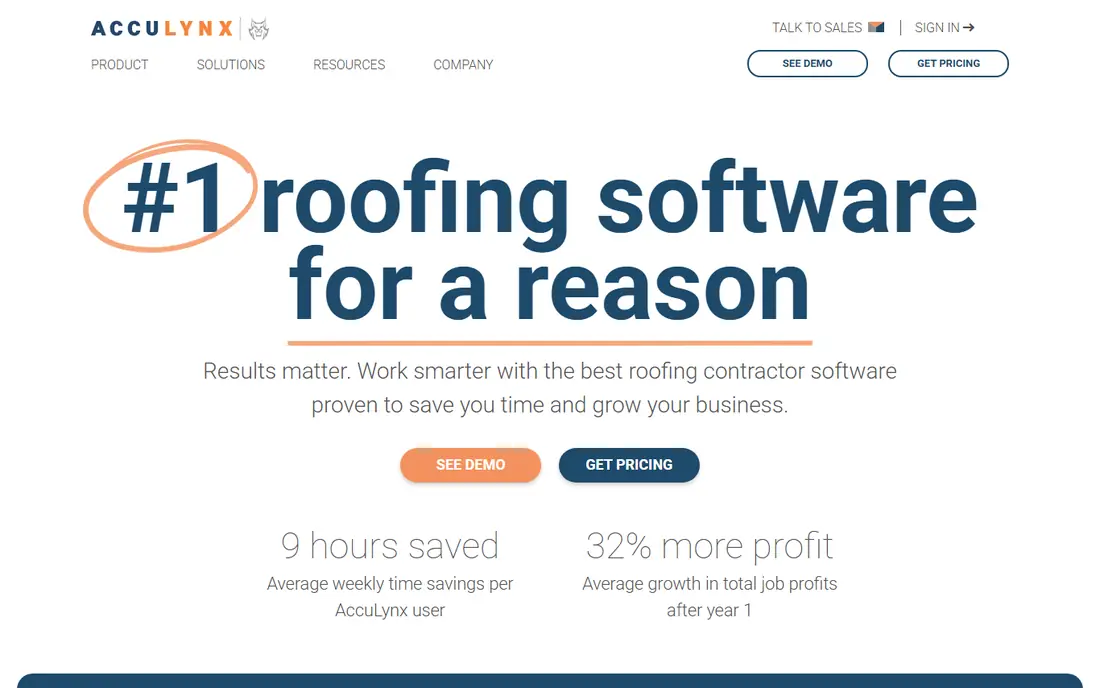
Think of AccuLynx for roofing firms managing insurance restoration jobs. Insurance claim tracking, photo documentation, and integrations with aerial measurement tools make it the choice for restoration-heavy roofing firms. The CRM tracks the long, document-heavy sales cycles that insurance jobs build.
That specialization is also the boundary. For a roofing company doing significant insurance work, the fit is hard to beat. AccuLynx shows no starting price here, so confirm the cost on the vendor site. AccuLynx has no permanent free option.
Points against: Niche focus limits flexibility.
- Insurance claim tracking
- Purpose-built for roofers
- Quote-based pricing
Buildertrend
Ideal for: Residential builders and remodelers managing homeowners
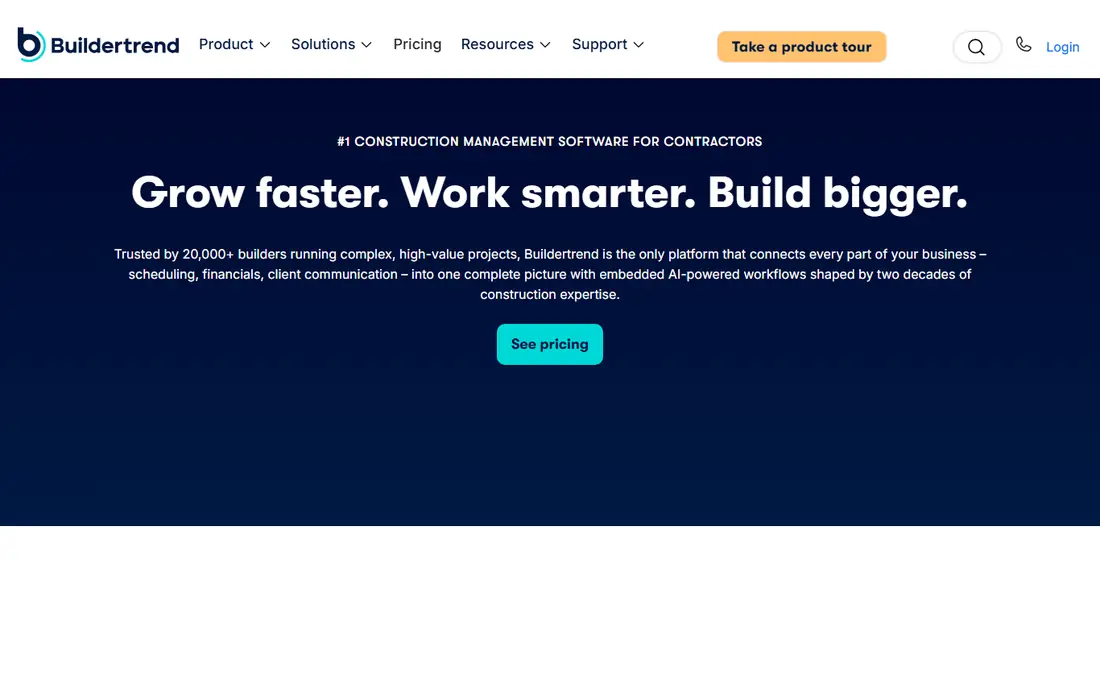
Buildertrend was built for residential builders and remodelers managing homeowners. The client portal manages selections, change orders, daily logs and payments in one place, which cuts the back-and-forth that eats a remodeler's week.
Honest limits: Interface feels dated to some users.
The interface displays its age next to newer tools. Pricing starts around $339 per month on annual billing and climbs with users and extras. What you pay to start with Buildertrend: From $339/month. There is no free plan with Buildertrend.
- Strong project management alongside CRM
- Selections and change orders
- Pricing starts high and scales per user
HubSpot
Ideal for: Contractors that create leads through marketing
HubSpot was built for contractors that create leads through marketing. If your leads come from Google Ads, SEO and content, HubSpot's free CRM plus its marketing tools provide you lead capture, pipeline tracking, email automation and reporting that no construction-native tool matches.
Limits to weigh: Bid tracking needs custom setup.
HubSpot pricing: Free. HubSpot has a free plan.
- Free CRM is genuinely capable
- Solid marketing automation
- No construction-specific features
FollowUp CRM
Ideal for: Commercial contractors and subs managing bid pipelines
Choose FollowUp CRM for commercial contractors and subs managing bid pipelines. A roofing subcontractor gets twelve bid invitations in a week, each with its own deadline, documents and contact. Its pipeline stages match how construction firms sell: lead intake, bid, proposal, negotiation, close.
Bid calendars and deadline reminders keep estimators from missing the dates that decide revenue. It also links up with construction ERPs like Foundation, Viewpoint and Sage, which matters for specialty contractors whose accounting lives elsewhere. FollowUp CRM does not show a starting price in this comparison, so check the vendor site for current pricing. FollowUp CRM has no free plan.
Limits to weigh: Concentrated on sales, not project execution.
- Bid calendars and deadline tracking built in
- Connects with construction ERPs
- Quote-only pricing
Projul
Ideal for: Full-service contractors that want one product from result in invoice
In short, Projul is for full-service contractors that want one system from result in invoice. Projul was built by contractors who were tired of generic software, and the pricing displays it. On top of that, core opens at $4,788 per year, Core+ at $7,188, and Pro at $14,388, all flat rate.
Watch-outs: no use for other firms.
In practice, the CRM is one module of a full system that covers estimating, scheduling, job costing and invoicing. That is the strength and the limitation: you cannot buy just the CRM, and if you run anything besides construction, you will need a separate tool. Worth adding: for a general contractor ready to consolidate, the value is real. Projul cost at the entry level: $4,788/year. Projul has no free tier.
- Scheduling and job costing
- CRM links to estimating
- CRM cannot be bought standalone
How the list was put together
Pricing pages, product documentation and feature lists were the main sources, and every entry carries at least one honest drawback. Prices and plan limits come from vendor pages and can change, so confirm them on the vendor site before you buy. Tools are placed by general fit for construction CRM software, with price clarity and free access as tie-breakers. A different team can reasonably rank them differently.
Pre-purchase checklist
- Get a written quote from AccuLynx and FollowUp CRM; the list shows no starting price for them.
- Test the free plan from HubSpot against your real workload before relying on it.
- Take the trial from Jobber and push a live task through it before you pay.
- Read the limits listed for Jobber first: CRM features are entry-level.
- Confirm you can export your data from HubSpot, so leaving later does not mean losing records.
- Ask FollowUp CRM whether prices are locked for the first term and what happens at renewal.
Frequently asked questions
How are the tools for construction CRM software ordered?
The order follows typical fit for construction CRM software, with Jobber first and Projul last, then price clarity and free access. It is editorial judgement, not a score, so another team could rank the tools differently.
What is the cheapest option for construction CRM software in this list?
On published monthly entry prices, Jobber is the lowest here at $49/month. Entry price is only part of the cost, because seats, add-ons and billing terms can change the total.
Which options for construction CRM software have a free plan?
HubSpot is the only tool in this list with a free plan. Free plans usually cap users, projects or features, so check the limits on the vendor page. One other tool offers a trial instead.
What is construction CRM software?
A CRM made for how contractors sell: tracking leads through bids, estimates, proposals and signed contracts, with features like bid calendars, deadline reminders, estimate tracking and handoff to project management.
Do I need a CRM if I already have project management software?
Yes, if you lose track of bids and follow-ups. Project management tools like Procore take over after the contract is signed. From a buyer's view, plenty of businesses run both and link them.
Is HubSpot a decent match for construction businesses?
It is well suited to contractors whose leads come from marketing, since the free CRM plus marketing automation is unmatched. It lacks construction-specific features like bid tracking and estimating, so commercial contractors with heavy bid volume usually prefer a purpose-built tool.